Sales and marketing alignment is the strategic integration of two traditionally siloed departments to create a unified framework for growth, customer acquisition, and long-term retention. When these teams function as a cohesive unit—often referred to as ‘smarketing’—they stop competing for resources and start contributing to a shared vision. This alignment ensures that marketing efforts directly support sales needs, while sales feedback informs content strategy, resulting in a more efficient conversion funnel. By breaking down the walls between these critical functions, organizations can eliminate the friction that often slows down revenue generation and improves the overall customer experience.
The Impact of Unified Teams
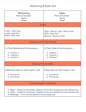
Organizations that prioritize this integration often see measurable improvements in their bottom line. Research indicates that businesses with tightly aligned teams experience significantly faster profit growth and higher customer retention rates. Leads nurtured by aligned teams tend to spend more than those managed in fragmented environments. By removing the friction between lead generation and lead closing, you create a more predictable revenue engine that functions based on shared metrics rather than competing agendas. This predictability allows leadership to forecast revenue with greater accuracy, reducing the volatility often associated with disjointed sales and marketing efforts.
Furthermore, the impact extends beyond immediate financial metrics. When teams are aligned, the customer journey becomes smoother and more consistent. Prospects no longer experience a jarring shift in tone or messaging when moving from a marketing email to a sales call. This continuity builds trust and credibility, which are essential for closing deals, especially in complex B2B environments. The reduction in internal conflict also boosts employee morale, as team members feel supported rather than undermined by their counterparts in the other department.
Defining the Core of Smarketing
True alignment goes beyond occasional meetings; it requires a shared language, common goals, and an infrastructure that supports ongoing collaboration. Effective smarketing relies on three foundational pillars: deep knowledge of buyer personas, clear ownership of lead qualification, and a culture of continuous learning. Without these pillars, alignment efforts often devolve into superficial gestures that fail to address the underlying structural issues causing departmental friction.
Organizing Around Buyer Personas
Buyer personas are essential tools that bridge the gap between marketing and sales. When marketing teams understand exactly who they are targeting, they can produce content that speaks to specific pain points. When sales teams utilize these same personas, they can tailor their outreach, presentations, and email templates to resonate with the prospect’s unique needs. This consistency ensures that the transition from a marketing lead to a sales prospect feels like a natural progression for the customer.
To maximize the effectiveness of buyer personas, both teams must be involved in their creation and refinement. Marketing should not develop personas in a vacuum based solely on demographic data. Instead, they should collaborate with sales representatives who have direct access to prospect insights. This collaborative approach ensures that personas reflect the actual challenges, motivations, and decision-making processes of the target audience. Regularly updating these personas based on new market data and sales feedback keeps them relevant and actionable.
Lead Qualification and Handoffs
One of the most common points of failure in any organization is the handoff process. To maintain alignment, you must designate specific personnel or teams responsible for receiving and qualifying incoming leads. If your sales team is unsure who should handle a lead generated by a specific campaign, the momentum is lost. Clearly defined roles and responsibilities in this handoff process are essential for maintaining the integrity of your pipeline.
A robust lead qualification process involves establishing clear criteria for what constitutes a marketing-qualified lead (MQL) and a sales-qualified lead (SQL). These criteria should be agreed upon by both teams and regularly reviewed to ensure they remain aligned with business objectives. By implementing a formal handoff procedure, such as a notification system or a scheduled review meeting, you ensure that no leads fall through the cracks. This structured approach reduces the burden on sales teams to sift through unqualified leads, allowing them to focus their energy on high-potential opportunities.
Facilitating Cross-Departmental Education
Smarketing is fundamentally an educational exchange. Sales representatives possess frontline insights into what prospects are asking, while marketing teams possess the ability to produce resources that answer those questions. By having sales staff hold product demonstrations for marketing teams, you ensure that content creators understand the nuances of the product. Similarly, marketing can provide sales with the data and collateral they need to handle common objections more effectively.
This educational exchange should be a continuous process rather than a one-time event. Regular training sessions, workshops, and knowledge-sharing meetings can help keep both teams informed about changes in the product, market trends, and competitor activities. Encouraging team members to shadow each other’s activities can also provide valuable insights into the challenges and opportunities faced by the other department. This mutual understanding fosters empathy and collaboration, which are critical for maintaining long-term alignment.
Aligning Sales and Strategy
Bridging the gap between strategy and execution requires a shift in how both departments perceive their roles. While marketing often focuses on short-term campaign visibility, sales is typically oriented toward long-term client relationships. Successful alignment happens when these two perspectives are synthesized into a balanced strategy. This synthesis ensures that marketing initiatives support sales goals and that sales efforts leverage marketing insights to drive revenue.
Embracing Lessons from Losses
Alignment does not guarantee immediate success for every initiative. When a campaign underperforms, it is vital to treat the result as a learning opportunity rather than a failure of one department. Analyzing why a specific approach failed allows both teams to refine their strategy, adjust their tactics, and develop a shared understanding of what drives actual value for your customers. This post-mortem analysis should be conducted collaboratively, with both teams contributing their perspectives and insights.
By embracing lessons from losses, organizations can build a culture of continuous improvement. This culture encourages experimentation and innovation, as team members feel safe to take risks and learn from their mistakes. It also helps to identify systemic issues that may be hindering performance, such as misaligned messaging or inefficient processes. Addressing these issues proactively can prevent future failures and improve overall performance.
Maintaining Focus on Target Segments
It is tempting to pursue every lead that shows a hint of interest, but this often dilutes your efforts. By identifying and sticking to target segments, both teams can concentrate their resources on the prospects most likely to convert. This focused approach allows you to build a more consistent framework for success and prevents the waste of time associated with pursuing low-probability opportunities.
Target segment identification should be based on a comprehensive analysis of historical data, market trends, and customer feedback. Both marketing and sales should be involved in this process to ensure that the selected segments are realistic and achievable. Regularly reviewing and adjusting target segments based on performance data helps to keep the strategy agile and responsive to changing market conditions. This focus ensures that resources are allocated efficiently and that efforts are directed toward the most promising opportunities.
Defining Shared Metrics
Metrics are the language of alignment. While departments may have individual KPIs, they must share a set of core performance indicators. Metrics such as lead-to-customer conversion rates, lead value, and milestone engagement rates (like email open rates or website visits) provide a common ground for evaluation. When both teams are measured by the same outcomes, they become naturally incentivized to work toward the same results.
Establishing shared metrics requires a collaborative effort to identify the most relevant and impactful indicators. These metrics should be tied to overarching business goals and should be easily measurable and trackable. Regularly reviewing these metrics together helps to identify trends, spot issues, and celebrate successes. This shared focus on data-driven decision-making fosters accountability and transparency, which are essential for maintaining alignment.
Essential Best Practices for Collaboration
To maintain long-term alignment, you must build structures that force interaction and encourage transparency. These practices turn the abstract concept of alignment into daily operational reality. By implementing these best practices, organizations can create a sustainable framework for collaboration that drives consistent results.
Establishing Routine Communication
Regular, structured communication prevents the formation of silos. This includes onboarding new sales hires with a clear understanding of marketing support, attending weekly sales meetings to share upcoming content plans, and holding monthly leadership reviews to evaluate the effectiveness of the service-level agreement. These touchpoints ensure that both departments remain updated on shifts in strategy or market dynamics.
Effective communication also involves creating channels for informal interaction. Slack channels, team chats, and casual coffee breaks can facilitate spontaneous conversations and idea sharing. These informal interactions help to build relationships and foster a sense of community between team members. Encouraging open and honest dialogue allows for the rapid resolution of issues and the identification of new opportunities.
Coordinating Content Creation
Content should be a collaborative asset. By creating a shared calendar and a central repository for ideas, you allow sales reps to contribute their frontline feedback without needing to write full articles themselves. When marketers promote a new offer, they should provide the sales team with talking points, data-driven stats, and relevant email templates. This ensures that sales reps are equipped to use new marketing assets in their own conversations immediately.
Coordinating content creation also involves aligning the content lifecycle with the sales cycle. Marketing should develop content that addresses the specific needs and challenges of prospects at each stage of the buyer’s journey. Sales can provide feedback on the effectiveness of this content and suggest improvements. This iterative process ensures that content remains relevant and impactful, driving better engagement and conversion rates.
Leveraging Sales Expertise
Your sales team is a goldmine of expertise that is often underutilized. Marketing can elevate the personal brand of sales representatives by ghostwriting blog posts based on their insights or encouraging them to share content on social media. When prospects see the people they talk to as thought leaders, trust increases. Shadowing sales calls also provides marketers with invaluable insights into how the product is discussed in the real world, which can then be fed back into the content production cycle.
Leveraging sales expertise extends beyond content creation. Sales representatives can provide valuable input on product development, customer service, and market positioning. By involving sales in these strategic discussions, marketing can ensure that its initiatives are aligned with the actual needs and preferences of customers. This holistic approach to leveraging sales expertise helps to create a more customer-centric organization.
Fostering a Shared Environment
Finally, alignment is also about the human element. Organizing team outings, lunches, or casual meetups helps build the personal trust necessary for professional collaboration. When people feel comfortable with each other, they are more likely to reach out for support and share information openly. Investing time in these relationships is just as critical as investing in the right software or reporting tools.
Creating a shared environment also involves recognizing and celebrating joint successes. Acknowledging the contributions of both teams to successful campaigns or deals reinforces the value of collaboration. This recognition can take many forms, from public praise in company meetings to formal awards or bonuses. By fostering a culture of appreciation and mutual respect, organizations can strengthen the bonds between sales and marketing teams.
Sales and marketing alignment is the process of creating a shared framework of goals and strategies backed by continual communication that enables departments to work as a cohesive whole. By integrating your teams, you create a more resilient organization that is capable of responding to market shifts with a unified voice. The result is a more efficient pipeline, higher conversion rates, and a more consistent experience for your customers. This holistic approach not only drives revenue growth but also enhances customer satisfaction and loyalty, setting the foundation for long-term success.


