Generating and managing leads remains one of the most demanding aspects of modern sales. For every successful conversion, teams often face dozens of missed opportunities, all while the pressure to hit monthly targets persists. To keep pipelines full and prospects engaged, sales and marketing professionals are increasingly turning to AI to support their efforts. By automating research, identifying high-quality leads, and predicting conversion likelihood, AI allows teams to focus their energy where it matters most.

AI lead generation is the use of machine learning, natural language processing, and predictive analytics to identify, attract, and convert potential customers at scale. Unlike traditional methods that rely on manual prospecting and broad, indiscriminate outreach, AI analyzes vast amounts of behavioral and firmographic data to surface high-intent prospects automatically. At its core, AI lead generation serves to automate the discovery and qualification of potential customers.
Many sales professionals are already leveraging these capabilities to regain time. Research indicates that a significant majority of sales experts find that automating manual tasks saves them several hours per week—time that is then reinvested into building genuine relationships and closing deals. Furthermore, AI-powered personalization has been shown to increase response rates, making it a critical component for teams aiming to stand out in a crowded digital space.
Effective Strategies for AI-Powered Lead Generation
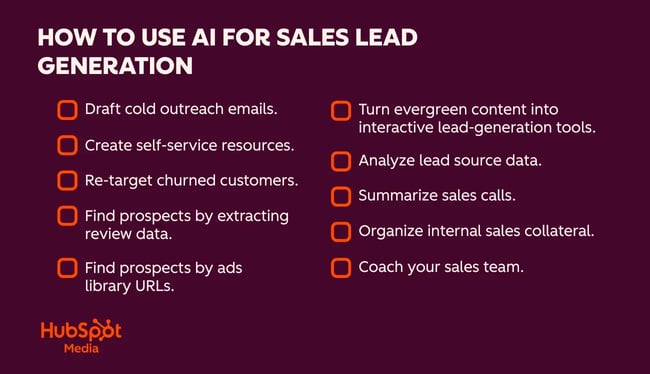
AI tools can increase lead conversion rates significantly when applied to the right workflows. From drafting cold outreach emails to discovering ideal prospects through data collection, here are practical ways sales teams can use AI to generate leads.
Drafting Cold Outreach Emails
Cold outreach often suffers from a negative reputation, yet it remains one of the most effective channels when executed with precision. AI tools can help you quickly draft personalized prospecting emails that move beyond generic templates. The key to success here is specificity; rather than sending broad messaging, use AI to tailor your communication to the specific needs of your target audience.
Why Personalization Matters: Generic emails are easily ignored or marked as spam. AI-driven personalization goes beyond inserting a first name; it analyzes recent company news, job changes, or industry trends to craft messages that resonate on a personal level. This approach demonstrates that you have done your homework, increasing the likelihood of a reply.
Common Mistakes to Avoid: A frequent error is over-relying on AI without human oversight. While AI can generate the initial draft, a human reviewer must ensure the tone aligns with your brand voice and that the insights provided are accurate. Additionally, avoid sending too many variations too quickly; A/B test your AI-generated subjects and bodies to see which performs best before scaling.
Creating Self-Service Resources
Modern B2B buyers prefer to conduct their own research before ever speaking with a sales representative. By creating robust self-service resources—such as blog posts, case studies, and interactive tools—you can capture leads who are already interested in your solutions. AI can assist in content creation, ensuring your resources are helpful and relevant, which significantly influences buyer decision-making.
How It Works: AI can help outline comprehensive guides, generate FAQ sections based on common customer queries, and even draft initial blog posts that require minimal editing. This allows content teams to produce high-quality material at a faster pace, ensuring that your digital footprint is always up-to-date and informative.
Practical Steps for Implementation:
- Audit your existing content to identify gaps where buyers are seeking information.
- Use AI to generate outlines for new articles or whitepapers that address these gaps.
- Implement chatbots powered by AI on your website to guide visitors to these resources based on their questions.
Re-targeting Churned Customers
Winning back old customers can be more cost-effective than acquiring new ones. By using AI to summarize exit interviews, you can identify common pain points that led to churn. This insight allows you to create targeted content campaigns that address those specific issues, potentially restarting conversations with former clients who are now better positioned to succeed with your services.
Why It Matters: Churned customers already know your brand and product. Re-engaging them requires less education than acquiring a new lead. AI helps by analyzing large volumes of qualitative data from exit surveys and support tickets to find patterns that human analysts might miss.
Actionable Insight: Segment your churned customers based on the reason for leaving. Use AI to craft personalized re-engagement emails that highlight how your product has evolved to solve the specific problem they faced. For example, if a customer left due to a lack of integration features, send them a case study showing how your new integrations have helped similar companies.
Extracting Data from Reviews
Market research is often hidden within public review platforms. By scraping and analyzing reviews from sites like Trustpilot or Google, you can identify companies experiencing specific challenges. This allows you to reach out with a solution that directly addresses their current frustrations, positioning your brand as a helpful partner rather than just another vendor.
How It Works: AI tools can monitor review sites for competitors or even your own industry. They can detect sentiment and specific keywords related to pain points, such as “slow support” or “expensive pricing.” This real-time intelligence allows sales teams to act on opportunities as they arise.
Things to Consider: Ensure that your outreach is empathetic and solution-oriented. Avoid criticizing competitors directly; instead, focus on how your solution addresses the specific issue the prospect mentioned in their review. This approach builds trust and shows that you are listening to customer feedback.
Identifying Opportunities Through Ad Libraries
AI can help you find companies that are falling behind their competitors. By analyzing competitor ad libraries, you can identify businesses that are not investing in digital advertising, while their peers are. You can then reach out to these prospects with data-backed insights on how they could improve their market position.
Why It Matters: In competitive markets, visibility is key. Companies that are not advertising may be losing market share to rivals. By using AI to analyze ad spend and creative strategies, you can identify prospects who are ripe for a conversation about digital marketing or sales enablement tools.
Practical Steps:
- Use AI tools to monitor the ad libraries of your top competitors.
- Identify prospects who are not running ads or are using outdated creative.
- Craft outreach messages that include specific examples of how competitors are succeeding and how your solution can help them catch up.
Repurposing Content into Interactive Tools
Evergreen content is a valuable asset, but it can be made even more effective by turning it into an interactive lead-generation tool. By integrating AI models into your high-traffic pages, you can provide users with a personalized assistant that guides them through tasks. This interaction keeps visitors engaged longer and increases the likelihood of them converting into a lead.
How It Works: AI can transform static content, such as a pricing calculator or a product recommendation engine, into dynamic, interactive experiences. For example, an AI-powered chatbot can ask users a series of questions to recommend the best product for their needs, capturing their contact information in the process.
Why It Matters: Interactive content has higher engagement rates than static pages. By providing immediate value through AI-driven interactions, you can capture leads who are ready to buy but need a little extra guidance.
Analyzing Lead Source Data
Growth teams often struggle to understand which channels are truly driving value. AI tools can analyze lead source data via natural language queries, allowing you to access insights without needing complex coding skills. This enables teams to quickly identify high-performing sources and shift their strategy toward the channels that generate the most revenue.
Why It Matters: Not all leads are created equal. Some channels may generate a high volume of leads but low conversion rates, while others may generate fewer leads but with higher quality. AI helps by correlating lead source data with downstream metrics like deal size and close rate.
Practical Steps:
- Use AI to query your CRM data to identify the top-performing lead sources.
- Analyze the characteristics of leads from these sources to understand what makes them successful.
- Allocate more budget and resources to these high-performing channels.
Summarizing Sales Calls
Manually documenting meeting notes is a major drain on productivity. AI agents can record, transcribe, and summarize sales calls, providing not just a recap but also actionable follow-up recommendations. This ensures that no detail is lost and allows sales representatives to focus on the conversation rather than the paperwork.
How It Works: AI-powered meeting assistants join calls via Zoom, Teams, or other platforms. They transcribe the conversation in real-time and generate a summary that includes key points, objections, and next steps. This summary is then automatically pushed to your CRM.
Why It Matters: Accurate and timely follow-up is critical for closing deals. By automating the note-taking process, sales reps can send personalized follow-up emails immediately after the call, while the conversation is still fresh in the prospect’s mind.
Organizing Sales Collateral
Finding the right pitch deck or case study in a vast internal repository can waste precious time. AI-powered search functionality allows team members to locate essential documents using simple keywords. This keeps your team focused on selling rather than searching for outdated files.
Why It Matters: Sales reps spend a significant amount of time searching for information. By reducing this friction, AI allows them to spend more time with prospects. Additionally, AI can recommend relevant collateral based on the prospect’s industry, role, and pain points, ensuring that reps are always using the most effective materials.
Practical Steps:
- Audit your existing sales collateral to ensure it is up-to-date and relevant.
- Implement an AI-powered search tool that integrates with your CRM and document management system.
- Train your team on how to use the new search functionality to find resources quickly.
Coaching Sales Teams
Consistent coaching is vital for revenue growth, but managers often lack the time to provide individual feedback. Conversational intelligence platforms can analyze sales calls and provide objective feedback, helping reps refine their techniques. This scalable approach to coaching ensures that your entire team is constantly improving.
How It Works: AI analyzes call recordings to identify patterns in successful and unsuccessful calls. It can provide feedback on talk-to-listen ratios, objection handling, and adherence to sales playbooks. This data-driven approach allows managers to provide targeted coaching rather than generic advice.
Why It Matters: Coaching is one of the most effective ways to improve sales performance. By using AI to scale coaching efforts, managers can ensure that all reps are receiving the feedback they need to succeed, regardless of team size.
Practical Steps to Implement AI
Integrating AI into your lead generation process requires a thoughtful, structured approach. Follow these steps to ensure your adoption is both effective and sustainable.
- Define your objectives: Start by identifying the specific outcomes you hope to achieve, such as increased lead quality or reduced manual research time. Clearly defining your goals will help you select the right AI tools and measure their success.
- Prepare your data: AI is only as good as the data it processes. Ensure your CRM is clean, deduplicated, and organized before deploying new tools. Poor data quality can lead to inaccurate insights and ineffective automation.
- Choose your technology: Select tools that integrate seamlessly with your existing infrastructure. Focus on solutions that offer tangible benefits for your specific pain points. Consider factors such as ease of use, scalability, and customer support.
- Integrate and automate: Gradually introduce AI into your workflows, starting with repetitive tasks like lead scoring or email outreach. This allows your team to become comfortable with the technology before expanding its use to more complex areas.
- Train and test: Use historical data to train your AI models and continuously test their performance against real-world results. Regular testing ensures that your AI tools are providing accurate and relevant insights.
- Measure and iterate: Track key performance indicators like conversion rates and cost per acquisition to refine your strategy over time. Use these metrics to identify areas for improvement and adjust your approach accordingly.
Frequently Asked Questions
What is AI lead generation?
AI lead generation is the process of using artificial intelligence to automate and enhance the identification, attraction, and qualification of potential customers. It works by analyzing large datasets—such as behavioral history and firmographic information—to surface high-intent prospects and personalize engagement at scale.
How can I get started without overwhelming my team?
Begin with a pilot project. Identify one specific area where AI can provide an immediate, measurable win, such as email personalization or meeting summaries. Once your team is comfortable with the technology and sees the benefits, you can scale your efforts to other areas of the sales process.
Is AI lead generation legal?
Yes, provided you remain compliant with data privacy regulations such as GDPR and CCPA. Always obtain proper consent for data collection and be transparent about your use of AI in communications. If you have specific concerns, it is wise to consult with your legal department to ensure your outreach strategies align with regional laws.
Scaling Visibility in the AI Era
As you integrate these AI strategies, remember that the ultimate goal is to amplify your team’s effectiveness. AI is a powerful tool for efficiency, but it thrives when paired with human judgment and strategy. By prioritizing clean data and clear objectives, you can create a more sustainable and productive lead generation engine. As you refine your approach, consider how your content strategy can also support this growth, ensuring your brand remains visible and relevant in the evolving landscape of AI-driven search.


