Developing the ability to write persuasive copy is a foundational skill for any professional, yet it is rarely mastered during formal education. Many marketers enter the field with strong theoretical knowledge but struggle when tasked with creating blogs, emails, or case studies that actually convert. The transition from academic theory to practical application often requires a shift toward behavioral science. By understanding how the human brain processes information, you can refine your writing to be more impactful and memorable. This shift is not merely about choosing fancier words; it is about aligning your message with the cognitive shortcuts and psychological triggers that govern human decision-making. When you ignore these underlying mechanisms, your content risks being overlooked, regardless of its factual accuracy or creative flair.
Science-backed copywriting hacks are evidence-based principles that help writers bridge the gap between simple text and persuasive communication. These tactics do not rely on intuition alone but are supported by psychological research into memory, attention, and decision-making. Whether you are drafting a landing page or a newsletter, applying these principles can help you capture attention more effectively and drive meaningful results for your brand. In an era where consumers are bombarded with thousands of marketing messages daily, standing out requires more than just visibility. It requires resonance. By leveraging insights from behavioral science, you can craft marketing communication that feels less like an advertisement and more like a helpful, relevant insight, thereby increasing brand visibility and trust.
The Power of Concrete Language
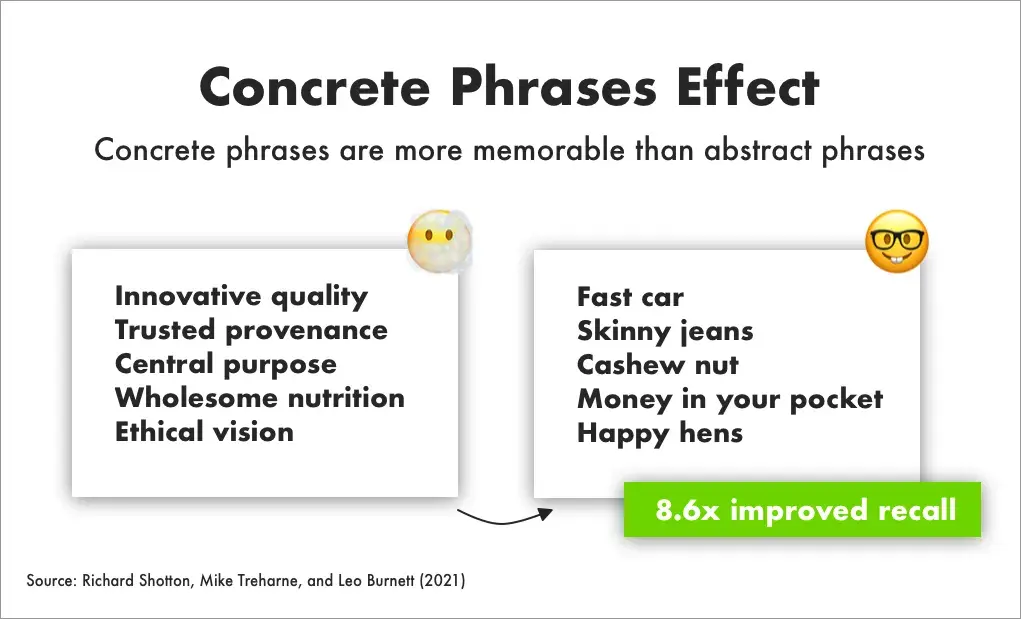
Writing concrete copy is the practice of using clear, visual, and specific terms rather than abstract or vague descriptors. Abstract language, such as “innovative quality” or “synergistic solutions,” often fails to resonate because the brain struggles to visualize these concepts. These phrases are cognitive dead-ends; they require the reader to expend mental energy trying to decipher what you mean, which often leads to disengagement. Conversely, concrete phrases like “fast car” or “15 cookies per pack” are processed quickly and remembered with significantly higher accuracy. The human brain is wired to process sensory information—sights, sounds, tastes, textures—much faster than abstract concepts. When you use concrete language, you are essentially providing a shortcut for your reader’s brain, allowing them to grasp your message instantly without the friction of interpretation.
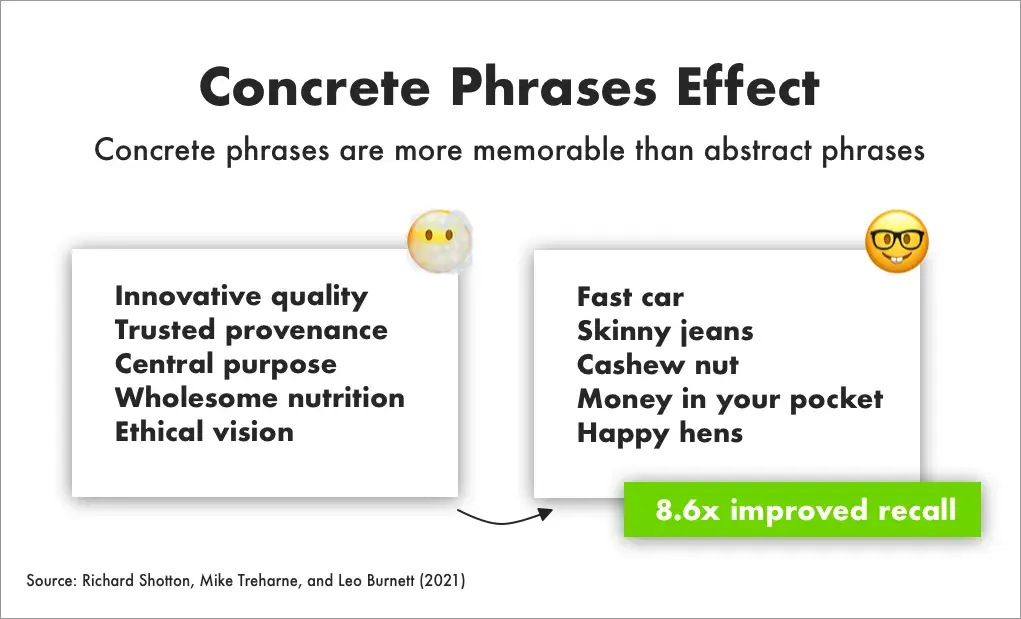
Research indicates that when descriptions are concrete, the benefits of a product become more salient to the consumer. For instance, shifting a product description from a weight-based measurement to a count-based measurement can increase sales by making the utility of the product immediately clear. When you write for your audience, prioritize words that paint a picture. If your reader can visualize your point, they are far more likely to retain it and act upon it. This principle applies across all forms of content engagement. In a blog post, instead of saying “our software improves efficiency,” describe the specific action: “save two hours every Monday morning on data entry.” This transformation turns a vague promise into a tangible benefit that the reader can imagine experiencing in their own life.
Why Specificity Matters
Being specific with your numbers and claims is an extension of the concrete writing principle. Research shows that precise numbers are perceived as more accurate and trustworthy than rounded or vague figures. If you are describing the duration of a service or the effectiveness of a tool, avoid generic terms like “a decade” or “a lot.” Instead, use exact figures, such as “10 years” or “47% more efficient.” This precision signals to the reader that you have done the work and are providing a factual, reliable account. Vague numbers often trigger skepticism because they feel like estimates or exaggerations. Precise numbers, however, suggest data-driven confidence. When you claim that a process takes “12 minutes” rather than “about 10 minutes,” you are implicitly telling the reader that you have measured this result rigorously. This small adjustment can significantly boost the credibility of your persuasive writing, making your brand appear more authoritative and dependable in the eyes of potential customers.
Common Pitfalls of Abstract Writing
One of the most common mistakes in marketing communication is relying on industry jargon or buzzwords that mean little to the average consumer. Words like “leverage,” “paradigm,” or “holistic” are often used to sound sophisticated, but they frequently obscure the actual value proposition. To avoid this, ask yourself if a five-year-old could understand the core benefit of your sentence. If not, simplify. Replace abstract nouns with active verbs and concrete nouns. For example, instead of stating that your team provides “strategic optimization,” say that you “cut costs by 20%.” This shift not only improves clarity but also enhances content engagement by making the text easier to scan and digest. Readers are more likely to stay on a page and continue reading when the language is direct and visual, rather than dense and conceptual.
Anchoring and the Illusion of Effort
Anchoring is a cognitive bias where the first piece of information offered—the anchor—sets a standard for the rest of the information. In copywriting, you can use concrete examples as anchors to frame the value of your offering. For example, comparing a nutritional drink to recognizable, healthy foods like salmon or bananas acts as an anchor that influences the reader’s perception of the product’s health benefits. By associating your brand with established, high-value concepts, you shift the reader’s expectation before they even finish the sentence. This technique works because humans rely on mental shortcuts to make decisions. When you provide a strong anchor, you guide the reader’s judgment toward your desired conclusion. If you want your product to be seen as premium, anchor it against other premium items. If you want it to be seen as affordable, anchor it against expensive alternatives to highlight the savings.
Another effective strategy is the “labor illusion,” which involves highlighting the effort behind your work. Audiences tend to value content more when they understand the time and research invested in its creation. If you share that a report took weeks to synthesize or that a guide was built on hundreds of hours of interviews, you change how the reader perceives the quality of the output. Simply stating the effort you have put into your work can significantly increase engagement and click-through rates. This is not about complaining about hard work; it is about demonstrating dedication and expertise. When readers see the labor behind the scenes, they are more likely to respect the final product and view it as a valuable resource rather than just another piece of generic content.
How to Implement Anchoring Effectively
To use anchoring effectively, you must identify the key attribute you want to emphasize and find a relevant comparison point. If you are selling a high-end consulting service, anchor your price against the cost of hiring a full-time employee. This makes your service feel like a bargain in comparison. If you are promoting a fast-delivery option, anchor it against standard shipping times to highlight the speed. The key is relevance; the anchor must be something the reader already understands and values. Additionally, place the anchor early in your copy. The first impression is the strongest, so ensure that your comparative frame is established before you delve into the finer details. This approach helps guide the reader’s perception from the very first sentence, ensuring that your message is received in the context you intend.
Maximizing the Labor Illusion
To maximize the labor illusion, be transparent about your process without being verbose. Mention specific steps you took, such as “we tested 50 different variations” or “we consulted with three industry experts.” These details provide evidence of your thoroughness and care. However, avoid overdoing it; the goal is to inspire confidence, not to bore the reader with minutiae. Focus on the aspects of the labor that directly benefit the reader. For example, instead of saying “we spent 10 hours editing,” say “we spent 10 hours editing to ensure every sentence is clear and actionable for you.” This connects the effort back to the reader’s experience, reinforcing the value they will receive. By strategically highlighting the work behind your content, you build a deeper connection with your audience and enhance the perceived quality of your brand.
Leveraging Linguistic Patterns
Language structure significantly affects how your message is received and remembered. Using the present tense is one of the most effective ways to make your copy more persuasive. Present-tense writing feels immediate and active, whereas past-tense language can feel distant or historical. Studies on product reviews have shown that consumers are more likely to find present-tense reviews helpful and are more inclined to purchase products described in the present tense. This is because the present tense creates a sense of immediacy and relevance. It pulls the reader into the current moment, making the benefits feel accessible and real. When you write in the past tense, you are telling a story about something that has already happened, which can create psychological distance. By switching to the present tense, you invite the reader to experience the benefit right now.
The Alliteration Effect
Alliteration is the repetition of initial consonant sounds in neighboring words, and it is a powerful tool for improving memorability. Phrases that use alliteration are often perceived as more clever, catchy, and reliable. This is why many successful slogans and brand taglines rely on this technique. You can apply this to your own writing by looking for opportunities to alliterate in headers, calls to action, or key value propositions to ensure your message sticks with the reader long after they leave your page. The rhythmic quality of alliteration makes the text easier to process and recall. For example, “fresh, fast, and friendly” is more memorable than “fresh, quick, and helpful.” While you should not force alliteration where it feels unnatural, using it strategically in key areas can enhance the aesthetic appeal of your copy and make it more engaging.
The Impact of Negations and Pronouns
Contrary to the belief that copy should always be positive, the use of negations—words like “no,” “none,” or “never”—can actually grab attention. Research suggests that content containing these words often sees higher engagement because they act as a pattern interrupt. When used strategically, negations can highlight a common misconception or a problem your reader is trying to avoid, making your solution feel more relevant. For instance, “Stop wasting time on manual data entry” is more compelling than “Save time with automated data entry.” The negative frame triggers a loss-aversion bias, which is a powerful motivator in human psychology. People are often more motivated to avoid pain or loss than to gain pleasure or reward. By framing your message around what the reader will not experience, you can create a stronger emotional response.
Furthermore, the use of second-person pronouns such as “you” and “your” is essential for building a connection. These pronouns bridge the gap between the brand and the reader, creating a more personalized experience. Instead of writing about what a company does, write about what the reader will achieve. This shift in perspective makes the content feel like a conversation rather than a broadcast, increasing both the favorability of your brand and the engagement levels of your audience. When readers see “you” in your copy, they feel seen and understood. It signals that you are speaking directly to their needs and desires. This personalization is crucial for building trust and fostering a loyal community around your brand.
Practical Application for Content Strategy
Effective copywriting is a blend of psychological insight and clear, intentional communication. To maximize the effectiveness of your brand’s messaging, you should focus on making your content visual, precise, and reader-centric. By consistently applying these principles, you ensure that your writing serves as a reliable guide for your audience, helping them understand the value you offer without the need for aggressive sales tactics. Start by auditing your existing content. Look for abstract language and replace it with concrete examples. Check your numbers for precision and ensure they are specific. Review your headlines and calls to action for opportunities to use alliteration or negations. This systematic approach will help you refine your voice and improve your results over time.
As you integrate these strategies into your content, keep in mind that the goal is to provide value that is easy to process and remember. Whether you are creating long-form articles, social media updates, or email campaigns, the science of persuasion suggests that your success depends on how clearly and directly you speak to your reader. By focusing on concrete details, using the present tense, and keeping the focus on the reader through second-person pronouns, you build a sustainable foundation for brand communication that resonates in any environment. Remember that these copywriting hacks are not just tricks; they are tools for better understanding your audience. When you respect the way their brains work, you create content that is not only persuasive but also genuinely helpful. This alignment between psychological insight and clear communication is the key to lasting brand visibility and meaningful engagement.
Step-by-Step Checklist for Implementation
- Audit for Abstract Language: Review your recent posts and identify any vague terms like “quality” or “efficiency.” Replace them with specific, visual descriptions.
- Check Your Numbers: Ensure all statistics and claims are precise. Change “many users” to “over 5,000 users” if possible.
- Apply Anchoring: Identify one key benefit of your product and find a strong, relatable comparison to anchor it against.
- Highlight Effort: Add a brief note about the research or testing behind your content to build trust through the labor illusion.
- Use Present Tense: Rewrite key sentences in the present tense to create immediacy and relevance.
- Incorporate Alliteration: Look for headers or slogans where repeating initial consonant sounds could improve memorability.
- Test Negations: Try framing a call to action around avoiding a negative outcome to leverage loss aversion.
- Personalize with “You”: Ensure every piece of content addresses the reader directly, focusing on their benefits and experiences.


