A shopper lands on a product page displaying “From $49.” They select a specific size and color, adding the item to the cart. Yet the underlying data still points to the parent product or a different variant. This disconnect is not merely a technical glitch; it triggers a cascade of mistaken orders, service tickets, and returns. The root issue is that product data conflicts across the visible page, JSON-LD, and the merchant feed. Effective AI product schema aims to eliminate this ambiguity by defining the precise, purchasable unit—specific color, size, and stock state—rather than just the general product family.

The Distinction Between Parent Product and Purchasable Variant
A label like “Linen Shirt” fails because it describes a family, not a specific item. Retrieval systems and shoppers need precise details to distinguish the exact product. This includes the brand, cut, fabric composition, color, and regional size. Without these attributes, the data remains too vague to support confident matching.

This gap becomes visible in how options are presented. A phrase like “Available in multiple colors” offers no clarity, leaving both humans and algorithms to guess. In contrast, a strong signal states the exact state: “Selected: Forest Green, 500 ml, in stock.” This specific phrasing removes ambiguity by confirming the current selection and availability in plain text.
The commercial logic is straightforward: a parent product is a catalog entry, but a variant is the only thing a customer can actually buy. When marking up AI product schema, the goal is to reflect this purchasable state, not just the general product family. If the data points to the parent while the cart holds a specific variant, the system receives conflicting signals.
Removing Ambiguity in Variant Selection
Visual swatches alone create a common failure mode. When a shopper clicks a color circle, the interface often lacks a text label confirming the choice. This visual-only approach creates ambiguity for buyers and prevents retrieval systems from verifying the selected state. The selected option must be stated in clear text for both audiences.
Consider the offer block. Displaying “From $49” is misleading if the selected configuration costs more. A precise statement, such as “Forest Green, 500 ml: $59, available now,” aligns the visible price with the specific item. This approach supports structured data shopping by ensuring the price and stock status match the exact variant in the customer’s view.
Clear semantic product data allows AI assistants to compare items against user constraints accurately. When the text explicitly identifies the variant, the system can process the request without relying on image recognition or guessing. This precision reduces the likelihood of mistaken orders, which are a primary driver of returns and service tickets.
Aligning Structured Data, Feeds, and Visible Offers
Data drift begins when ownership of product information is split. Merchandising teams update prices in the backend, developers manage the rendering engine, and operations control the shopping feed. When these layers operate independently, inconsistencies appear after price changes or new variant launches. The result is a page that shows one reality while the underlying machine-readable data describes another.
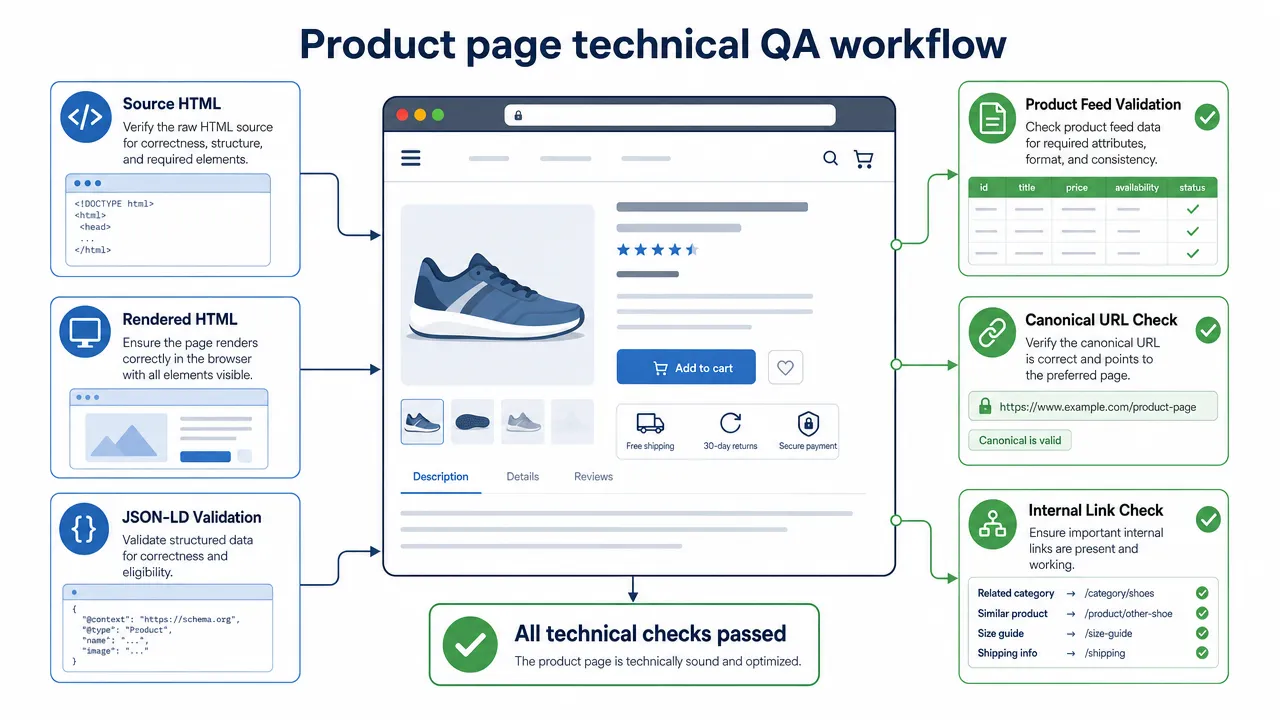
The core requirement for successful structured data shopping is alignment. The visible price, stock state, and SKU displayed on the page must exactly match the entries in the JSON-LD code and the product feed. If a discrepancy exists between what the human sees and what the machine reads, retrieval systems will struggle to verify the offer.
This misalignment creates specific risks for users and AI assistants. Consider a common scenario: a product feed updates stock levels every hour, while the website caches that information for twenty-four hours. This time lag creates a mismatch. An AI shopping assistant might recommend an item as available because the feed says it is in stock, but the page displays an “out of stock” message due to the cached data. The buyer is confused by the conflicting signals, and the system loses trust in the product record.
To diagnose this, look for conflicting identifiers. If the page lists a 30 ml serum at $34, but the schema identifies a different variant or a parent product without a specific size, the issue is not a lack of content. It is conflicting product data. The semantic product data must point to the exact purchasable unit. When the visual offer, the code, and the feed do not agree, no amount of descriptive text can resolve the error. The fix lies in synchronizing the data source, not in writing more copy. This consistency allows LLMs to accurately interpret the current state of the product.
Making Semantic Product Data Visible and Crawlable
Schema markup does not create information; it only labels facts that already exist on the page. If you tag a shipping promise or a review rating that is not displayed in the visible text, you create conflicting evidence for the retrieval system. In structured data shopping, this mismatch erodes trust because the AI assistant sees a promise in the JSON-LD that it cannot verify in the rendered HTML.
The Visibility Requirement
For semantic product data to be effective, it must be visible to the user. We recommend a two-layer approach: a concise summary of key attributes near the purchase button and a deeper specification section lower on the page. This ensures that both the shopper and the crawler encounter the same critical information without navigating away from the core offer.
Structuring for Interpretation
Semantic HTML plays a vital role in how systems interpret content. A single clear H1 title, logical section headings, and properly labeled specification tables help parsing engines understand the hierarchy of product information. For LLM product markup to work, the visual structure of the page should mirror the logical structure of the data. A specification table with explicit headers for material, dimensions, and compatibility is far easier to parse than an unstructured paragraph of text.
Avoiding Hidden Decision Facts
Critical decision facts—such as material composition, exact dimensions, and device compatibility—should never be buried in downloadable PDFs or tab interfaces that require a click to load. If a crawler cannot access the information without interaction, it is effectively invisible to the AI. Ensure these details are present in the initial HTML source, giving the system all the data it needs to answer user queries accurately.
Prioritizing LLM Product Markup for Business Outcomes
Prioritizing LLM product markup for business outcomes requires moving away from cosmetic enhancements toward structural integrity. Teams often rush to rewrite descriptions or add generic FAQ sections, treating content depth as the primary lever for visibility. However, without a solid foundation, this extra text cannot resolve the underlying ambiguity that drives returns. We must distinguish between high-impact fixes and low-impact adjustments to allocate engineering and content resources efficiently.
The Priority Framework
A tiered audit approach clarifies what to fix first. P1 priorities involve crawlability and data integrity: ensuring the rendered HTML is accessible, canonical tags are correct, and product identity fields align across the page, JSON-LD, and merchant feeds. P2 priorities address specific attribute completeness, such as package contents and compatibility details. P3 priorities cover content depth, media quality, and stylistic tone. Inverting this hierarchy—polishing P3 items while P1 conflicts persist—wastes effort. If the system cannot reliably identify the item, better writing will not help.
The Diagnostic Test
To validate the current state of your structured data shopping infrastructure, ask a single question: Can a buyer and a retrieval system identify the exact purchasable item, understand the current offer, and compare it against constraints without guessing? If the answer is no, the issue is not a lack of creative copy. It is a failure in data alignment. A retrieval system processing semantic product data needs consistent signals. When the page displays one price and the schema references another, the system discards the record as unreliable. This uncertainty directly increases customer service tickets, as shoppers cannot confirm whether the displayed option matches the actual order. Resolving these fundamental conflicts reduces the friction that leads to mistaken purchases and subsequent returns.
The shift from viewing schema as hidden markup to treating it as a consistent business system changes how we manage product data. The goal is to close the gap between what the page displays and what the retrieval system processes. When structured data reflects the actual purchasable state, it supports clearer decisions for both humans and AI.


