Beyond SEO: Why Your Content Infrastructure Requires a New Operating System
In the era of generative AI, the traditional Content Management System (CMS) is showing its age. Most site-mapping approaches were designed for hierarchical indexing—a linear path for a bot to follow from a home page to a product page. However, Large Language Models (LLMs) do not navigate; they synthesize. They process your entire domain as a flat, associative knowledge graph.
When your content is locked in static page formats, you are forcing the AI to work harder to extract meaning. Content Engineering bridges this gap by treating your brand’s output as a synthesis of human-centric narratives and machine-readable data. By adopting a ‘source-of-truth’ architecture, you provide LLMs with a clean, unambiguous data set. This shifts your role from simply “publishing posts” to curating an authoritative, machine-ready information ecosystem that AI agents can cite with confidence.
The Content Modeling Framework: Building Your Semantic Foundation
To move from page-based thinking to object-based content modeling, you must decompose your brand’s knowledge into atomic parts. Instead of viewing a blog post as a monolithic document, view it as a collection of entities, attributes, and relationships.
- Entities: Define your brand’s core concepts (e.g., your products, services, leadership team, and proprietary methodologies).
- Attributes: Establish the specific data points that describe these entities consistently across your site.
- Relationships: Map how these entities connect to one another, providing the context required for an AI to understand your brand’s internal logic.
By modeling your content this way, you ensure that when an AI query triggers a summary, the model pulls from a structured foundation rather than guessing the context of a paragraph.
Implementing Modularity: Applying DRY Principles to Your Content Ecosystem
The DRY (Don’t Repeat Yourself) principle, long a staple of software engineering, is critical for modern content strategy. Content bloat creates conflicting signals for AI models. If you have five different explanations of a core concept across your site, you are diluting your authority.
Instead, deconstruct long-form assets into reusable modules. By storing your brand’s core definitions and facts in a centralized location and calling them into various articles, you maintain a singular source of truth. This modularity reduces technical debt and ensures that when your brand evolves, you update the information once, and the change propagates across every AI-referenced endpoint.
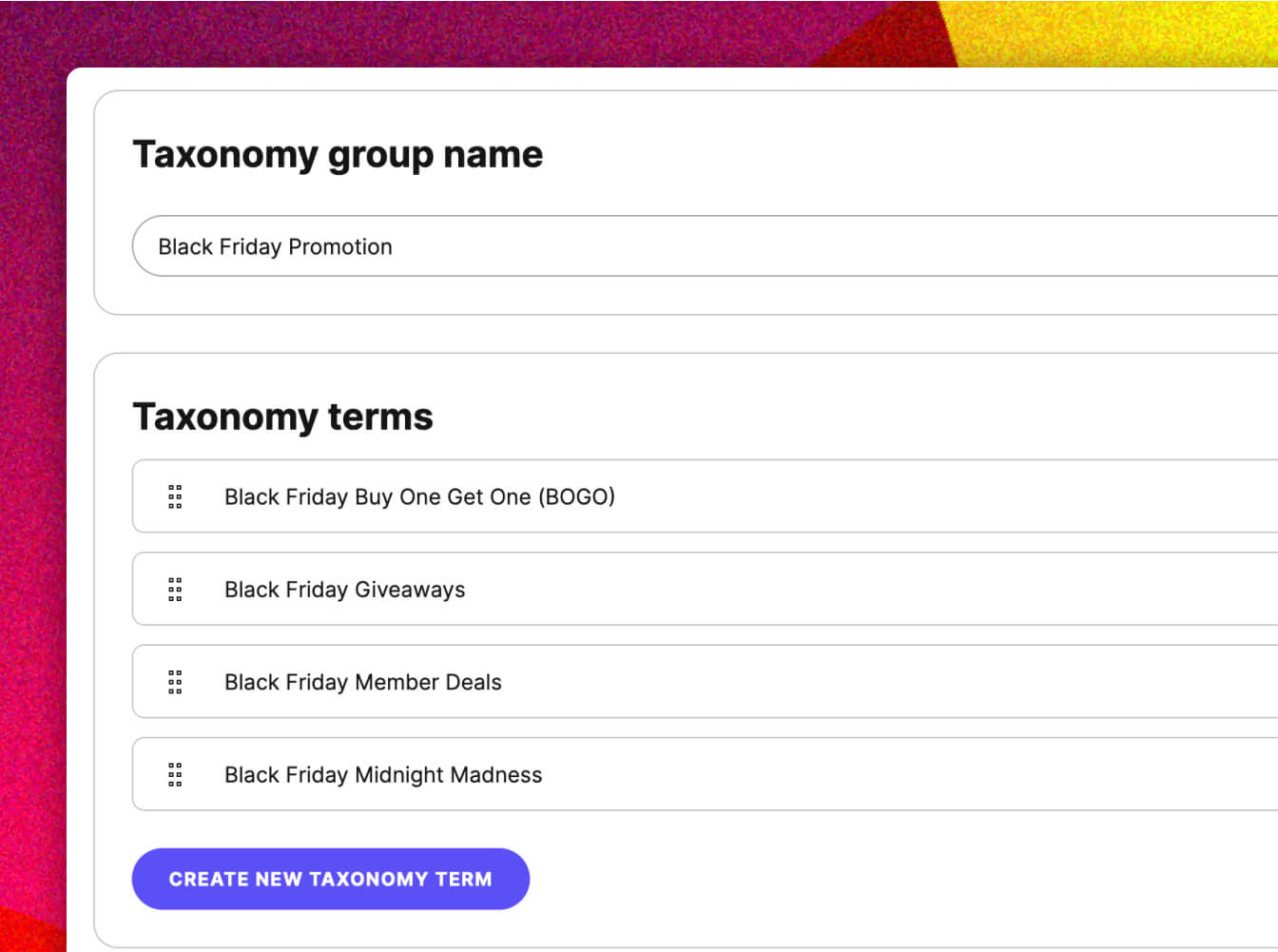
Architectural Taxonomy and Metadata: Communicating Relevance to LLMs
An effective hierarchical taxonomy must do more than organize navigation; it must communicate intent to machine learning patterns. Moving beyond simple keyword stuffing, semantic relevance is achieved through structured metadata that disambiguates your brand data.
When you classify content based on its relationship to user intent and machine-readable patterns, you tell the AI exactly which topics you command. This structured approach allows LLMs to categorize your domain with precision, ensuring that when users ask questions related to your niche, your brand entities are retrieved as the primary, authoritative sources.
From Audit to Evolution: The Lifecycle of AI-Ready Architecture
Establishing AI-ready infrastructure is not a one-time project; it requires a mindset of continuous evolution.
- The Proactive Audit: Before building, assess your existing content for modular integrity. Identify where content is fragmented and consolidate it into high-value knowledge blocks.
- Bridging the Gap: If you are operating on a legacy CMS, map your current structures toward a more flexible, headless architecture that separates content data from presentation layers.
- Iterative Governance: AI search is dynamic. Your architectural strategy should include regular reviews of how LLMs are representing your brand, allowing you to refine your taxonomy and content models as generative search models evolve.

By shifting your focus from tactical SEO to long-term content engineering, you create an infrastructure that is not only optimized for the AI search ecosystem of today but is also resilient enough to scale as the technology matures.