You translated your best-performing blog post into Spanish, German, and Japanese. The grammar is correct, the meaning is clear, and the content mirrors the English original. Yet, when you check AI Overviews, your translated pages remain invisible, while competitors with similar quality appear in the citations. The issue is not linguistic; it is structural.
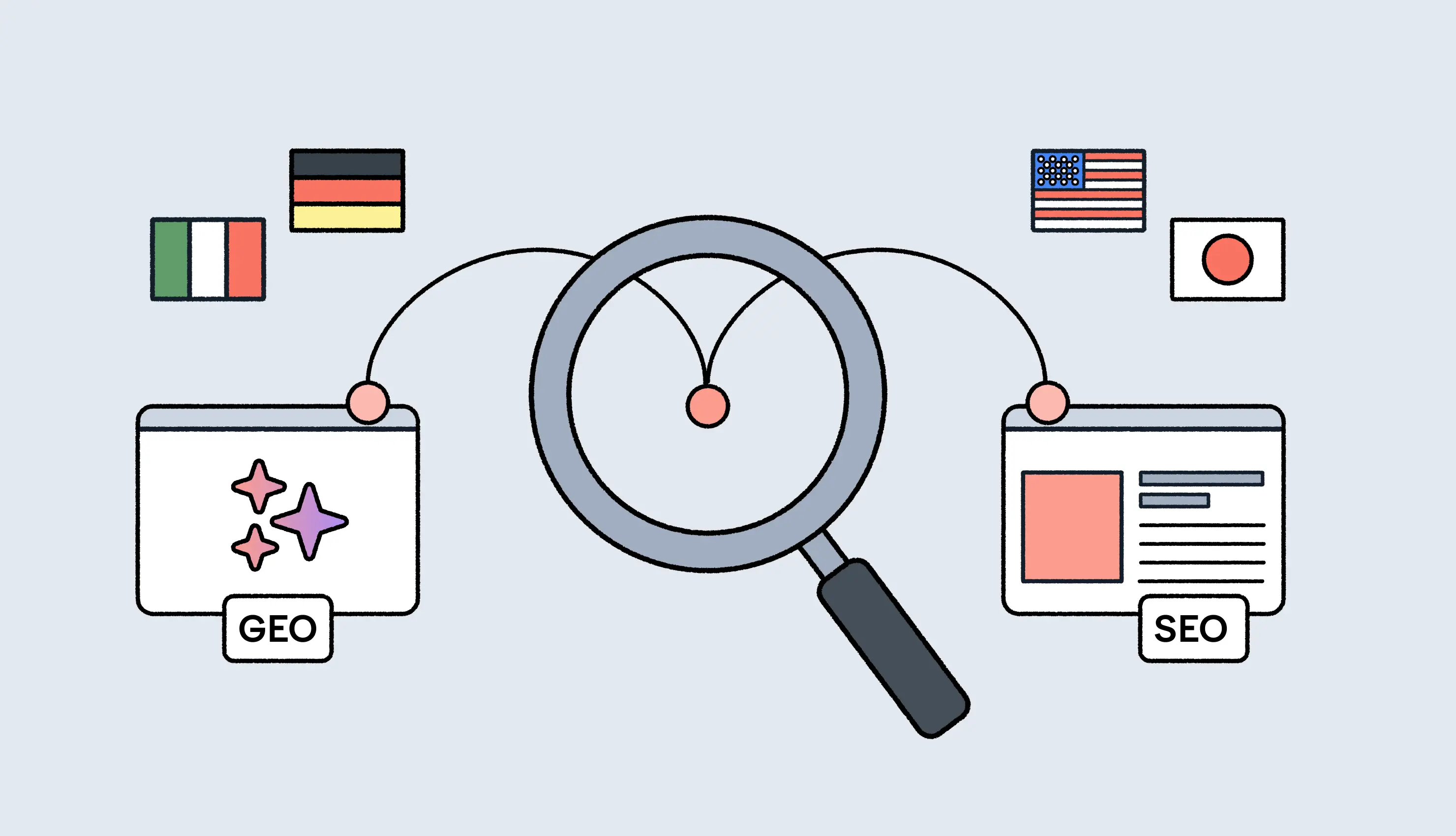
AI engines do not judge your content based on fluency alone. They evaluate the trust signals that indicate whether your text is genuinely relevant to a specific region. This is where the distinction between translation and localization becomes critical for AI search optimization. Translation converts words; it is a mechanical process that swaps vocabulary while preserving the original structure. Localization, however, builds the contextual framework that AI models rely on. It includes terminology consistency, cultural relevance, and regional intent signals. Without these elements, your content may be understandable to a human but opaque to an AI model. This gap is the core challenge in multilingual AEO.
The Gap Between Word Conversion and AEO Localization
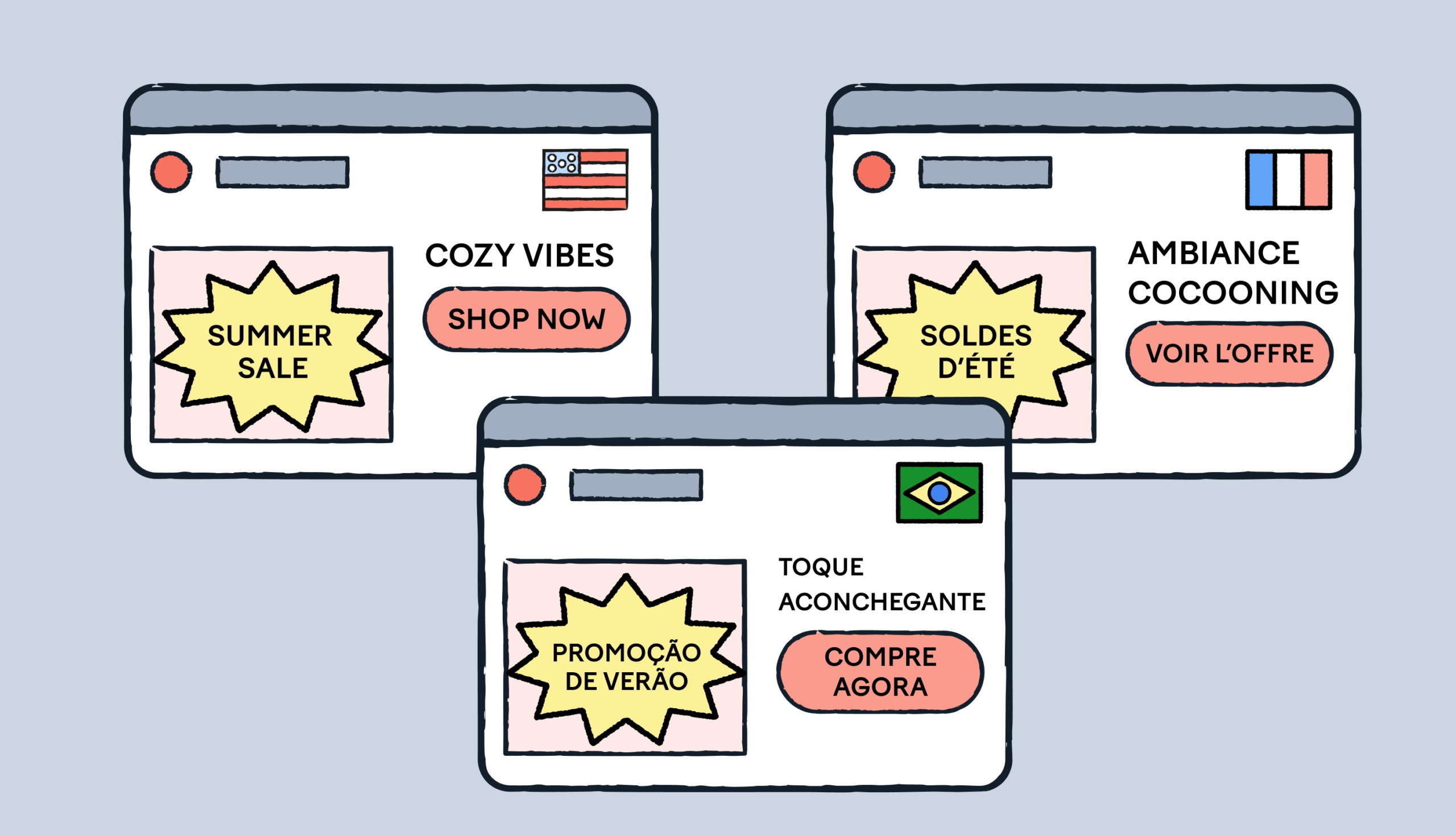
Translation is the mechanical conversion of text from one language to another, preserving literal meaning but often missing cultural context or specific search intent. Localization goes further; it adapts content for a specific market by integrating keyword research, tone adjustments, and technical signals like hreflang tags. This distinction is critical for AEO localization because AI models do not process language in a vacuum. They evaluate intent and regional relevance to determine which sources are most authoritative for a given query.
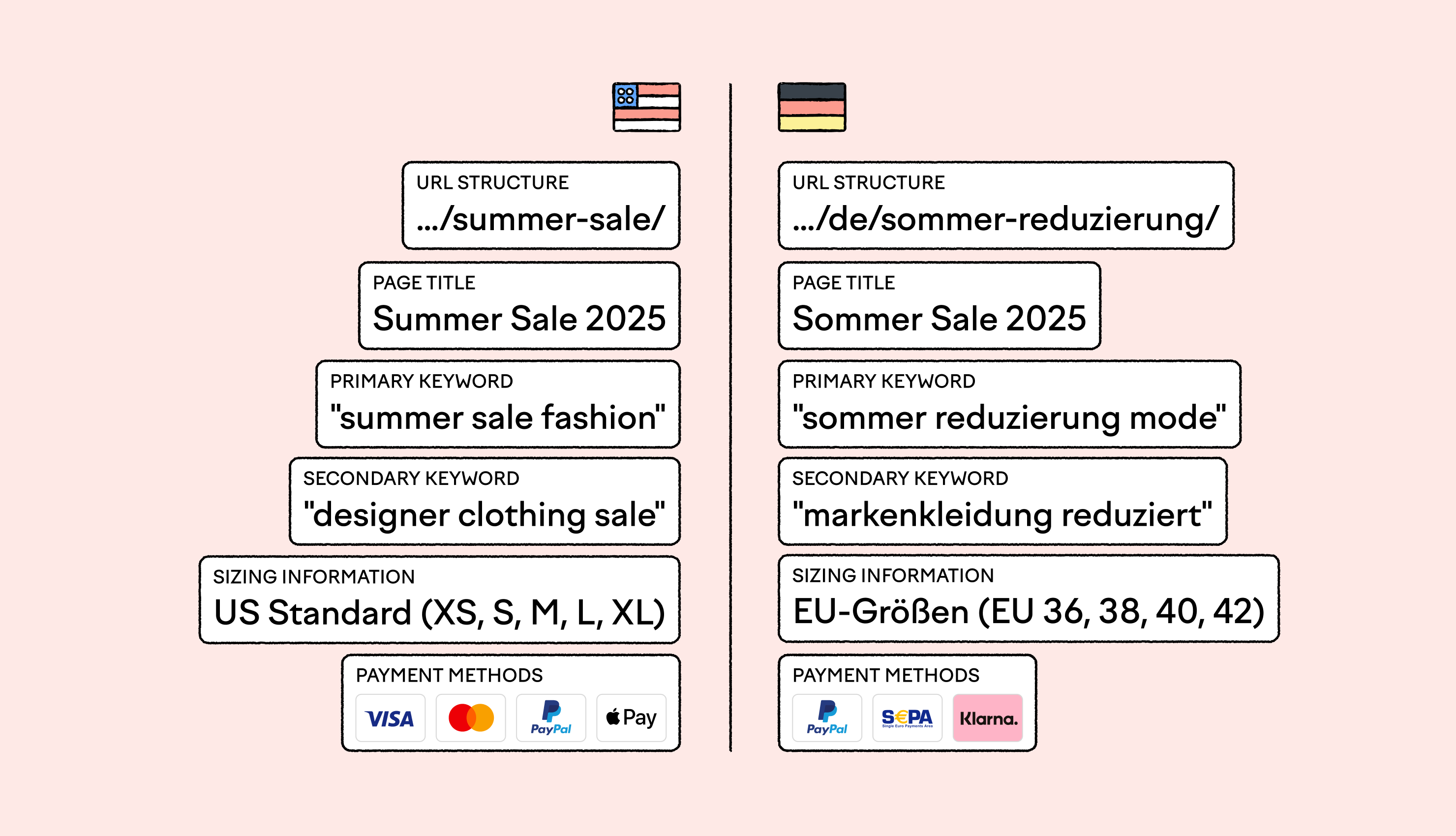
When you look at the practical impact, the difference becomes clear. Translation delivers a version of your page, but it may not align with how users in that region actually phrase their questions. AI search optimization relies on strong trust signals that only a full localization strategy can provide. If the content feels foreign or contextually misaligned, engagement metrics suffer, and the AI engine deprioritizes your page in favor of sources that feel genuinely native.
A notable example is Airbnb, which saw a 20% year-over-year increase in bookings in new markets after localizing their support content. This growth wasn’t driven by mere word-for-word conversion; it resulted from adapting the user experience to local expectations. For managers in service industries, this highlights a key shift: winning in multilingual AEO requires building content that feels trusted and relevant to the specific audience, rather than just translating what you already have in English.
Why AI Engines Trust Signals Over Language Fluency
AI models do not have a built-in linguistic conscience that judges your grammar in real time. Instead, they rely on indirect trust signals to determine if a source is worth citing. The engine cannot look at your text and ask, “Is this well-written?” It looks at how users behave on the page and how the content is structured within your domain.
The Metrics That Matter More Than Grammar
When AI crawlers analyze your site, they prioritize behavioral data over textual fluency. If users bounce quickly or spend little time on a page, the algorithm interprets this as a lack of relevance or quality, regardless of how polished the translation is. These negative signals—high bounce rates and low engagement—directly impact your visibility in AI Overviews.
- Bounce Rate: Indicates whether the content actually answers the user’s intent.
- Engagement Time: Reflects if the reader found value in the information provided.
- Consistency: Measures if the brand maintains a uniform voice across the site.
Terminology as a Semantic Anchor
Inconsistent terminology is a hidden killer in multilingual AEO. When the same concept is described using different terms across different pages, it creates ambiguity that confuses both users and AI models. This inconsistency signals poor content quality to crawlers, making it harder for the engine to map the semantic boundaries of your brand’s domain.
By maintaining a consistent glossary, you provide the AI with clear semantic anchors. This helps the algorithm understand exactly what your product or service is, ensuring that when a user asks a specific question, your content is recognized as a relevant and authoritative source.
The Cost of Poor Localization
A lack of proper localization creates a compounding “quality penalty.” This penalty reduces the likelihood of your content being selected as a source for AI-generated answers. In a landscape where AI Overviews draw from the top 3-5 ranked sources, even a small drop in perceived quality can mean the difference between being cited and being ignored. The goal is not just to be readable, but to be trustworthy to the machine.
Building a Localized Content Foundation for AI Search
Start by establishing a core glossary containing 50 to 100 key terms for every language pair you support. This baseline ensures that your content remains semantically consistent, which is the first requirement for effective multilingual AEO. Without this foundation, your translation work remains fragmented and difficult to maintain at scale.
Enforce Strict Terminology Control
Once your glossary is in place, enforce 100% Translation Memory ™ matching for all brand names, product terms, and technical jargon. This rigid consistency prevents the ambiguity that often plagues translated content. When these critical terms remain identical across all versions, you provide AI models with a clear, unbroken signal of your brand’s semantic boundaries. This precision is a core component of any robust localization strategy, as it removes the noise that confuses both human readers and machine algorithms.
Implement a Two-Stage Review Workflow
The production process should follow a two-stage model: first, use AI or machine translation for speed, then route the output to an in-market reviewer for final approval. This human-in-the-loop approach is essential for high-value pages. The reviewer does not just check for grammatical errors; they validate cultural adaptation, tone, and local relevance. This final layer of quality signals to AI crawlers that your content is not merely processed, but truly tailored for the target region, strengthening its position in AI search optimization results.
FAQ: Localizing for Generative Search
Does AI prefer translated or localized content?
AI engines consistently prioritize content that has been localized rather than merely translated. A localized page provides stronger region-specific trust signals and typically results in lower bounce rates, both of which are critical factors in citation selection for AI Overviews. When an AI model encounters consistent, culturally appropriate terminology, it interprets the content as more authoritative and relevant to the specific user’s intent, increasing the likelihood that your brand is cited as a source.
What is the minimum requirement for a localized glossary?
For a localization strategy that supports multilingual AEO, aim to build and maintain a core glossary of 50 to 100 key terms for each language pair. This ensures semantic consistency across your digital assets. You should enforce 100% matching for brand names, product terms, and technical jargon within your Translation Memory ™. This practice prevents the ambiguity that often signals low content quality to both users and AI crawlers, helping the engine understand the precise boundaries of your domain.
Why does terminology consistency matter for AEO?
Inconsistent terminology creates ambiguity that confuses both readers and AI models. From an AI search optimization perspective, when a term changes across different pages or languages, the algorithm struggles to associate those concepts with your brand, effectively eroding your authority. Consistency acts as a clear structural cue, allowing the model to accurately map your content to specific queries and reducing the risk of being excluded from generative search results due to perceived quality issues.
Conclusion
Winning in multilingual AI search requires moving beyond word-for-word translation to a strategic localization approach that prioritizes quality signals and cultural relevance. AI models do not just parse language; they assess the reliability of the source through consistency and engagement metrics. This distinction between translation and localization is what determines whether your content is cited in AI Overviews or overlooked.
As English dominates the web, many brands assume their primary content is sufficient. However, non-English markets represent a significant opportunity where competition is often less saturated. The gap between a simple translation and a fully localized strategy can be the difference between being a trusted authority and a generic source. Auditing your current multilingual content for these trust signals reveals where your brand stands in the eyes of generative engines. The landscape is shifting, and those who treat language as a bridge rather than a barrier will find the clearest path to visibility.