On This Page· 4
We often assume that E-E-A-T for financial sites is built through polished author bios and a steady stream of backlinks. For a new neobank, that assumption misses the point. The true foundation of Trustworthiness and Authority isn’t written in your content strategy; it’s embedded in your technical architecture. When search engines and AI models evaluate a digital bank, they look past the surface copy to assess the underlying API-first design and real-time transaction handling. This infrastructure becomes the primary signal of financial SEO trust. A new bank’s authority is proven not by what it claims, but by how its code behaves under pressure, making technical stability the baseline for credible fintech visibility.
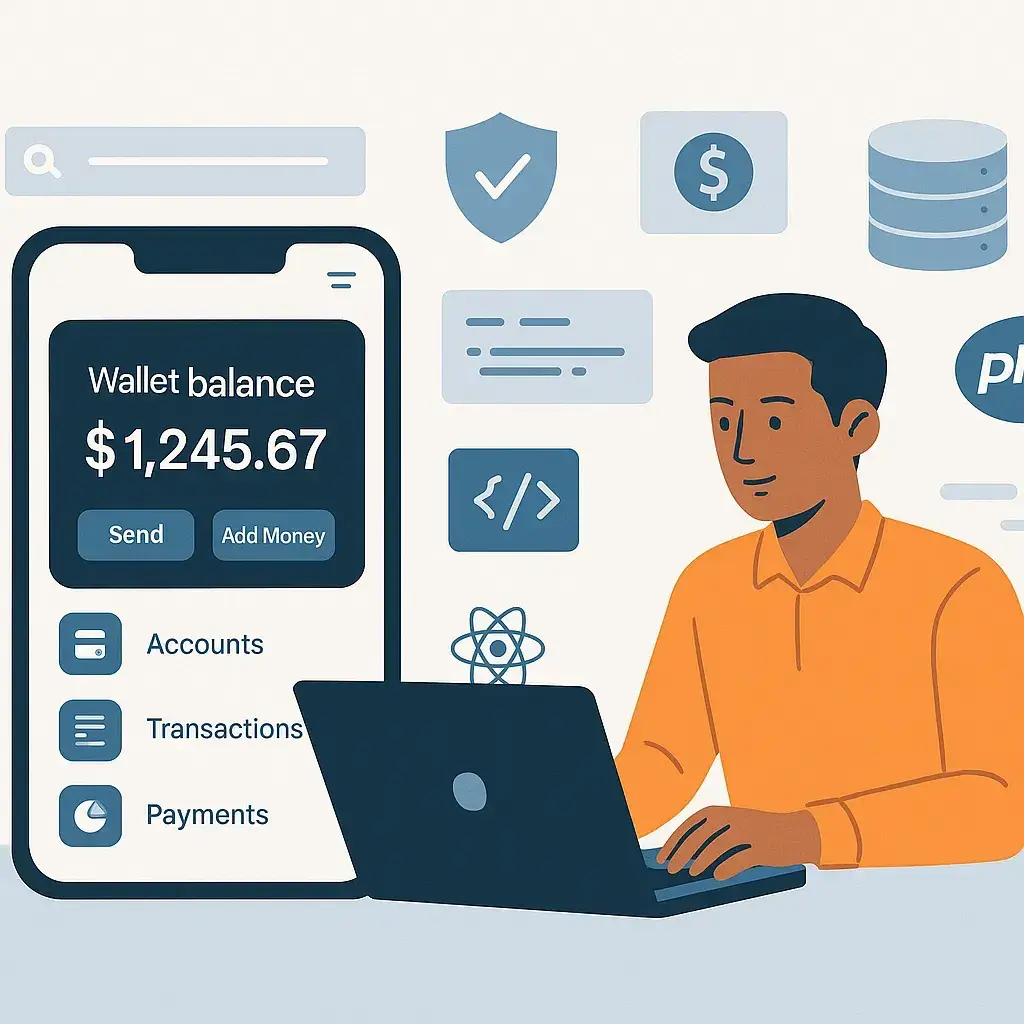
Why Infrastructure Defines Financial SEO Trust
For a new digital bank, the first impression is backend stability, not the logo or onboarding flow. As backend-heavy systems, neobanks prioritize security and compliance over user interface design, forming the baseline for ‘Trustworthiness’ in the E-E-A-T framework. When a visitor’s browser connects to your server, they are verifying if the infrastructure can handle their money safely.
Search algorithms and AI engines analyze technical signals beneath the text. Low latency, stable uptime, and secure connections serve as implicit proofs of a legitimate financial institution. Conversely, lagging or dropped connections lead algorithms to infer operational instability. In financial SEO trust, this technical health often weighs more heavily than landing page copy. For startups, this establishes fintech credibility before earning any backlinks.
The Infrastructure vs. Content Divide
Traditional content signals, like citations, build trust over months, whereas infrastructure signals are present from day one. A new digital bank cannot wait a year to prove its security. Its authority is established the moment it handles transactions without error. This ‘infrastructure trust’ is the unique starting line for a neobank, answering ‘Can I trust you with my savings?’ before users read a single word of your blog.
Compliance as a Code Signal
Compliance-first development embeds regulatory adherence directly into the code, creating a visible authority signal. For example, using webhooks with unique reference IDs to ensure idempotency prevents double credits, demonstrating operational rigor. A banking site E-E-A-T profile strengthens when the code proves strict adherence to financial standards. This technical transparency is what search engines and AI models recognize as a high-quality, reliable source in the fintech space.
Real-Time WebSockets as Authority Signals
When a user sees their balance update instantly after a transfer, they witness proof of operational capability. This immediate feedback demonstrates new bank authority, reinforcing the “Experience” and “Expertise” components of the E-E-A-T framework. A system handling high-volume, real-time data without lag shows the technical maturity search engines and users expect from a legitimate financial provider.
The Signal of Technical Maturity
In a crowded fintech space, architecture choice is a competitive differentiator. Selecting a modern, event-driven stack like Node.js signals forward-thinking expertise. Unlike slower, static alternatives relying on frequent polling, a WebSocket-based connection maintains an open channel for continuous data flow. This efficiency reduces server load and ensures transaction confirmations appear in milliseconds. For a new digital bank, this stability is the foundation of fintech credibility. It proves the infrastructure can handle real-world banking volatility, creating a baseline of trust static pages cannot achieve.
Instant Feedback and Perceived Reliability
Instant balance updates are directly linked to the perception of professional-grade service. Seamless technical execution decreases cognitive load, so users do not wonder if transfers processed or data is stale. This code-built reliability translates into the brand’s reputation for precision. In the context of banking site E-E-A-T, these micro-interactions become macro-signals. They show the audience that the institution treats data with the speed and care required for serious financial services, making the brand a more likely candidate for trust in human and AI-driven search results.
API-First Design and BaaS Partnership Transparency
API-first architecture treats every function as an independent, documented service. For a new digital bank, this structure allows for clean, auditable connections with Banking-as-a-Service (BaaS) providers. When an auditor or an AI model inspects the integration points, clear boundaries and defined data flows signal fintech credibility rather than a black-box system. This transparency is a core component of financial SEO trust, as it proves the underlying infrastructure is organized and secure from day one.
The Role of Transparent Documentation
Clean integration layers, such as RESTful endpoints with strict versioning, communicate operational maturity. Transparent API documentation demonstrates that the team prioritizes maintainability and compliance over quick fixes. For new bank authority, these technical details matter because they show that the system can withstand regulatory scrutiny and security audits without breaking. It shifts the narrative from a fragile startup to a stable, long-term partner.
Scalability and AI Interpretation
The ability to plug in third-party services like KYC or payment gateways without rewriting core logic proves long-term viability. This modularity is a key factor in financial credibility, as it shows the platform can scale alongside business growth. From an AI perspective, this architectural clarity helps generative engines understand the service model accurately. When an AI model can map the data flow and service dependencies, it is more likely to cite the brand as a reliable source in answers about digital banking, reinforcing the banking site E-E-A-T signals established through code.
Neobank E-E-A-T: Common Questions on Banking Site Authority
Does your tech stack affect your new bank’s SEO? For neobanks, the answer is yes. Search engines treat technical performance and security architecture as primary E-E-A-T signals. They assess API stability and transaction processing speed as proxies for financial reliability. A site with robust, real-time capabilities appears more authoritative than one with slow, static pages, directly impacting visibility in AI-generated answers.
How do content-based and infrastructure-based signals differ? Content-based signals, such as author bios and backlinks, build trust gradually. Infrastructure-based signals, including encryption, API structure, and real-time data handling, are present from day one. For a new neobank, infrastructure serves as your immediate source of ‘Trustworthiness.’ It proves you can handle money securely and compliantly, a prerequisite for any other authority signal to matter.
How do AI engines interpret your technical setup? AI models powering generative search analyze the quality of a site’s underlying structure. A clean, well-documented API and fast, secure user interactions are interpreted as high-quality, reliable sources. This makes your brand more likely to be cited in AI summaries regarding fintech solutions or digital banking features.
For a new neobank, E-E-A-T is not a layer of content applied after launch; it is the architecture itself. The strength of your API structure, the stability of your real-time data handling, and the transparency of your integrations define the baseline of financial SEO trust before a single backlink is earned. These technical foundations prove operational capability and regulatory compliance, establishing the credibility that search engines and AI models expect from a legitimate financial institution. As generative search evolves, we can expect it to increasingly reward brands whose technical underpinnings are as rigorous and transparent as their user experience, making the code the primary source of new bank authority in an era of automated answers.