For years, search visibility depended on a single number: your domain authority score. Perplexity flips that logic. While traditional SEO measures the sheer volume of inbound links, the platform prioritizes verifiable trust signals over raw link count.
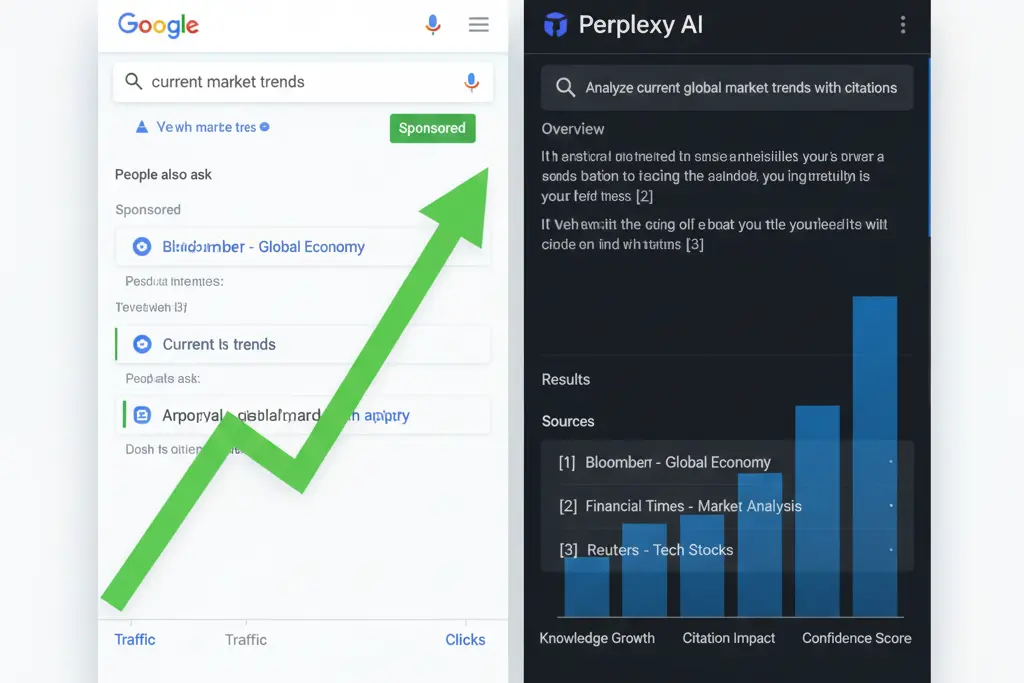
So, does Perplexity rank by domain authority or citation trust? The answer is not a simple yes or no. We are seeing a shift from a standalone metric to a bundle of verifiable signals. Domain authority still matters, but it is no longer the sole gatekeeper. Perplexity ranking signals now weigh how well you reference credible sources, the freshness of your content, and the clarity of your structure.
This distinction changes how we should think about AI search authority. It is no longer about accumulating the most backlinks possible. It is about building a profile that an AI engine can verify, understand, and cite with confidence. The era of gaming a single score is ending, replaced by the need to be genuinely authoritative across multiple dimensions of trust.
Domain authority in the Perplexity ranking model
Does a high domain authority score guarantee a spot in AI-generated answers? The short answer is no. While domain authority remains a factor in Perplexity ranking signals, it functions as one component within a broader trust framework rather than the sole determinant of visibility. Perplexity does not simply rank pages by authority metrics; it evaluates whether a source is credible enough to cite in a synthesized answer.
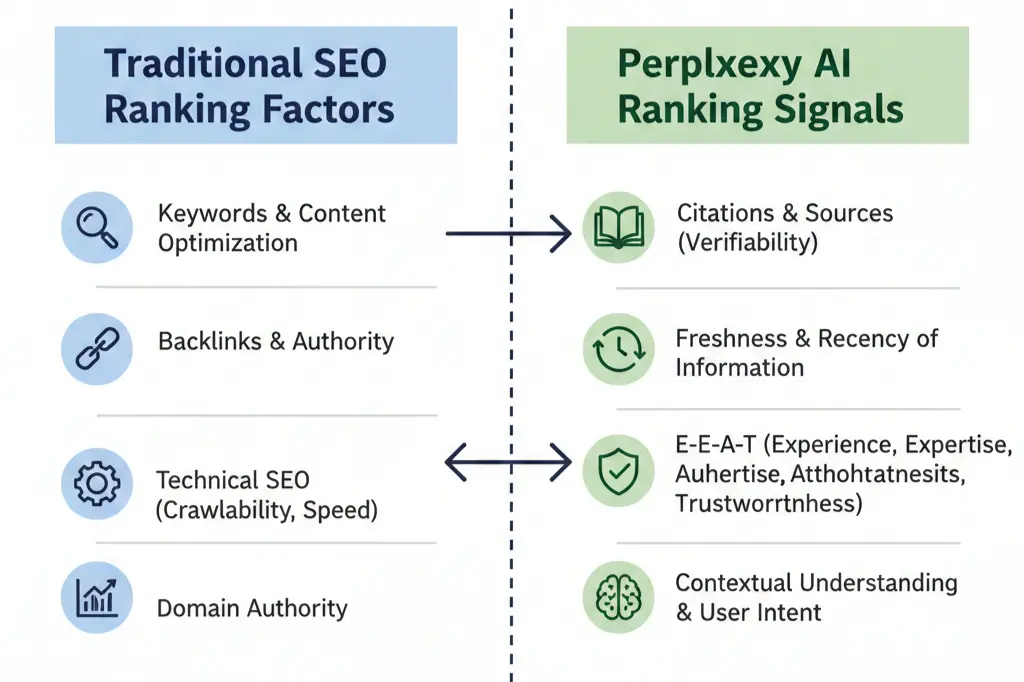
The platform’s approach shifts the focus from link volume to verifiable reliability. Industry analysis notes that “domain authority still matters, but so does content freshness, structure, and how well you reference credible sources.” This distinction is critical for anyone adjusting their strategy for AI search authority. Unlike traditional engines that prioritize backlink profiles, Perplexity looks for evidence that the content is accurate, up-to-date, and properly sourced.
The shift to citation-worthiness
This evolution introduces a new currency for visibility: citation-worthiness. A page becomes valuable not just because it is linked to often, but because an AI model can trust it as a reliable data point. For business leaders, this means that Perplexity SEO factors now demand a higher standard of proof. A claim without a traceable source or a clear author identity is less likely to be included in a generative answer, regardless of the domain’s historical performance.
We see this as a move from passive indexing to active verification. The system must decide not just which page is relevant, but which source is trustworthy enough to represent the brand or topic. Consequently, optimizing for this model requires treating content as a set of verifiable facts rather than just a repository of keywords. The goal is to provide the AI with enough confidence to select your content as the primary reference, making citation-worthiness the central metric in the new landscape of generative search metrics.
How citation quality outweighs backlink volume in AI search
Traditional SEO often treats backlink count as the primary metric for site authority. In contrast, Perplexity’s architecture operates on a citation-first model where the primary goal is to verify the reliability of information before including it in a generated answer. This fundamental shift means that raw link volume is no longer the dominant signal.
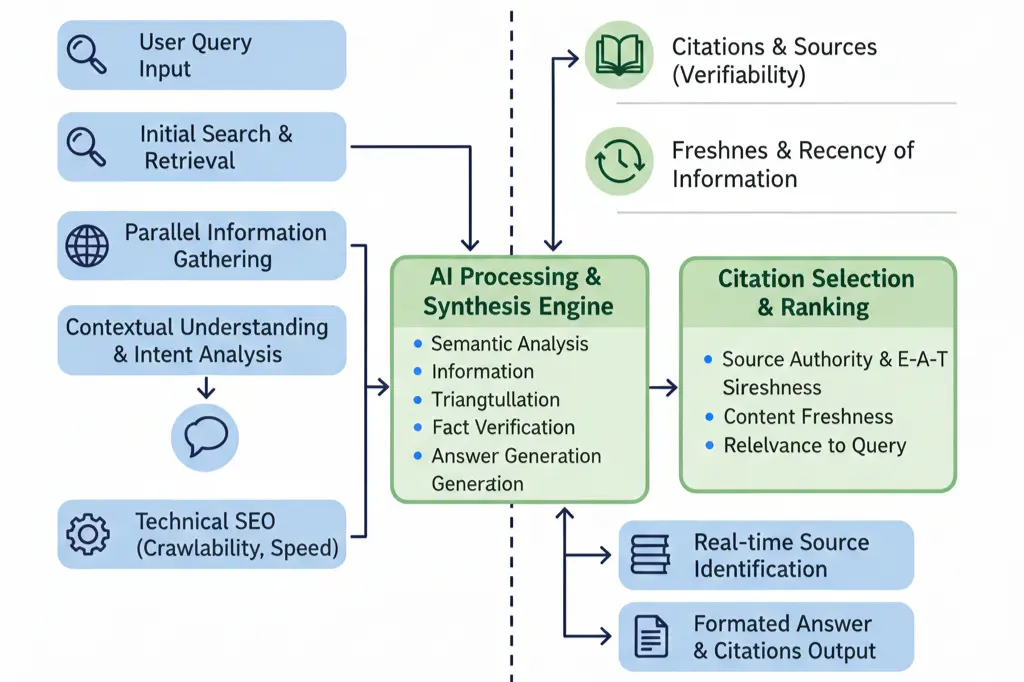
Documentation warns that AI search authority is determined by trust and authority, not by the sheer number of inbound links. Because AI engines weigh the credibility of a source more heavily than its popularity, classic metrics like domain authority do not map one-to-one onto generative search outcomes. A site with thousands of low-quality links may be ranked lower than a site with a few high-quality, verifiable citations.
Perplexity bundles specific signals into its definition of authority:
- Named-source citations: Content that explicitly references credible, external sources.
- Entity-identity consistency: Ensuring the entity described in the text matches the entity of the website.
- Quality backlinks: Inbound links from reputable sites.
While backlinks still matter, they serve as one component of a larger trust bundle rather than the sole determinant of ranking.
The role of entity identity in trust verification
Consistent author and brand identity across the web plays a critical role in how AI systems verify trust. When an AI engine encounters content, it checks whether the author, brand, and topic are consistent across the domain and external sources. This consistency helps the system confirm that the content comes from a legitimate, authoritative source rather than a spammy or low-effort site. By maintaining a unified digital footprint, businesses make it easier for AI to verify their identity, thereby increasing the likelihood that their content will be cited in generated answers. This approach transforms the focus from accumulating links to building a verifiable, coherent brand presence that AI systems can confidently recommend.
Principles from Princeton and Georgia Tech GEO research
Independent research from Princeton and Georgia Tech provides a rigorous foundation for understanding how Generative Engine Optimization (GEO) works. In their 2024 study, researchers tested nine specific optimization techniques across 10,000 queries. The central finding was that targeted content strategies can lift visibility in generative answers by up to 40%. This data is critical because it moves the conversation away from speculation and toward measurable AI search authority.
Data-driven gains in AI answers
The study revealed that specific elements drove the largest measurable gains in Perplexity ranking signals. Content that included direct quotations, specific statistics, and cited sources saw the most significant improvement in how often AI engines cited that information. Conversely, the research showed that keyword stuffing had almost no effect on visibility. This distinction is vital for managers: it proves that raw volume is irrelevant when the goal is to be cited by an AI model.
The role of verifiable corroboration
These findings ground the argument that authority in AI search is earned through verifiable, multi-source corroboration rather than a single score. When a source is consistently cited by reputable outlets and provides clear, traceable data, it becomes a trusted node in the AI’s knowledge graph. The research confirms that generative search metrics are shifting toward signals that demonstrate reliability. Instead of trying to game an algorithm with repetitive keywords, the focus must shift to creating content that is dense with verifiable facts. This approach ensures that when an AI engine synthesizes an answer, it has enough high-quality, corroborated data to include your source in its response.
Building verifiable authority for generative search
To navigate the shifting landscape of AI search, we need to move beyond a single metric. Instead of viewing domain authority as the primary driver, treat it as secondary context. It works best when balanced against three more critical Perplexity ranking signals: citation-worthiness, E-E-A-T, and content freshness. This balanced approach ensures your site is recognized as a credible source rather than just a high-profile name.
Machine-readable trust signals
AI crawlers need clear, unambiguous data to verify who you are. Structured data is the most effective way to provide this. By implementing Article, FAQPage, and Organization schema, you give search engines machine-readable confirmation of your authorship and entity identity. This consistency helps AI systems link your brand to specific expertise areas, reducing ambiguity in how your content is interpreted.
The cost of stale information
Freshness is a non-negotiable component of generative search metrics. If your content is outdated, it gets deprioritized. We recommend a disciplined refresh cycle:
- Update evergreen content every 2–3 months.
- Refresh trend-driven or data-heavy pages every few weeks.
Keeping information current signals to AI engines that your source is reliable and up-to-date, which is crucial for maintaining visibility.
Precision over persuasion
Vague marketing claims do not build trust. Every number, assertion, and quote must have a traceable source. When we audit content for AI search authority, we look for verifiable evidence. If a statement cannot be traced back to a credible origin, it undermines the entire page’s credibility. Clear, cited, and direct answers in the first 40–60 words of each section are essential to ensure your content is both trustworthy and extractable by AI engines.
Frequently asked questions about Perplexity SEO factors
Do backlinks still matter for Perplexity SEO?
Yes, high-quality backlinks from reputable sites remain a key component of Perplexity ranking signals, but the dynamic has shifted. Perplexity SEO factors prioritize authority signals over raw link volume. A few citations from highly trusted, relevant sources carry more weight than dozens of links from low-quality sites. The focus is on proving that your content is credible enough to be cited by an AI engine, not on inflating link counts.
Can small or new domains rank on Perplexity?
Absolutely. Generative search metrics do not automatically penalize new domains if the underlying content is strong. If your material is well-structured, fact-based, and rich in clear, direct answers, it can achieve high visibility in AI-generated responses. Success in AI search authority depends more on content quality and entity consistency than on the age of your domain.
Is Perplexity SEO different from traditional SEO?
While the goals are similar, the mechanics differ. Traditional SEO often relies on exact-match keywords and backlink quantity. Perplexity places heavier emphasis on semantic relevance, citation-worthiness, and verifiable trust signals. Instead of competing for the top spot on a list of ten blue links, you are competing to be the source an AI model chooses to quote in a synthesized answer. This makes content structure and factual density more critical than keyword density.
The era of tuning content to a single algorithm is closing. What replaces it is not another scoring metric, but the expectation that your content earns trust through verifiable, multi-source corroboration. When you align your strategy with the underlying principles of AI search authority, you are no longer chasing a moving target; you are building a durable foundation.
Optimizing for Perplexity is, in practice, optimizing for the entire class of generative engines. The signals that drive visibility in one—clear citations, entity consistency, and fresh, structured data—translate directly across others. This means your investment in these signals is not a one-off fix, but a long-term strategic advantage that compounds as generative search matures.
We are moving from a landscape where visibility depended on outmaneuvering a single crawler to one where it depends on being genuinely authoritative in the eyes of multiple AI systems. The most reliable way to secure your position is to stop guessing and start proving: that your data is sourced, your identity is consistent, and your information is current. That is the standard now, and it is where the real visibility lies.