On This Page· 5
Your AI assistant cites the technical manual incorrectly. It isn’t “hallucinating” in a mystical sense; it received data sliced in the wrong place. This is where document chunking becomes the quiet bottleneck. It determines whether the retrieval step finds the exact sentence you need or just a generic paragraph that misses the mark. When input data is fragmented, the output loses context, regardless of how sophisticated the underlying model is.

Where document chunking sits in the RAG workflow

Document chunking is an upstream data preparation step, not a model parameter. To understand its role, we can map the five-stage RAG process:
- Prompt: The user submits a query.
- Retrieval: The system searches for relevant data.
- Integration: Retrieved data is combined with the prompt.
- Generation: The LLM processes the augmented prompt.
- Output: The final response is delivered.
The four core components of this architecture are the knowledge base, the retriever, the integration layer, and the generator. The knowledge base holds your raw data—PDFs, guides, or audio files. Before entering the loop, this data is transformed into vectors through embedding. The retriever then uses these vectors to find semantically similar matches to the user’s query. This is where your chunking strategy matters most.
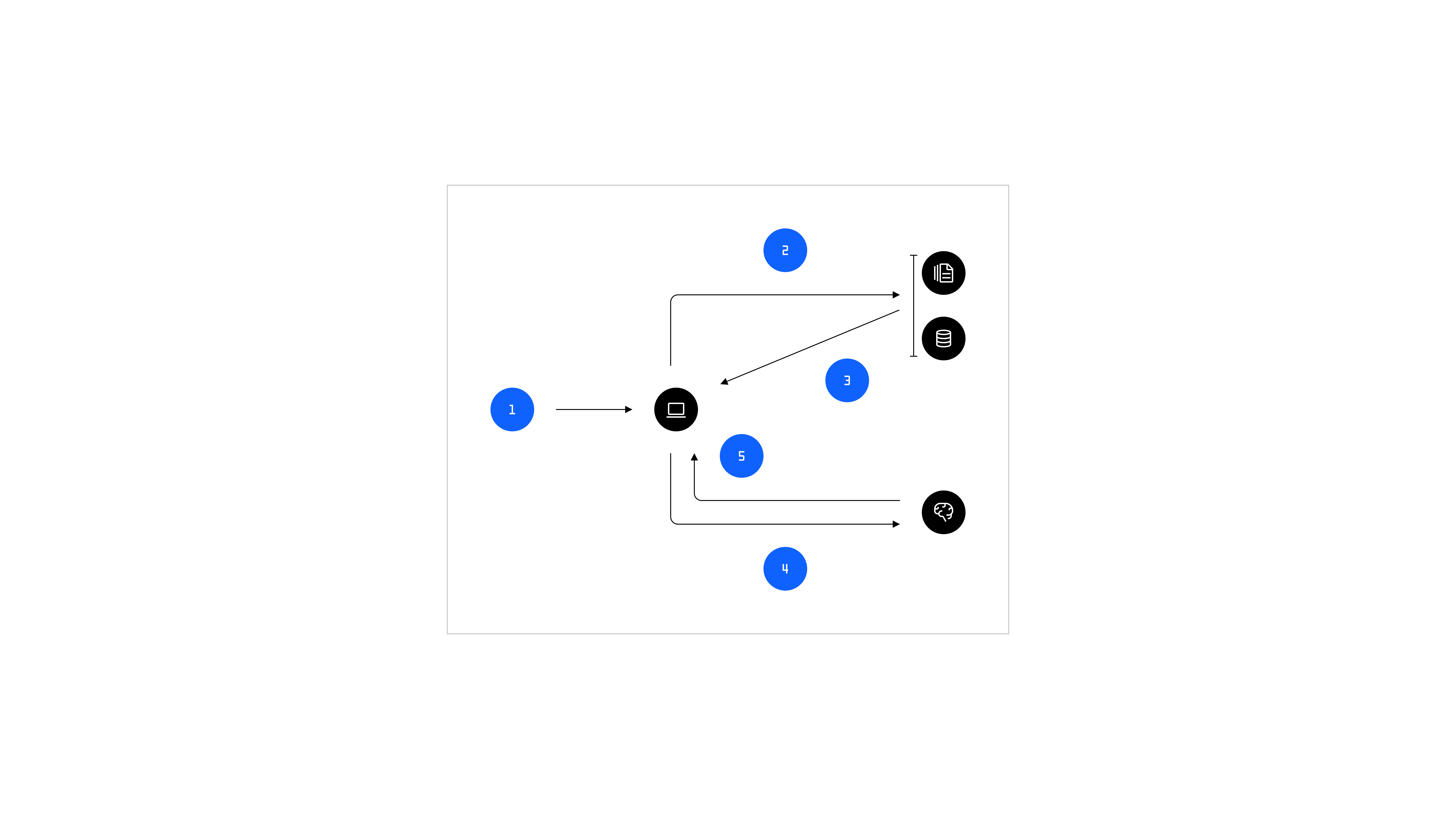
If chunks are too large or too small, the retriever fails to align the query with the correct context, regardless of the LLM’s capabilities. The goal of chunking is not just storage; it is ensuring the retriever finds accurate, coherent data points to augment the prompt effectively. A well-structured knowledge base allows the system to access external organizational data and specialized datasets without requiring costly model retraining.
The two failure modes of chunk size
Retrieval systems face a binary dilemma when slicing source material. The first failure mode occurs when chunks are too large. When a single unit contains multiple distinct topics, the resulting vector becomes semantically general. This generic representation fails to match specific user queries because it lacks the precision needed to distinguish between various concepts packed into that single entry. The retriever may find the chunk, but the content within it is too broad to provide accurate, targeted information.
The second failure mode arises when chunks are too small. Excessive fragmentation strips away the semantic context required for the LLM to understand relationships between concepts. A sentence isolated from its surrounding logic loses its meaning. The model receives fragments that are individually coherent but collectively incoherent, leading to answers that miss the nuance of the source material. This loss of context is a critical error in RAG optimization, as it breaks the chain of reasoning the model needs to generate a valid response.
A common misconception is that smaller is always better for embeddings. This view prioritizes specificity over coherency. However, coherency is just as critical. A chunk must contain enough context to stand alone as a meaningful unit while remaining narrow enough to be relevant to a specific query. Balancing these two factors is the core challenge of effective document chunking in any AI data preparation workflow.
How context windows dictate your chunking strategy
The LLM context window is the hard limit defining how much data the model can process without losing coherence. Exceeding this threshold leads to degraded output quality.
The causal chain of retrieval
In RAG optimization, the flow moves from raw documents to embeddings, then to vector databases. The retriever pulls the most relevant vectors, which feed directly into the model’s context window. Chunk size is the critical variable here: if chunks are too large, they dilute specific semantic signals, causing the retriever to match generic rather than precise queries. If chunks are too small, they fail to provide enough context for the model to understand relationships between concepts.
Balancing density and memory
This creates a trade-off between information density and the model’s ability to hold that information in active memory during generation. High-density chunks contain more data per token but risk overwhelming the limited context window, leading to incoherent responses. Low-density chunks ensure clarity but may lack the necessary depth for complex questions.
Effective AI data preparation requires finding the balance where chunks are specific enough for accurate retrieval yet broad enough to maintain semantic integrity. We must view chunking not as a static setting, but as a dynamic constraint that shapes the entire pipeline’s performance. If the retrieved context is fragmented or too general, the model cannot generate accurate answers, regardless of the prompt engineering.
Is it a prompt engineering problem or a data one?
When an AI assistant incorrectly cites a technical manual, the root cause is rarely the model’s logic but an upstream AI data preparation decision. Quote correctness depends on source data integrity and chunk granularity, not prompt engineering, as fixing the prompt cannot correct fundamental input structure errors.
Adjusting prompts cannot compensate for knowledge bases that return irrelevant or fragmented data. While prompts guide synthesis, they cannot retrieve context that was never properly stored. If vector embeddings are too broad or narrow, the retriever pulls wrong data points, and prompt refinement cannot restore missing context. This core principle states that output quality is strictly bounded by input quality.
For teams deploying these systems, focus must shift from model selection to data hygiene. Understanding how to structure documents for semantic alignment is now more valuable than choosing an LLM. The goal is ensuring the knowledge base is clean, coherent, and relevant to likely user queries. This is especially true for technical writing AI workflows, where precision in definitions and procedures is non-negotiable.
Frequently asked questions about RAG optimization
Does document chunking affect AI hallucinations? Yes. Accurate, coherent chunks reduce the model’s likelihood of inventing details by preventing fragmentation that causes fabricated specifics. Since RAG systems mitigate hallucination by anchoring responses in authoritative data, precise chunking is essential.
Can I use the same chunk size for all documents? No. Technical manuals often require finer granularities to isolate procedures, whereas marketing copy might benefit from broader semantic blocks. The goal is semantic alignment with user queries, not a uniform numerical standard, as a one-size-fits-all approach ignores structural differences inherent in diverse data types, which is a core challenge in RAG optimization.
How do I test if my chunks are working? Monitor citation accuracy and user feedback. If quotes appear fragmented or off-topic, your chunking strategy needs adjustment. Effective testing involves verifying that the retrieved context directly supports the generated answer, ensuring the AI data preparation stage has successfully structured the knowledge base for precise retrieval.
The accuracy of your assistant ultimately rests on the structure of your underlying data. No amount of prompt engineering can compensate for a knowledge base that returns fragmented or irrelevant information. If your RAG system is struggling with coherence or citation errors, the issue likely lies in your document chunking strategy rather than the model itself. Start by auditing how your current pipeline slices source material. Ask whether the resulting chunks preserve enough semantic context to answer specific queries. This is where effective RAG optimization begins. Treat this as a practical first step. A small change in data preparation can shift your results from generic guesses to grounded, verifiable answers. Better data structure leads directly to better output quality. Consider testing a different granularity before assuming the model needs further tuning. Your data is the real engine of your RAG system.