Scaling high-quality content output in the era of generative search is no longer about human endurance; it is about building a scalable AI-first production machine. While many brands struggle with the churn of generic, low-value AI outputs, the market leaders are winning by integrating AI directly into their core content operations.
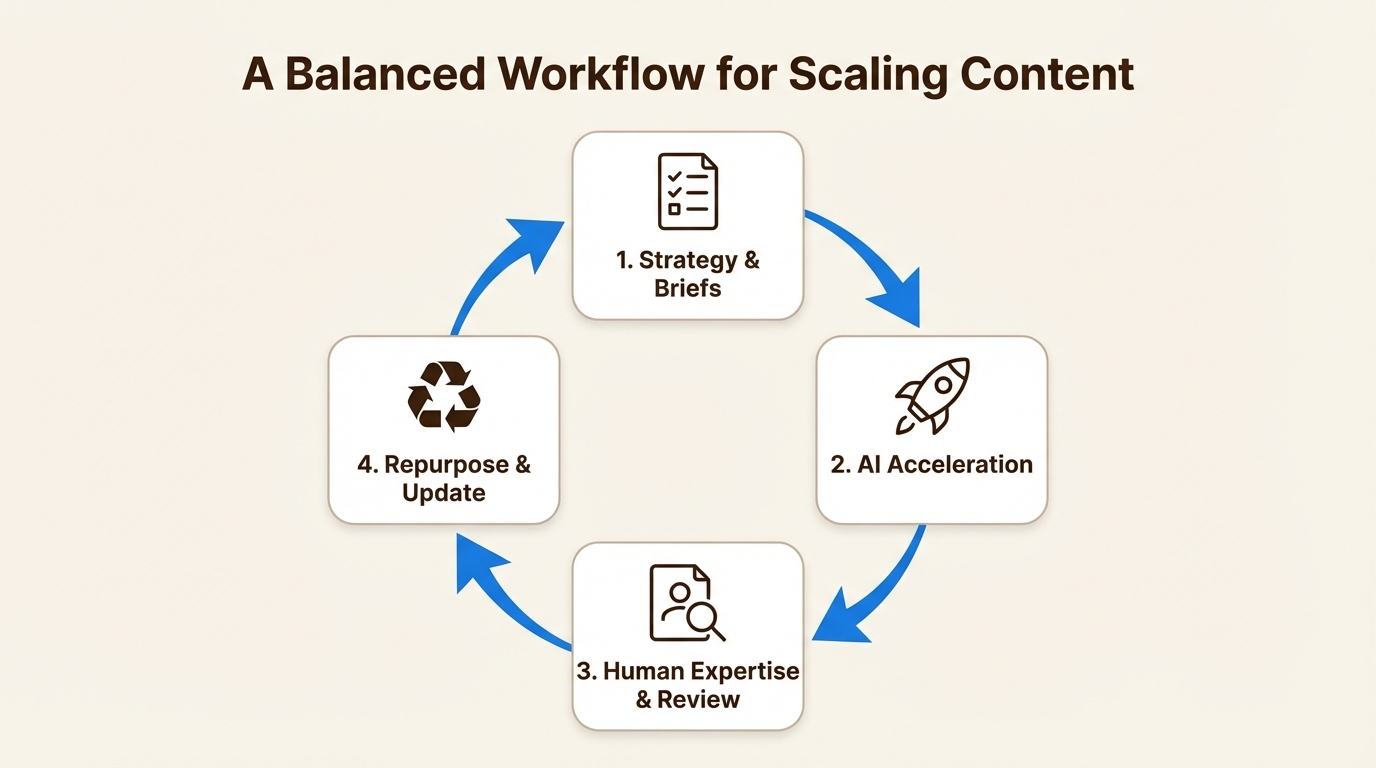
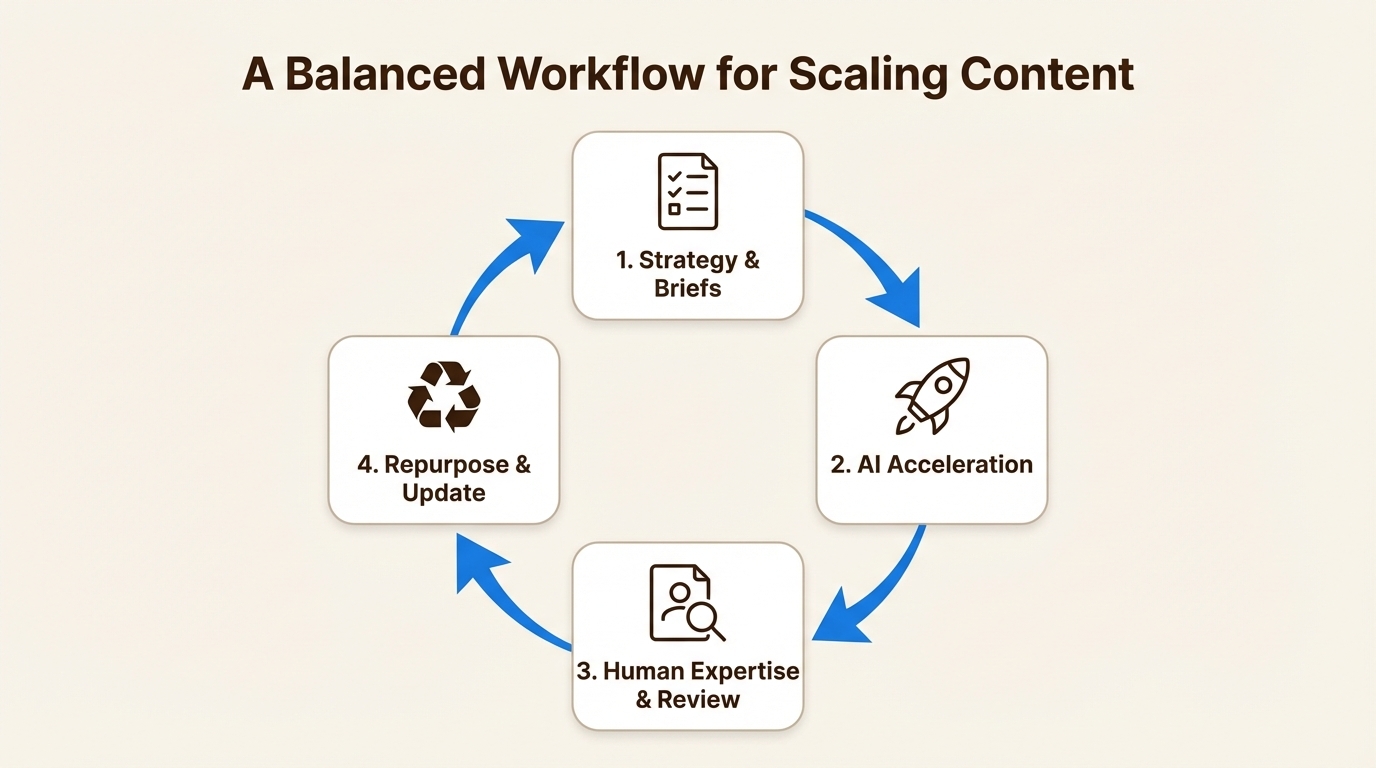
Beyond Prompting: The Systems Approach
True scaling content for AI search requires moving away from one-off, manual interactions with large language models. Treating AI as an automated writing engine necessitates a shift toward an engineering-led mindset. Your content pipeline should mirror software development cycles, where templates are versioned, tested, and systematically improved based on performance data rather than anecdotal preference.
Standardization via Modular Frameworks
To guarantee output consistency, you must standardize your input variables. Rather than relying on simple instructions, implement a framework that forces the AI to account for:
- Strategic Intent: Define the primary goal (e.g., brand authority vs. bottom-of-funnel conversion).
- Contextual Grounding: Supply the specific constraints, target persona, and required tone.
- Technical Guardrails: Set hard boundaries on terminology, formatting, and disallowed buzzwords to maintain your brand voice.
The Hybrid Model: AI Velocity meets Human Expertise
The most efficient teams operate on an 80/20 split. AI handles the heavy lifting—drafting structures, synthesizing data, and creating initial versions—while human subject matter experts (SMEs) focus on high-leverage verification and strategic nuance.
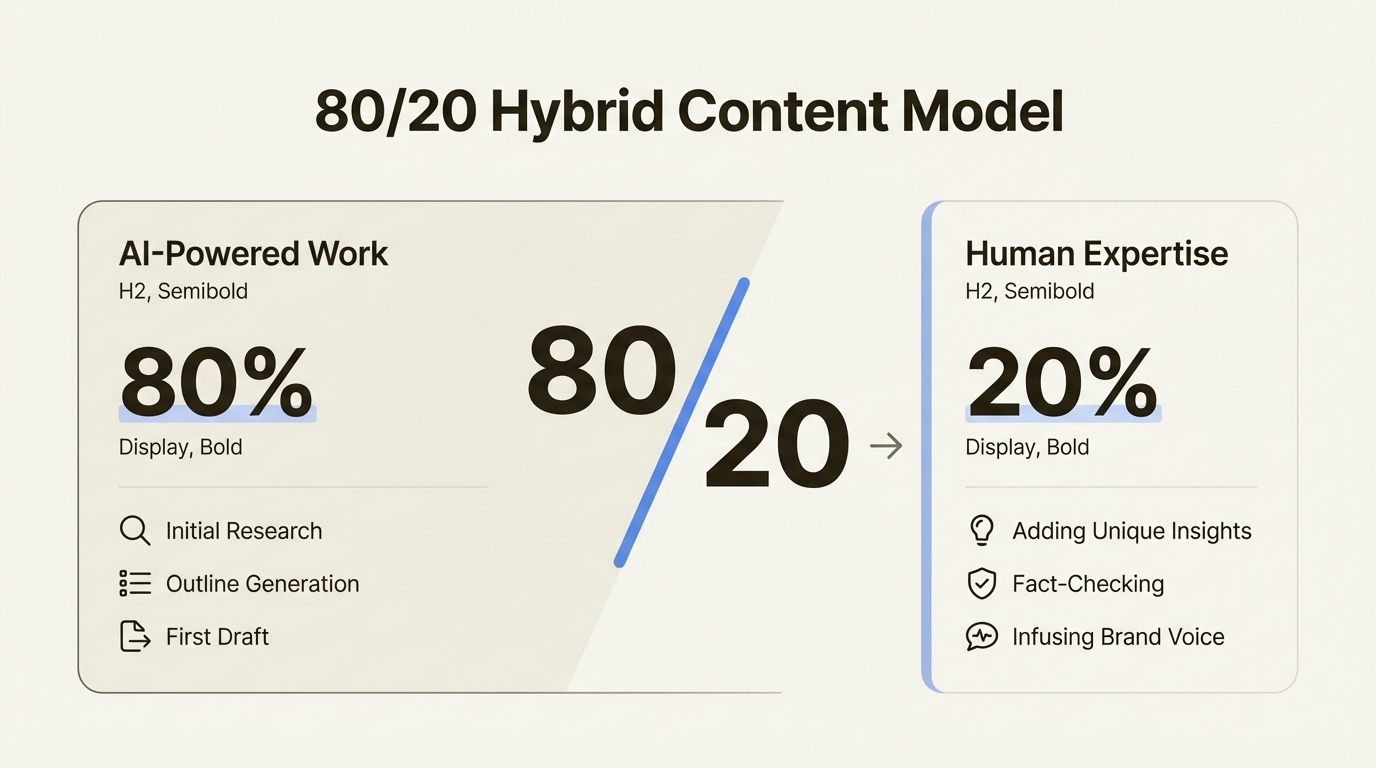
By automating the mundane aspects of content generation, your team can pivot to focusing on proprietary insights—the specific industry data or internal experiences that AI models cannot replicate. This is how you differentiate your brand in a sea of automated search results.
Operationalizing for Search Visibility
To remain competitive in AI search ecosystems, content must be accurate, modular, and discoverable. Implementing a “Source of Truth”—a centralized repository of your company’s internal documentation—is critical. When your AI models are grounded in your actual product specs, internal wikis, and verified knowledge bases, the resulting content moves from generic to authoritative.
Key Performance Indicators for Efficiency
Stop measuring vanity metrics like raw word count. Focus instead on:
- Time-to-First-Draft (TTFD): Reducing the bottleneck between ideation and a functional draft.
- Human-in-the-Loop Efficiency: Measuring the effort required by editors to refine AI drafts.
- Accuracy Benchmarking: Audit frequency to ensure your AI output aligns with your product’s evolving facts.