To compete in the era of generative search, businesses must shift from mass production to precision-engineered content operations. Winning visibility requires moving away from keyword-stuffed articles and toward content that serves as authoritative, structured data for AI models.
The ‘Mise en Place’ of Modern Content Planning
The core of effective production is the mise en place philosophy: having everything prepared, organized, and in its right place before the actual work begins. Without this discipline, AI automation often leads to content drift.
Before generating a single word, you must map every content topic to a specific business objective. An AI-ready content brief is your most important tool, acting as the blueprint that prevents hallucinations and ensures brand alignment. Your briefs should include:
- Primary intent: The specific question or problem the AI model must solve for the user.
- Contextual parameters: Necessary company data, proprietary insights, or specific brand positioning.
- Structural requirements: Defined heading hierarchies, target length, and desired output formats.
Building Your Human-in-the-Loop Content Engine
High-volume production that maintains quality is only possible through a Human-in-the-Loop (HITL) framework. You aren’t replacing expertise; you are augmenting it.
- Content Strategist: Owns the content roadmap, ensuring every brief aligns with long-term business goals.
- Subject Matter Experts (SMEs): Provide the proprietary insights and validation that distinguish your brand from derivative AI outputs.
- AI-Editors: Focus on rapid iteration, using platform tools to refine drafts and ensure they meet structural requirements for generative search.
This team structure demands repeatable workflows. By standardizing how these roles collaborate—such as a mandatory SME review stage before any asset is published—you ensure topical authority while leveraging AI to maximize velocity.
Systematizing Distribution: The Repurposing Multiplier
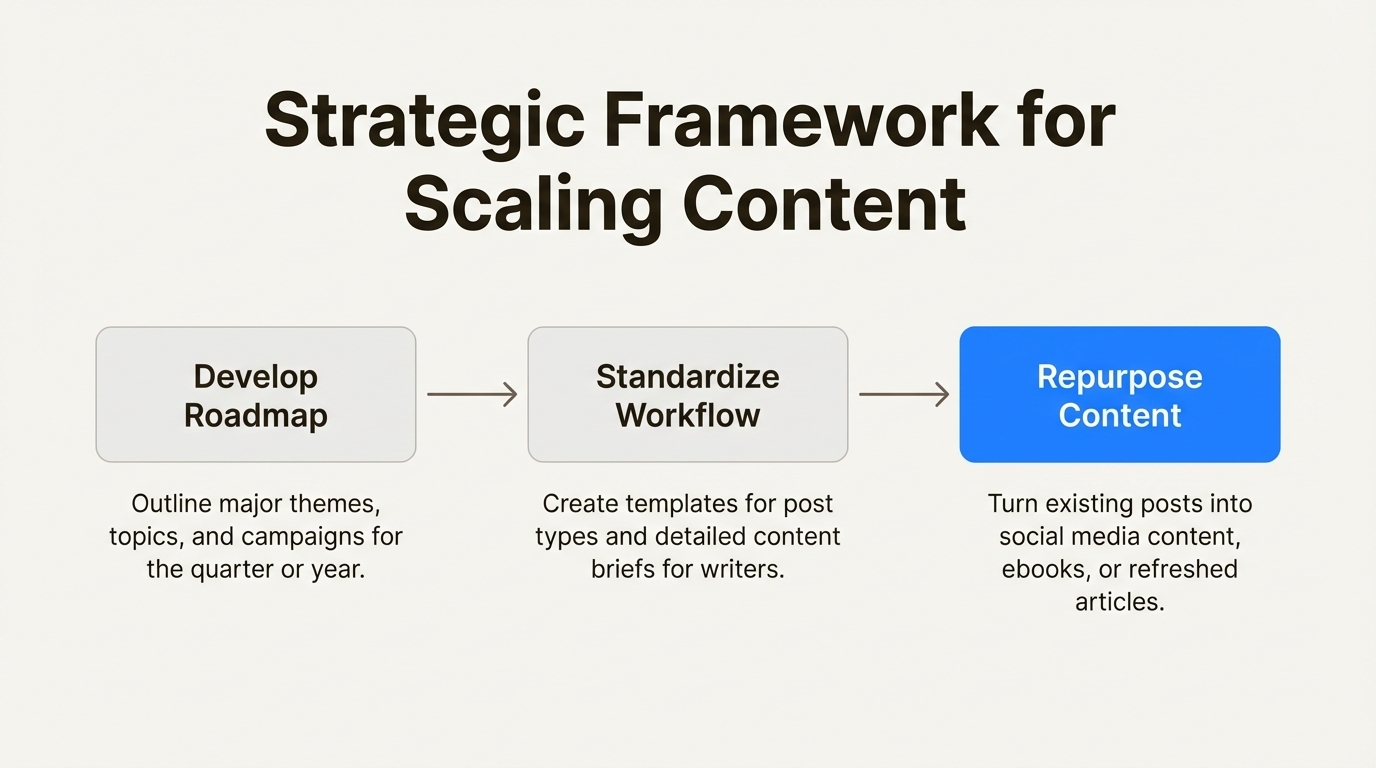
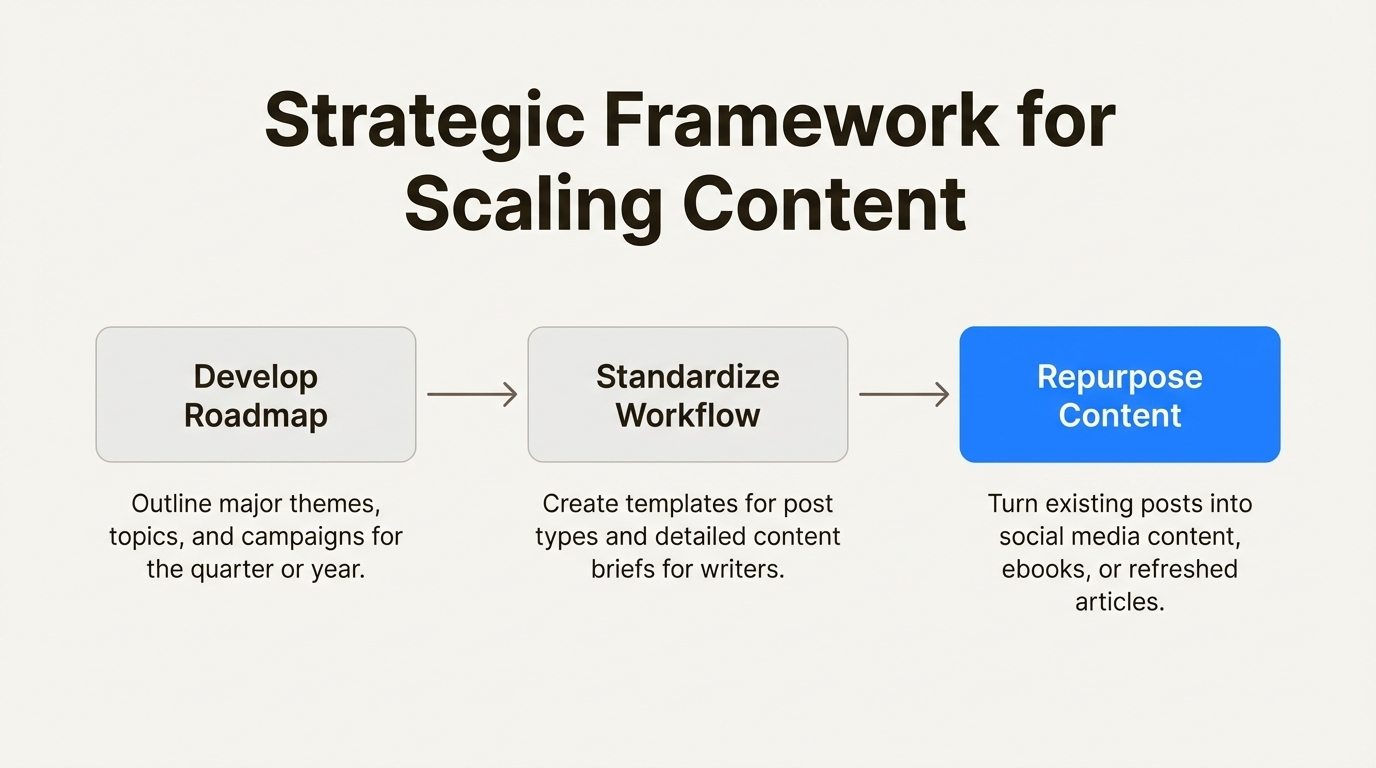
Scaling content volume does not mean writing more from scratch. Instead, use a repurposing multiplier to extract maximum value from every core asset.
Transform long-form whitepapers or pillar articles into micro-content for social platforms, newsletters, and quick-answer snippets. Use automation to ensure brand voice consistency during this transformation. When you apply this systematic approach, you scale your total footprint across multiple channels without needing to increase your raw writing output proportionally.
Measuring Impact in the Generative Search Era
Move beyond traditional traffic metrics to monitor visibility-based KPIs that actually matter in the generative search landscape.
- Answer Engine Placement: Track how often your content is cited or displayed within AI-driven search results.
- Brand Mention Frequency: Measure your brand’s visibility in context-specific queries.
- Feedback Loops: Use performance data to refine your briefs, constantly updating your ‘mise en place’ to better match changing user intent.
Troubleshooting Common Scaling Roadblocks
Even with perfect systems, challenges will arise. Address these early to maintain production momentum:
- Quality Control: If volume compromises quality, introduce a tiered approval process that mandates human review for high-impact topics.
- Voice Drift: Centralize your brand guidelines within your AI tool’s system prompt or knowledge base to ensure consistency across all automated outputs.
- Automation Overreach: Recognize that high-stakes, highly technical, or deeply nuanced content often requires more human intervention, while routine updates benefit from higher automation ratios.