As your business expands, you inevitably encounter a paradox: increasing revenue often brings increasing complexity. While growth is the ultimate goal for most enterprises, it frequently introduces the challenge of managing rising expenditures that scale in tandem with your sales. Understanding variable cost is a fundamental step in maintaining control over your financial health during these periods of development. Without a clear grasp of these dynamic expenses, it is easy to mistake top-line growth for bottom-line success, only to find that profit margins are shrinking despite higher sales volumes.

Variable cost is the sum of all labor and material expenses directly tied to the production of a single unit of your product or service. Unlike costs that remain static regardless of output, these expenses fluctuate based on your production volume. Mastering this concept allows you to identify your profit margins more accurately and make data-informed decisions about your pricing strategy. It also provides the necessary insight to forecast cash flow requirements, ensuring that you have the liquidity needed to fund increased production runs without disrupting operations.
The Components of Variable Cost
To effectively monitor your expenses, you must distinguish between the cost per unit and the total volume of production. The cost per unit encompasses the raw materials, packaging, and labor hours required to create one finished item. If you sell a product for $300 and it costs $200 to produce, that $200 represents your variable cost per unit, leaving $100 toward your overhead and profit. This per-unit metric is critical because it isolates the direct economic impact of creating each individual item, stripping away the noise of fixed overheads like rent or administrative salaries.
Understanding Cost Per Unit vs. Total Volume
Your total variable cost is then the product of that per-unit cost and the total number of units produced. If you produce 100 units at a $200 variable cost per unit, your total variable cost is $20,000. Recognizing this relationship is essential, as it highlights that higher sales volume requires a proportional increase in resource allocation. This linear relationship means that every additional unit sold adds a predictable amount to your total expenses. For business owners, this predictability is a double-edged sword: it simplifies forecasting, but it also means that a drop in sales volume provides an immediate, albeit painful, reduction in cash outflow.
The Impact of Production Scaling on Margins
When you are scaling a business, the behavior of variable costs becomes the primary driver of your operational leverage. If your variable cost per unit remains constant while your sales price increases, your contribution margin expands, allowing you to cover fixed costs more quickly. However, if supply chain disruptions or labor shortages cause your variable cost per unit to rise, your total variable costs will accelerate faster than your revenue. This scenario can lead to a situation where selling more units actually results in lower total profits. Therefore, monitoring the stability of your per-unit costs is just as important as monitoring your sales volume.
Calculating Total and Average Variable Costs
Calculating these figures provides a clearer picture of your operational efficiency. Total variable cost is determined by the formula: Total Variable Costs = Cost Per Unit x Total Number of Units. This calculation reveals the direct financial requirement for your current level of output. By regularly updating this calculation, you can track how your production efficiency changes over time. For example, if you produce the same number of units but your total variable costs decrease, it indicates that you have successfully negotiated better material rates or improved labor efficiency.
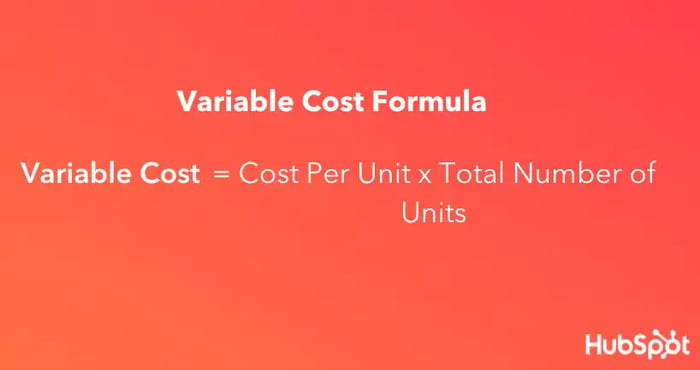
The variable cost formula demonstrates how expenses scale with production volume.
Average variable cost, by contrast, is calculated by dividing your total variable cost by the total number of units produced. This metric is particularly useful when you have multiple products with varying production costs. For instance, if you produce 10 units of Product A at $60 each and 15 units of Product B at $30 each, your average variable cost provides a single, manageable figure of $42 per unit to help you assess overall performance across your inventory. This average serves as a benchmark for evaluating new product lines or assessing whether existing products are still viable contributors to your bottom line.
Why Average Variable Cost Matters for Decision Making
The average variable cost is not just a mathematical average; it is a strategic tool for product mix optimization. If a specific product line has an average variable cost that is significantly higher than your company-wide average, it may be dragging down your overall profitability. Conversely, products with lower average variable costs can subsidize the fixed costs of the business, allowing you to take calculated risks on more expensive, niche offerings. By segmenting your average variable cost by product line, you gain the visibility needed to make informed decisions about which items to promote, which to discount, and which to potentially discontinue.
Practical Steps for Accurate Calculation
To ensure your calculations are accurate, you must maintain rigorous records of all variable inputs. This includes tracking not just the purchase price of raw materials, but also any associated costs such as freight-in charges, import duties, or quality control labor that varies with volume. A common mistake is to treat all labor as fixed; however, if you hire temporary staff or pay overtime specifically to meet production demands, those wages are variable. Regularly auditing your cost classifications ensures that your variable cost formula reflects the true economic reality of your operations.
Distinguishing Between Variable and Fixed Costs
Financial clarity requires you to separate variable costs from fixed costs. Fixed costs are expenditures that remain consistent regardless of your production levels. Examples include rent, website hosting, property taxes, and long-term loan repayments. While these costs may change over time due to external factors, they do not fluctuate based on the number of items you manufacture or sell. This distinction is crucial because fixed costs represent the baseline financial commitment of your business, while variable costs represent the incremental cost of growth.
| Cost Type | Definition | Common Examples |
|---|---|---|
| Variable | Costs that change with production volume | Materials, shipping, sales commissions |
| Fixed | Costs that remain constant regardless of output | Rent, utilities, insurance, base salaries |
Understanding the interplay between these two categories is vital for calculating your break-even point. Your break-even point is the specific level of sales where your total revenue exactly covers both your fixed and variable costs, resulting in zero net profit or loss. Knowing this threshold allows you to determine how many units you must sell before you begin generating a sustainable return on your investment. This metric is a key indicator of business risk; a high break-even point suggests that the business is vulnerable to downturns in sales, while a lower break-even point indicates greater financial resilience.
The Role of Contribution Margin
The difference between your sales price and your variable cost per unit is known as the contribution margin. This margin is the amount of money from each sale that contributes to covering your fixed costs. Once your fixed costs are fully covered, every additional unit sold contributes directly to your net profit. Therefore, a business with a high contribution margin can reach its break-even point with fewer sales, making it less risky in uncertain markets. Analyzing your contribution margin alongside your variable costs provides a more nuanced view of profitability than looking at gross profit alone.
Fixed Costs Can Become Variable in the Long Run
It is important to note that the classification of costs is not always permanent. In the short term, costs like factory rent are fixed. However, in the long term, if you expand production significantly, you may need to lease additional space, turning that previously fixed cost into a step-variable cost. Recognizing these shifts helps in long-term strategic planning. As you scale, you must anticipate when fixed costs will need to increase to support higher variable output, ensuring that your pricing strategy accounts for these future capital expenditures.
Analyzing the Variable Cost Ratio
The variable cost ratio is a powerful tool for pinpointing the relationship between your variable expenses and your net sales. By calculating this ratio, you can determine what percentage of your revenue is consumed by the direct costs of production. To calculate the variable cost ratio, divide your total variable costs by your net sales, then multiply by 100. This ratio provides a standardized metric that allows you to compare efficiency across different time periods, product lines, or even against industry benchmarks.
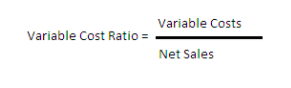
This formula allows you to see how much of every dollar earned is absorbed by production costs.
If you sell an item for $200 and it costs $20 to produce, your variable cost ratio is 10%. This indicates that 90% of the sale price remains to cover fixed costs and contribute to your profit margin. A lower ratio generally suggests higher efficiency, whereas a high or increasing ratio may indicate that your production costs are outpacing your pricing, potentially narrowing your profit margins as you scale. Monitoring this ratio over time can alert you to inefficiencies before they become critical financial issues.
Interpreting Changes in the Variable Cost Ratio
A sudden spike in your variable cost ratio warrants immediate investigation. It could signal that you are paying more for raw materials, that you are experiencing higher waste rates, or that your sales mix has shifted toward lower-margin products. Conversely, a decreasing ratio might indicate economies of scale, where bulk purchasing discounts or improved manufacturing processes are lowering your per-unit costs. By correlating changes in the variable cost ratio with operational data, you can identify the root causes of financial fluctuations and take corrective action.
Using the Ratio for Pricing Strategy
The variable cost ratio is also instrumental in setting competitive prices. If your ratio is higher than that of your competitors, you may struggle to compete on price without sacrificing profitability. In such cases, you might need to differentiate your product through branding, quality, or service rather than competing solely on cost. Alternatively, if your ratio is lower, you have the flexibility to offer competitive pricing while maintaining healthy margins. Understanding where you stand in the market relative to your variable cost structure empowers you to make strategic pricing decisions that drive growth.
Identifying Common Variable Costs
Identifying which expenses qualify as variable costs is essential for accurate bookkeeping. While every business model is unique, certain expenses consistently scale with activity. Recognizing these allows you to forecast your financial needs more effectively as your customer base grows. Misclassifying costs can lead to significant errors in financial analysis, so it is important to regularly review your expense categories to ensure they align with their actual behavior.
Common variable costs include:
- Physical materials: The raw components or ingredients necessary to assemble your final product.
- Sales commissions: Payments made to team members based on the volume of products sold.
- Credit card fees: Transaction costs that rise in direct proportion to your total sales volume.
- Shipping and packaging: Logistics expenses that are incurred on a per-unit basis.
- Online payment processing: Fees charged by service providers per transaction.
- Staff wages: Additional labor hours or temporary staff needed to meet increased production demands.
Hidden Variable Costs to Watch For
Beyond the obvious costs like materials and shipping, there are often hidden variable costs that can erode profitability. For example, customer support costs may vary with sales volume if you offer personalized onboarding or technical support. Returns and refunds are also variable costs, as they are directly tied to the number of units sold. Ignoring these hidden variables can lead to an underestimation of your true variable cost per unit, resulting in overly optimistic profit projections.
Strategies for Managing Variable Costs
Managing variable costs is not merely about restriction; it is about ensuring that your business model remains resilient as you achieve your growth objectives. One strategy is to negotiate better terms with suppliers for bulk purchases, which can lower your material costs. Another is to optimize your logistics network to reduce shipping expenses. Additionally, automating certain aspects of production or sales can help control labor and processing costs. By actively managing these variables, you can improve your contribution margin and enhance your overall financial health.
The Importance of Regular Review
As you assess your own operations, consider how your current costs behave during periods of high demand. If an expense increases specifically because you produced or sold more items, it should be categorized as a variable cost. By tracking these figures, you gain the ability to adjust your strategies, optimize your supply chain, and maintain a competitive edge in your market. Regularly reviewing your cost structure ensures that your financial models remain accurate and that you are making decisions based on the most up-to-date information. This proactive approach to cost management is essential for sustaining long-term growth and profitability.


