You ask Perplexity a specific question, and the answer returns with a clean list of five bullet points. You scroll back to the source and realize those exact lines come from a single niche forum post, not the comprehensive industry whitepaper sitting right next to it. This pattern of Perplexity citations often catches content creators off guard. Why does the engine select that specific, fragmented chunk of data over a dense, authoritative paragraph?

The answer lies in the concept of extractable chunks. When an AI engine processes a query, it does not read your entire page to understand the narrative. Instead, it runs a retrieval pipeline that scans for self-contained, verifiable statements. These discrete units are easier for the model to isolate and verify without hallucinating context. The retrieval-augmented generation (RAG) pipeline prioritizes clarity over comprehensiveness. A well-structured list provides clear boundaries for each fact, reducing the cognitive load on the extraction process. A long-form paragraph, by contrast, requires the model to synthesize and summarize information before it can use it. That extra step introduces room for error.
For the goal of AI search visibility, structure beats word count. The engine is not looking for the best story; it is looking for the easiest source of truth. This shift changes how we think about content architecture. It is no longer just about ranking for keywords. It is about formatting data so an LLM answer format can pull it directly, without interpretation. The following sections break down how this mechanics works and what formats actually trigger those citations.
The mechanics behind AI search visibility
To understand why certain content earns Perplexity citations, you must first look at the engine’s core process: retrieval-augmented generation (RAG). RAG is a method where a large language model (LLM) retrieves external data to verify specific claims before generating a response. Instead of relying solely on its training data, the AI pulls from a live knowledge base to ensure accuracy. This dual-step process means that visibility in AI search is not just about being found; it is about being verifiable.
This distinction creates two separate types of signals that content must satisfy. Retrieval signals determine if your page is accessible and relevant. These include domain authority, freshness, and proper robots.txt configurations for the PerplexityBot. Generation signals, however, determine if the AI can effectively use the content once it has found it. This is where content structure and clarity become critical. A page might rank well for retrieval but fail at generation if the LLM cannot parse the text into a coherent, low-risk answer.
Perplexity prioritizes pages where the AI can easily isolate and verify a specific claim. This preference exists to reduce the risk of hallucination. The model is designed to avoid generating unsupported statements. Therefore, it seeks out content that offers discrete, standalone facts rather than dense, interconnected narratives.
Consider the analogy of a researcher looking for a quote versus a summary. If you need to support a claim in a report, a standalone quote is far easier to verify than a paragraph that requires synthesis. A summary demands that the reader or the LLM interpret context, connect ideas, and extract the core meaning—a process where errors are more likely to occur. A verifiable quote, however, is self-contained. It has clear boundaries and requires no interpretation. For an AI engine, a bullet point or a table cell is that quote. It is a data point that can be lifted into an answer with high confidence, making it the preferred format for driving AI search visibility.
Formats that trigger Perplexity citations
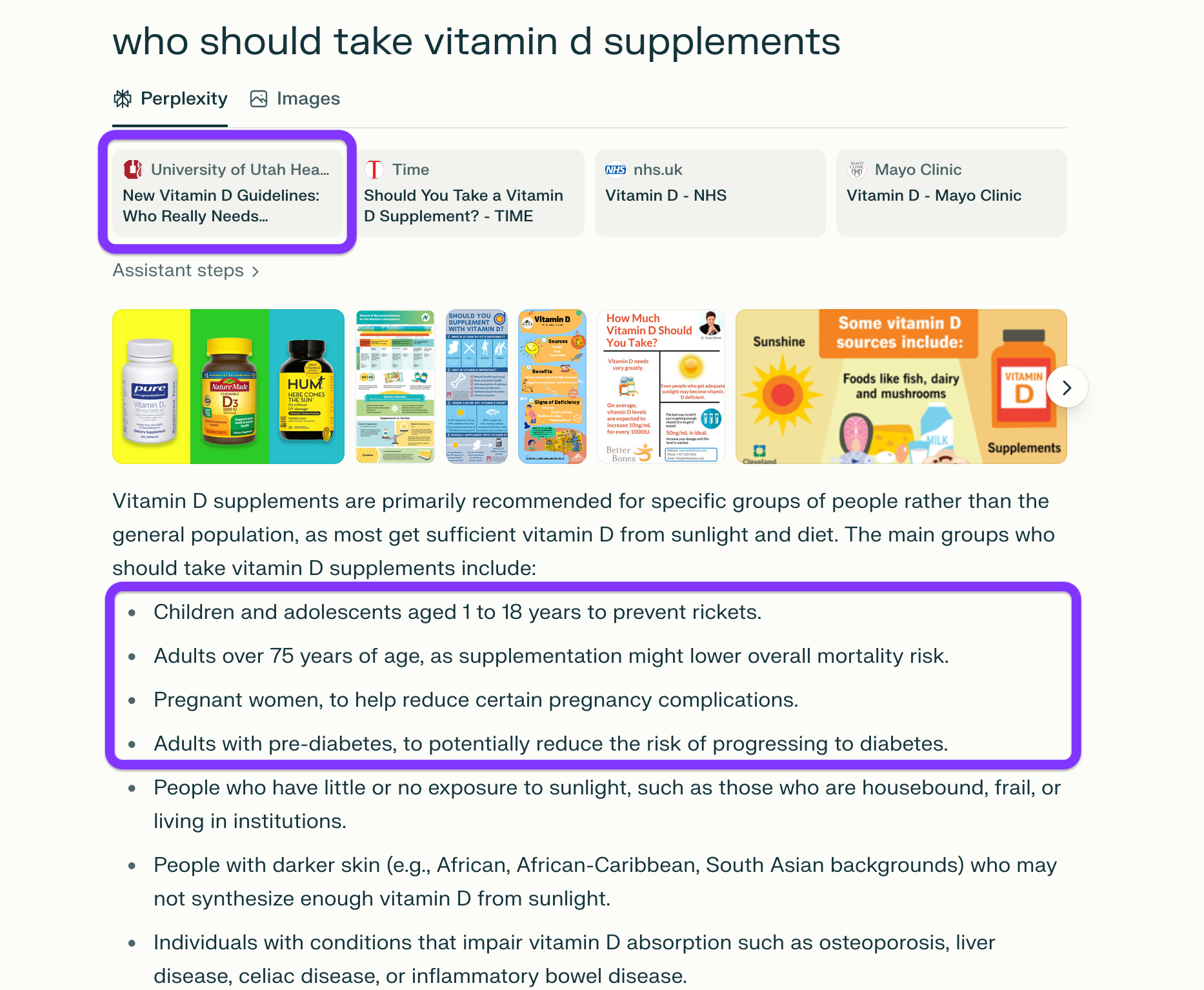
Three specific structures consistently drive AI search visibility: TL;DR sections, tables, and bullet-point lists. These formats align with the LLM answer format that large language models prefer because they allow for direct extraction without heavy synthesis. The data shows that Perplexity prioritizes these listicles over traditional blog posts due to content structure and clarity, making them critical for securing citations.
Consider the University of Utah example. When Perplexity cited this source, it did not summarize the dense paragraphs surrounding the data. Instead, the engine lifted the bullet points verbatim into its final answer. This behavior confirms that the system favors discrete, standalone items over connected narrative text. The citation was accurate because the source material was already formatted in a way that required no interpretation by the model.
Why discrete chunks win
These formats work because they are self-contained. A single bullet point or a table cell has clear boundaries; it stands alone as a complete thought. This reduces the cognitive load on the extraction process. The LLM does not need to determine where a sentence ends or what context belongs to a specific fact. It simply grabs the chunk that matches the query.
Long-form prose presents a different challenge. Continuous narrative requires the model to synthesize and summarize. It must identify the key idea, strip away supporting context, and rephrase it for the answer. This is a complex step where errors are more likely to occur. If the model fails to synthesize correctly, it may hallucinate or drop crucial nuance. By providing pre-segmented information, you eliminate this risk and ensure the output is a faithful reflection of your data.
Practical application
To maximize your chances of being cited, break down complex topics into discrete, answerable chunks. Avoid long, winding explanations. Instead, structure your content so that each point addresses a specific sub-question or fact. Use tables for comparative data and bullet lists for procedural steps or key statistics. This approach transforms your page from a story into a source of truth, offering the exact data points an AI engine needs to build a reliable response.
Applying structured data and LLM answer format
To make content truly machine-readable, we need to look beyond human-facing text. Schema markup serves as the underlying architecture that tells search engines exactly what a page contains. By implementing structured data types like FAQ, HowTo, or Product, you provide a standardized map. This allows the engine to parse your intent without guessing. When an LLM scans a page, clear JSON-LD signals reduce the ambiguity of what each section represents. This is a foundational step for any strategy focused on structured data.
A specific tactic that works well is adopting a Q&A heading structure. Instead of broad topics, use a question heading followed immediately by a 1-2 sentence answer. This creates a self-contained, extractable chunk. The LLM can isolate this snippet and verify it against the query without processing surrounding narrative. This direct mapping is the core of an effective LLM answer format.
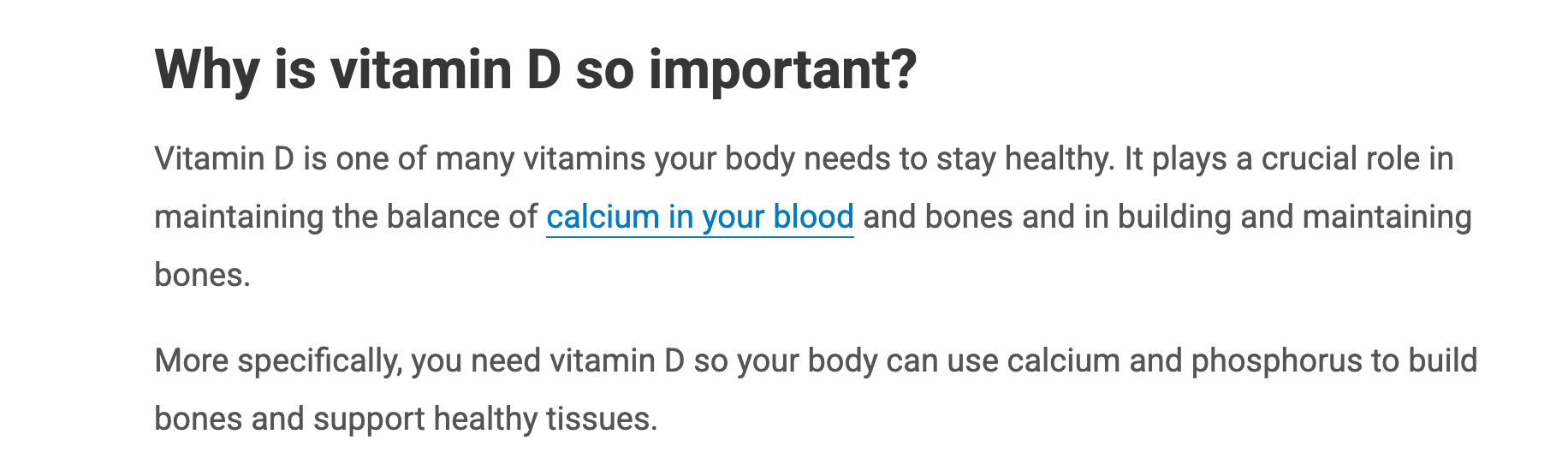
Consider a page about nutrition. A heading like “Importance of Vitamin D” is too vague for quick extraction. Rewriting it to “Why is vitamin D important?” and immediately answering with “It supports calcium absorption and bone health” gives the engine a precise, verifiable claim. This specific, concise pair is far easier to cite in a generated response. Such clarity directly influences AI search visibility by lowering the risk of misinterpretation during the retrieval phase. Structure is no longer just about user experience; it is a direct signal for whether your content gets picked up by an AI engine. By designing your pages as discrete, answerable units, you align your content architecture with the way these systems actually work.
Common questions about Perplexity citations
How Perplexity indexes content
Perplexity does not rely on Google’s search index. Instead, it uses its own index, direct crawling, and partner sources like Bing to retrieve data. This distinction means that ranking highly for traditional search engines does not automatically guarantee Perplexity citations. If your content is not in Bing’s index or accessible via direct crawling, the AI engine may simply miss it, regardless of your traditional SEO performance.
Building a sustainable presence
Publishing directly on Perplexity Pages offers a fast tactical win, often generating visibility within days. However, this approach acts as a “parasite” strategy that lacks long-term durability. For sustainable AI search visibility, you must own your content structure on your own domain. The platform may shift its data sources, but a well-structured, authoritative site on your own property remains under your control.
Maintaining data freshness
Freshness is a critical signal for AI search visibility. Studies show that content visibility begins to decay within just 2–3 days if pages remain static. To combat this, regular updates and IndexNow pushes are essential. These mechanisms notify search engines and AI crawlers that your data is current, ensuring your content remains a viable candidate for citation in the LLM generation process.
Structure is a generation signal, not just a layout choice. As the line between narrative content and machine-readable data blurs in the AI era, clarity often beats length. Is your next article a story, or a source of truth?