Scaling entity SEO often stalls not because of poor strategy, but because the workflow breaks under maintenance pressure. For many teams, the real question between WordLift and InLinks isn’t about which tool has superior AI, but whether your operations can absorb the manual curation demands of one versus the automated throughput of the other. This article breaks down the specific architectural choices that drive results in AI semantic search: how you build your knowledge graph and how you deploy schema. We’ll look at the operational reality of each approach to help you decide which structure fits your team’s capacity and long-term goals.

How WordLift and InLinks build your knowledge graph
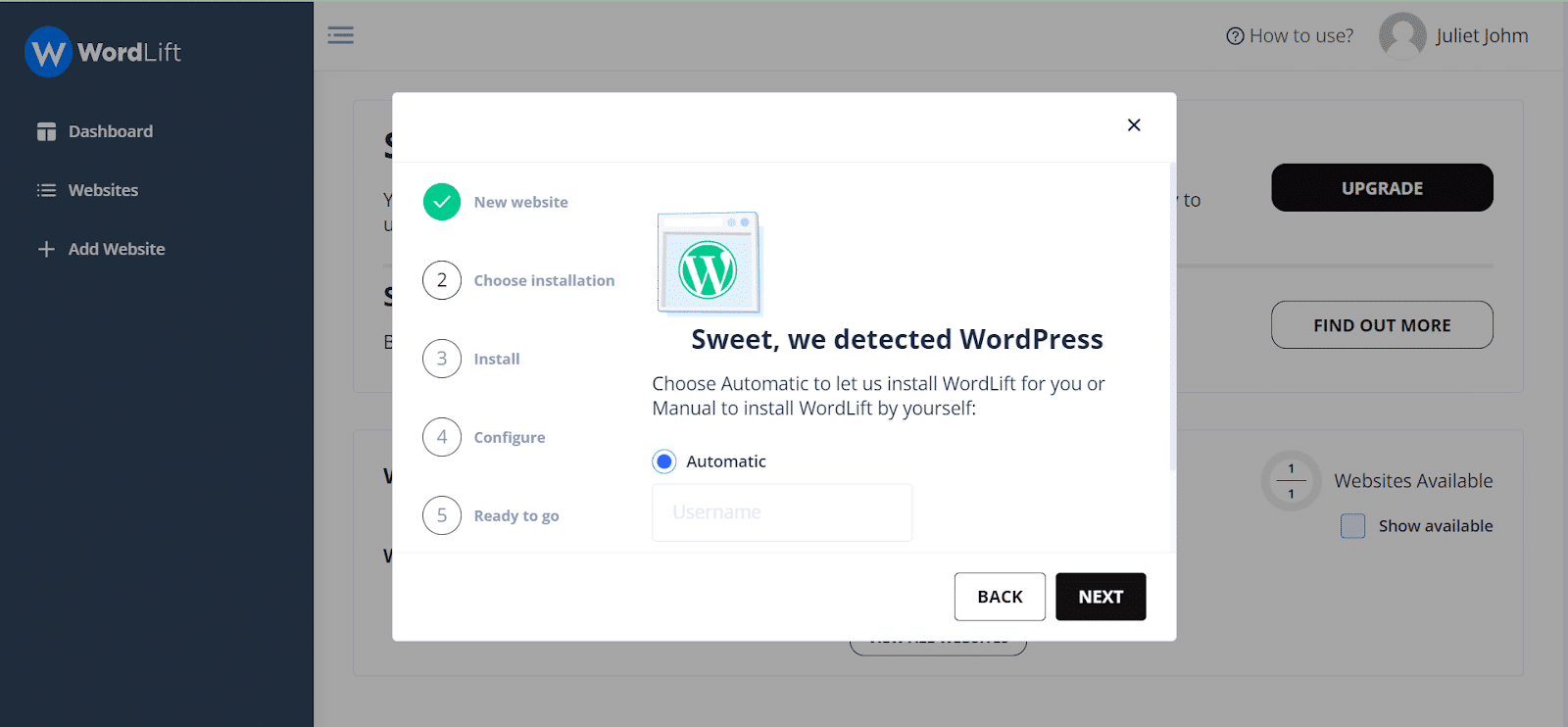
The core architectural difference between WordLift and InLinks lies in how they construct and expose your knowledge graph. WordLift relies on open-source tools to publish your data as Linked Open Data, adhering to principles established for the semantic web. In contrast, InLinks employs a proprietary semantic analyzer to extract entities and build the graph internally. This distinction defines the trade-off between total control and automated throughput.
WordLift requires you to define a custom entity vocabulary directly within your CMS. This grants granular control over your site’s ontology, allowing you to map exactly how concepts relate. However, this precision demands constant editorial curation. If you work with highly specific industry terminology, this manual effort ensures no nuance is lost, but it scales linearly with your content volume.
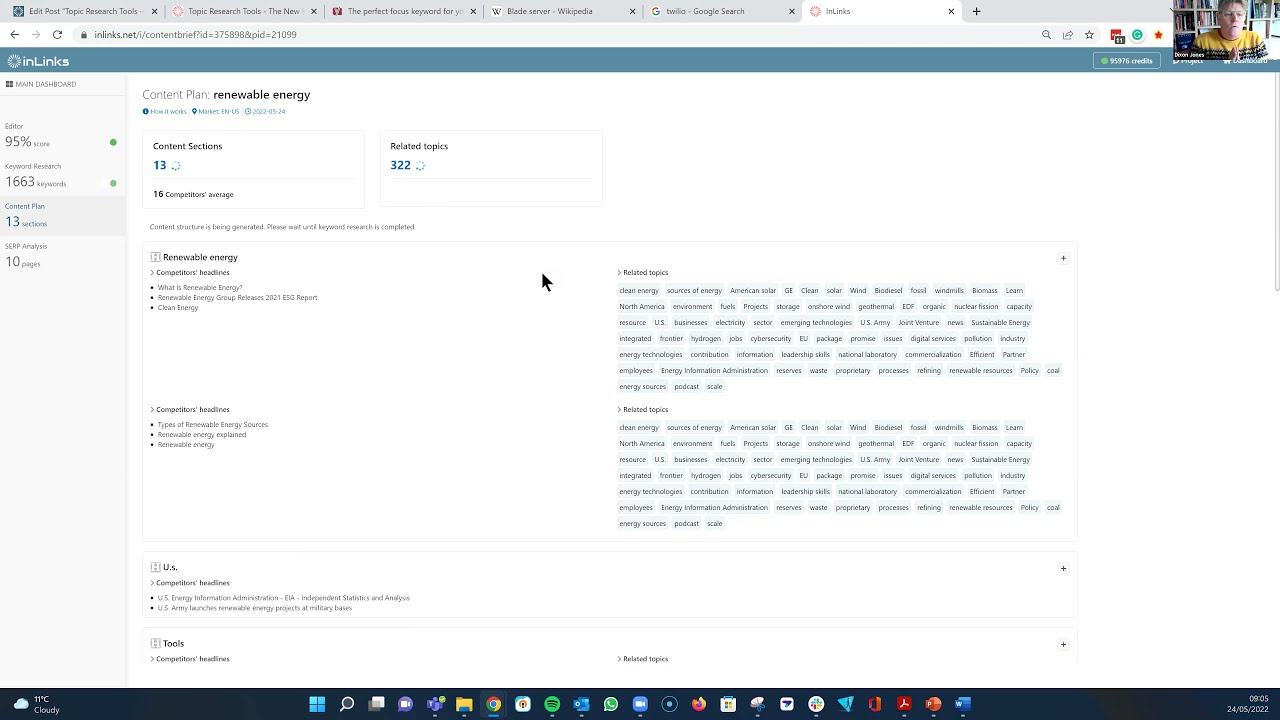
InLinks, by comparison, automates entity extraction from your existing content and search results. This method is faster to scale and reduces the manual burden on your team. The trade-off is granularity. Standard NLP models may miss niche or hyper-specific terms that a human editor would catch, making InLinks better suited for broader topics rather than highly specialized technical data.
Why architecture matters for AI engines
This underlying architecture is critical for entity SEO in the context of AI semantic search. When AI engines process your site, they are not just matching keywords; they are attempting to understand the relationships between your specific concepts. If your graph is built on a rigid, manually curated vocabulary (WordLift), the AI receives a precise map of your intent. If it is built on automated extraction (InLinks), the AI receives a broader, potentially less specific interpretation. The choice determines whether AI systems see your content as a network of distinct, defined concepts or as a collection of semantically related text. For teams prioritizing accurate concept relationships over speed, the manual route offers a clearer signal for machine understanding.
Manual schema selection vs. automatic entity detection
The workflow for entity SEO changes significantly depending on your preferred level of automation. WordLift requires a hands-on approach where you open each page in the WordPress admin interface. You must manually select the primary entity from a provided list and update the page to generate the necessary WebPage schema. This process ensures precise control over what is published but adds a repetitive administrative task to your content calendar.
InLinks offers a different approach to content enrichment by automating this entire step. The platform’s proprietary semantic analyzer detects the main entity in your text automatically. It then generates both WebPage and FAQ schema without requiring any manual intervention per page. This reduces the maintenance burden, allowing your team to focus on writing rather than technical tagging.
Deployment and schema specifics
Deployment methods also differ between the two platforms. InLinks pushes the generated schema live using a single line of JavaScript placed in your header or footer. This method is independent of your CMS’s update cycle. WordLift, conversely, relies on the standard WordPress update process to publish its data.
One specific utility of InLinks is its automatic FAQ schema generation. The system triggers this markup when it detects questions in two or more heading tags on a page. This feature is particularly useful for health or government websites, where Google currently restricts the display of FAQ rich results to these specific verticals.
DBpedia vs. Wikipedia: the disambiguation trade-off
In entity SEO, the “Same As” attribute serves a critical function. It tells search engines that your local entity is identical to a globally recognized concept in an authoritative database. This link helps AI systems disambiguate your specific business terms from generic ones, reducing confusion in AI semantic search results.
The database split
The primary architectural difference here is which external authority each tool references. WordLift uses the Same As attribute to connect your content directly to DBpedia. InLinks, conversely, links its entities to Wikipedia. While both are major knowledge bases, they are not identical. DBpedia is a structured extraction from Wikipedia’s infoboxes, whereas Wikipedia remains the broader, human-edited encyclopedia. This split means the “ground truth” for your disambiguation depends entirely on which database your chosen platform queries.
Why niche industries must check
For generalist brands, this distinction is rarely an issue. However, for niche industries or specific service-based entities, the gap between these two databases can be significant. If your specific brand, service, or technical term exists in Wikipedia but lacks a corresponding entry in DBpedia, WordLift cannot generate a valid disambiguation link for you. Conversely, if a concept is well-structured in DBpedia but missing from Wikipedia, InLinks will miss it. In these cases, the disambiguation signal is either weaker or missing entirely, potentially limiting the effectiveness of your knowledge graph for specialized topics.
Practical verification step
Before committing to a platform, run a quick audit of your top-priority entities. Search for your core concepts in both DBpedia and Wikipedia. If you find that your most critical terms are present in only one of these databases, consider which tool aligns with that source. This simple check ensures that the automated entity SEO benefits you receive are based on actual, verifiable data rather than a structural mismatch in your external links.
Entity SEO for AI semantic search: Which workflow scales?
Choosing between these tools comes down to three core architectural decisions: how the graph is built, how schema is generated, and how it is deployed. WordLift constructs its knowledge graph using open-source principles and requires manual schema selection per page, whereas InLinks relies on a proprietary analyzer to auto-detect entities and generates schema automatically. Finally, while WordLift integrates through the standard CMS update process, InLinks pushes its markup live via a single line of JavaScript code.
The risk of cancellation
Before committing, consider what happens when you cancel. If a user cancels their InLinks subscription, the links and schema created by the tool disappear from the website immediately. The platform does provide CSV exports of internal links and schema for manual implementation, but the automated structure is removed. In contrast, if a user deactivates the WordLift plugin, all metadata and entities disappear from the dashboard; unpublishing linked data requires assistance from the support team. This difference in offboarding can impact your long-term data integrity if you plan to switch platforms or manage your own semantic layer later.
The scaling decision
For a content-heavy site with a large team capable of manual curation, WordLift’s custom vocabulary and open-data approach offer better long-term control over your ontology. However, for a high-volume or agency environment where speed and automation are critical, InLinks’ standalone platform and one-line deployment are more efficient. The right choice depends on whether your team prioritizes granular editorial control or automated throughput.
The future of entity data
As AI engines become more sophisticated, the need for accurate, well-disambiguated entity data becomes more critical than the specific tool used to create it. The “Same As” link remains the key to helping AI systems understand your content’s context, regardless of whether you use WordLift or InLinks to build the underlying graph.
Frequently asked questions about WordLift and InLinks
What is the main difference between WordLift and InLinks?
The core distinction lies in their deployment architecture and workflow automation. WordLift is a WordPress plugin that relies on open-source tools to help you build a custom entity vocabulary, requiring manual schema selection for each page. InLinks operates as a standalone platform that uses a proprietary analyzer to auto-detect entities and generate schema automatically. While WordLift demands active curation within the CMS, InLinks deploys its knowledge graph via a single line of code, offering a more passive maintenance model for high-volume sites.
Does WordLift work without WordPress?
WordLift primarily functions as a WordPress plugin, which means its core workflow is deeply integrated into that environment. However, it does offer a JavaScript library that allows it to work with other content management systems. In practice, though, the most streamlined experience is found within WordPress, as the tool is designed to leverage the WP ecosystem for metadata publishing and entity linking. If you are on a non-WordPress stack, the setup becomes less intuitive and may require additional technical intervention to achieve the same level of integration.
How does InLinks handle FAQ schema?
InLinks automatically generates FAQ schema when its system detects questions in two or more heading tags on a page. This feature is particularly useful for health or government sites, where Google now limits the display of FAQ rich results to those specific verticals. The automation removes the need to manually write and update FAQ markup, ensuring that your content remains compliant with current search guidelines as the system processes new headings.
Which tool uses DBpedia for disambiguation?
WordLift uses the “Same As” attribute to link entities to DBpedia, a curated subset of Wikipedia data. InLinks uses the same attribute but links to Wikipedia instead. This difference matters for niche industries where specific entities may exist in one database but not the other. Before committing to either tool for entity SEO, it is worth verifying that your most critical terms are present in the specific database the platform uses to ensure effective disambiguation.
The decision between these two platforms comes down to a single operational question: does your team have the bandwidth for manual curation, or do you need automated scale? WordLift offers granular control over your ontology but demands continuous editorial effort, while InLinks prioritizes speed through its standalone, auto-detection workflow.
Ultimately, the specific tool you choose is less critical than the underlying quality of your entity data. As AI engines become more sophisticated in semantic search, the accuracy of your “Same As” links and disambiguation signals will determine your visibility in generated answers. Focus on building a precise, well-disambiguated knowledge graph, and the platform will simply become the delivery mechanism for that structural integrity.