Video marketing has moved from a nice-to-have experimental tactic to a core component of modern brand strategy. The data from 2025 is clear: visual storytelling wins. Brands that communicate their value proposition through video build stronger relationships with prospects and customers. We see this shift not just in engagement metrics, but in the fundamental way companies allocate budget and resources. Visual content allows for brevity, relatability, and emotional connection in a way static text cannot match.
To help you navigate this landscape, we have gathered new statistics from HubSpot, Wyzowl, Wistia, and other industry studies. These insights highlight how marketers are using video, what is performing well, and where the industry is heading. Whether you are looking to start your video marketing journey or refine an existing strategy, these numbers provide a factual baseline for decision-making.

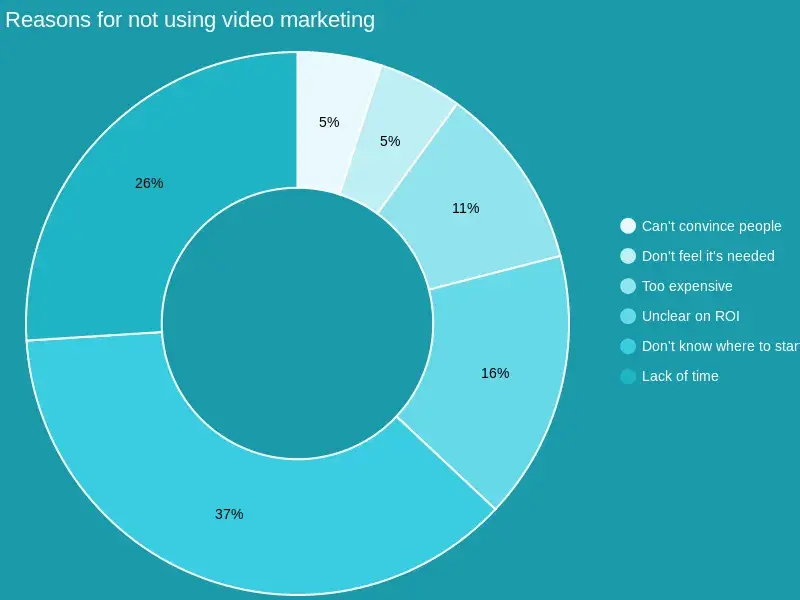
The adoption rate is no longer a question of “if” but “how.” With 89% of businesses already using video marketing, the competitive pressure is on. The remaining 11% often cite a lack of knowledge on where to start as their primary barrier. This suggests that the barrier to entry is not necessarily technical skill or budget, but strategic clarity. Understanding the current state of the market helps you position your brand effectively.
General Video Marketing Statistics
The foundation of any successful video strategy is adoption and integration. The latest data shows that video is not a siloed activity but a central pillar of marketing efforts. Ninety-three percent of marketers consider video a crucial part of their overall strategy. This high level of integration means that ignoring video is becoming increasingly difficult for brands that want to remain visible.
Investment is following adoption. Thirteen point nine nine percent of marketers say they will invest more in video marketing channels in 2025. This is a significant portion of the marketing community redirecting resources toward video. The reasons for not adopting video are shifting. While 37% of non-users say they don’t know where to start, other common reasons include lack of time (26%), uncertainty about ROI (16%), and perceived high costs (11%).
The good news is that the gap is closing. Sixty-five percent of marketers who currently don’t use video marketing say they plan to start in 2025. This surge in future adoption means that now is the time to establish your presence. The platforms where these videos live are also evolving. Company websites remain the number one platform for sharing video, used by 67% of businesses. Email follows at 49%, then LinkedIn (43%), YouTube (40%), Instagram (22%), Facebook (19%), TikTok (7%), and X (4%).
Production methods are diversifying. Fifty-five percent of marketers produce videos in-house, while 14% outsource to vendors, and 31% use a hybrid approach. This mix allows brands to balance control, cost, and quality. Budgets vary widely, ranging from under $999 to over $20,000 monthly. This wide range indicates that effective video marketing is accessible at different scales.
The Role of AI in Video Production
Artificial intelligence is reshaping how video content is created and optimized. Fifty-one percent of marketers say they have used AI tools for video creation or editing. This near-even split shows that AI is no longer a novelty but a practical tool for efficiency. The most common use case is auto-generating captions and transcripts, used by 59% of those leveraging AI for video.
The demand for accessibility and silent viewing is driving this trend. Two hundred fifty-four percent more businesses captioned their videos in 2023 than in 2022. This massive increase highlights the importance of making content accessible to a wider audience, including those who watch without sound. AI tools help automate this process, reducing the manual workload for teams.
Tech marketers are leading the way in using video for complex explanations. Forty-nine percent create videos to explain complex products, followed by improving brand awareness (39%), branding (31%), and generating leads (29%). This shows that video is particularly effective for simplifying difficult concepts and building trust through education.
Video Marketing Performance Stats
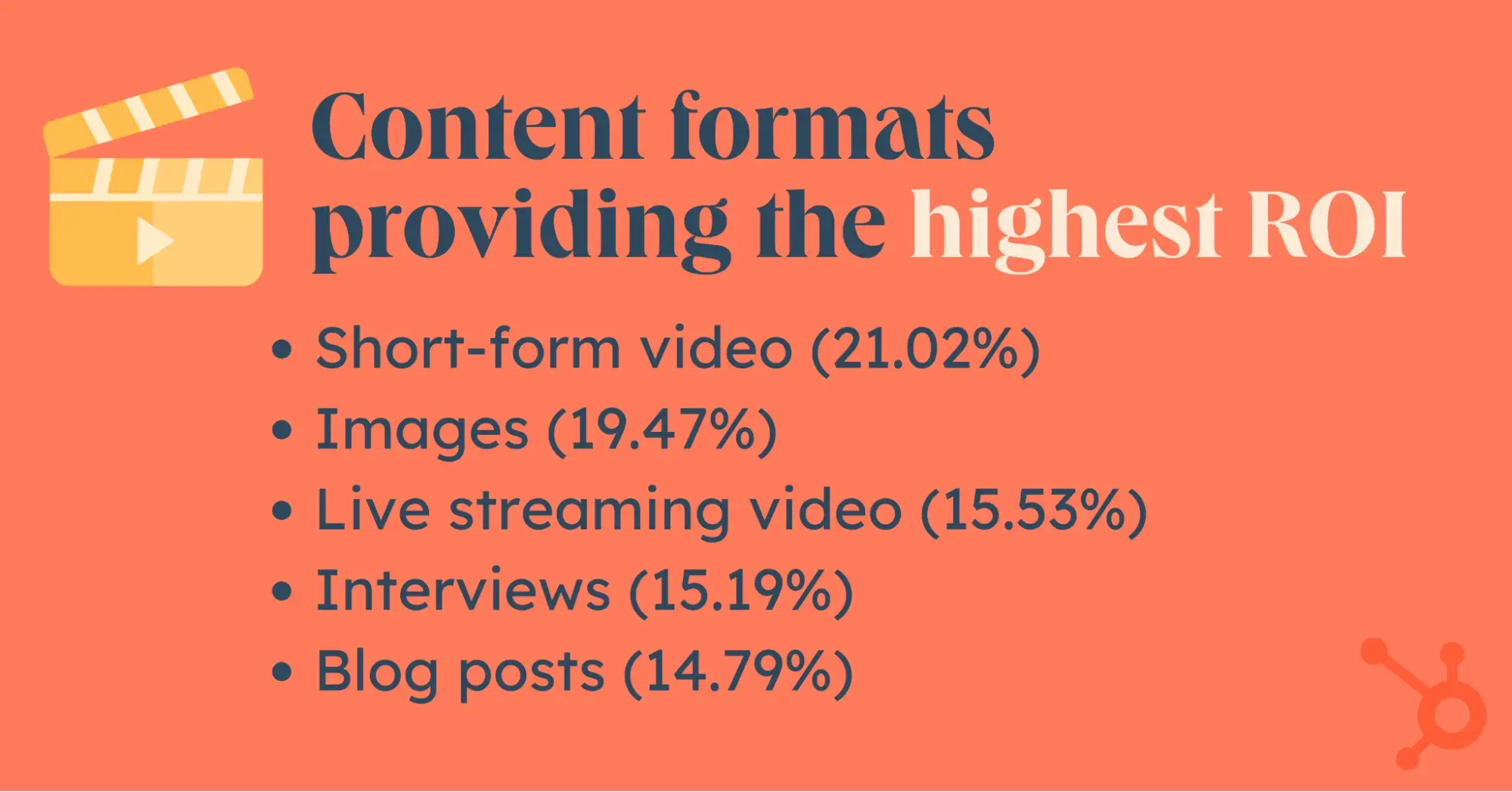
Performance is the ultimate measure of success. The data confirms that video delivers strong returns. Ninety-three percent of marketers report a strong ROI from video marketing. This high confidence level is a strong indicator that video is a worthy investment. Short-form videos deliver the highest ROI, with 21% of marketers citing them as the top performers. Live-streaming video ranks third at 15.53%.
Engagement patterns vary by length. Shorter videos drive higher engagement rates, but longer videos achieve more total watch time. Videos under one minute average 16 seconds of watch time, while those 60+ minutes average 16 minutes and 40 seconds. This trade-off between engagement rate and total time watched is crucial for strategy. If you want quick engagement, go short. If you want deep learning, go long.
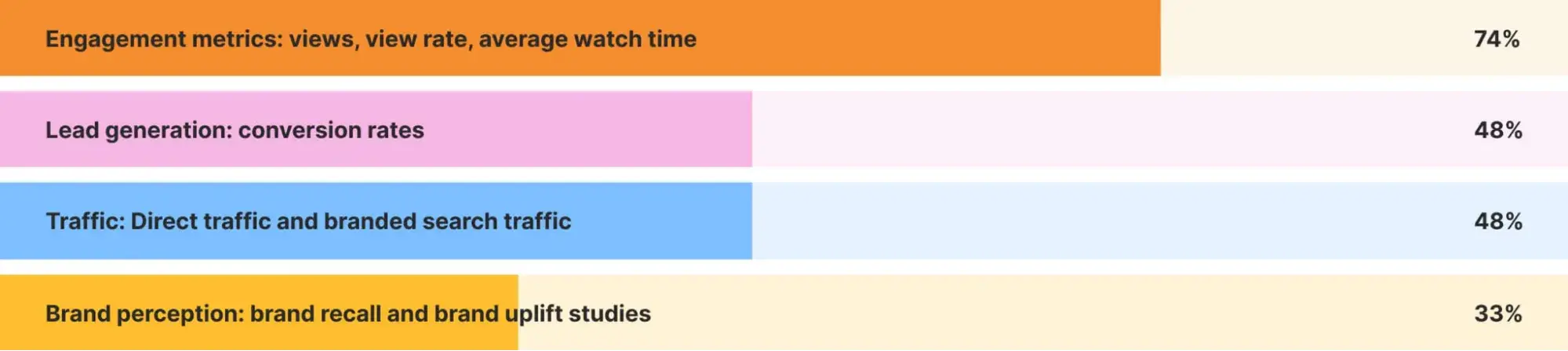
The average engagement rate for 3-5 minute videos is 43%. However, how-to videos of the same length see a 74% engagement rate. This specific data point is powerful. It suggests that educational content retains attention better than generic promotional material. Companies measure this success primarily through engagement metrics like views, view rate, and average watch time (74%). Conversion rates (48%) and traffic (48%) are also key metrics.
The types of videos companies aim to create reflect these performance drivers. Product videos lead at 44%, followed by educational and instructional content (38%), and webinars and live events (32%). A/B testing is also common. Companies test different versions of a video (31%), CTAs (26%), and thumbnails (18%) to optimize performance.
Social Media Video Marketing Stats
Social media is a primary distribution channel for video. In 2023, 35% of companies created social media videos, making it the fourth most common video type. For 2025, the top platforms for increased investment are YouTube (29.58%), Instagram (28.84%), and TikTok (27.64%). This shows a clear preference for platforms with strong video-native cultures.
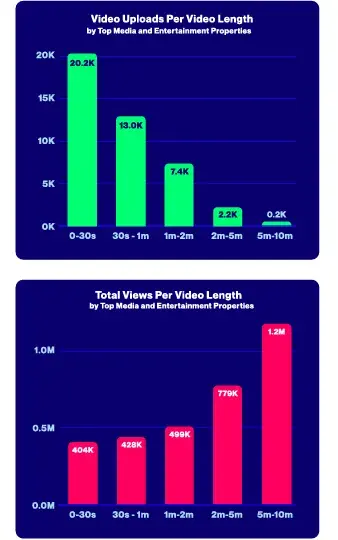
Short-form videos, like TikTok, Instagram Reels, and YouTube Shorts, are the most commonly used formats, with 29.18% of marketers leveraging them. Live streaming is also popular, used by 19.19% of marketers. On TikTok, most top publishers upload videos shorter than 30 seconds. However, videos between 5 to 10 minutes get the highest average views. This nuance is important: while short clips are common, slightly longer content can capture more attention if it holds interest.
Captions are critical on social platforms. TikTok ad videos with captions get a 95% boost in brand affinity, a 58% increase in recall, and a 25% jump in uniqueness. On LinkedIn, 97% of videos are vertical, and 78% are shot with a smartphone. This democratization of production means you don’t need expensive gear to create effective content. However, 65% of LinkedIn in-feed videos don’t have a CTA. When they do, the most common are “Follow for more tips” (19%) and “Check the link in my bio” (10%).
Timing also matters. The best times to post vary by platform: Instagram (Monday at 9 AM PST), Facebook (Monday at 10 AM PST), LinkedIn (Monday at 1 PM PST), X (Friday at 9 AM PST), and YouTube (Saturday at 7 PM PST). Aligning your posting schedule with these trends can improve initial visibility.
YouTube Shorts Marketing Stats
YouTube Shorts has become a dominant force in short-form video. Alphabet Inc. reports that Shorts’ monetization rate relative to in-stream viewing has more than doubled in the past 12 months. This indicates that advertisers are allocating more budget to Shorts, recognizing their value. Shorts had an engagement rate of 5.91% in Q1 2024, the highest of all short-form video platforms.
The scale is massive. YouTube Shorts average over 70 billion daily views. As of July 2023, Shorts had an average of 2 billion monthly viewers. Seventy percent of YouTube channels that upload content each month post Shorts. The number of channels uploading Shorts grew 50% year-on-year in 2023. This growth trajectory suggests that Shorts will remain a key area of focus.
YouTube has expanded the format to allow 3-minute long Shorts. This change provides creators with more flexibility to tell deeper stories. Advertisers can now book First Position on YouTube Shorts in up to 40 markets, meaning their ads appear first when consumers scroll their feed. This premium placement offers high visibility for brands.
Performance data shows that most Shorts are 30-40 seconds long. However, 50-60 second Shorts get the most views. Videos with an average watch time of 50 seconds or more get 4.1 million views, whereas those with lower watch times receive fewer. Gen Z consumers in the U.S. spent about 29.3% of their video time on YouTube in 2023. This demographic’s preference for YouTube highlights the platform’s enduring relevance.
Strategic Takeaways for 2025
The most important takeaway is that video marketing doesn’t have to be expensive. Most companies have a budget of less than $5,000. While customer case studies may require a professional touch, your in-house team can create other basic videos with their smartphones. The key is to start with a clear strategy and consistent execution.
If you aren’t already using video marketing, create your strategy, pull out your phone, and start smiling for the camera. If you already do video marketing, use these insights to audit and improve your strategy in 2025. Focus on educational content, use captions, and test different lengths to find what works for your audience. The data is clear: video is essential for modern marketing success.
Video marketing is a powerful tool for building brand visibility and trust. By understanding these statistics, you can make informed decisions about your content strategy. Remember that consistency and quality are key. Start small, learn from your results, and scale up as you grow. The future of marketing is visual, and the time to act is now.


