Modern consumers are increasingly protective of their time and digital space, often going to great lengths to avoid traditional promotional interruptions. Data suggests that roughly three out of four people actively seek ways to bypass advertisements, with nearly half of them modifying their media habits or employing ad-blocking technology. This trend highlights a fundamental misalignment between aggressive marketing tactics and user experience. When brands prioritize reach over resonance, they risk more than just ignored impressions; they risk cultivating a lasting negative perception. Understanding these advertising mistakes is crucial for any business looking to maintain a healthy relationship with its audience.

Understanding the Consumer Disconnect
The primary issue often stems from repetitive or intrusive messaging. When a specific brand appears incessantly, particularly within content that the viewer is trying to enjoy, it creates a friction point. Instead of building awareness, the brand becomes an obstacle. This phenomenon is particularly damaging because it forces the audience to associate the company not with value or utility, but with the annoyance of the interruption. For any business aiming to maintain a professional reputation, understanding why these negative associations form is the first step toward building a more effective marketing strategy.
The Psychology of Interruption
To truly grasp the disconnect, one must look at the psychological impact of interruption. When a user is engaged in a task—whether reading an article, watching a video, or browsing a product catalog—their cognitive load is focused on that specific activity. An unexpected advertisement breaks this flow, forcing the brain to shift attention. If the ad is perceived as irrelevant or obstructive, the user experiences a micro-stress response. Over time, repeated instances of this stress condition the user to view the brand as a source of irritation rather than a provider of solutions. This conditioning is powerful; it can override previous positive experiences with the brand, leading to a rapid erosion of goodwill.
Recognizing the Signs of Alienation
Brands often fail to recognize they are alienating their customers because the feedback is silent. Users rarely send emails complaining about a specific banner ad; instead, they simply leave. However, there are indirect signs that a disconnect exists. A sudden spike in ad blockers usage among your target demographic, a decrease in click-through rates despite increased spend, or a rise in negative sentiment on social media platforms can all indicate that your current approach is causing friction. By monitoring these metrics, companies can identify when their digital ad placements are crossing the line from visibility to nuisance.
The Impact of Intrusive Ad Formats
Digital advertising is a necessary component of growth, yet the format in which it is delivered defines the user’s initial reaction. Research indicates that pop-up advertisements are among the most detested formats, with a significant majority of users citing them as a primary source of frustration. These elements often block content immediately upon arrival, forcing the user to struggle with navigation before they have even had a chance to engage with the site. This creates a barrier that can lead to high bounce rates and diminished trust for the host website.
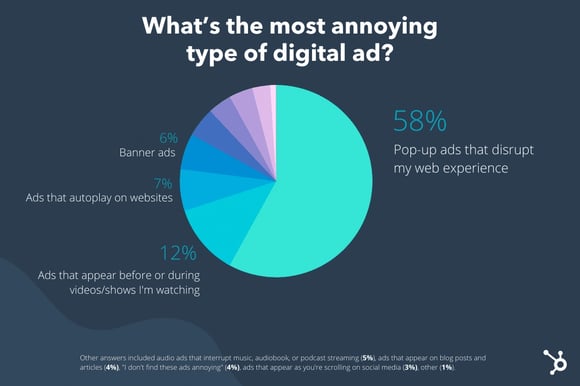
This survey data reflects how users feel about digital disruption. When ads become the focal point of a page rather than a helpful addition, the user experience suffers, leading to lower engagement and potential long-term traffic loss.
The Problem with Immediate Blockers
Pop-ups and interstitials that appear immediately upon page load are particularly harmful to user experience. They demand immediate attention and action, often covering the very content the user intended to consume. This forces the user to perform an extra step—closing the ad—before they can proceed. In the world of mobile browsing, where screen real estate is limited, these ads can be difficult to close, leading to accidental clicks or frustration. This friction not only damages the immediate interaction but also sets a negative tone for any future interactions with the brand. Users begin to associate the brand with obstruction, making them less likely to engage with future marketing efforts.
Alternatives to Intrusive Formats
To mitigate these issues, brands should consider less intrusive ad formats that integrate more naturally with the content. Native advertising, for example, blends seamlessly with the surrounding material, providing value without disrupting the flow. Sponsored content that offers genuine insight or entertainment can also be effective, as it respects the user’s time and interest. By choosing formats that enhance rather than hinder the user experience, brands can maintain visibility without sacrificing goodwill. This shift requires a deeper understanding of where and how ads are placed, ensuring that they complement the user’s journey rather than interrupt it.
Navigating Video Ad Fatigue
Video advertising presents a unique set of challenges. Pre-roll and mid-roll ads are frequently viewed as unavoidable nuisances, and studies suggest that a vast majority of consumers will skip these segments the moment the option becomes available. This behavior is a clear signal that the standard approach to video placement is losing its effectiveness. Rather than forcing a message onto an unwilling viewer, the goal should be to respect the user’s intent by providing immediate value or emotional resonance within the first few seconds of the experience.
The Skip Button as a Feedback Mechanism
The prevalence of skip buttons in video advertising serves as a direct feedback mechanism for brands. When users consistently skip ads, it indicates that the content is not engaging enough to warrant their attention. This is a critical insight for marketers, as it suggests that the creative elements of the ad—such as the hook, the message, or the visual appeal—are not resonating with the audience. Ignoring this feedback can lead to wasted ad spend and further alienation of potential customers. By analyzing skip rates, brands can identify which aspects of their video ads are failing and make necessary adjustments to improve engagement.
Creating Engaging Video Content
To combat video ad fatigue, brands must focus on creating content that is genuinely engaging from the start. This means moving away from generic promotional messages and toward storytelling that connects with the viewer on an emotional level. The first few seconds of a video ad are crucial; they must capture attention and convey value quickly. If the hook is weak, the viewer will likely skip the ad, rendering the rest of the content irrelevant. Additionally, ensuring that the video quality is high and the audio is clear can significantly improve the user experience, making the ad more likely to be watched in its entirety.
Designing for the User Experience
Effective advertising planning requires a shift from focusing on volume to focusing on context. One way to mitigate the intrusive nature of pop-ups is to trigger them only after a user has demonstrated high engagement, such as spending a certain amount of time on a page or interacting with multiple pieces of content. By waiting for these cues, you ensure that the message is presented to someone who has already shown an interest in the environment, making the interaction feel less like a disruption and more like a logical next step.
Timing and Contextual Relevance
Timing is everything when it comes to displaying ads. Presenting an ad too early can feel presumptuous, while waiting too long may result in missed opportunities. By using data to determine the optimal moment to display an ad, brands can ensure that the message is relevant and timely. For example, if a user has spent several minutes reading an article about fitness, an ad for workout gear displayed at the end of the article is likely to be more welcome than one that appears immediately upon arrival. This contextual relevance enhances the user experience by aligning the ad with the user’s current interests and needs.
Respecting User Intent
Respecting user intent is another key aspect of designing for user experience. Users have specific goals when they visit a website, whether it is to find information, make a purchase, or entertain themselves. Ads that interfere with these goals are likely to be perceived as annoying. By understanding the user’s intent and tailoring ad placements accordingly, brands can ensure that their marketing efforts support rather than hinder the user’s journey. This approach requires a deep understanding of user behavior and a willingness to prioritize the user’s needs over immediate marketing gains.
Finding the Optimal Frequency
Repetitive messaging is a major driver of brand resentment. While it is tempting to believe that more impressions lead to better results, there is a clear plateau where additional exposure starts to yield diminishing returns. Research indicates that the most successful campaigns find a balance, often limiting exposure to a few times per week. The objective is to keep your brand top-of-mind without becoming a constant source of irritation in the user’s daily digital routine.
The Danger of Overexposure
Overexposure is one of the most common advertising mistakes brands make. When users see the same ad repeatedly, they begin to tune it out, a phenomenon known as banner blindness. Worse, excessive frequency can lead to active annoyance, causing users to develop negative feelings toward the brand. This is particularly true for digital ad campaigns that lack frequency capping, which limits the number of times a single user sees an ad. Without these safeguards, brands risk saturating the market and alienating their audience.
Balancing Visibility and Patience
Finding the right balance between visibility and patience is essential for maintaining a positive brand image. Brands should aim to stay top-of-mind without overwhelming their audience. This can be achieved by varying the creative assets used in campaigns, ensuring that even if users see the brand multiple times, the message feels fresh and engaging. Additionally, using frequency capping tools can help manage exposure, ensuring that no single user sees the same ad too many times. By striking this balance, brands can maintain visibility without crossing the line into annoyance.
Avoiding the Creep Factor
Personalization is a powerful tool, but it is easily misused. Consumers generally appreciate relevance, but there is a distinct boundary between being helpful and being intrusive. Ads that seem to track a user’s every movement, such as those based on specific recent search history, often trigger a feeling of being watched. This is why many consumers report that highly specific retargeting ads feel less like assistance and more like an invasion of privacy. Instead, focusing on contextual and demographic relevance—such as showing an ad for a product that complements the content currently being viewed—is a much more effective way to provide value without crossing that line.
The Fine Line Between Helpful and Intrusive
The line between helpful personalization and intrusive tracking is thin. While users appreciate ads that are relevant to their interests, they do not appreciate ads that feel like they are being monitored. For example, seeing an ad for a product you just searched for can be convenient, but seeing ads for that same product across multiple platforms and devices can feel like stalking. This “creep factor” can damage trust and lead to negative perceptions of the brand. To avoid this, brands should focus on broader demographic and contextual targeting rather than hyper-specific behavioral tracking.
Building Trust Through Transparency
Transparency is key to building trust with users. Brands should be clear about how they use data and give users control over their privacy settings. By being open about data collection practices and offering easy ways to opt out of personalized ads, brands can demonstrate respect for user privacy. This approach not only helps avoid the creep factor but also fosters a sense of trust and loyalty among users. When users feel that their privacy is respected, they are more likely to engage with ads and view the brand positively.
The Importance of Conciseness
When a user is interrupted by a video ad, their patience is limited. Data shows that a significant portion of younger audiences will abandon a video entirely if the ad exceeds a short threshold, typically around ten seconds. If you must use longer formats, the content must be exceptionally engaging from the very first frame. If the hook does not capture interest immediately, the viewer will likely drop off, rendering the entire ad campaign ineffective. Keeping messaging short, clear, and to the point is the most reliable way to ensure your message is actually received.
Capturing Attention Quickly
In the fast-paced world of digital media, capturing attention quickly is more important than ever. Users are bombarded with information from multiple sources, and their attention spans are short. An ad that takes too long to get to the point risks being ignored or skipped. To combat this, brands should focus on creating concise and compelling messages that deliver value immediately. This means stripping away unnecessary details and focusing on the core benefit or message. By doing so, brands can ensure that their ads are not only seen but also remembered.
The Power of Simplicity
Simplicity is a powerful tool in advertising. Complex messages can confuse users and dilute the impact of the ad. By keeping messaging simple and straightforward, brands can ensure that their message is clear and easy to understand. This is particularly important for digital ad campaigns, where users may only have a few seconds to process the information. A simple, clear message is more likely to resonate with users and drive action, making it a crucial element of any successful marketing strategy.
Strategic Experimentation
Ultimately, there is no universal formula for the perfect advertisement. Every audience segment responds differently, and what works for one industry may fail for another. The best approach is to treat your advertising strategy as a living experiment. By monitoring how your audience interacts with different placements and frequencies, you can gather the data needed to refine your approach over time. This iterative process is what separates brands that simply shout into the void from those that successfully connect with their target audience in a meaningful way. As you continue to optimize your efforts, remember that the goal is to be a welcome presence in your customer’s digital journey rather than a persistent distraction.
The Role of Data in Refinement
Data plays a critical role in refining advertising strategies. By analyzing metrics such as click-through rates, engagement levels, and conversion rates, brands can gain insights into what is working and what is not. This data-driven approach allows for continuous improvement, ensuring that ads remain relevant and effective. Additionally, A/B testing different ad creatives and placements can help identify the most effective strategies for specific audience segments. By leveraging data, brands can make informed decisions that enhance user experience and drive better results.
Adapting to Changing Trends
The digital landscape is constantly evolving, and brands must be willing to adapt to changing trends. New platforms, technologies, and consumer behaviors emerge regularly, requiring brands to stay agile and responsive. By staying informed about industry trends and being willing to experiment with new approaches, brands can stay ahead of the curve. This adaptability is essential for maintaining relevance and ensuring that advertising mistakes are minimized. By embracing change and continuously refining their strategies, brands can build stronger connections with their audiences and achieve long-term success.


