Ranking in AI search results requires a fundamental shift in how we approach content strategy. While traditional SEO focuses on driving clicks to a landing page, AI search optimization prioritizes providing the most direct, accurate answer to a user’s query within the AI interface itself. This shift is not just about visibility; it is about establishing your brand as a trusted authority that AI models rely on for information.
AI search results are now a primary way users interact with information. Platforms like ChatGPT, Perplexity, and Google AI Overviews often synthesize answers without requiring a user to click through to a website. By optimizing for this environment, you ensure your brand remains present even when the traditional blue-link search path is bypassed. This is the essence of AEO, or Answer Engine Optimization.
Why AI Visibility is a Competitive Advantage
AI-referred visitors represent a segment of users with high intent. Because these users have already received a summarized answer from an AI model, their decision to click through to your site indicates a genuine interest in your service or expertise. Data consistently shows that these visitors convert at higher rates compared to those arriving from standard organic search results. By investing in AEO now, you are securing your brand’s place in the knowledge graph of the future.
Beyond the immediate conversion benefits, AI visibility acts as a form of brand validation. When an AI model cites your content, it implicitly endorses your brand as a primary source of truth. This creates a feedback loop where increased visibility leads to higher traffic, which in turn signals to the AI that your content remains relevant and authoritative, further cementing your position in search summaries.
Technical Accessibility for AI Crawlers
Before you can rank, you must ensure that AI systems can actually read and process your website. AI crawlers operate differently than traditional search engine bots, and blocking them inadvertently can remove your brand from the AI discovery process. Your technical infrastructure is the foundation of your search presence.
Understanding Retrieval Crawlers
Many platforms utilize specific bots for real-time information retrieval. For example, OAI-SearchBot and PerplexityBot are essential for appearing in ChatGPT and Perplexity searches. If your robots.txt file restricts these agents, your content will be invisible to users on those platforms. It is vital to audit your server configurations to ensure that your key informational pages remain accessible to these essential crawlers.
Emerging Standards for AI Communication
Beyond basic crawlability, newer standards like the llms.txt file help AI systems better understand your site’s hierarchy and content. This file acts as a map for AI models, explicitly stating which sections of your site are safe to summarize and cite. Implementing this is a low-effort, high-impact way to signal your readiness for the AI-driven web. Additionally, maintaining fast page load times remains a priority, as AI systems favor content that can be retrieved and processed without latency.
Practical Steps for Technical Readiness
To ensure your site is AI-ready, perform a regular audit of your robots.txt file to confirm that no critical AI user agents are disallowed. Next, implement structured metadata and ensure your sitemap is up to date. Finally, monitor your server logs to see if AI crawlers are successfully accessing your content without encountering 4xx or 5xx errors, which can cause bots to deprioritize your pages.
Implementing an Answer-First Content Structure
AI systems scan content for direct, extractable answers. If your writing is buried in introductory fluff, the AI will likely skip your content in favor of a more concise source. To rank in AI search results, you must adopt an answer-first approach where the core information is presented immediately.
Tactical Formatting for AI Extraction
Structure your content around the questions your audience is asking. Use clear, concise H2 and H3 headings that mirror natural language queries. Immediately follow each heading with a 1-3 sentence summary that answers the specific question. This structure allows AI models to identify and cite your content with minimal effort, significantly increasing your chances of appearing in an AI-generated summary.
The Role of Structured Data
While schema markup does not directly influence rankings, it provides the context AI needs to understand your content. Using JSON-LD format to define your pages—such as FAQPage, Article, or HowTo schema—helps AI systems parse the meaning of your text. This explicit categorization is particularly effective for Google AI Overviews, which rely heavily on structured signals to verify the accuracy of the information they present.
Avoiding Common Formatting Pitfalls
Avoid using overly creative or ambiguous headings that do not clearly describe the content below them. AI models prefer straightforward, descriptive language. Additionally, ensure your content is free of excessive jargon or complex sentence structures that might confuse an AI parser. Keeping your prose simple and direct ensures your message is captured accurately by the model’s summarization algorithms.
Building Topical Authority through Clusters
AI models prioritize sources that demonstrate deep expertise across a subject. By organizing your content into pillar pages and supporting clusters, you build a semantic web that signals your authority to AI systems. This strategy also helps you capture traffic from related sub-queries, as the AI sees your site as a comprehensive resource rather than a collection of isolated posts.
Leveraging Internal Linking
Internal links are the pathways AI crawlers follow to understand your topical depth. When you link from cluster content to your pillar pages, you reinforce the relevance of your main topics. This creates a cohesive structure that makes it easier for AI to navigate your site and identify the most authoritative information on a given subject.
The Impact of Original Research
Original research is one of the most effective ways to earn AI citations. When you publish proprietary data, survey results, or unique insights, you provide the AI with information it cannot find elsewhere. Since AI models are designed to cite their sources, having original research makes your brand a go-to reference point, which in turn boosts your E-E-A-T signals.
Strategic Content Mapping
Map your content to the entire user journey, from top-of-funnel awareness questions to bottom-of-funnel decision-making queries. By covering every stage, you ensure that your brand is present regardless of where the user is in their research process. This comprehensive coverage forces AI models to recognize your site as the definitive source for your industry niche.
Establishing E-E-A-T and Off-Site Authority
Google’s E-E-A-T framework—Experience, Expertise, Authoritativeness, and Trustworthiness—has become a standard for AI citation filters. AI systems look for proof that your content comes from credible sources. This includes author bios with verifiable credentials and the use of first-person experience to ground your advice in reality.
Managing Brand Data Consistency
Off-site authority is just as important as on-site content. Ensure your brand information—such as your name, address, and product descriptions—is consistent across platforms like LinkedIn, Wikipedia, and industry directories. This consistency helps AI systems verify your brand identity, reducing the risk of misinformation and improving your visibility in AI-generated answers.
Proactive Brand Monitoring
AI models can sometimes misrepresent brands if they rely on outdated or incorrect training data. Regularly query major AI platforms to see how your brand is being described. If you find inaccuracies, the best response is to publish new, authoritative content that clarifies the facts. Owning your brand narrative is the most effective way to ensure AI systems provide accurate information to users.
Building External Trust Signals
Cultivate mentions in reputable industry publications and high-authority websites. AI models weigh these external signals heavily when determining which sources to trust. By fostering a strong digital footprint outside of your own domain, you provide the necessary validation that AI systems require to confidently cite your brand as an expert resource.
Measuring Success in an AI-Driven Era
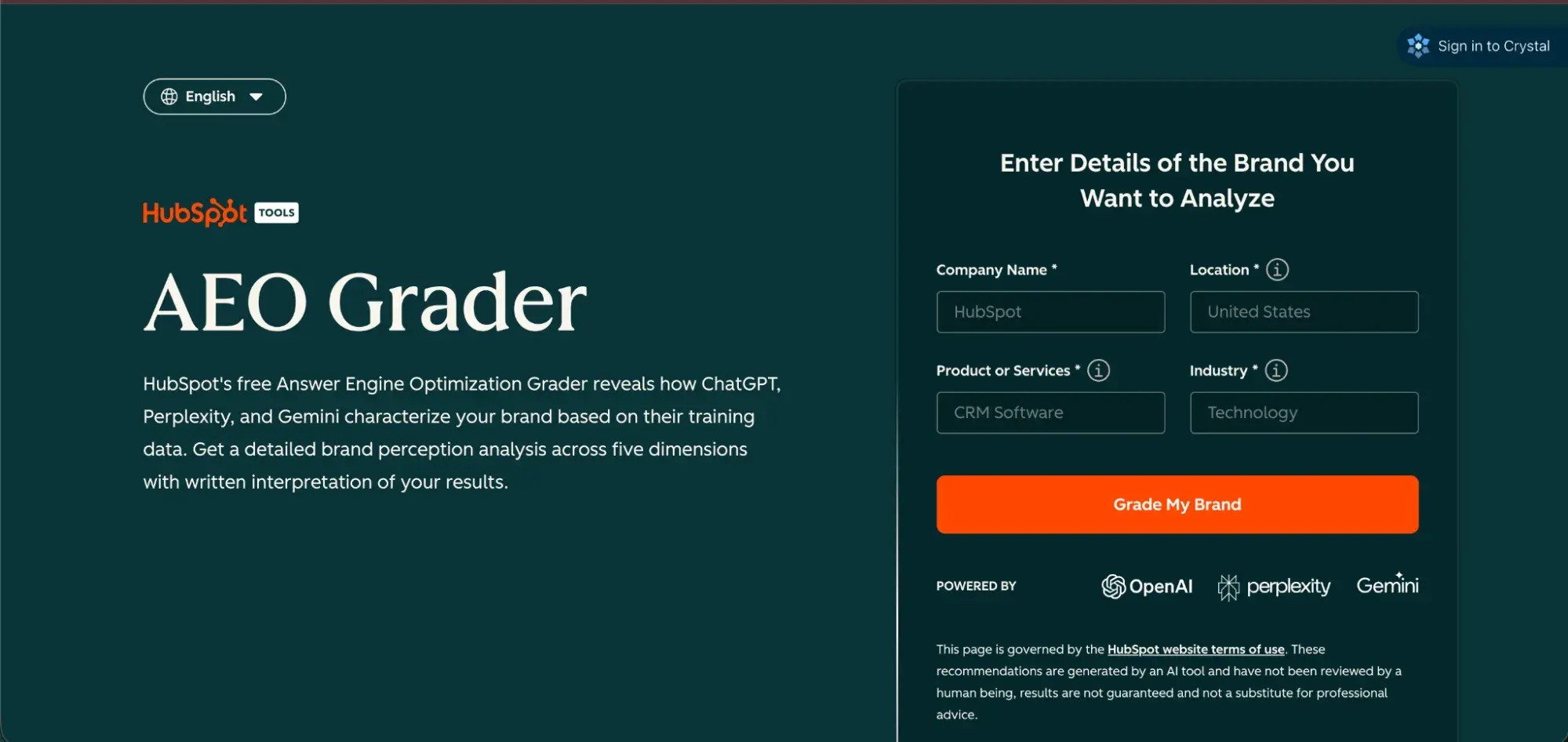
Tracking performance in AI search is different from traditional SEO, as it focuses on citation presence and share of voice rather than just clicks. We recommend a framework that monitors your brand’s mentions across platforms and tracks the quality of AI-referred traffic within your CRM. This allows you to connect AI visibility directly to business outcomes like lead generation and revenue.
Setting a Baseline for Growth
To begin, run a series of target queries across ChatGPT, Perplexity, and Google AI to see where your brand currently appears. Use this to establish a baseline and measure your progress over a 90-day period. Consistent effort in optimizing your structure and technical accessibility will typically show results within a few months, as AI systems refresh their knowledge bases and recognize your brand’s increased topical authority.
Refining Your AI Strategy
Analyze which queries lead to the most valuable traffic and double down on those topics. If you notice specific types of content—such as data-heavy reports or how-to guides—consistently earn citations, prioritize producing more of that format. Continuously iterating based on AI-driven feedback ensures your strategy remains aligned with how these models evolve and prioritize information.
AI search is not a future trend; it is the current standard for how information is consumed. By focusing on technical accessibility, answer-first content, and building verifiable authority, you can ensure your brand remains a trusted resource in this new ecosystem. The goal is to provide value so clearly that the AI model identifies your content as the best possible answer for the user.


