Understanding the Shift to AI Search Strategy
An AI search strategy is a deliberate plan to ensure your brand remains visible and authoritative within generative search environments, such as ChatGPT, Gemini, and Perplexity. Unlike traditional search engine optimization, which focuses on ranking for specific keywords to drive clicks, an AI search strategy prioritizes eligibility and clarity. When large language models (LLMs) generate answers, they do not simply list links; they synthesize information and attribute it to sources they recognize as credible.
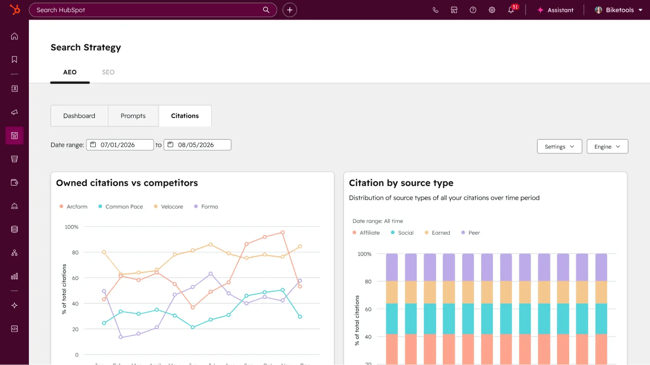
This shift requires a fundamental change in how we view content. In the era of generative AI, the unit of optimization is no longer the page or the keyword, but the paragraph and the relationship between entities. Our goal is to provide content that is so well-structured and factually precise that an AI system can confidently extract it, cite it, and present it to the user. This is the core of answer engine optimization (AEO), a practice that complements traditional SEO by ensuring your brand is not just indexed, but recommended.
As AI tools continue to gain traction, the traditional search landscape is evolving. Users are increasingly turning to chat-based interfaces to research products, resolve technical issues, and make informed purchasing decisions. Consequently, organic traffic patterns are changing, and brands that rely solely on blue-link visibility may find themselves less present in the moments that matter most. An effective AEO strategy ensures your expertise is recognized by the models that power these new discovery platforms.
The Evolution of User Discovery
Modern users are moving away from the “search and click” model. Instead, they interact with LLMs to gather synthesized summaries. This change means that the traditional battle for the top spot on a search results page is being replaced by a battle for the “citation.” If your brand is not the source of the information presented in the chat window, you are essentially invisible to that user.
Why Authority Matters More Than Ever
Because AI models are designed to provide accurate answers, they favor sources with high topical authority. If your brand consistently provides deep, accurate, and well-structured insights on specific subjects, the model learns to associate your domain with those topics. This creates a feedback loop where your brand becomes the go-to reference for the AI, increasing your visibility in future queries.
The Core Principles of AI Search Visibility
To succeed in an environment where LLMs act as the primary interface, marketers must understand that these systems do not browse the web like traditional crawlers. They interpret the world through entities—distinct concepts like your brand, your products, and the problems you solve. Establishing a clear, consistent identity across the digital landscape allows these models to map your expertise accurately within their knowledge graphs.
Moving Beyond Keywords to Entities
An entity is any clearly defined person, organization, or idea. When your brand uses consistent, unambiguous language across your website, social media, and third-party platforms, you help AI systems unify these data points into a single, trusted entity. This consistency acts as a signal of authority. If your brand is described as a leader in a specific niche on your website but is portrayed differently elsewhere, you create confusion that hinders the AI’s ability to recommend you.
The Role of Schema and Structured Data
Schema markup is the language we use to tell search engines and AI models exactly what a page represents. By using standardized vocabularies, we provide the context necessary for machines to process our content without inference. When you label an FAQ section with FAQPage schema or identify an author with Person markup, you are essentially providing the AI with a roadmap to your content’s purpose. This technical foundation is essential for ensuring your content is eligible for inclusion in AI Overviews and chat citations.
The Importance of Extractable Content
AI systems prioritize content that is easy to lift and restate. This means writing in a way that respects the model’s need for concise, standalone units of information. We find that content structured with clear topic sentences, bulleted lists, and summary blocks performs better in AI environments. When a paragraph can stand alone as a complete, verifiable answer, the probability of it being cited increases significantly. This is not about sacrificing nuance; it is about making that nuance accessible to machine intelligence.
How AI Interprets Context
Beyond simple text, AI models analyze the relationship between different concepts. By linking your internal content through logical site architecture and clear internal linking, you help the AI understand the hierarchy of your expertise. Think of your website as a web of interconnected entities where each page reinforces the authority of the others.
Practical Steps for Implementing Your AEO Framework
Implementing an AI search strategy is a process of refining your existing assets and technical infrastructure. It involves auditing your current visibility, optimizing your content for machine readability, and ensuring your brand presence is consistent across all channels.
Audit Your Current AI Visibility
The first step is to establish a baseline of how your brand appears in generative search. You cannot fix what you do not measure. By querying leading answer engines with the questions your customers ask, you can identify which competitors appear, which sources are cited, and whether your brand’s positioning is clear. This audit process provides the insights needed to address gaps in authority and relevance.
Optimize for Technical Accessibility
AI crawlers have specific requirements for data retrieval. Because many AI systems do not execute complex JavaScript, you must ensure that your core content is available in static HTML. This includes maintaining clean, semantic code, fast page load speeds, and updated XML sitemaps. By removing barriers to entry, you ensure that your expertise is both discoverable and indexable by the systems that power modern search.
Structure Content for Maximum Impact
Content optimization for AEO involves adopting patterns that favor machine extraction. This includes:
- Opening with a clear, plain-language answer to the primary question.
- Including summary or TL;DR blocks under major headings.
- Using tables and lists to illustrate relationships between data points.
- Implementing schema at the template level to ensure consistent entity labeling.
These practices help AI systems synthesize your information quickly. When you provide clear, actionable summaries, you increase the likelihood that your content will be used as a source for generated responses.
Build Consistency Across the Web
Your website is only one part of your entity. AI models verify information by cross-referencing sources across the internet. By ensuring that your brand name, product offerings, and executive credentials are consistent across all third-party listings and social platforms, you reinforce the signal of your expertise. A cohesive narrative across every touchpoint is essential for building long-term trust with AI systems.
Use Data to Drive Iteration
Finally, treat your AEO work as a cycle of continuous improvement. Track your AI mentions, analyze the sentiment of those citations, and monitor how your brand compares to competitors in key prompts. By connecting this visibility data to your CRM, you can begin to see how AI-driven discovery influences the buyer’s journey. This allows you to refine your content strategy based on what actually drives engagement and revenue, rather than just chasing vanity metrics.
Measuring Success in an AI-Driven World
Success in the age of AI is defined by influence, not just traffic. While traditional metrics like click-through rates remain relevant for site health, they are insufficient for measuring your presence in answer engines. We must instead focus on metrics that reflect your brand’s authority in synthesized answers.
Beyond the Click: Tracking Influence
In a zero-click environment, the value lies in being the source of truth. When an AI system cites your brand, you gain awareness and trust that often leads to direct traffic and branded search queries later in the customer journey. These assisted conversions are a crucial indicator of your AI search performance. By monitoring your share of voice in prompts and tracking the quality of AI-generated citations, you can build a clearer picture of your brand’s true influence.
The Value of Consistent Representation
Your goal is to become the preferred source for specific topics within the AI ecosystem. This requires a persistent effort to maintain factual precision and entity clarity. As models are updated and refined, your ability to provide consistent, high-quality information will be the primary driver of your long-term success. By operationalizing these practices, you can turn your AI search strategy into a repeatable, scalable system that supports your broader growth objectives.
Establishing Long-Term Authority
Building authority in AI search is a marathon, not a sprint. Because these models are trained on vast datasets, they prioritize information that is corroborated by multiple reliable sources. By consistently publishing high-quality content that answers user intent, you build a digital footprint that becomes harder for competitors to displace. Over time, this cumulative effort transforms your brand into an essential node within the AI’s knowledge graph.
Adapting to Model Updates
AI models are updated frequently, and their preferences for certain types of content can shift. A successful strategy includes monitoring these changes and adjusting your content delivery accordingly. By staying agile and keeping your technical infrastructure updated, you ensure that your brand remains compatible with the latest advancements in generative search technology.


