As generative engines like ChatGPT, Gemini, and Google’s AI Overviews redefine the search landscape, traditional SEO metrics have become insufficient. Winning generative search visibility requires a shift from tracking static blue-link rankings to measuring your brand’s actual influence within AI-generated responses. This guide outlines a tactical methodology for performing a comprehensive AI search competitor audit.

Defining the Audit Scope: Entities and Competitor Mapping
Effective auditing begins with precision. You cannot measure visibility if you haven’t clearly defined your brand entity and its primary competitors within the AI context.
-
Standardizing the Brand Entity: Define your brand’s specific name, common misspellings, core products, and sub-brands. AI engines treat these as distinct triggers. By grouping these variations, you ensure the AI accurately attributes mentions across your ecosystem.
-
Competitive Baseline: Categorize your competitors into three tiers:
-
Direct: Brands offering identical services.
-
Indirect: Brands solving the same problem differently.
-
Aspirational: Market leaders setting the standard for AI-generated authority.
-
-
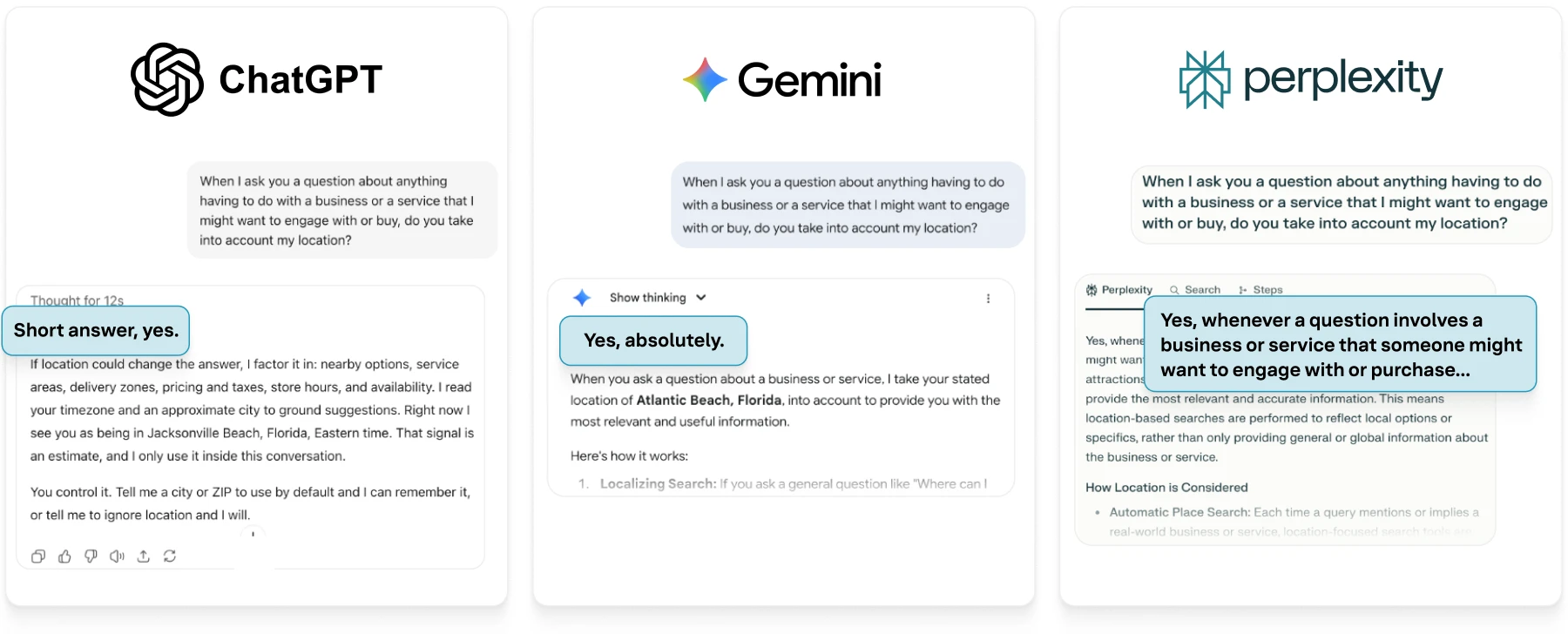
Setting the Environment: Select specific target AI engines and geographic locales for your benchmarking. Consistency is crucial; testing across different regions or engines without standardizing inputs will invalidate your data.
Quantifying Presence: The Benchmarking Workflow
Once the scope is defined, you need a repeatable process to track how your brand performs against these competitors.

-
Broad Assessment: Use automated tools to scan your primary query sets. Avoid manual spot-checking, which is prone to sampling bias.
-
Differentiating Visibility: Distinguish between general organic visibility and generative answer placement. A brand might rank #1 in organic search but be completely ignored in an AI summary.
-
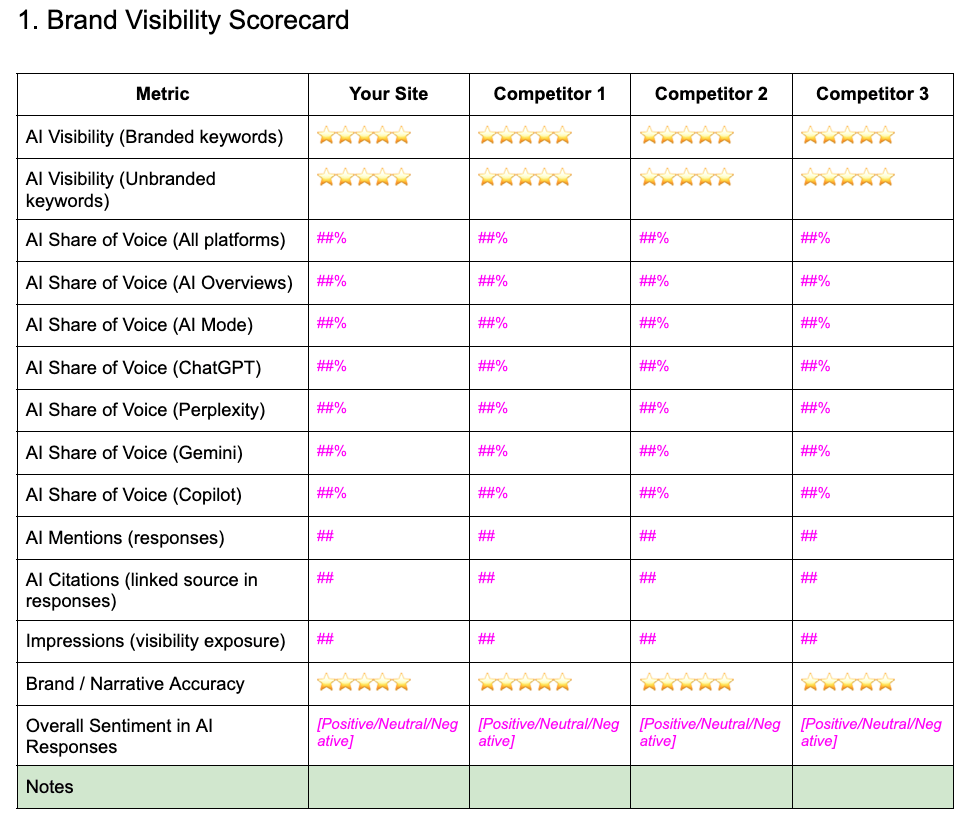
Core Metrics: Focus on Share of Voice (SoV) in AI responses, citation frequency, and source diversity. These metrics indicate how often an AI selects your content as the “trusted authority” compared to your competitors.
The Qualitative Deep Dive: Sentiment and Positioning Analysis
Quantitative data shows if you appear, but qualitative analysis reveals how you appear.
-
Decoding AI Framing: Evaluate how the AI interprets your brand’s tone. Is your brand positioned as a high-authority expert or a peripheral, “also-ran” mention?
-
Sentiment Analysis: Identify if your brand is associated with positive, neutral, or conflicting sentiment within generated responses. Detecting negative associations early allows for targeted content updates.
-
Expert vs. Peripheral: Determine the depth of your mentions. An ideal state is being the “Key Source” for a topic rather than being buried in a generic list.
Topic Ownership: Mapping Content Authority via GEO Analysis
To dominate, you must segment your strategy by content pillars rather than treating your site as a monolith.
-
Identify Topic Gaps: Where is the AI pulling information from competitors instead of your site? These gaps represent immediate opportunities for content development.
-
Format Alignment: Align your content format with the AI’s preference. If a query consistently returns a table or a step-by-step list, ensure your asset provides that specific structure to increase the likelihood of extraction.
Synthesizing Findings for Executive Action
Your audit is only as valuable as the actions it triggers.
-
Prioritizing Insights: Categorize findings into Quick Wins (optimizing existing pages for better extractability) and Long-Term Authority Building (strengthening your entity and brand mentions across the web).
-
Stakeholder Reporting: Translate technical GEO data into business impact. Focus on metrics like “AI-driven traffic potential” and “Competitive Share of Voice” to demonstrate ROI to leadership.
-
Operational Roadmap: Convert your audit data into a recurring, evergreen optimization cycle. Continual monitoring ensures your strategy evolves alongside the AI models.