On This Page· 5
The formula for AEO ROI looks deceptively simple: divide total investment by the number of citations earned. The trouble usually sits in that denominator. Most teams treat “investment cost” as a single, opaque number, masking the specific line items that actually drive the metric.

This article isolates the hidden components—production, promotion, personnel, and tool subscriptions—that distort your cost per citation analysis. We’ll walk through how to itemize these costs accurately, using a shared analytical lens rather than a sales pitch. By the end, you’ll see exactly where your current model might be undercounting the true operational burden of AI search visibility. This is a practical breakdown for managers who need to judge the real efficiency of their content strategy in generative search.
Itemizing the denominator: production and promotion
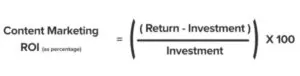
In the AEO cost per citation equation, the denominator—investment cost—is often where precision fails. This metric splits that investment into two distinct streams: direct content production and distribution. Production covers the raw creation assets, such as fees for freelancers, video editing, and graphic design. Distribution accounts for the effort to push that content into the visibility layer, including paid ads and sponsored posts. Separating these ensures you know exactly where money is spent versus where it works.
AI content automation changes this balance significantly. While it drastically lowers the unit cost of production, it often shifts the financial burden toward promotion. To secure visibility in generative search, brands may need to spend more on distribution to ensure their content is cited by AI models. This creates a cost profile that differs from traditional SEO, where the focus was often on ranking position rather than citation frequency.
Lumping all marketing spend into a single line item obscures this shift. By keeping production and promotion distinct, you can perform a more accurate citation cost analysis. This separation allows for better attribution, helping you identify whether rising costs are driven by expensive asset creation or the higher price of buying visibility in the AI search landscape. This level of detail is essential for any valid AEO ROI calculation.
Personnel and tools: the recurring AI content metrics load
The denominator of your AEO ROI calculation rarely ends with the last blog post published. Personnel costs for content strategists and engineers, alongside subscriptions for analytics platforms, content management systems, and LLM APIs, form a persistent operational base. These are the recurring expenses that keep your AI content engine running.
In initial projections, these overhead costs are frequently undercounted or omitted entirely. When they are excluded, the resulting cost per citation appears artificially low. This distortion hides the true operational burden, creating a metric that looks healthy on paper but fails to reflect the actual resources required to maintain visibility in generative search.
For SaaS and service businesses, the situation is more complex. The cost of maintaining technical infrastructure—such as schema updates and llms.txt file maintenance—must be included in the denominator. Ignoring these technical line items produces a misleading figure. To get a realistic citation cost analysis, you need to account for every dollar spent on keeping your content technically compliant and discoverable by AI models. This ensures the metric reflects the full cost of sustained AI search presence.
Quality vs. quantity: the long-term maintenance trade-off
High-quality content carries a higher upfront price tag, but it significantly reduces the “rewrite” factor in your cost model. This shift is critical for any accurate citation cost analysis, as it lowers the recurring operational load over the asset’s lifespan.
In contrast, high-volume, low-quality AI content often appears cheaper on the surface. While the initial cost per citation may look attractive, the total expenditure climbs rapidly. Generative search engines prioritize relevance and authority, forcing teams to update these pieces frequently to maintain visibility. This constant cycle of refreshes inflates the long-term cost per citation, eroding the initial savings.
Content “aging” is the key driver here. When AI models detect outdated information, they often discard it entirely. This forces a perpetual loop of revisions that many teams miss in their initial projections. By choosing quality over volume, you stabilize your AI content metrics and ensure that your AEO ROI calculation reflects sustainable value rather than a temporary spike.
AEO citation cost analysis: practical calculation steps
Calculating this metric requires a consistent framework. We recommend a three-step approach to ensure accuracy:
- Aggregate total costs. Sum all production, promotion, personnel, and tool expenses for the selected period. Do not omit recurring overhead; including it reveals the true operational burden rather than an artificial low.
- Count total citations. Track the number of times your content was cited by AI engines during that same timeframe. This count serves as your denominator for the efficiency check.
- Divide total cost by total citations. This yields your average cost per citation. If the number is high, it signals inefficiency in either production spend or citation generation.
The difference from traditional SEO ROI
Traditional SEO ROI tracks direct conversion value, such as clicks and sales. In that model, revenue is the primary indicator of success. Here, the definition of value shifts. The return is visibility and trust within AI-generated answers, not immediate transactional conversions. While indirect benefits like brand awareness contribute to long-term growth, the immediate metric is how frequently AI models reference your brand as a source of authority.
Tracking citation sources
It is not enough to know the total number of citations. You must track the source of each one. Identify which AI model generated the answer and which specific query triggered it. This data helps you pinpoint which content pieces are driving the most efficient citations. If one article generates citations at a significantly lower cost than others, you can replicate that strategy across your content portfolio.
Frequently asked questions about AEO ROI calculation
How does AI content automation change the cost per citation baseline?
It significantly lowers production costs but shifts weight to promotion and technical maintenance. While the initial expense to create content drops, securing visibility in generative search often requires higher spend on distribution and infrastructure updates, altering the total cost profile compared to traditional SEO.
Can small businesses track AEO ROI without expensive software?
Yes, you can effectively track this metric using manual logs for costs and simple citation tracking tools for the denominator. By recording labor and tool subscriptions in a spreadsheet and manually noting citations from AI engines, you obtain a functional AEO ROI calculation without premium subscriptions. This manual approach provides a clear view of your citation cost analysis, allowing for accurate benchmarking regardless of team size.
What is a healthy cost per citation for AI search?
There is no universal standard, as it varies by industry and keyword difficulty. However, a rising trend in your data usually signals a need to revise the content strategy or improve targeting. If the cost per citation climbs consistently, it indicates that the current approach is becoming less efficient, prompting a review of how you balance AI content metrics against actual visibility gains in AI-generated answers.
A low cost per citation looks attractive on a spreadsheet, but it holds no value if those citations stem from low-quality or irrelevant AI answers. True success in AEO ROI calculation is not defined by the initial price tag, but by the consistency of your visibility over time. Ask yourself whether your current content strategy fully accounts for the long-term maintenance costs required to keep your brand visible in AI search.