Deconstructing the Shift: From Keyword Matching to Answer Engineering
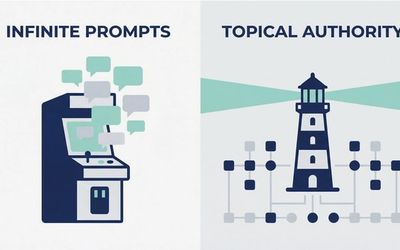
The digital landscape is undergoing a fundamental transformation. We are moving away from the era of index-based search—where success was defined by gaming keyword density—and entering the age of LLM-driven inference. In modern AI search, the objective is no longer to rank a page, but to provide the precise, high-value data point that satisfies a user’s intent within an AI-generated answer.
Traditional SEO tactics, such as repetitive keyword stuffing, are now largely obsolete. They offer no value to Large Language Models (LLMs) that prioritize semantic relevance and contextual clarity. To remain discoverable, brands must pivot toward Answer Engine Optimization (AEO). AEO is the strategic practice of engineering content to be the definitive source that AI models reference, cite, and trust when synthesizing information for users.
The Anatomy of AI-Ready Content Architecture
To win in generative search, content must be architected for machine consumption just as much as for human readability. AI models function as inference engines; they need clear, modular, and entity-rich data to construct accurate answers.
- Semantic Clarity: Use clear, descriptive headings and concise, fact-dense writing. AI models favor content that defines concepts explicitly.
- Entity-First Formatting: Structure your content to emphasize unique entities—people, products, or specific services—so the AI can easily map your brand to relevant search queries.
- Balanced Data Structures: While maintaining readability for users, incorporate structural elements like schema markup and well-defined tables that provide the underlying technical signals AI models require to interpret content relationships.
High-authority knowledge graphs serve as the backbone for many AI models. By ensuring your brand information is consistent and verifiable across reputable sources, you increase the likelihood that your site will be treated as a trusted node within the AI’s training and retrieval data.
Operationalizing Visibility: Scaling for Generative Search Ecosystems
The frequency of AI-driven inquiries demands a shift in how content is produced. Manual, one-off content creation cannot keep pace with the real-time nature of LLM indexing and knowledge updates.
Growth-focused organizations require automated publishing pipelines that ensure content is constantly refreshed. Because AI models prioritize current, authoritative information, your content strategy must move beyond static pages. You need a systemic approach to update, verify, and redistribute information to remain within the model’s preferred answer sources. If your brand disappears from the AI’s “preferred” list because your content is outdated, you lose critical visibility in every subsequent search interaction.
Measuring Success in the Age of Generative AI
Traditional metrics like click-through rates and page views are insufficient for measuring generative search performance. You must evolve your KPIs to match the reality of a world where users may never actually “click” through to your site because they received the answer directly from the AI.
- AI-Generated Citations: Monitor how frequently your brand or content is cited as a source in responses from platforms like Perplexity, ChatGPT, or Google AI Overviews.
- Share of Voice in Answers: Track your presence in AI-generated responses for your primary target keywords.
- Brand Sentiment in AI Output: Assess how the AI characterizes your brand when it pulls information from your digital assets.
Source citation has effectively become the modern version of link building. By optimizing for Answer Engineering, you ensure that your brand captures the authority and visibility necessary to lead in the generative AI era.