The era of traditional SEO, defined by keyword density and link-volume strategies, is effectively over. In the new search landscape, generative AI models act as the primary interface between users and information. These systems no longer prioritize simple keyword repetition; they demand context-rich, authoritative, and logically structured data.
For growth-focused businesses, the challenge is clear: how to maintain visibility in this AI-driven ecosystem without falling into the trap of generating low-quality, derivative content that AI models are trained to ignore. The goal is no longer just volume, but contextual relevance at scale.
The New Rules of Visibility: Why Scaling Volume No Longer Works
Historically, content teams scaled by prioritizing quantity—pushing out hundreds of thin-form articles to capture long-tail search traffic. Today, this approach is counterproductive. Generative search engines evaluate content based on its ability to answer complex queries directly, often pulling from a small, curated set of authoritative sources.
When you scale volume without focus, you dilute your brand’s authority. AI models penalize generic, repetitive information in favor of original insights, structured data, and nuanced answers. If your content library consists of shallow posts, your chances of appearing in AI-generated answers decrease significantly. Visibility is now a measure of how well your content aligns with the intent behind a search, rather than the specific terms within the query.
Foundations of AI-Ready Content: Moving Beyond Keywords to Context
To win in the age of generative search, you must transition from keyword-focused writing to context-first architecture. This requires a fundamental shift in how you plan and structure your assets.
Understanding LLM Context-Relevance
Large Language Models (LLMs) operate by identifying the most authoritative and logical response to a user’s prompt. To be selected, your content must:
- Provide comprehensive answers: Cover the “who, what, when, where, and why” within a single, logically organized asset.
- Use structured data: Implement clear H2 and H3 hierarchies that make it easy for AI crawlers to parse your content’s sub-points.
- Prioritize unique value: Incorporate original research, proprietary data, or unique perspectives that cannot be easily replicated by basic AI scraping.
Building an Automated Content Engine: From Production to Publication
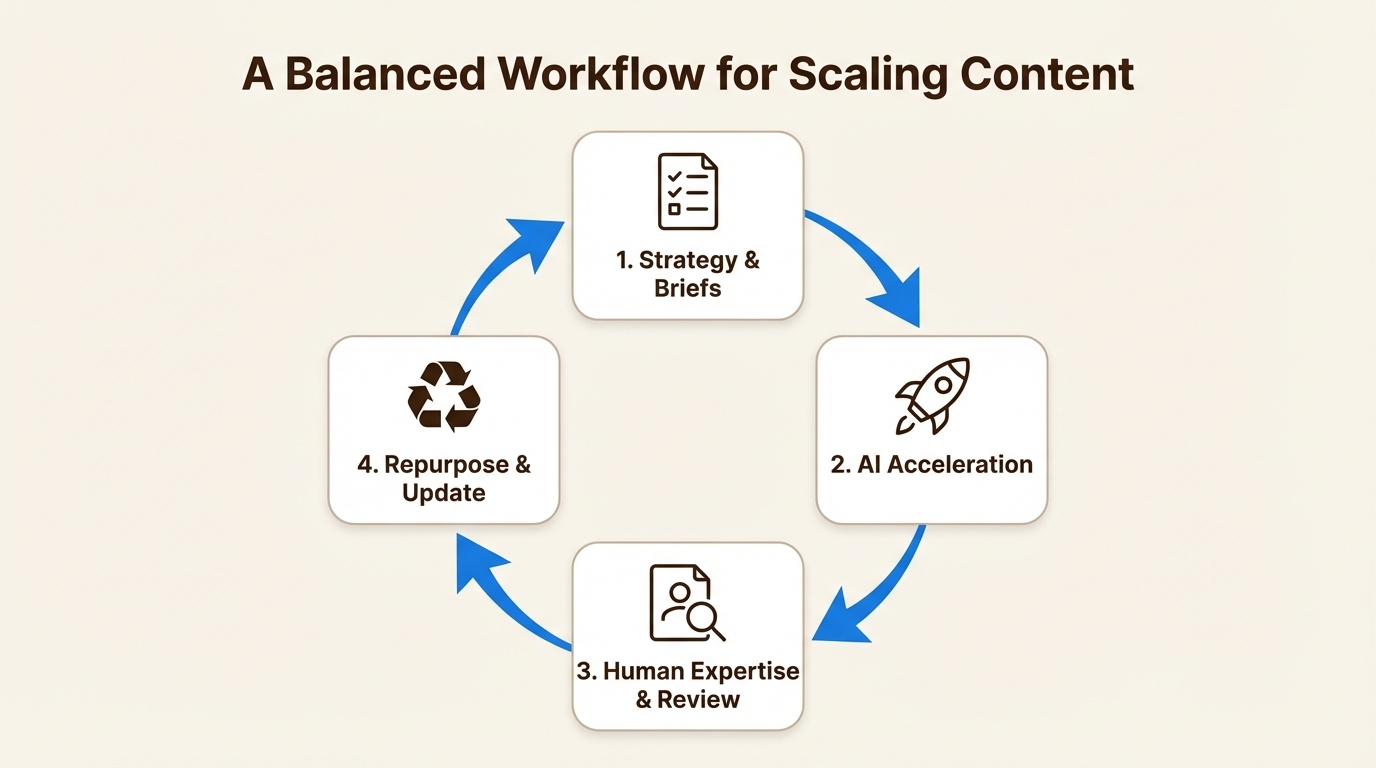
Scaling content efficiently requires a technological foundation that manages the entire lifecycle of an asset. An effective automated content engine replaces manual bottlenecks with intelligent workflows.
- Strategic Planning: Use AI tools to identify content gaps and high-value search intent patterns within your industry.
- AI-Accelerated Drafting: Leverage models to generate initial outlines and drafts based on verified, proprietary context.
- Automated Formatting: Ensure content is automatically formatted for search relevance, including schema markups and optimized structure.
- Distribution: Sync your production pipeline with your hosting platform to ensure consistent, timely publication that signals activity and freshness to search engines.
Maintaining Quality at Scale: The Role of Human-in-the-Loop AI
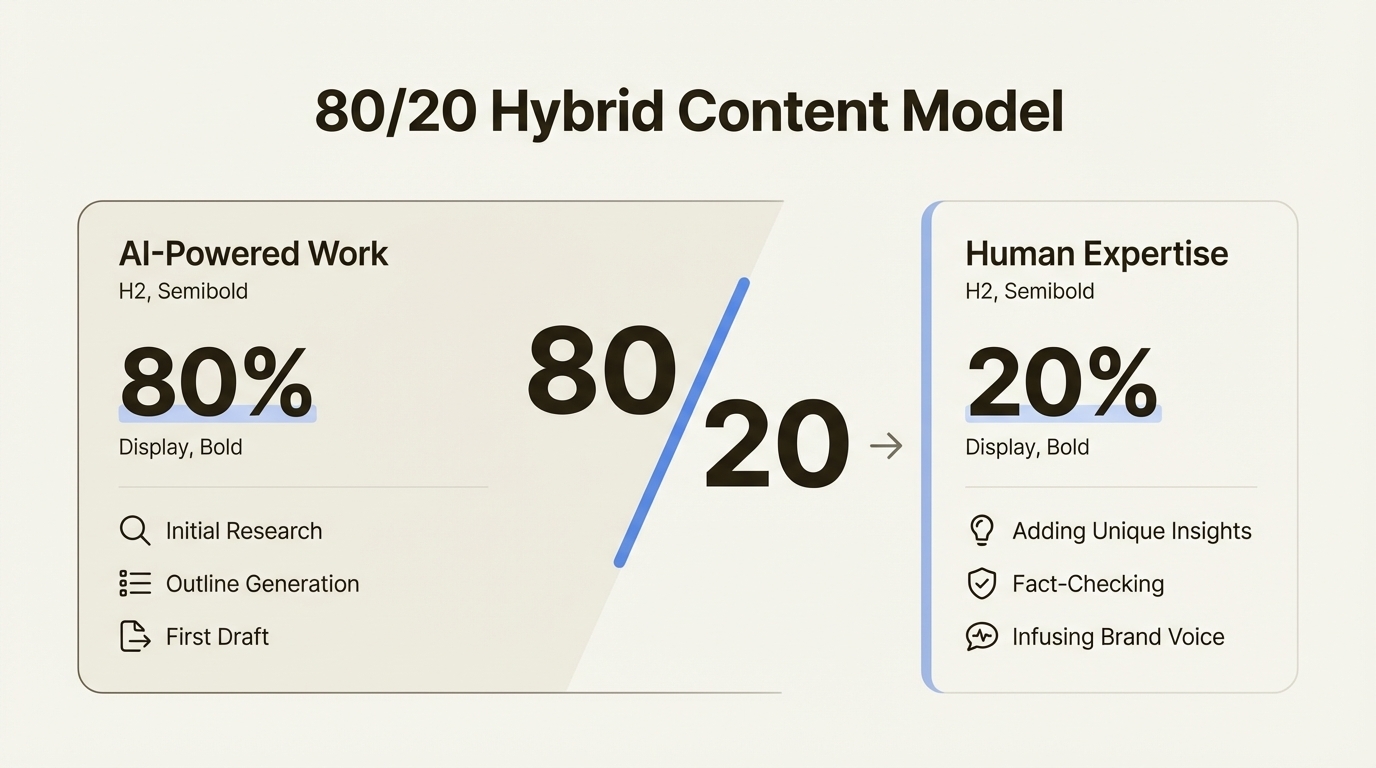
The most successful brands operate on a hybrid model. While AI can handle the heavy lifting of structure and drafting, human expertise is non-negotiable for high-level quality assurance.
The human-in-the-loop framework ensures that:
- Tone and Brand Consistency: Humans provide the nuance, voice, and empathetic connection that pure AI-generated text often lacks.
- Accuracy Verification: Subject matter experts audit content for technical correctness and potential hallucinations.
- Strategic Alignment: Editors ensure every piece of content supports broader business objectives, such as lead generation or thought leadership.
Strategy: How AEO/GEO Transforms Your Content Workflow
AEO/GEO Services is designed specifically to navigate these complexities. By automating the technical requirements of generative search optimization—such as context-structuring and intelligent distribution—our platform enables teams to produce enterprise-grade content at a speed previously impossible.
When you integrate AEO/GEO into your workflow, you move away from chaotic manual production and toward a predictable, scalable engine. You gain the ability to maintain visibility in AI-generated answers while freeing your human talent to focus on high-value strategy and original thought.
To learn how to modernize your content production, visit AEO/GEO.