On This Page· 5
The polished AI-generated description claims your product is “perfect.” The Reddit thread argues it is barely usable. Modern AI product recommendations are increasingly built to trust the second source. Recommendation engines no longer rely solely on static specifications or brand copy. They parse human experience to determine what to surface to the next shopper. This shift marks how authenticity has moved from a marketing nicety to a core ranking and conversion signal.
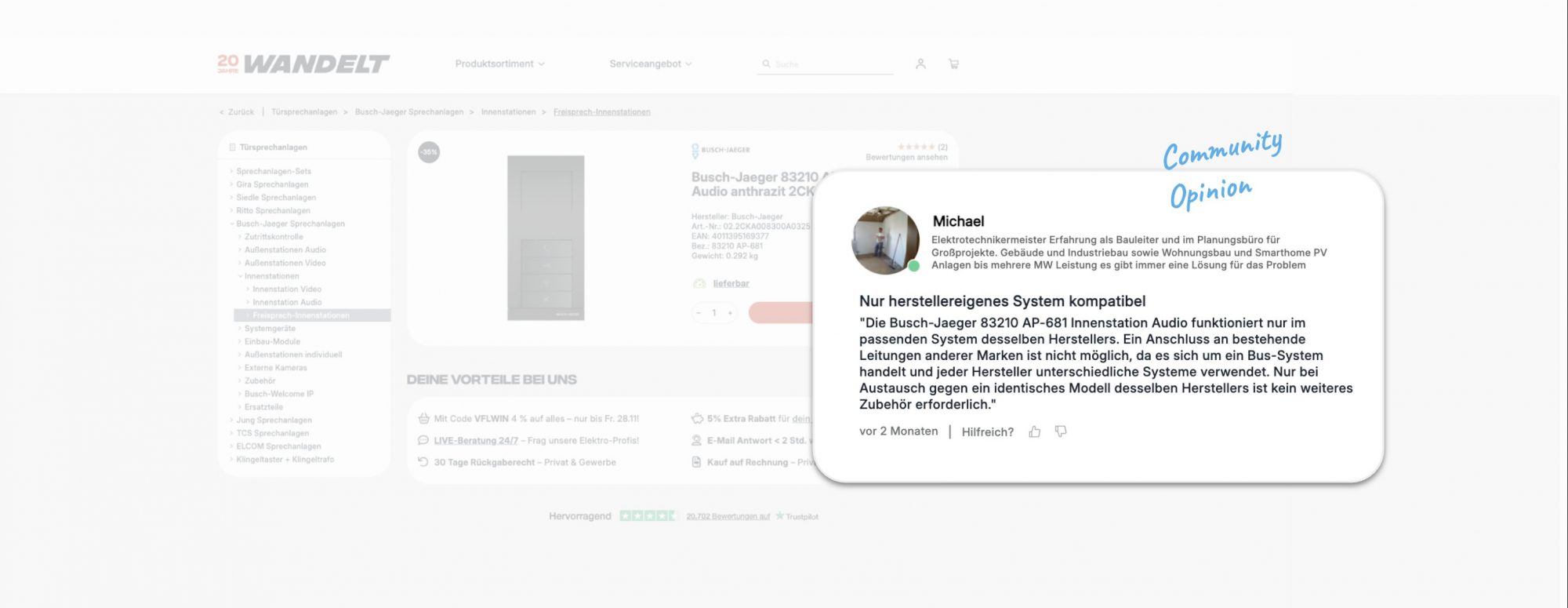
The Signal Gap: Why LLMs Cite Reddit Over Product Descriptions

When an AI engine searches for a product, it often ignores the polished marketing copy on your site. Instead, it turns to platforms like Reddit or Quora. This happens because generative engines prioritize sources containing lived experience over optimized brand content.
The Value of Lived Experience
Large Language Models are trained to identify authentic human interaction. They look for specific pain points, real-world nuances, and unfiltered feedback. These elements signal genuine utility. Generic, AI-written copy lacks this depth. It often reads as smooth but hollow. Without the friction of real use, the text fails to provide the contextual depth required for citation.

UGC as Training Data
User generated content is no longer just a tool for social proof. It is the primary data source that teaches AI systems what a product is actually like to use. For recommendation algorithms, the raw input from customers is more valuable than technical specifications. This data helps personalization engines understand how a product performs in daily life. By analyzing these authentic signals, AI product recommendations become far more relevant to the shopper’s actual needs.
Mapping the Flow: How Recommendation Algorithms Process Real-World Evidence
Personalization engines do not simply read text; they parse structured and unstructured data to build a multidimensional profile of user intent. When you submit a customer review or answer a question in a Q&A section, that input is immediately ingested as a training signal. The system extracts semantic entities—such as specific features, pain points, and usage contexts—and maps them to existing product attributes. This process transforms raw narrative input into structured vectors that the algorithm can use to refine future matching scores. By treating peer feedback as valid data, these systems move beyond static categorization into dynamic, experience-based ranking.

Weighing Sentiment Against Specs
A key challenge for recommendation algorithms is determining the relative weight of subjective sentiment versus objective technical specifications. A spec sheet states a battery lasts twenty hours, but user generated content reveals it lasts six hours under heavy load. The algorithm analyzes comparative judgments and specific use-case mentions to adjust its internal confidence scores. If multiple reviews highlight a discrepancy between advertised performance and real-world experience, the system may down-rank the product for users prioritizing reliability. This weighting mechanism ensures that the final product match reflects not just what the manufacturer claims, but what the community confirms.
Static Specs vs. Dynamic Insights
Technical specifications are static; they rarely change until a new model is released. In contrast, peer recommendations are dynamic, evolving with each new piece of feedback. This difference is critical for navigating long-tail use cases. A product might list compatibility with a specific operating system, but only users in a niche profession can confirm if it handles specialized workflows without lag. AI systems leverage these contextual insights to handle queries that standard specs cannot address. While a spec sheet defines the boundaries of a product, user generated content defines the quality of the experience within those boundaries. By prioritizing this dynamic data, the algorithm can navigate complex, ambiguous purchase decisions with greater precision.
The Performance Data: 88% Trust and the 29% Conversion Lift
The commercial value of authentic peer insights is a measurable metric. Nielsen research establishes that 88% of consumers trust recommendations from other users as much as advice from personal contacts. This baseline of human trust is what drives the performance of UGC in ecommerce. When shoppers see genuine customer reviews, their hesitation drops, and the path to a purchase decision shortens.
This trust translates directly into revenue. Data from PowerReviews indicates that pages featuring authentic user generated content see an average 29% lift in conversion rates. This is not a marginal improvement; it is a significant commercial impact that proves experience has a clear return on investment.

The strength of these reviews lies in their dual function. They improve the immediate shopper journey by answering specific, lingering questions that generic descriptions cannot address. Simultaneously, this high-quality, first-hand data acts as a signal for personalization engines. AI product recommendations systems rely on these nuanced inputs to understand what a product is actually like to use. By providing this data, brands increase the likelihood of being surfaced by AI-driven search, creating a feedback loop where authenticity drives both direct conversion and long-term visibility in generative answers.
Scaling Authenticity: Solving the Structural Challenges of UGC
Collecting high-quality user generated content creates a trust surplus but introduces an operational deficit. Unlike polished brand copy, raw UGC is inconsistent, unstructured, and expensive to scale without significant incentives. This friction often leads teams to default to AI-generated text, which solves the volume problem but destroys the authenticity signal that drives modern AI product recommendations.
The effective path forward is a hybrid model. Instead of using AI to fabricate reviews, we use it to structure, filter, and optimize real human input. This approach preserves the genuine voice of the customer while making the data parseable for recommendation algorithms. By letting AI handle the formatting and categorization of existing content, brands can scale their UGC assets without compromising the lived-experience signals that LLMs prioritize.
| Feature | AI-Generated Copy | Authentic UGC |
|---|---|---|
| Speed | Fast | Slow |
| Tone | Generic | Authentic |
| Control | High SEO control | Hard to structure |
| Impact | Low conversion lift | High conversion lift |
Common Questions on UGC and AI Personalization
Detecting Inauthentic Signals
Many brands worry that AI-generated reviews will eventually become indistinguishable from human input. The reality is that detection systems are becoming increasingly sophisticated at identifying inauthentic patterns, which actually penalizes brands that rely on synthetic content. When an AI engine flags content as fabricated, it loses the credibility needed for citation in AI product recommendations. Trust is the currency of the algorithm; once a source is marked as inauthentic, its visibility in generative search drops significantly. This dynamic reinforces the value of genuine human experience as a primary ranking factor.
The Value of Q&A Structure
Question and answer formats offer a distinct structural advantage for language models. LLMs prefer direct question-answer pairs because they provide clear context for specific product queries, reducing the ambiguity that often plagues descriptive copy. This structure allows the model to extract precise answers without needing to interpret lengthy paragraphs. For customer reviews and Q&A content, this clarity ensures that the most relevant insights are surfaced when a user asks a targeted question. It is a format that aligns perfectly with how AI systems process and synthesize information for personalized responses.
The brands that will define the next era of commerce are those using technology to amplify human expertise, not replace it. This distinction determines whether a personalization engine sees your content as credible evidence or just another algorithmic artifact. When an AI engine scans your site, it is looking for the raw, unfiltered texture of real usage. If your content strategy relies on polished, synthetic copy, you are effectively asking the algorithm to ignore the very signal that drives trust. Does your current content library look like a human experience, or just another automated output?