Generative search has fundamentally altered how users discover information, moving from a list of blue links to synthesized, conversational answers. For businesses, achieving visibility in this new landscape requires moving beyond traditional SEO toward a technical framework designed for Generative Engine Optimization (GEO).
The Anatomy of AI-Ready Content Architecture
The transition to generative search requires shifting your focus from keyword density to topical authority. LLMs do not look for exact keyword matches; they map entities and the semantic relationships between them to construct answers.
- Entity-Based Authority: Build comprehensive content clusters that define your brand’s expertise as an entity. Connect concepts logically so that AI models can easily associate your site with authoritative knowledge in your niche.
- Structured Data: Leverage FAQ and HowTo schema to provide direct, machine-readable answers. By packaging information in these formats, you make it easier for crawlers to ingest specific snippets that appear in AI summaries.
- Navigational Hierarchy: Use H2 and H3 tags as semantic markers. These headings act as signposts for LLMs, helping them categorize the depth of your content and determine its suitability for answering specific user queries.

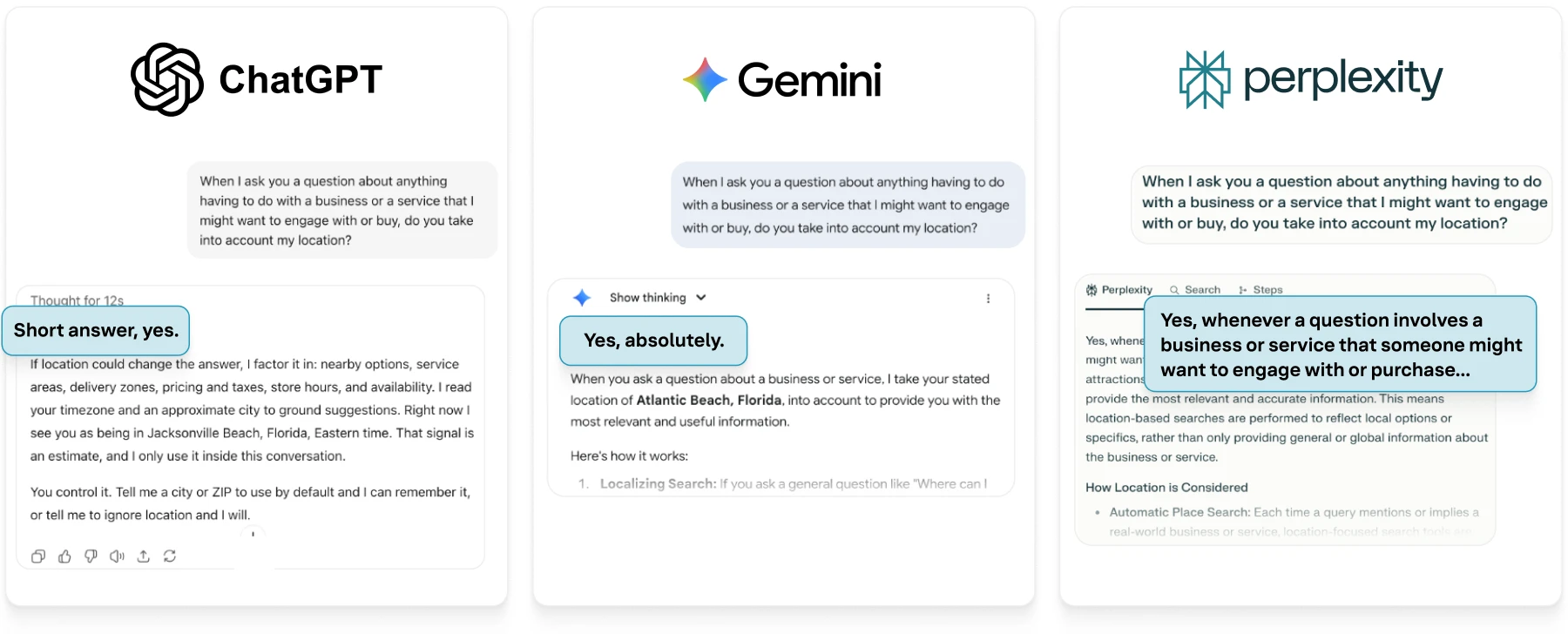
Engine-Specific Nuances: Optimizing for ChatGPT, Perplexity, and Google AI Overviews
Not all AI engines function identically. Differentiation is key to capturing visibility across the ecosystem.
- Perplexity: This engine favors research-heavy, citation-rich sources. Optimization here requires deep-dive content that relies on original data, verified statistics, and secondary source corroboration.
- ChatGPT: With its conversational bias, ChatGPT prioritizes clarity and direct, human-like explanations. Focus on high-readability content that answers “how-to” and “why” questions concisely.
- Google AI Overviews (SGE): Google emphasizes high-trust, authoritative domains. Your technical accessibility—specifically managing how you allow-list AI crawlers—is crucial. Ensure your server logs confirm that primary AI agents can parse your content effectively without being blocked by overly aggressive rate limits.
GEO Implementation: A 10-Point Tactical Framework
To operationalize your visibility strategy, follow this technical checklist:
- Map Semantic Entities: Identify the core concepts defining your brand and industry.
- Cluster Content: Organize pages into logical topic hubs rather than isolated articles.
- Inject Structured Schema: Implement schema markup on every high-intent page.
- Optimize for Density: Keep information dense; remove filler and fluff.
- Audit Bot Signals: Review robots.txt to ensure AI crawlers have full access.
- Verify Citations: Ensure your primary domain is cited in key industry responses.
- Standardize Formatting: Use consistent H2/H3 structures across the site.
- Improve Load Velocity: Faster rendering supports better ingestion for search indexers.
- Refresh Periodically: AI prefers up-to-date data; update core content quarterly.
- Analyze Synthetic Output: Monitor what LLMs generate when queried about your sector.
Measuring Success Beyond Traditional Rank: GEO-Specific KPIs
Traditional rankings are now a vanity metric. To succeed in the generative era, you must track metrics that reflect actual AI presence:
- Presence Rate: The frequency at which your brand appears in AI-generated answers for your target topic clusters.
- Citation Share of Voice: The percentage of time your brand is cited as a source compared to competitors in AI responses.
- Brand Mention Consistency: Tracking if the AI accurately reflects your brand identity and value proposition when summarizing information.
Operationalizing GEO: Partnering for AI Visibility at Scale
Scaling generative search visibility is as much an infrastructure challenge as it is a content one. When evaluating automation partners, prioritize those that offer robust API integrations for automated content deployment and real-time schema management.
Effective GEO is not just about the volume of content; it is about building a scalable publishing pipeline that integrates human expertise with AI efficiency. Choose partners who prioritize technical signals—like server accessibility and semantic architecture—over simple content volume, as this infrastructure is what ultimately sustains long-term visibility in the AI era.