The Infrastructure Deficit: Why Standard CMS Workflows Fail in the AI Era
Traditional content management systems were built for human-to-browser interactions. They operate on manual, linear queues that create a significant bottleneck when attempting to compete in generative search. In this environment, the gap between production and indexing is a liability; manual editing queues cannot match the speed or volume required by AI-driven algorithms.
To achieve sustained visibility, you must move toward a Content-as-Code paradigm. This approach treats your content repository not as a library of static documents, but as a dynamic database of modular assets, version-controlled and programmatically managed, ensuring that your output is always optimized for machine consumption rather than just human readability.
Core Tech Stack Components for Generative Search Readiness
Scaling content for AI search requires a robust, high-performance architecture. You are building a factory, not just a blog.
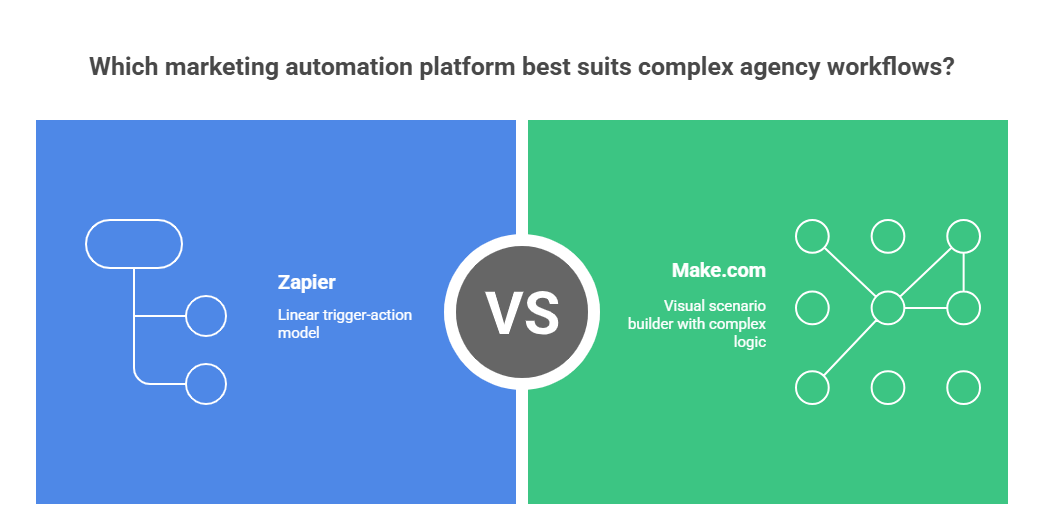
- Workflow Orchestration: Move beyond simple, linear Zapier triggers. Utilize Make.com or similar platforms to architect complex branching logic. This allows for conditional routing based on topic clusters, real-time data ingestion, and multi-stage approval workflows.
- Model Selection: Adopt a hybrid LLM strategy. Deploy GPT-4 for high-level semantic synthesis and structural planning, while leveraging Claude for long-form content generation where nuance, length, and specific tone adherence are critical.
- Contextual Retrieval: Anchor your AI output in reality using Vector Databases like Pinecone or Weaviate. By converting your proprietary knowledge, white papers, and historical performance data into vector embeddings, you provide the LLM with a “ground truth” source, drastically reducing hallucinations.
Orchestrating the ‘Human-in-the-Loop’ API Pipeline
Pure automation is a risk; high-performance content engineering relies on controlled, programmatic human intervention.
- Automated Validation: Deploy API-driven fact-checking layers. Before any content is staged, your pipeline should cross-reference key assertions against your Vector Database.
- Feedback Integration: Implement a mechanism where manual edits made by subject matter experts are pushed back into the vector store. This ensures your knowledge base is continuously learning from human intelligence.
- Cost Governance: Maintain strict token-usage transparency. By instrumenting your API calls with custom logs, you can track cost-per-article and token consumption, allowing you to optimize prompts and model selection to protect your margins.
Operational ROI: Measuring the Efficiency of AI-Content Automation
Architectural investment must be justified by granular efficiency metrics. By shifting from manual production to an automated engineering stack, you can track:
- Cost-per-Asset Reduction: Compare the overhead of legacy agency/internal team production against the amortized costs of your automated pipeline.
- Visibility Impact: Replace vanity traffic metrics with LLM-based rank tracking, monitoring how frequently your brand appears as a cited source in synthesized search responses.
- Consistency Control: Automate brand-voice enforcement through custom system-prompt validation, ensuring consistent output across thousands of pages without manual oversight.
Future-Proofing Your Automation Architecture
The AI landscape is volatile. Your infrastructure must be designed for modularity—allowing you to swap an LLM or a vector provider without performing a total system rebuild. Transitioning from experimental pilots to an enterprise-grade content infrastructure means prioritizing decoupled architecture. As LLM search algorithms evolve, a modular stack allows you to swap internal components rapidly, maintaining your search visibility while your competitors remain tethered to rigid, legacy platforms.