On This Page· 4
The digital search landscape has fundamentally shifted. We have moved from a model of retrieving blue links to a new era where Large Language Models (LLMs) synthesize information into direct, authoritative answers. For modern businesses, relying on static SEO publishing strategies is no longer sufficient; success now demands a dynamic approach to visibility.
The New Reality: Why Content Architecture Alone Isn’t Enough
The transition from traditional keyword-based retrieval to generative synthesis means your brand is no longer just competing for a SERP position—you are competing for inclusion as a trusted reference.
- From Retrieval to Synthesis: Generative engines act as curators, not just indexers. They prioritize content that is contextually rich and semantically dense.
- The ‘Monitor, Adapt, Optimize’ Loop: Because LLMs are constantly updating their reasoning weights and training data, a ‘set it and forget it’ publishing strategy leads to rapid irrelevance. Visibility requires a continuous cycle of tracking how your content is processed and cited.
- Content Quality vs. Citation Authority: High-quality writing is table stakes. Citation authority—the degree to which an AI engine views your site as a primary, verifiable source—is the new metric for success. Your architecture must explicitly map entities and relationships to make your expertise machine-readable and easy to extract.
Defining Your AI Visibility Stack: Essential Measurement Categories
To master generative search, you must move beyond vanity metrics like page views and implement a sophisticated visibility stack.
- AEO (Answer Engine Optimization) vs. GEO (Generative Engine Optimization): AEO focuses on optimizing for specific, structured snippets in traditional engines, while GEO focuses on being embedded within the narrative of LLM-generated responses. You need tracking that covers both.
- Brand Sentiment in LLM Responses: It is not enough to be mentioned; you must be mentioned accurately. Tracking sentiment within generated answers allows you to detect and correct “hallucinations” or biased interpretations of your brand before they cement into user perception.
- Key Performance Indicators:
- Citation Frequency: How often your domain is cited in response to industry-relevant queries.
- Source Relevance: The contextual alignment between the queries driving AI answers and your specific content assets.
- Answer Engine Reach: The aggregate number of generative interactions where your brand appears as a source.
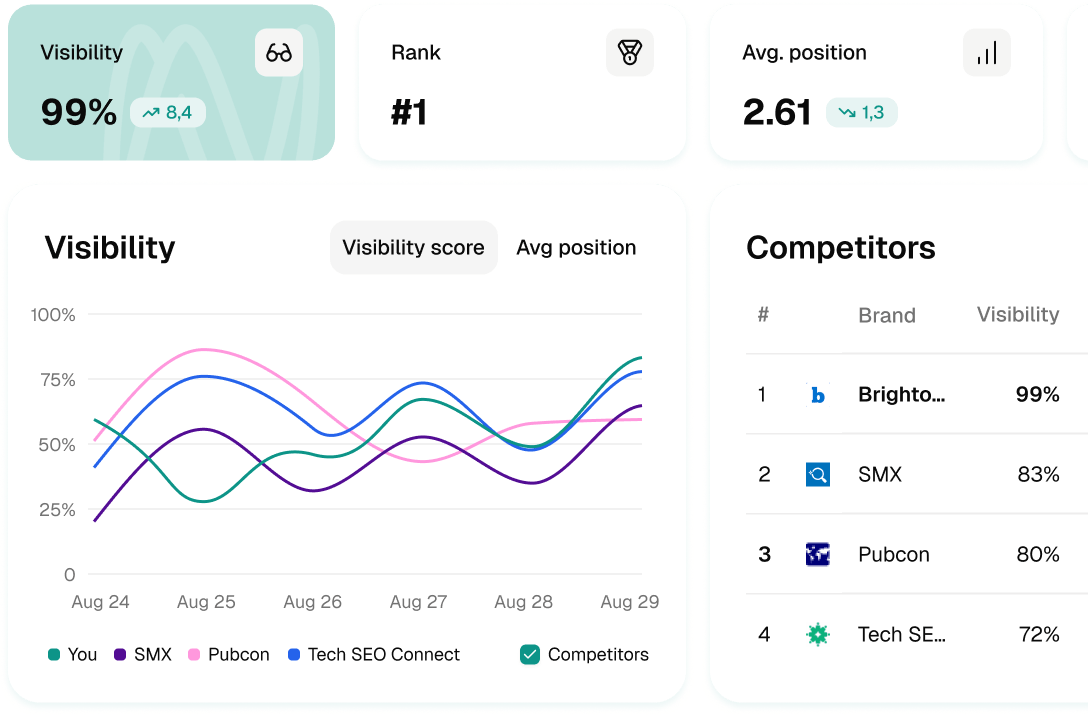
Operationalizing Optimization: The Recurring Visibility Loop
Optimization must become a core operational task rather than a quarterly project. This shift requires integrating visibility data directly into your content production lifecycle.
- Continuous Monitoring as a Workflow: Agencies and internal teams must treat visibility data as a real-time feedback loop. If a piece of content loses its citation frequency, it should trigger an immediate audit of its semantic structure and data accuracy.
- Data-Informed Architecture: Use visibility gaps identified by your monitoring tools to refine your content architecture. If an LLM consistently sources a competitor for a core service query, identify the “knowledge gap” in your current documentation and update your content to provide a more definitive answer.
- Cross-Team Integration: Ensure your SEO, content, and engineering teams are aligned on AI visibility goals. By creating a unified dashboard for AI-ready content performance, you transform technical search data into actionable content briefs.
Selecting the Right Tools for Your AI Visibility Goals
Not all SEO tools are built for the generative age. You need a platform that prioritizes generative search visibility over traditional SERP rankings.
- Evaluation Framework: Look for tools that offer granular tracking of LLM citations, sentiment analysis of generated summaries, and automated alerts for visibility drops.
- Matching Tooling to Business Scale:
- SaaS Companies: Prioritize platforms that offer API-first integrations to automate the optimization of product documentation and knowledge bases.
- Digital Agencies: Seek multi-tenant platforms that provide centralized reporting across multiple client domains, enabling you to scale AI search strategies efficiently.
- The AEO/GEO Audit Checklist:
- Does the tool track visibility across multiple LLMs (e.g., GPT, Claude, Gemini)?
- Can it distinguish between organic SERP rankings and generative answer placement?
- Does it offer direct insights into the ‘entities’ the engine is associating with your brand?
By bridging the gap between high-quality content and real-time visibility monitoring, you create a sustainable, competitive moat in the evolving AI-driven search ecosystem.