Defining the Intelligence: From ANI to ASI
At its core, Artificial Intelligence (AI) represents the simulation of human cognitive processes by machine systems. While the term is often used as a monolith, it encompasses distinct levels of capability. Understanding these classifications is essential for navigating the modern technological landscape.
- Artificial Narrow Intelligence (ANI): This is the current state of technology. ANI systems are designed to perform specific tasks—such as voice recognition, image classification, or predictive text—by processing data within predefined parameters. Modern search engines are almost exclusively powered by ANI; they excel at pattern recognition but lack genuine consciousness or cross-domain adaptability.
- Artificial General Intelligence (AGI): This represents a theoretical future stage where an AI would possess the ability to understand, learn, and apply knowledge across any intellectual task that a human can perform.
- Artificial Super Intelligence (ASI): A conceptual milestone where machines surpass human intelligence across all fields, including creativity, general wisdom, and social skills.
Current search ecosystems rely on the efficiency of ANI to parse massive datasets and deliver relevant results, defining the boundaries of what is possible in today’s digital information environment.
The Technical Engine: How Systems Learn and Adapt
The transformation of raw information into “intelligence” occurs through complex mathematical architecture. At the center of this evolution are machine learning models that identify patterns within data.
The Mechanics of Learning
- Supervised Learning: Think of this as a student with an answer key. The model is trained on labeled datasets where the input and the correct output are provided. The system learns to map inputs to specific labels, refining its accuracy through continuous feedback.
- Unsupervised Learning: This resembles independent study. The system is given raw data without instructions and must find inherent patterns, structures, or anomalies on its own, such as clustering customer behaviors or identifying natural language groupings.
Neural Networks and LLMs
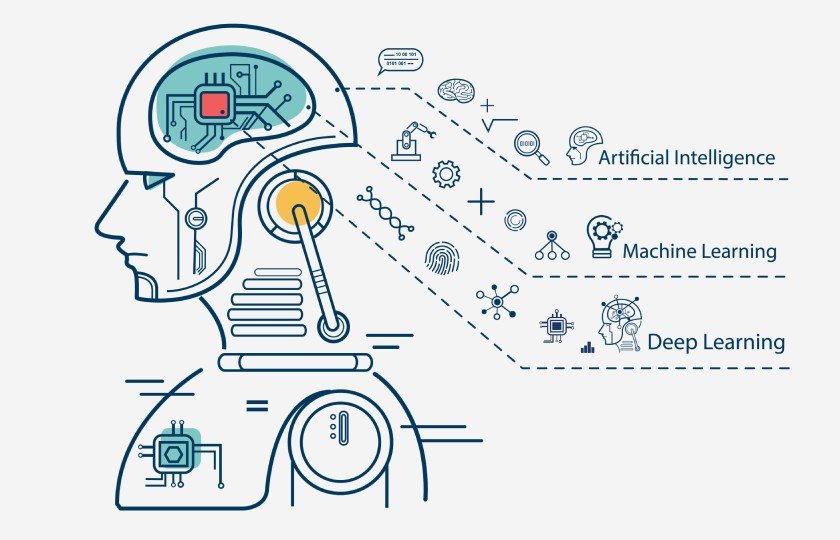
Modern AI is built upon neural networks—multi-layered architectures inspired by the human brain. Large Language Models (LLMs) take this further by utilizing billions of parameters to predict the statistical probability of subsequent words or concepts. This architecture allows AI to simulate reasoning, summarize complex topics, and synthesize answers that appear contextual, even though they are rooted in advanced probabilistic modeling rather than sentient understanding.
An Evolutionary Perspective: A Brief History of AI Development
The trajectory of AI has been marked by bold ambition and periodic stagnation. The intellectual foundations were laid mid-20th century by pioneers like Alan Turing, who questioned if machines could “think,” and John McCarthy, who officially coined the term “Artificial Intelligence” at the 1956 Dartmouth Workshop.
Following these early breakthroughs, the field experienced several “AI Winters”—periods where funding and interest dried up due to the mismatch between high expectations and the hardware/data limitations of the time. The transition to the Big Data era changed this dynamic entirely. With the explosion of digital content and high-speed computing, models finally had the fuel necessary to move from abstract theory to practical utility, directly shaping the generative AI capabilities we interact with today.
Ethical Landscapes and Security Challenges in AI Integration
As AI systems become embedded in daily information retrieval, the focus has shifted from mere capability to governance and oversight.
- Data Privacy and Intellectual Property: Training models requires vast amounts of information, raising critical questions about consent and the ownership of the content used to build these “brains.”
- Algorithmic Bias: Because models learn from historical data, they can inadvertently perpetuate or amplify societal prejudices. Ensuring neutral and equitable decision-making is a primary challenge for developers.
- The Governance Shift: The tech sector is moving toward comprehensive oversight frameworks, focusing on transparency and “explainability”—the ability to track how an AI reached a specific conclusion to ensure it aligns with human values.
The Future of Algorithmic Reasoning in Search Ecosystems
The convergence of technical AI advancement and search intent is fundamentally changing how users interact with the internet. We are moving toward a future where search isn’t just about finding links, but about receiving synthesized, verified knowledge.
As AI models become more adept at anticipating complex user needs, organizations must cultivate a high degree of technological literacy. Strategy in the coming years will depend on understanding the nuances of algorithmic behavior—not just to chase rankings, but to ensure that brand information is structured, accurate, and ready for ingestion by the intelligent systems defining the future of digital discovery.