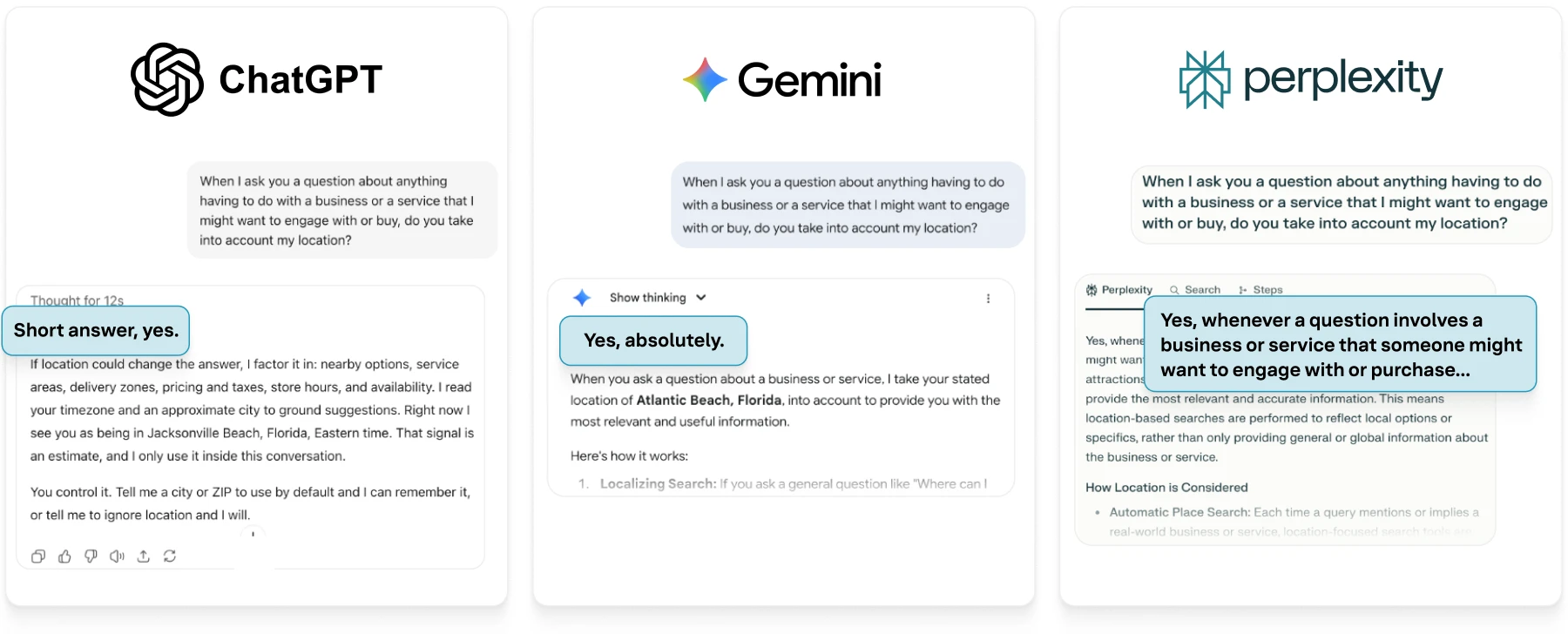
In the era of AI-driven search, traditional SEO metrics are losing their grip. When users ask questions, they no longer want a list of blue links; they want an immediate, synthesized answer. This shift toward Generative Engine Optimization (GEO) requires a fundamental change in strategy. You are no longer competing for ranking positions; you are competing to be the authoritative source that AI models use to construct their answers.

The New Authority: Why Generative AI Prioritizes Trust Over Ranking
The transition to GEO marks the end of the “keyword density” era. Large Language Models (LLMs) function based on probabilistic prediction, prioritizing content that displays high levels of corroboration and semantic relevance.
Unlike traditional backlinks, which act as digital votes of popularity, AI citations operate on a “trust-by-evidence” model. When an AI generates a response, it pulls from data points it perceives as factual, stable, and widely supported. To “rank” in generative search, your content must provide the evidence necessary for the AI to confidently cite your brand as a primary source.
Entity Clarity: Ensuring AI Understands Your Brand’s Value Proposition
If an AI cannot definitively link your content to a specific topic or value proposition, it will bypass your site entirely. You must treat your brand as an entity that needs to be clearly defined within the machine-readable web.
- Semantic Markup: Utilize Schema.org markup to explicitly define your business entity, services, and relationships.
- Knowledge Graph Footprint: Establish a consistent identity across external platforms—industry directories, professional aggregators, and authoritative databases—to help AI correlate your brand with your expertise.
- Query Alignment: Don’t just target keywords; analyze the intent behind user queries. Structure your content to directly answer the “who, what, and why” that your ideal customers are asking.
Proof Assets: A Checklist for Becoming a Source of Truth
To be selected as a citation, your content must be structured as a proof asset. An AI needs “grab-and-go” data that it can synthesize without needing to interpret complex prose.
Essential Components of a Proof Asset:
- Original Data & Research: Unique statistics or proprietary industry analysis provide the raw material AI models thrive on.
- Case Studies: Documented outcomes serve as verifiable proof of your competency.
- Neutral Corroboration: Content that is cited or referenced by other credible industry sources reinforces your brand’s authority within the LLM’s training data.

Diagnosing Your AI Visibility: Why You Aren’t Being Cited
Visibility in AI search is not a mystery; it is a measurable data output. If you aren’t appearing in generative answers, it is likely because your content lacks the markers of high-authority, extractable information.
- Audit for Readability: Are your answers buried in long-form narratives, or are they presented in a clear, semantic structure (such as tables or concise lists) that an AI can easily parse?
- Gap Analysis: Compare your entity representation against competitors. Are they winning because they have more “proof assets,” or because they have higher brand consistency across the web?
- Citation Tracking: Monitor how frequently your brand or domain is being associated with your target topics in generative outputs. A lack of citations is a clear signal that your content is not viewed as a “source of truth.”
Building a Consensus-Driven Content Engine
Winning in generative search requires a scalable, proactive approach. You need to treat your content pipeline as a system for citation acquisition.
- Extractable Content Formats: Prioritize the creation of modular, high-value assets that AI can easily pull into a response—think data tables, quick-reference guides, and definitive lists.
- Automated Distribution: Ensure your content is pushed to platforms where the AI models frequently source their information updates.
- Cross-Platform Management: Manage your brand’s presence on forums, review sites, and expert platforms. AI models synthesize these community-led discussions to gauge consensus.
By transforming your content strategy into a machine-optimized library of proof, you move from fighting for a link to becoming the backbone of the AI’s answer.