Building an online community is not just about creating a digital space for people to gather. It is about fostering genuine connections that turn casual visitors into loyal advocates. As Matthew Stibbe, CEO of Articulate Marketing, puts it, community is not the cult of celebrity. It is a reciprocal thing. It is about building true connections and developing those connections into lasting relationships.

At AEO/GEO, we understand that visibility in the modern digital landscape goes beyond traditional search engine optimization. It requires building ecosystems where your brand serves as the hub for valuable information and interaction. When you build a successful online community, you share your brand identity, deepen relationships with members, and provide them with the resources they need to succeed.
But how do you actually build an online community that thrives? It requires a strategic approach, from defining your ‘why’ to choosing the right platform and promoting your launch. Here is a step-by-step guide to help you create a space that adds value to your members and your business.
Define Your Purpose and Audience
The foundation of any successful online community lies in understanding why you are building it. Without a clear purpose, your community may lack direction and fail to engage members. Jenny Sowyrda, Manager of Community Strategy and Operations at HubSpot, advises knowing why you are building a community from a business perspective and who you are building it for. You should have a clear goal and mission statement.
Uncovering Your Community’s ‘Why’
Your motivation will guide every decision you make, from the platform you choose to how you promote the space. A helpful strategy is to build a persona for each community. This persona represents your ideal member and helps you tailor your approach to their specific needs and interests. If you are building multiple communities, create a separate persona for each one.
Sowyrda illustrates this well: setting up an email inbox is similar for Gmail and Outlook, but setting one up for a bakery looks different than for a law firm. The same applies to community building. The majority of your adjustments will depend on the members you are serving, not the platform you are using.
Identifying Your Ideal Audience
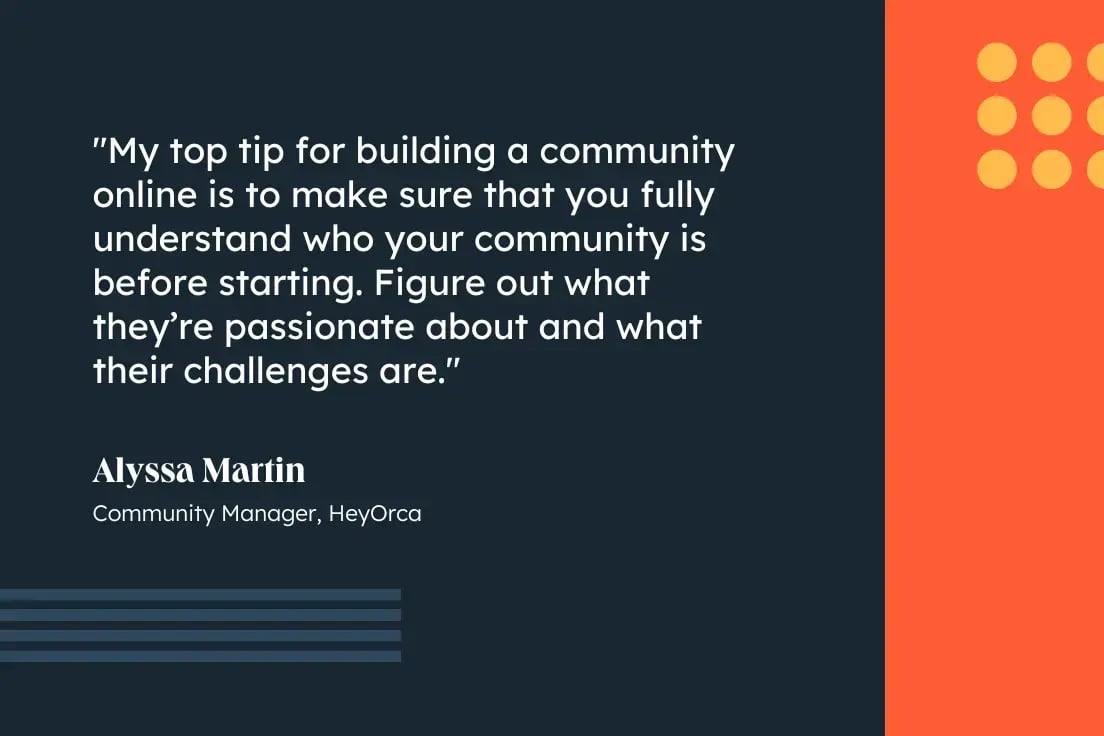
Once you have defined your objectives, the next step is to identify and understand your audience. Alyssa Martin, Community Manager at HeyOrca, emphasizes the importance of fully understanding who your community is before starting. Figure out what they are passionate about and what challenges they face. This insight allows you to strategize and set up a space that truly resonates with them.
Understanding your target audience helps you:
- Choose the most effective channels for community building.
- Determine the appropriate style and tone of communication.
- Tailor content and activities to their needs and interests.
- Predict and manage potential challenges.
To gain these insights, gather data on your current customers or target demographic. Look at demographics (age, gender, profession), psychographics (values, attitudes, lifestyles), behaviors (online interaction, social media usage), and needs and challenges. Qetsiyah Jacobson, a Social Media Community Manager at HeyOrca, suggests immersing yourself in niche communities, like Facebook groups or Reddit, to understand the audience you are trying to reach. Market research, social media analytics, and customer surveys are also valuable tools.
Establish Internal Structure and Metrics
Before launching your community externally, you need to align your internal teams and define what success looks like. This internal groundwork ensures that your community supports broader business goals and has the resources it needs to thrive.
Identifying Key Internal Stakeholders
Identify the internal stakeholders who will be involved in your community. These generally fall into three categories:
- Community Managers: For external-facing communities, this may include the community manager, marketing department, and customer support. Internal communities may have different stakeholders.
- Impacted Teams: If your community is external, involve marketing teams as they will be impacted by the insights gained. If you are gathering community feedback, involve product management stakeholders.
- Upper Management: This stakeholder oversees processes to ensure everything is running smoothly, such as an operations manager.
Determining Success Metrics
Success looks different for every online community, so it is essential to decide on the metrics you will track based on your goals. If your goal is brand awareness, tracking the number of followers and new followers will be critical. Sowyrda notes that they monitor metrics like weekly and monthly active members, number of posts, community growth, response time, and response rate.
Align your success metrics with what the business cares about. If multiple teams are involved, success might look different for each. Here are some examples of KPIs for different teams:
| Team | Example KPIs |
|---|---|
| Marketing | Market share, customer sentiment, mobilizing influencers, NPS |
| Operations | Operational efficiency, reducing support costs |
| Customer Service | CSAT, NPS |
| Product Management | Product testing, market research, beta testing, customer feedback |
Choosing the right metrics early on helps you demonstrate the value of your community to stakeholders and guides your ongoing strategy.
Choose and Set Up Your Platform
With your purpose, audience, and metrics defined, it is time to choose the right platform and set up your community. This step involves selecting a tool that aligns with your goals and configuring it to provide a seamless experience for your members.
Selecting the Right Platform
Christina Garnett, CCO of Founder and Fractional and Pocket, advises against choosing your community tech stack until you understand what behaviors you want members to exhibit and what metrics you want to track. This clarity will help you narrow down the best tools for your needs.
Consider the different community models: free, owned, and paid. Each offers different levels of control and freedom. A free Facebook Page allows for discussion but limits your control to what Facebook permits. An owned forum on your website gives you complete creative liberty and control over how you run the community and what members can do.
Key factors to consider when choosing a platform include:
- Audience Interest: Where does your target audience already spend time online?
- Community Objectives: Does the platform help you meet your goals (e.g., exclusive content, paid membership)?
- Features: What features do you need (e.g., forums, events, gamification)?
- Control: How much ownership and control do you want?
Camille Trent, Director of Content and Community at Teal, suggests building in public channels first. For Teal, an AI resume builder, this meant starting on LinkedIn and their blog. This approach helps build credibility, increase awareness, and conduct light audience research before expanding to private channels.
Configuring Your Community
Once you have chosen a platform, familiarize yourself with the software. Play with a demo or spend time on the platform to understand its capabilities. Here are some setup processes useful for all types of online communities:
- Define Roles: Decide on roles like moderators or super members. Will these be held by internal staff or community members?
- Assign Permissions: Set and test permissions for each role. For example, restrict new accounts from posting links.
- Implement Your Theme: Tie your community to your brand using your color palette and recognizable touches.
- Review Sign-Up: Thoroughly test your sign-up process. Consider single sign-on (SSO) for owned platforms to make joining easier.
- Configure Spam Controls: Set up filters to prevent spam and harmful content.
- Create a Crisis Plan: Prepare contingency plans for potential issues.
- Keep It Private Pre-Launch: Ensure your community is not accessible to outsiders until you are ready.
For owned communities, you can also decide which features to enable, create initial forum categories, set up gamification (badges, rewards), and configure outgoing emails for notifications and welcome messages.
Launch and Grow Your Community
The final phase involves promoting your community, launching it, and remaining adaptable as it grows. A well-planned launch and ongoing adaptation are crucial for building a thriving, engaged community.
Creating a Promotion Plan
Jenny Sowyrda recommends having a detailed promotion plan before launch. You need to understand how you will get people into your community. If you build it, people will not just show up. You need to find the right people, introduce the value, and build trust.
Leverage your existing online presence. Promote your launch on your website, through email communications, and by having your sales and customer service teams tell existing and potential customers about it. A targeted promotion plan ensures your target audience knows the community exists and is excited to join.
Soft Launching
Consider a soft launch to a smaller group before going public. This allows you to fix any roadblocks initial users might encounter. BigFish Games, for example, soft-launched their game Dungeon Boss in the Apple Canada store, driving users to a private community forum. They incorporated feedback, and when they launched worldwide, it became one of the most downloaded games.
Prepare for the soft launch by removing test content, fixing known issues, and pre-populating the community with quality content. Set the right tone before moving to an internal soft launch with trusted colleagues. They can provide valuable feedback and help internal moderators learn the tools. Then, conduct a public soft launch with a select audience, encouraging them to give feedback.
Official Launch and Adaptation
When you are ready, launch your community to your target audience. Leverage your promotion plan and use these tips to drive your first 100 members:
- Invite Contacts: Reach out to professional contacts who align with your community’s purpose.
- Network: Talk to people everywhere, especially if your community has broad appeal.
- Use Gamification: Encourage early members to invite others through contests or reward systems.
- Partner with Influencers: Collaborate with complementary companies or micro-influencers to reach new audiences.
Finally, remain adaptable. Sowyrda advises being willing to pivot. Your community may change as you learn more about your members and their needs. Be open to adapting to meet those needs, as the end goal should always be your members’ success.
Building a successful online community is a journey. It requires understanding your purpose, knowing your audience, setting clear metrics, choosing the right platform, and promoting effectively. By following these steps and remaining adaptable, you can create a space that fosters genuine connections and adds value to both your members and your business. At AEO/GEO, we believe that content and community go hand in hand. By creating AI-ready content and distributing it effectively, you can maximize your brand’s visibility and build a loyal following in the evolving digital landscape.
What is the first step you will take to build your online community?





