The Evolution of Brand Presence on Snapchat
When Snapchat launched in 2011, it offered brands a novel way to reach Gen-Z and millennial audiences through ephemeral, authentic content. However, the early years were fraught with friction for marketers trying to establish a foothold. Between 2015 and 2017, major brands like NASA, Warby Parker, and Sour Patch Kids attempted to build audiences through individual branded accounts. Most of these efforts eventually stalled, leaving many marketers frustrated. The platform’s architecture made it difficult for users to distinguish between official business accounts and impersonators, and the lack of searchability meant brands had to drive traffic from outside sources just to get discovered. This created a high barrier to entry for organizations that relied on organic growth.

Furthermore, early Snapchat accounts could not link directly to external websites. For marketers focused on immediate ROI and web traffic, this limitation created significant hurdles. Many brands pivoted to Instagram Stories, which offered similar ephemeral content formats but with better engagement metrics and direct linking capabilities. Today, searching for these older brand accounts often reveals inactive profiles with missing profile pictures and no recent posts, serving as a graveyard of abandoned digital real estate. This period highlighted a critical lesson: without a clear path to conversion or discovery, brand presence on Snapchat was unsustainable.
The landscape shifted dramatically with the introduction of Snapchat Discover in 2015. This feature provided a dedicated hub for Story-styled content from publishers, major brands, and influencers. It offered a more structured environment for visual storytelling, moving away from the chaotic peer-to-peer model of personal accounts. For larger brands, Discover became a viable channel for awareness campaigns, even if it remained less accessible to small businesses due to partnership requirements and advertising costs. This shift marked the beginning of a new era where curated, high-quality content began to dominate the user experience.

Why the Shift to Discover Matters
The move to Discover was not just a technical update; it was a strategic pivot for the entire platform. By centralizing content, Snapchat allowed brands to reach users who were already in a consumption mindset. Unlike personal feeds, which are dominated by friends and acquaintances, Discover is a destination for entertainment and information. This distinction is crucial for marketers because it changes the context in which their content is viewed. Users are more receptive to branded content when they expect it, reducing the friction associated with traditional advertising.
Moreover, Discover provided a standardized format that encouraged consistency. Brands no longer had to experiment with wildly different styles to stand out; instead, they could focus on refining their narrative within a known framework. This standardization helped elevate the overall quality of content on the platform, making it more appealing to advertisers and publishers alike. As a result, brands that adapted quickly to this new model were able to build stronger, more loyal audiences over time.
Publications Adapting Content for Discovery
Publications have been among the most successful adopters of Snapchat Discover, leveraging their existing content libraries to create engaging visual narratives. The Wall Street Journal, for instance, has maintained a strong presence by adapting its daily news coverage into bite-sized Stories. Rather than chasing trends, WSJ stays true to its brand identity, focusing on finance, culture, and investigative journalism. They use the swipe-up feature to direct viewers to longer-form articles hosted within Snapchat’s content management system, effectively bridging the gap between quick consumption and deep reading. This strategy demonstrates how legacy media can thrive in a fast-paced digital environment by respecting the platform’s unique constraints.
Harvard Business Review has similarly found success by demystifying complex topics. While the name “Harvard” might intimidate some younger users, HBR uses Discover to present accessible stories on technology, career advice, and global issues. They mix short snaps with interactive elements like polls and quizzes, making high-level business concepts relatable. This strategy helps break down the perception of academic elitism, allowing a younger demographic to engage with expert insights. HBR also replicates this strategy on Instagram, where they can link directly to their web articles, showing how content can be scaled across platforms while maintaining brand integrity.
National Geographic takes a different approach, focusing on visual wonder and quick facts. Their Stories often feature fun facts about animals, such as the history of the goldfish, presented in a fast-paced format that matches the platform’s rhythm. By simplifying complex scientific topics into entertaining snippets, they capture attention without overwhelming the viewer. This method serves as a teaser, encouraging interested users to explore their TV shows or magazine subscriptions for deeper content. It’s a masterclass in using visual storytelling to drive interest in broader media properties.
Mashable excels at engaging tech-savvy audiences through interactivity. In one example, they discussed the Google Pixel Buds using polls and a maze-like interactive snap. This approach acknowledges that not all viewers are hardcore tech enthusiasts; by offering multiple ways to engage—voting, solving puzzles, or learning specs—they broaden their appeal. For brands in news-heavy industries, this demonstrates how to position yourself as a credible expert while keeping the experience light and engaging. The key is to balance information with entertainment, ensuring that users remain invested throughout the Story.
Best Practices for Editorial Brands
Editorial brands must prioritize brevity and clarity when adapting content for Snapchat. Long paragraphs and dense text are ineffective on a platform where users swipe away in seconds. Instead, focus on key takeaways and use visuals to reinforce the message. Interactive elements like polls and quizzes can also boost engagement by giving users a sense of agency. Finally, always include a clear call-to-action that directs users to more in-depth content, whether that’s an article, a video, or a subscription page.
Leveraging Partnerships and Shoutouts
Not all brands have the resources to create their own Discover channels. Instead, many choose to partner with existing publishers to reach targeted audiences. This strategy allows brands to benefit from the publisher’s established credibility and audience trust. Sperry collaborated with Style Insider to showcase the intricate manufacturing process of their iconic shoes. By filming the painting and lacing stages, Sperry highlighted the craftsmanship behind their products. This visual proof of quality, combined with Style Insider’s fashion authority, persuades viewers of the brand’s value. It’s a powerful example of how behind-the-scenes content can build brand equity.
Rivian, an electric vehicle startup, worked with Car Insider to differentiate itself from competitors like Tesla. The Story featured quotes from employees and highlighted affordable models, providing a human element to the tech-heavy automotive space. For startups, this approach offers a cost-effective way to gain exposure in a niche market. By aligning with a trusted voice in the industry, Rivian could reach car enthusiasts who might otherwise overlook a new brand. This partnership strategy is particularly effective for brands that need to establish credibility quickly.
Local businesses can also benefit from this model. Color Coat Beauty Boutique appeared on Macro Beauty, where an expert demonstrated manicure techniques. By showcasing their skills through a reputable publisher, they built trust with viewers in their area. This strategy works well for service-based businesses that rely on expertise and personal recommendation. If your brand has an expert on staff, consider offering their knowledge to publishers in exchange for visibility. This type of collaboration can yield significant returns without a large advertising budget.

How to Identify the Right Partners
Choosing the right partner is critical for the success of any collaboration. Brands should look for publishers whose audience demographics align with their target market. Additionally, consider the publisher’s content style and tone to ensure a natural fit. A mismatch in brand voice can feel forced and disengage viewers. It’s also important to define clear goals and metrics for the partnership, whether that’s brand awareness, lead generation, or sales. By approaching partnerships strategically, brands can maximize their impact on Snapchat Discover.
Paid Story Ads on Discover
For brands with advertising budgets, promoted Stories on Discover offer a direct way to reach audiences. These ads appear natively within the feed, blending in with organic content. Purple Mattress uses short, punchy Stories to explain their unique product features. By getting to the point quickly, they respect the user’s time and reduce drop-off rates. This approach is effective for products that need a clear value proposition delivered in seconds. The key is to hook the viewer immediately and provide a compelling reason to keep watching.
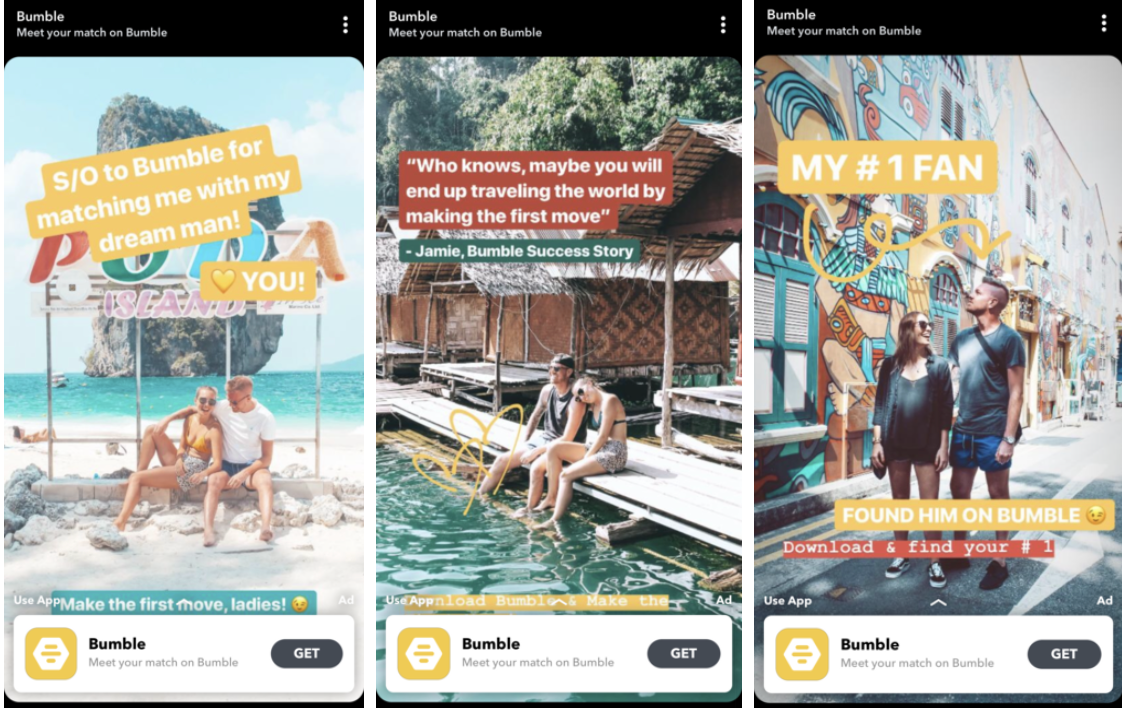
Bumble leverages emotional storytelling in their promoted content. They share photos of couples who met through the app, often on vacation. This social proof is powerful, suggesting that the app leads to real, meaningful connections. For dating apps, showing success stories is more compelling than listing features. It taps into the viewer’s desire for romance and connection, making the ad feel like a native part of the social feed. Emotional resonance is a powerful tool for building brand affinity.
Raymour & Flanigan takes a different tack with their furniture ads. Instead of a narrative, they present a series of room settings with text overlays like “It’s time to make time for…” followed by a room type. This visual catalog approach allows viewers to see products in context. It’s a practical way to showcase inventory and inspire home improvement ideas without a complex storyline. This method is particularly effective for brands with visually appealing products that benefit from contextual presentation.
Ritual Vitamins focuses on customer testimonials. Their Stories show real users discussing their experience with the product, highlighting benefits like reduced stomach upset. This user-generated content style builds trust through authenticity. When viewers see people like themselves endorsing a product, they are more likely to consider it. This strategy works well for health and wellness brands where personal experience is a key decision factor. Authenticity is increasingly important in an era of polished, corporate advertising.
Optimizing Paid Stories for Performance
To maximize the impact of paid Stories, brands should focus on creating content that feels native to the platform. This means avoiding overly salesy language and instead focusing on storytelling and value. Use high-quality visuals and concise text to capture attention quickly. Additionally, test different formats and calls-to-action to see what resonates best with your audience. By continuously optimizing your content, you can improve performance and achieve better results over time.
Strategic Takeaways for Marketers
The success of these brands on Snapchat Discover highlights the importance of adapting content to the platform’s unique format. Visual storytelling, interactivity, and brevity are key. Whether you are a large publication, a startup, or a local business, there are opportunities to engage audiences through Stories. For smaller brands, Instagram and Facebook Stories offer similar capabilities with more accessible tools and direct linking options. However, the principles of effective visual storytelling remain the same across platforms.
Even if you don’t plan to advertise on Snapchat, studying these examples can inform your broader social media strategy. Observe how brands simplify complex topics, use interactivity to boost engagement, and leverage partnerships for credibility. These tactics are transferable to other platforms. As an AI content automation platform, we see that brands that master visual storytelling and consistent messaging tend to perform better across all channels, including emerging AI search ecosystems. Consistency is key to building a strong brand presence.
Consider your own brand’s strengths. Do you have expert insights to share? Do you have visually appealing products? Can you partner with a trusted voice in your industry? By answering these questions, you can develop a Story strategy that resonates with your audience. The goal is not just to be present on every platform, but to deliver value in a format that users enjoy. In an era where attention is scarce, making every snap count is essential.
Actionable Steps for Your Brand
- Audit Your Current Content: Review your existing social media content to identify opportunities for visual storytelling. Look for topics that can be broken down into bite-sized, engaging snippets.
- Identify Potential Partners: Research publishers and influencers in your industry who align with your brand values. Reach out to discuss potential collaboration opportunities.
- Test Interactive Elements: Incorporate polls, quizzes, and other interactive features into your Stories to boost engagement. Monitor performance to see what resonates with your audience.
- Focus on Authenticity: Whether you’re creating paid ads or organic content, prioritize authenticity. Real stories and genuine connections are more likely to resonate with viewers than polished, corporate messaging.
- Measure and Optimize: Track key metrics such as engagement, completion rates, and conversions. Use this data to refine your strategy and improve performance over time.
What visual stories can your brand tell that will stand out in a crowded feed?





