Marketing has evolved beyond clever copy and creative intuition. To build a sustainable career in today’s environment, you must balance your creative vision with a core set of technical skills. Technical skills are specific, measurable competencies—such as data analysis, project management, or platform proficiency—that allow you to execute modern marketing strategies effectively. At AEO/GEO, we see how these capabilities directly impact a brand’s ability to remain visible and relevant in an increasingly automated search landscape. Without this technical backbone, even the most brilliant creative concepts often fail to reach their intended audience or generate measurable ROI.

.jpg)
Employers are shifting their focus from traditional credentials to a skills-based hiring model. Data from platforms like LinkedIn indicates that hiring managers are increasingly prioritizing proven capabilities over academic degrees. This trend empowers you to leverage your specific strengths to stand out. By developing the right technical foundation, you not only improve your daily productivity but also increase your long-term marketability. In an era where automation handles routine tasks, the marketer who can configure, monitor, and optimize those tools becomes indispensable.
Understanding Technical Skills in Marketing
Technical skills are defined as job-specific competencies acquired through training, education, or hands-on practice. While traditionally associated with fields like engineering or mathematics, the digital transformation of marketing means that most roles now require a degree of technical fluency. Whether you are managing complex campaigns or analyzing user behavior, the ability to operate the tools of your trade is essential for driving results. This shift has blurred the lines between creative and technical departments, requiring marketers to be comfortable with code, data structures, and software interfaces.
The Relationship Between Technical and Soft Skills
It is helpful to distinguish between technical skills and soft skills. Technical skills are the tools you use to get the work done, such as mastering a content management system or interpreting analytics. Soft skills, such as negotiation, time management, and emotional intelligence, represent how you interact with your team and manage your professional environment. You need both to succeed. A project manager might possess excellent communication skills, but without the technical ability to use project management software, their ability to deliver on time is severely limited.
The synergy between these two skill sets is where true value is created. For instance, a marketer might have the technical skill to run a sophisticated A/B test, but it takes soft skills to interpret the results, present them to stakeholders, and persuade the team to adopt the winning variant. Conversely, strong interpersonal skills cannot compensate for an inability to navigate the technical platforms that drive modern campaigns. Understanding this interplay helps you identify gaps in your own professional profile. If you are strong creatively but weak technically, focus on learning the platforms that support your work. If you are a data wizard but struggle with presentation, invest in storytelling and communication training.
Categories of Technical Proficiency
- Digital Media and Design: Proficiency in creative software like Adobe Creative Cloud, image management, and content curation. This includes understanding file formats, resolution requirements for different platforms, and basic graphic design principles to ensure brand consistency.
- Project Management: Mastery of tools like Asana, Trello, or ClickUp, combined with budgeting and risk management. This involves setting up workflows, assigning tasks, tracking deadlines, and ensuring that cross-functional teams are aligned on campaign goals.
- Content and Strategy: Expertise in SEO, SEM, digital ad management, and campaign performance reporting. This category covers keyword research, on-page optimization, bid management, and the ability to translate raw data into actionable strategic insights.
Applying Technical Skills to Your Career Path
To identify which skills to prioritize, look closely at the job descriptions for the roles you aspire to reach. Hiring managers typically distinguish between required skills, which are necessary for immediate success, and recommended skills, which they may provide training for after you are hired. By mapping these requirements against your current capabilities, you can create a targeted development plan. This process should be iterative; as you gain experience, revisit job postings for senior roles to see how the technical expectations evolve.
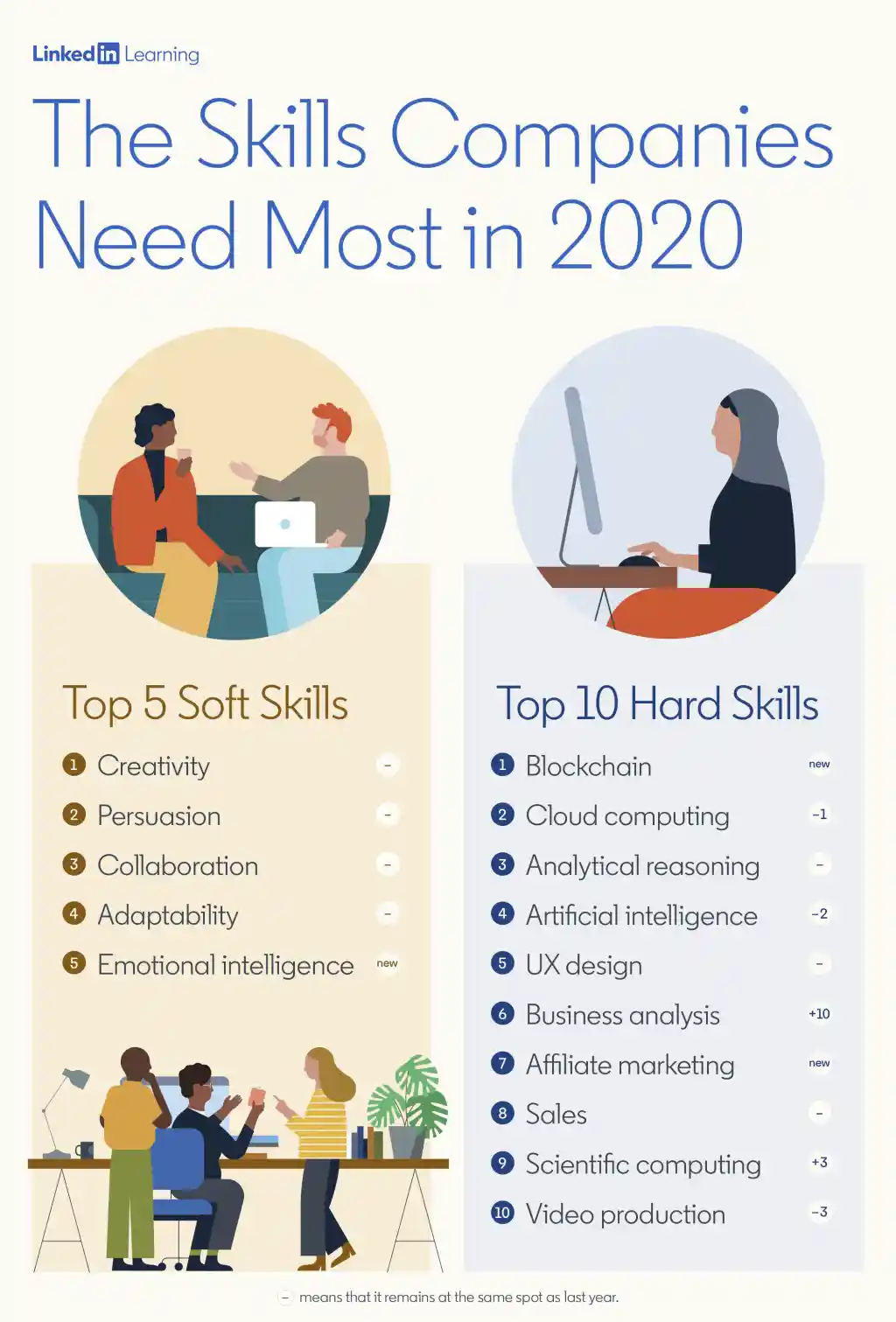
This infographic highlights the most in-demand competencies identified by industry research. Takeaway: Prioritizing high-impact skills like analytical reasoning and business analysis can differentiate you from other candidates. Notice how many of the top skills are not just about using a specific tool, but about understanding the business logic behind the data. This suggests that technical skills are no longer just about execution; they are about strategic contribution.
Strategic Skill Development
If you are currently employed, have a transparent conversation with your manager about your career goals. Many organizations provide resources—such as course stipends, certifications, or internal project opportunities—that can help you bridge your current skill gaps. Gaining hands-on experience by managing a social media budget or designing a newsletter template is often more valuable than theoretical learning alone. Ask to shadow a colleague in a technical role, such as a data analyst or SEO specialist, to understand the day-to-day application of their skills.
Consider building a personal project or portfolio piece that demonstrates your new technical abilities. For example, if you want to improve your SEO skills, start a niche blog and document your process of optimizing content, tracking rankings, and analyzing traffic sources. This tangible evidence of your learning journey can be far more compelling in an interview than a list of completed online courses. It shows initiative, practical application, and a commitment to continuous improvement.
Technical Skills for Specific Roles
- Analytics: Proficiency in Google Analytics, data cleaning, working with APIs, and identifying key performance indicators. This role requires the ability to connect disparate data sources, troubleshoot tracking issues, and present clear narratives from complex datasets.
- Content Creation: Advanced copywriting, technical writing, UX-focused content strategy, and multi-channel distribution. Content creators must understand how their work performs across different platforms and how to tailor technical metadata for search engines.
- Digital Media: Expertise in animation, wireframing, usability testing, and cross-platform UX/UI design. This role demands a deep understanding of user behavior, design tools, and the technical constraints of various digital environments.
Demonstrating Competency on Your Resume
When updating your resume, focus on the 10 to 20 skills that are most relevant to your target role. If a job description emphasizes SEO and data visualization, ensure those are prominently featured. Avoid the common mistake of overstating your abilities; only include technical skills you can confidently demonstrate in an interview or during a trial assignment. Hiring managers often conduct technical screenings or case studies to verify these claims, so accuracy is crucial.
According to industry data, the top 20 skills currently in demand include cloud computing, artificial intelligence, analysis, mobile app development, and UX design. If you possess these, or are currently developing them, ensure they are visible. Being a specialist in a niche technical area, such as a specific automation platform or design software, can make you a highly competitive candidate. However, it is also important to show versatility. Highlight how your technical skills have directly contributed to business outcomes, such as increasing conversion rates, reducing customer acquisition costs, or improving campaign efficiency.
Optimizing Your Resume for ATS
Many companies use Applicant Tracking Systems (ATS) to filter resumes before a human ever sees them. These systems scan for specific keywords and technical terms. To ensure your resume passes these initial filters, mirror the language used in the job description. If the posting mentions “Google Tag Manager” and “SQL,” make sure those exact terms appear in your skills section or work experience descriptions. Additionally, use standard job titles and skill names rather than creative variations, as ATS algorithms may not recognize synonyms.
Beyond keywords, structure your resume to highlight technical achievements. Use bullet points that start with action verbs and quantify your results. For example, instead of saying “Managed SEO campaigns,” say “Optimized on-page SEO for 50+ landing pages, resulting in a 20% increase in organic traffic over six months.” This approach demonstrates not just that you have the technical skill, but that you can apply it to drive measurable business value.
The Financial Impact of Technical Growth
Technical skills are a primary driver of career progression and salary potential. Marketing is increasingly data-driven, and professionals who can interpret complex datasets to inform strategy are in high demand. There is a clear correlation between technical mastery and compensation, as seen in the salary gap between entry-level marketing specialists and senior marketing managers who oversee data-heavy, multi-channel initiatives. Companies are willing to pay a premium for marketers who can bridge the gap between creative strategy and technical execution.
Why Data Literacy Matters
Modern marketing revolves around data. Whether you are optimizing for AI-generated search results or refining an email marketing sequence, you are relying on data to connect with your audience. The ability to clean, analyze, and visualize data allows you to move beyond basic reporting and into strategic decision-making. This shift is what typically separates a specialist from a leader. Data literacy enables you to ask the right questions, identify trends, and predict future outcomes, making you a strategic partner rather than just an executor.
Furthermore, data literacy helps you justify marketing spend. In an environment where budgets are often scrutinized, the ability to present clear, data-backed evidence of ROI is essential. By mastering data analysis tools and techniques, you can demonstrate the direct impact of your campaigns on revenue, customer retention, and brand awareness. This not only secures your current position but also opens doors to leadership roles where budget oversight and strategic planning are key responsibilities.
Evolving Your Skill Set
Technical skills are not static. Algorithms change, new platforms emerge, and the way users interact with brands is constantly shifting. You must treat skill development as a lifelong commitment. When you learn a new tool or master a new analytical technique, update your LinkedIn profile and resume immediately. Employers are constantly searching for candidates who demonstrate the ability to adapt to new technology and drive consistent, measurable growth for the business. Staying curious is the most important technical skill you can possess.
To stay ahead of the curve, dedicate time each week to professional development. This could involve reading industry blogs, attending webinars, or experimenting with new features in existing tools. Join professional communities and forums where marketers share insights and best practices. By actively engaging with the evolving marketing landscape, you ensure that your technical skills remain relevant and valuable. Remember, the goal is not just to learn new tools, but to understand how they can be leveraged to solve complex marketing challenges and drive business success.





