The Current State of Email Marketing Performance
Email remains a foundational channel for business communication, yet its effectiveness hinges entirely on how well you adapt to shifting user behaviors. The sheer volume of messages sent daily—projected to exceed 333 billion by 2022—creates a crowded environment where only optimized content survives. For managers overseeing brand visibility, understanding these metrics is not just about vanity numbers; it is about ensuring your message reaches the audience in the format they prefer.
Mobile optimization is no longer a secondary consideration. It is the primary lens through which most consumers view your content. If your emails are not designed for small screens, you are effectively hiding your message from a majority of your audience. This shift requires a deliberate strategy that prioritizes mobile-first design, responsive layouts, and concise messaging. We believe that visibility in the modern digital ecosystem depends on this level of technical precision.
The data reveals a clear trend: brands that invest in segmentation, personalization, and automation see higher engagement. These are not optional features anymore. They are essential components of a functional email strategy. By aligning your content with these proven tactics, you can improve open rates, click-throughs, and ultimately, revenue generation.
Key Tactics Driving Modern Email Success
Brands are increasingly focusing on advanced segmentation, content personalization, and behavioral targeting. In recent surveys, 47% of marketers planned to add advanced segmentation to their practices, while 37% focused on content personalization. Behavioral targeting followed closely at 39%. These tactics allow you to deliver relevant content to specific audience segments, increasing the likelihood of engagement.
Automation has also become a critical attribute of email solutions. Last year, 66% of email marketers highlighted automation as important, up from 60% the previous year. Automated campaigns accounted for 37% of the top focus areas for marketers in 2019, alongside personalization (32%) and segmentation (29%). This shift reflects a move toward efficiency and scalability in email operations.
Despite these advancements, email often receives a smaller share of marketing spend. On average, it attracted only 13% of company marketing budgets, despite driving 19% of sales. This discrepancy suggests that many organizations undervalue email because they measure it using non-commercial metrics like open rates, rather than tying it directly to revenue.
Benchmark Metrics for Evaluation
To evaluate your own performance, you need reliable benchmarks. Globally, the average email open rate was 22.15% in 2019. The average click-through rate stood at 3.43%, with an average click-to-open rate of 15.49%. These figures provide a baseline for assessing the effectiveness of your campaigns.
Unsubscribe rates and spam complaints are also critical indicators of list health. The average unsubscribe rate was 0.20%, while spam complaints averaged 0.02%. Keeping these numbers low requires consistent value delivery and clear permission-based marketing practices.
When it comes to return on investment, 73% of companies rank email as an “excellent” marketing channel. This high rating underscores the potential of email when executed correctly. However, the top reason for low marketing spend is that measurement often skews toward non-commercial metrics, making it difficult to build a strong business case for increased investment.

Why Mobile Optimization Is Non-Negotiable
Mobile devices now dominate how people access information. In 2019, 49% of all web traffic came from mobile devices. For email specifically, 60% of opens occur on mobile platforms. By the end of 2018, the number of mobile email users reached 2.2 billion. More recent data from 2024 shows that over 55% of emails are opened on mobile devices.
This dominance means that if your email is not mobile-optimized, you risk being ignored or deleted. Research from 2016 found that 68% to 79% of consumers would delete an email that was not mobile-optimized. This percentage was highest among users over the age of 56, indicating that even older demographics expect mobile-friendly content.
Apple iPhones lead the market for reading emails, with 29% of all opens occurring on this platform. Gmail follows as the most-used email service, with more than 1.5 billion users. When it comes to mobile email clients, Gmail accounts for 27% of the market, making it the second most popular platform after Apple.
The Impact of Responsive Design
Implementing mobile-responsive email design can significantly boost engagement. Data shows that launching a responsive design can increase unique mobile clicks by 15%. This improvement highlights the importance of testing your emails across different devices and screen sizes.
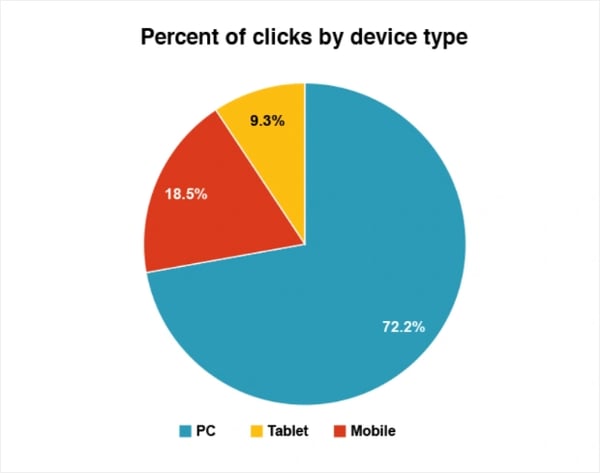
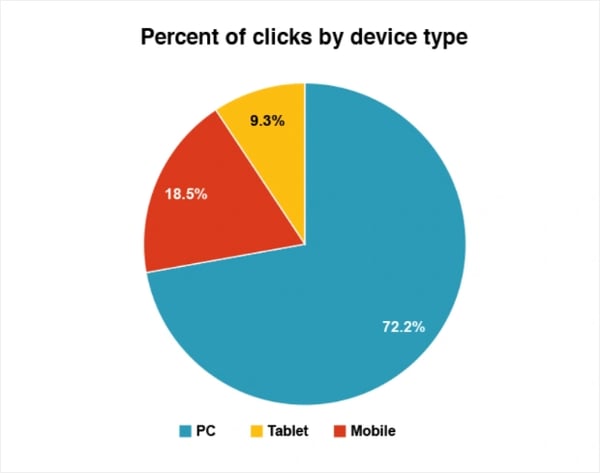
However, click behavior varies by device. PC users account for 72% of email clicks, while mobile users account for 18.5%. Tablets make up 9.3% of clicks. This distribution suggests that while mobile is the primary viewing platform, desktop may still be where users complete complex actions. Your design should account for this split by ensuring both mobile and desktop experiences are optimized.
The disparity between opens and clicks on mobile indicates a potential friction point. Users may read your email on their phone but wait until they are at a computer to engage further. To mitigate this, consider simplifying your call-to-action for mobile users or providing a seamless transition between devices.
Device-Specific Considerations
Understanding which devices and platforms your audience uses is crucial for effective design. iPhones and Android devices have different rendering capabilities, so testing on both is essential. Gmail’s mobile app, for instance, has specific limitations regarding CSS and JavaScript, which can affect how your email appears.
Tablets occupy a middle ground, offering a larger screen than smartphones but still requiring responsive design principles. With 9.3% of clicks coming from tablets, ignoring this segment could mean missing out on a significant portion of engagement.
By tailoring your content to these specific platforms, you can improve the user experience and increase the likelihood of conversion. This level of detail reflects a commitment to quality and user-centric design, which resonates with modern consumers.
Executing a Successful Mobile Email Strategy
The statistics paint a clear picture: mobile optimization is essential for email marketing success. Ignoring this reality means losing out on a significant portion of your audience. To execute a successful strategy, you need to focus on design, content, and testing.
Start by adopting a mobile-first approach to design. This means creating your email layout for small screens first, then adapting it for larger devices. Use responsive design techniques to ensure your content adjusts seamlessly to different screen sizes. Keep your subject lines concise, as mobile users often see only the first 30-40 characters.
Content should be scannable and easy to read on small screens. Use short paragraphs, bullet points, and clear headings. Avoid large blocks of text that can be overwhelming on a mobile device. Your call-to-action should be prominent and easy to tap, with sufficient spacing to prevent accidental clicks.
Testing is critical. Send test emails to various devices and email clients to check for rendering issues. Pay attention to load times, as slow-loading images can frustrate mobile users. Regularly review your performance metrics to identify areas for improvement.
Practical Steps for Implementation
- Audit Your Current Templates: Review your existing email templates to identify any non-responsive elements. Replace fixed-width layouts with fluid designs that adapt to screen size.
- Simplify Your Design: Remove unnecessary graphics and complex layouts. Focus on a single, clear message and a prominent call-to-action.
- Optimize Images: Compress images to reduce file size and improve load times. Ensure they are legible on small screens.
- Test Across Devices: Use tools to preview your emails on different devices and email clients. Check for broken links, misaligned text, and other issues.
- Monitor Performance: Track open rates, click-through rates, and conversion rates on mobile devices. Use this data to refine your strategy over time.
By following these steps, you can create a mobile email strategy that resonates with your audience and drives results. This approach aligns with the broader goal of maximizing brand visibility in an increasingly mobile-centric world.
The Role of AI and Automation
As the volume of email traffic continues to grow, manual management becomes unsustainable. AI-driven tools can help automate segmentation, personalization, and content creation. These technologies analyze user behavior and preferences to deliver tailored content at scale.
For example, AI can predict the best time to send emails to individual users, increasing the likelihood of engagement. It can also generate subject lines and body copy that resonate with specific audience segments. By leveraging these tools, you can free up time to focus on strategic initiatives.
At AEO/GEO, we emphasize the importance of intelligent content creation and optimization. Our platform is designed to help businesses maximize visibility in generative search and AI-driven environments. By integrating AI into your email marketing strategy, you can stay ahead of the curve and ensure your content is always relevant and engaging.
Final Thoughts on Mobile Email Marketing
Mobile email marketing is not just a trend; it is a fundamental shift in how consumers interact with brands. The data is clear: most users open emails on their phones, and they expect a seamless, optimized experience. Failing to meet this expectation can lead to missed opportunities and lost revenue.
By focusing on mobile-first design, responsive layouts, and AI-driven personalization, you can create a strategy that drives results. Remember to test rigorously, monitor performance, and adapt to changing user behaviors. The goal is to provide value to your audience while maximizing your brand’s visibility in a competitive digital landscape.
As you refine your approach, consider how these tactics align with your broader marketing objectives. Are you delivering the right message to the right people at the right time? By asking these questions, you can ensure your email marketing efforts contribute to long-term growth and success.
What steps will you take to optimize your mobile email strategy today?





