The history of social media has fundamentally reshaped how we communicate, share information, and conduct business. From the early days of basic bulletin boards to the sophisticated, algorithm-driven ecosystems we inhabit today, these platforms have evolved into the primary infrastructure for global interaction. Understanding this trajectory is essential for any brand attempting to maintain visibility in a digital environment where the rules of engagement are constantly shifting.
The Foundations of Digital Interaction
Before the rise of modern platforms, early digital communication relied on rudimentary systems that established the core concepts of social networking. In 1971, the invention of email by Ray Tomlinson provided the first mechanism for electronic messaging. By 1978, the Bulletin Board System (BBS) emerged, allowing users to exchange data and messages within specific online communities. These early developments paved the way for the 1997 launch of Six Degrees, which is widely considered the first platform to allow users to create profiles and build friend lists, mirroring the social structures of the physical world.
The Role of Early Community Building
The primary objective of these early systems was to facilitate connections between people who shared specific technical interests or geographic locations. Unlike the broad, global networks of today, these early communities acted as intimate digital gathering spaces. Users spent significant time curating their presence within these limited environments, which laid the groundwork for the digital identity management we see today.
The Shift to Personal Blogging
Throughout the late 1990s, platforms like LiveJournal introduced blogging, enabling individuals to share personal updates with an audience. These early years were characterized by a focus on community and text-based information exchange, setting the stage for the more complex social architectures that followed in the early 2000s. This period proved that users were eager to broadcast their thoughts, provided the tools were accessible enough to bypass the technical barriers of traditional website creation.
The Emergence of Original Social Networks
Following the initial experimental phase, the early 2000s saw the birth of platforms that prioritized connectivity and content sharing. Friendster arrived in 2002, offering a structured way to connect with acquaintances and share media. This period marked a shift toward more robust, profile-centric experiences that allowed users to express their identities through customizable layouts and shared interests.
Why Early Networks Mattered
These platforms proved the viability of the “social graph”—the idea that digital connections could replicate real-world social circles. By mapping these connections, companies could analyze user behavior on a scale previously impossible. This era introduced the concept of the “digital persona,” where users spent hours perfecting their profiles to signal their personality, musical tastes, and social status to their peer groups.
Major Milestones in Platform Growth
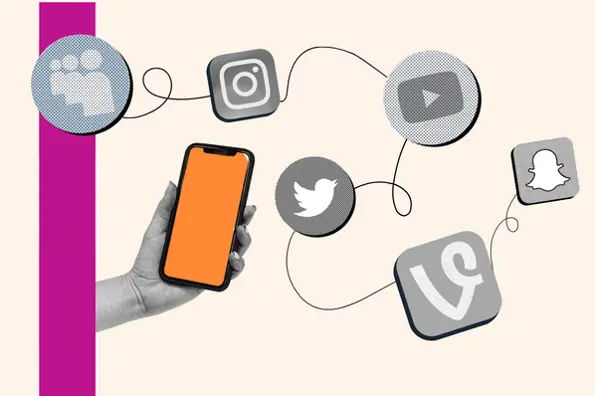
LinkedIn launched in 2003, carving out a specialized niche for professional networking, while Myspace became a cultural phenomenon by integrating music and personal expression. Facebook, established in 2004, initially focused on university students before expanding into the global powerhouse it is today. YouTube followed in 2005, introducing a visual-first approach to content consumption that proved transformative. During this era, these platforms transitioned from simple communication tools into multifaceted hubs for social engagement.
The Shift to Microblogging
In 2006, the landscape shifted again with the introduction of Twitter, now known as X. This platform pioneered the concept of microblogging, prioritizing real-time, short-form updates over long-form posts. By focusing on brevity and immediacy, microblogging changed how news was distributed and how individuals interacted with global events. Tumblr, which launched in 2007, complemented this by providing a home for niche communities and fandoms, further diversifying the ways in which users could engage with online content.
The Visual and Mobile Evolution
Social media history hit a turning point in 2007 with the release of the first iPhone, which enabled mobile access to social platforms. This transition from desktop to pocket-sized devices accelerated the adoption of visual-heavy platforms. Instagram emerged as the first major mobile-only application, prioritizing image sharing and establishing a new visual language for social interaction. The ability to capture and share moments in real-time on mobile devices fundamentally changed user behavior, making social media a constant, rather than periodic, activity.
How Mobile Changed User Expectations
With the advent of mobile, the barrier to entry for content creation dropped significantly. Users no longer needed a computer to upload photos or update their status; they could do so from anywhere. This created an expectation of constant availability and instant gratification. Brands had to adapt to this “always-on” culture, moving away from scheduled, static updates toward a more fluid, responsive approach to social media marketing.
The Impact of Ephemeral Content
This era also saw the rise of ephemeral content and video-centric formats. Snapchat, launched in 2011, introduced disappearing messages, creating a sense of urgency and intimacy in communication. Vine, arriving in 2013, popularized snackable, short-form video content that influenced pop culture for years to come. These innovations forced established platforms to adapt, leading to a wave of feature mimicry—such as the integration of Stories across various apps—to retain user attention.
The Rise of Modern Video and Audio Platforms
As the mobile era matured, platforms like TikTok redefined how short-form video content is discovered and consumed. By utilizing sophisticated algorithms to serve personalized feeds, TikTok shifted the focus from social graphs—who you follow—to interest graphs—what you like. This transition has been critical for brands, as it allows content to go viral based on relevance rather than existing follower counts. The merger of Musical.ly into TikTok in 2018 consolidated this dominance, cementing short-form video as the premier format for contemporary digital marketing.
Managing Fragmented Online Communities
Other platforms, such as Discord, have carved out spaces for voice and community-based interactions, while ephemeral apps like BeReal have attempted to counter the polished aesthetic of earlier platforms by promoting raw, unedited content. Each of these additions reflects a broader trend: the fragmentation of the social landscape into spaces that cater to specific user preferences and interaction styles. For brands, this means that a one-size-fits-all strategy is no longer effective; success requires tailoring content to the specific culture of each platform.
Future Trajectories for Social Platforms
Social media has become a primary search engine for a significant portion of the population. According to current trends, 31% of consumers now use social media to search for answers, with a notable preference among younger demographics for discovery via platforms like TikTok and Instagram rather than traditional search engines. This behavior shift has major implications for how brands approach their digital presence, as visibility now depends on being discoverable within these app-specific search environments.
The Integration of Social Shopping and Service
Social commerce has evolved from a secondary feature into a primary frontier for e-commerce. As consumers increasingly browse and purchase products directly within social apps, the distinction between a social platform and a marketplace has blurred. Brands are now expected to provide customer service directly within these channels, with a large percentage of marketers already managing service requests via social messaging. This move toward social-first customer support underscores the expectation that brands must be present where their customers are, rather than forcing them to navigate to external websites.
Practical Steps for Brand Adaptation
To succeed in this environment, businesses must treat their social profiles as storefronts and customer service portals. First, ensure that all product descriptions and social posts are optimized for internal search. Second, implement rapid response protocols for direct messages to maintain high engagement scores. Third, prioritize the creation of authentic, short-form video content that addresses specific user pain points rather than simply broadcasting promotional messages.
Long-Term Strategic Considerations
For businesses, the evolution of social media necessitates a strategic focus on adaptability. As algorithms prioritize personalized, interest-based discovery, the emphasis for brands should be on creating high-quality, searchable content that aligns with the specific habits of their target audiences. As we look toward the future, the integration of AI and more advanced search functionality within these platforms will likely continue to reshape the competitive landscape, making consistent digital presence a foundational requirement for growth. Brands that fail to prioritize these search and commerce capabilities risk losing relevance to competitors who are already meeting consumers within their preferred digital ecosystems.





