An AI engine publishes an answer that cites the wrong entity. Three days later, your team discovers that no one owned the final check. This ownership blur erodes trust in AEO workflow automation faster than any technical failure. The AEO RACI matrix is not a form to fill out after launch; it is the prerequisite that defines who holds the line when the machine writes. This guide explains how to assign AEO roles for specific automated tasks, turning ambiguity into a clear content responsibility matrix before the first script runs.

Why AEO automation fails without clear roles
Automation moves faster than human oversight can follow. When you deploy AEO workflow automation without a clear content responsibility matrix, the system produces ambiguity alongside errors. One person updates entity data, another drafts the answer, and a third publishes it—none knowing if the output is accurate or aligned with brand guidelines. This lack of a single point of contact for AI citation errors leads to duplicate work and unapproved changes to structured data that go unnoticed until a major citation fails.
The traditional RACI model defines Responsible as the person doing the work, Accountable as the owner of the outcome, Consulted as the source of input, and Informed as the recipient of updates. In an AI-driven search environment, this distinction becomes critical because “Accountable” is no longer just about oversight—it is about owning the accuracy of machine-generated answers. When tasks run on autopilot, tracking who is accountable for a specific citation error becomes difficult if roles were never explicitly assigned.

Using the chart to drive conversations before the first automated task runs ensures the team is aligned on what “done” looks like. Defining these roles early prevents the “ownership blur” that often plagues teams scaling their AEO efforts. It transforms the matrix from a static document into a practical tool for assigning AEO roles with clarity, ensuring that when automation hits a snag, you know exactly who must step in to fix it.
Assigning AEO roles to four core tasks
When you begin to assign AEO roles, start with the four pillars of your AEO workflow automation: entity mapping, answer testing, structured data optimization, and automated publishing. For each, the content responsibility matrix should clearly distinguish who does the work from who owns the result.
For entity mapping, the content lead is Responsible for identifying and linking brand entities correctly. The product owner remains Accountable for ensuring the AI understands these connections accurately. This prevents the system from citing the wrong entity in a generative answer.
In answer testing, the content team is Responsible for running queries and evaluating the AI’s responses. The product owner is Accountable for the quality of those answers. They decide if the output is fit for publication or if it requires human revision.
For structured data optimization, the SEO/Technical team is Consulted. They provide the technical insight on schema markup that the content team needs to draft the right metadata. The product owner remains Accountable for the final visibility outcome, while the content lead is Responsible for executing the technical recommendations.
Finally, in automated publishing, the system executes the task, but a human must remain Accountable. The content lead is Responsible for monitoring the initial batch, while the product owner is Accountable for the long-term accuracy of the distributed content. Stakeholders are simply Informed on the performance metrics of this final stage.
The most critical rule is that accountability must stay singular. Consider an automated task like “publish updated product specs.” If both the content manager and the product owner are listed as Accountable, neither will sign off quickly. The product owner might wait for the manager to verify the data, while the manager waits for the owner’s approval. This creates a bottleneck where the automated workflow stalls, not because of technical failure, but because of ambiguous human authority. One person must own the decision; the other supports it.
The RACI matrix as a conversation tool
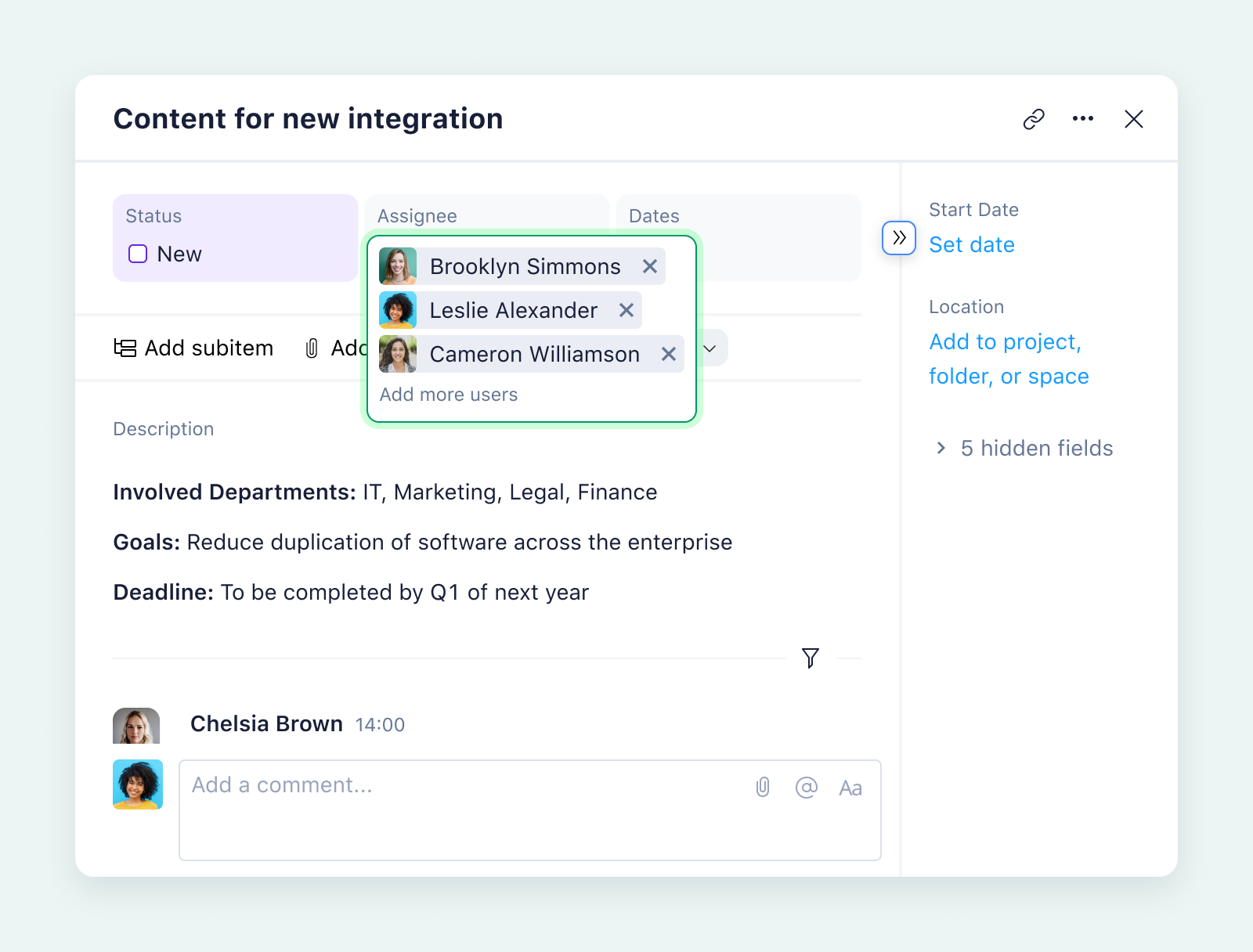
A static spreadsheet rarely survives contact with a live AEO workflow. The most effective teams treat the AEO RACI matrix as a dynamic component of their project management environment rather than a standalone document. By embedding the matrix directly into your workflow tools or AEO platform, you ensure it stays visible and relevant. This prevents the chart from becoming a stale artifact that no one references when decisions need to be made in the heat of the moment.
Surfacing hidden assumptions
Before the first automated task runs, use the chart to interrogate your planning process. Each cell in the matrix should prompt a specific question: Who actually has the technical insight to steer this part of the workflow? When you assign a role, you are not just naming a person; you are identifying where the expertise lies. If the “Consulted” role for schema markup is vague, your automated workflow may publish incorrect structured data. Using the matrix this way surfaces gaps in understanding before they become expensive errors.
Handling dynamic shifts
The RACI model has a known limitation: it is static, while automated environments are fluid. When an AEO script flags a new citation error or a strategic pivot is required, roles can shift. The matrix does not need to change in real-time, but your team needs a protocol for when it does. Agree in advance on how you will reassign responsibility if the automated process identifies an issue that falls outside the current RACI definitions. This ensures that the clarity you built into the chart remains a living part of your operational rhythm.
Avoiding the AEO RACI pitfalls that slow teams down
Even when the AEO RACI matrix looks complete, it can still create bottlenecks if it is built on weak assumptions. Two common errors undermine clarity immediately: overfilling the chart with granular sub-tasks that make the document unreadable, and listing job titles instead of specific individuals. When a cell says “SEO Manager” instead of “Jane Doe,” confusion follows the moment two people share that title. Specific names remove ambiguity and ensure that a single point of contact is always clear for each automated task.
The “Consulted” gap
A more subtle but costly mistake is leaving the technical stakeholders out of the “Consulted” column. If you skip the dev team or AI specialists during the setup phase, you invite costly rework later in the automation cycle. These experts hold the technical insight needed to flag schema markup issues or entity mapping errors before they propagate. By the time the workflow is running, changes to the underlying infrastructure can break the content responsibility matrix you carefully built. Engaging them early prevents the cycle of broken pipelines and manual fixes that erode team trust in the automation.
Keep it lightweight
Resist the urge to create a complex, sprawling document. A RACI chart that is too complex is the same as having no chart at all. If the team dreads opening the file, it will stop being referenced, and the clarity you sought will disappear. Keep the chart focused on the core tasks and the people who own them. When the matrix is light enough to review in minutes, it becomes a living reference point rather than a static artifact that gathers dust. This practicality ensures that assigning AEO roles remains a dynamic part of your AEO workflow automation, not just a one-time administrative task.
Common questions on AEO roles and workflow clarity
Confusion often arises when teams first attempt to assign AEO roles in an automated environment. The following answers clarify how to maintain accountability when the workflow runs on autopilot.
What distinguishes ‘Responsible’ from ‘Accountable’?
In an automated AEO workflow, the Responsible role belongs to the person executing the setup or managing the daily operations of the automation. The Accountable role, however, sits with the individual who owns the final quality of AI citations and the resulting visibility metrics. One does the work; the other signs off on the outcome.
Should you update the matrix when tools change?
Yes. Swapping AEO tools or modifying automation scripts alters the technical landscape. This shift changes who needs to be Consulted for infrastructure decisions and who must be Informed about new dependencies. A static matrix becomes a liability when the underlying technology evolves.
Can an AI agent be ‘Responsible’?
No. The RACI model is a framework for human accountability. An AI agent is a tool, not a team member. A human must remain the Accountable party for any outcomes generated by that tool. Assigning responsibility to software creates a gap where no one answers for errors.
How often should the chart be reviewed?
We recommend a quarterly review or a check at the start of each major campaign. This ensures the content responsibility matrix reflects current team structures and project priorities, preventing role drift as the team scales.
Getting your AEO RACI right before you hit ‘run’
Effective AEO role assignment rests on three core principles. First, identify roles by specific names, not job titles, to eliminate ambiguity when responsibilities overlap. Second, keep accountability singular for every task, ensuring one person owns the final outcome while others support execution. Finally, integrate the content responsibility matrix directly into your daily project management flow so it remains a living guide rather than static documentation.
When your AEO workflow automation runs on its own, this structural clarity becomes your safety net. The matrix defines who is consulted when an AI citation error appears and who must be informed before changes go live. It preserves the human element of brand reputation by ensuring that even as processes move to autopilot, there is always a named individual who understands the implications of the output. This balance between automated execution and deliberate human oversight is what keeps your brand’s voice consistent and trustworthy in the eyes of both users and AI systems.
The true value of this clarity emerges the moment your AEO workflow automation runs on autopilot. A static document cannot monitor the process, but a well-defined responsibility structure does. It protects the human element of your brand reputation by ensuring that even as the machine executes the steps, a single accountable person remains behind the results. That balance is what turns a complex system into a reliable asset for your brand.


