Modern go-to-market teams are currently navigating a paradox. While the promise of artificial intelligence is to make operations easier, faster, and more unified, many organizations find themselves struggling with disconnected tools. The average company now balances roughly 15 separate applications just to handle customer interactions. This fragmentation creates a significant hurdle for teams attempting to meet the 82% of customers who now demand immediate problem resolution and the 78% who expect highly personalized experiences.
The reliance on disparate software creates data silos that prevent a clear view of the buyer journey. When information is trapped in isolated platforms, marketing, sales, and service teams operate with incomplete context, leading to missed opportunities and disjointed communication. Bridging these gaps is the primary challenge for leadership today.

Legacy CRM systems have historically struggled to act as a true source of truth, often failing to capture the full breadth of customer engagement data. When AI is introduced into this disjointed environment without a unified data strategy, it risks becoming just another layer of complexity. True growth in this landscape requires a shift toward platforms that offer a holistic view of the customer, where AI has direct access to your data and powers engagement tools with high precision.
The Foundation of AI-Driven Growth
To see real value, AI must move beyond being a novelty. Early adopters are already using integrated AI to accelerate their sales cycles and increase win rates by automating lead qualification and personalizing outreach. When AI is easy to implement, it acts as a catalyst for productivity rather than a burden on your team. The goal is not merely to adopt technology for its own sake, but to create a system where AI works in harmony with your existing processes.
Prioritize Data Enrichment
AI performance is directly tied to the quality and breadth of the data it processes. Customer data is often siloed, existing as fragmented pieces across various platforms and web interactions. To gain a complete picture, teams must unify their internal CRM data with external behavior signals. By feeding your AI models with this combined context, you ensure that every automated interaction is informed by the most holistic and up-to-date information available. A unified data set allows for a more accurate understanding of who your customers are and what they require at any given moment.
Data enrichment serves as the bedrock for effective automation. Without clean, consolidated data, AI models may generate irrelevant recommendations or outreach that feels disconnected from the customer’s actual history. By centralizing data, you provide the AI with the necessary context to make intelligent, real-time decisions that mirror human intuition but at a much larger scale.
Analyze Behavioral Signals
Sales and marketing teams benefit immensely when they can identify and act upon buyer intent. By analyzing digital body language—such as how a prospect interacts with pricing pages or specific content assets—AI can assign engagement and fit scores. This data-driven approach allows sales professionals to focus their energy on prospects who are most likely to convert. Beyond the initial sales push, these signals enable marketing teams to deliver highly segmented content that nudges prospects through the funnel, whether they are new leads or existing customers considering a repeat purchase.
Understanding digital body language shifts the focus from reactive selling to proactive engagement. When you can track specific interactions, you gain the ability to predict needs before the customer explicitly states them. This predictive capability is essential for modern teams aiming to reduce churn and increase customer lifetime value, as it ensures that every touchpoint is relevant to the prospect’s current stage in the buying cycle.
Scaling Content and Operational Efficiency
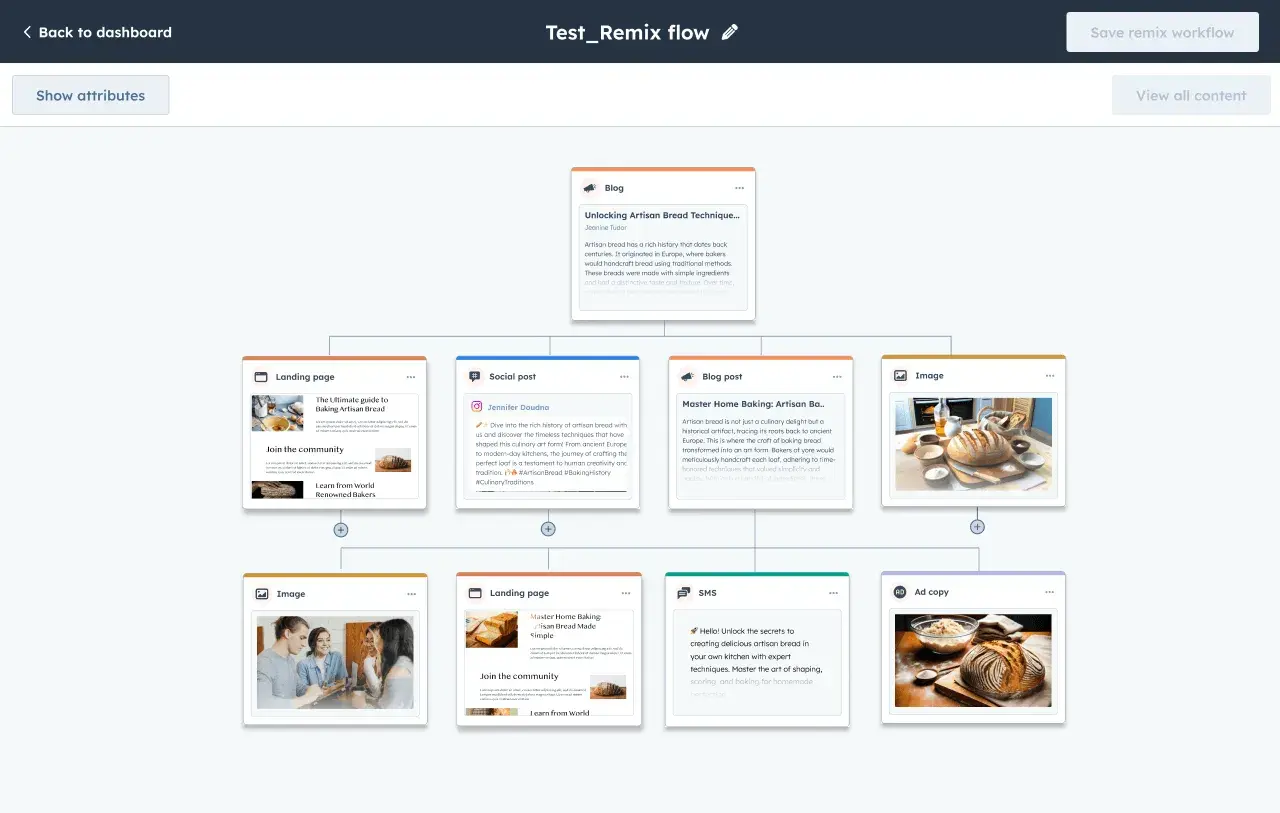
Content creation is frequently cited as a primary challenge for marketing teams, yet AI offers a way to overcome creative gridlock. By utilizing generative tools, teams can brainstorm, write, and illustrate content that resonates with specific audience segments. The objective is to move away from producing volume for the sake of volume and toward a strategy that prioritizes relevance and adaptability. AI-assisted content allows you to quickly remix a single core idea into multiple formats—such as social posts, ad copy, or long-form articles—ensuring that your brand message reaches customers on their preferred channels.
The Power of Content Remixing
Remixing content allows a small team to maintain a massive digital footprint. By taking a high-performing white paper or webinar, AI can help distill the core concepts into a series of social media threads, email newsletters, and short-form video scripts. This ensures that your messaging remains consistent across all platforms while maximizing the return on investment for every piece of original research or thought leadership produced.
Maintaining Brand Voice at Scale
One common mistake is allowing AI to generate generic, uninspired content. To avoid this, teams should train their AI models on brand-specific guidelines and historical successes. By providing clear parameters, you ensure that the output feels authentic and aligned with your company values. This approach allows for rapid production without sacrificing the quality or tone that your audience expects from your brand.
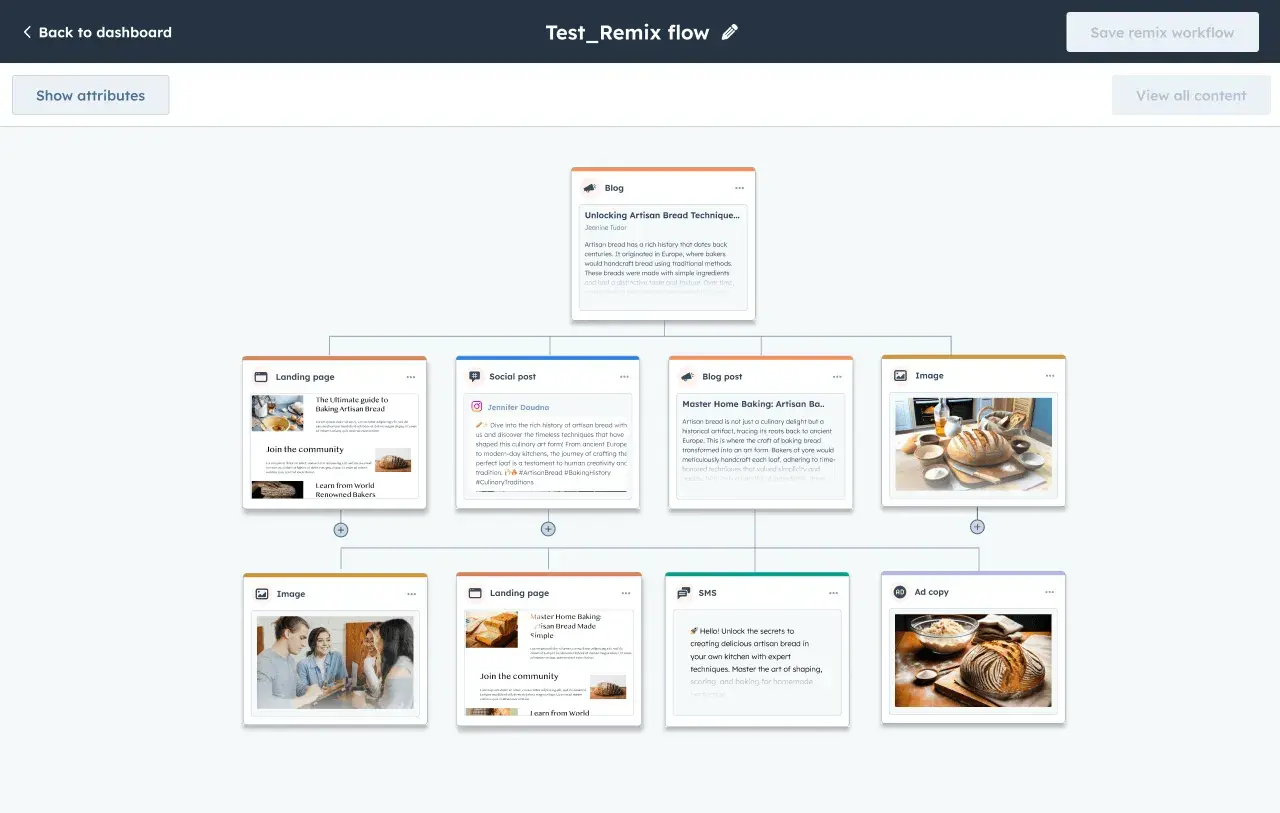
Effective content strategy today means you can adapt and react quickly to whatever comes next. Remixing content means your brand can maintain a consistent presence across diverse platforms without requiring an exponential increase in human labor. This operational efficiency is what separates high-growth organizations from those struggling to keep up with the demands of a multi-channel audience.
Leveraging AI Agents for Strategic Work
Perhaps the most significant shift in AI utility is the move toward specialized agents. Unlike traditional automation that requires manual configuration of individual workflows, AI agents are software entities designed to accomplish multi-step goals with minimal intervention. You simply provide the objective, and the agent executes the task from start to finish. This represents a move toward autonomy, allowing your human team members to focus on the high-level strategy and critical human touchpoints that AI cannot replicate.
Understanding Agent Autonomy
AI agents differ from basic automation scripts because they possess the ability to reason and make decisions based on the context provided. If a task hits a snag, an agent can often adjust its approach or flag the issue for human review, rather than simply failing or continuing with incorrect data. This level of sophistication is necessary for managing complex, non-linear workflows common in modern business environments.
Types of AI Agents
Different agents serve distinct functions within a modern go-to-market strategy. By delegating routine tasks to these digital teammates, organizations can see significant gains in efficiency.
- Content Agent: Automates the generation of blog posts, landing pages, and case studies to maintain a steady cadence of relevant content.
- Social Media Agent: Analyzes industry trends and audience performance data to draft and schedule content across multiple social channels.
- Prospecting Agent: Researches leads and automates initial outreach, ensuring that sales teams start their conversations with relevant, personalized context.
- Customer Agent: Provides 24/7 support by responding to inquiries, ensuring that customer expectations for immediate resolution are met without taxing your service staff.
By deploying these agents, managers can offload the “heavy lifting” of daily operations. This is not about replacing human talent, but rather augmenting it. When your team is freed from repetitive data entry or basic research, they can dedicate their time to building deeper relationships, refining high-level strategy, and solving complex customer problems that require emotional intelligence and creative thinking.
Creating a Unified Platform
Ultimately, the success of your go-to-market strategy depends on how easily your tools integrate. A platform that prioritizes ease, speed, and unification allows teams to see value in days rather than months. By eliminating the friction caused by disconnected apps, you empower your team to focus on what matters: driving growth and maintaining strong relationships with your customers. The best approach is to ensure that every feature, from data analysis to content distribution, works in harmony. When your infrastructure is unified, your team is free to innovate, iterate, and grow with confidence in the accuracy of their insights.
Reducing Technical Debt
A unified platform minimizes the need for complex middleware and custom integrations, which often become points of failure. By choosing a solution that inherently connects CRM data with engagement tools, you reduce the technical debt that typically accumulates as companies add new software. This creates a cleaner, more reliable environment where your data flows naturally from one stage of the customer journey to the next.
Driving Long-Term Growth
Investment in a unified customer platform pays dividends in the form of better decision-making. When your leadership team can access real-time dashboards that reflect the entire customer lifecycle, they can make informed choices about where to allocate resources. This clarity is essential for scaling a business, as it allows you to identify which campaigns are working, which segments are most profitable, and where the bottlenecks in your sales pipeline are located. By grounding your strategy in a unified system, you ensure that your team remains agile, focused, and ready to meet the evolving needs of your market.





