Determining the best time to post on YouTube is a challenge that many creators and marketers face when trying to maximize their initial reach. While the platform has evolved significantly, the timing of your upload remains a factor in how quickly your content gains traction during those crucial first few hours. By understanding the intersection of audience behavior and platform trends, you can make more informed decisions about when to hit publish. This process is not merely about guessing; it is about aligning your content distribution with the natural rhythms of your viewers’ daily lives.
Research indicates that the best time to post on YouTube is generally between 6 PM and 9 PM, as well as 12 PM to 3 PM, particularly on Fridays, Saturdays, and Sundays. These windows often align with periods when viewers are seeking entertainment and have more flexibility to engage with longer-form content. Because YouTube requires a higher time commitment from viewers compared to short-form platforms, weekend availability often serves as a primary driver for high engagement. Understanding these broad strokes helps you set a foundational strategy before diving into the granular details of your specific channel performance.
Why Timing Still Matters for Reach
While the long-term success of a video is largely determined by its relevance to a user’s search query, the initial push matters for short-term visibility. Posting at a time when your specific audience is active can help generate early views, which signals to the platform that your content is worth promoting. This early momentum doesn’t necessarily dictate your video’s lifespan, but it can accelerate its growth trajectory. When a video receives clicks and watch time quickly after publication, the algorithm interprets this as a sign of high quality and relevance, potentially boosting its placement in suggested feeds and homepage recommendations.
This initial surge is critical for building a feedback loop. If your video sits idle for the first few hours because you posted it at 3 AM when your audience is asleep, it misses the opportunity to gain that early velocity. Conversely, posting when your core subscribers are online ensures that your most loyal fans see the content first. Their immediate engagement—likes, comments, and shares—creates a social proof layer that can attract casual viewers who might otherwise scroll past. This dynamic is especially important for new channels that lack a large subscriber base, as they rely more heavily on algorithmic discovery than established brands do.
Furthermore, the concept of “reach” extends beyond just views. It includes the potential for your video to be shared on other social platforms. If you post when your audience is active, they are more likely to share the link with friends or colleagues while they are still engaged with the content. This secondary distribution can drive traffic back to your video, further reinforcing its relevance to the YouTube algorithm. Therefore, timing is not just about being seen; it is about creating an environment where your content can thrive and spread organically.
Navigating Peak Activity Windows
Data gathered from over 1,500 marketers highlights distinct preferences for posting schedules. Approximately 24% of those surveyed favor the 6 PM to 9 PM window, while 22% prefer the 12 PM to 3 PM slot. These findings suggest that aligning your publishing schedule with the end of the workday or early afternoon breaks can be a strategic starting point for new channels. The evening window captures viewers who are winding down after work or school, looking for relaxation or entertainment. This is often when people have the mental bandwidth to watch longer videos, making it an ideal time for in-depth tutorials, vlogs, or documentary-style content.
The afternoon window, on the other hand, caters to viewers taking lunch breaks or seeking a quick distraction during the day. This slot is particularly effective for shorter, punchier content that can be consumed in a single sitting. For example, a quick tip video or a news update might perform well during these hours. By understanding the nature of your content and the typical consumption habits of your audience, you can choose between these two peak windows more effectively. If your content is educational and requires focus, the evening slot might be more appropriate. If it is light and entertaining, the afternoon slot could yield better results.
It is also worth noting that these preferences can vary by industry. For instance, B2B content creators might find that their audience is more active during weekday business hours, while entertainment channels may see higher engagement on weekends. This nuance underscores the importance of not just following general trends but also considering the specific context of your niche. By combining broad industry data with your own observations, you can refine your posting strategy to better match the expectations and habits of your target audience.
Identifying the Worst Times to Upload
Avoiding low-traffic periods is just as important as identifying peak times for your content distribution. According to industry data, early mornings and the start of the work week often see lower engagement levels for video content, making them less ideal for major releases. Understanding when not to post can be just as valuable as knowing when to post, as it helps you avoid wasting resources on uploads that are unlikely to gain traction. This proactive approach allows you to conserve your energy and focus on times when your audience is most receptive.
The Impact of Early Morning and Mid-Week Slumps
Only about 9% of marketers surveyed identified Mondays or Tuesdays as the optimal days for posting. Furthermore, early morning slots—specifically between 6 AM and 12 PM—are frequently cited as less effective. This is likely because viewers are occupied with work or school routines, leaving little time for the deep engagement that YouTube content typically demands. Mondays, in particular, are often associated with high stress and productivity, as people focus on catching up on tasks and planning their week. As a result, they are less likely to browse for entertainment or educational content, leading to lower view counts and engagement rates.
Early mornings present a similar challenge. Most people are commuting, starting their workday, or getting ready for school, which leaves little room for watching videos. Even if they do have a moment to check their phones, they are more likely to consume quick, bite-sized content on platforms like TikTok or Instagram rather than committing to a longer YouTube video. This behavior pattern makes early morning uploads less effective for driving significant traffic. Instead, these times are better suited for administrative tasks, such as editing, scripting, or planning future content, rather than publishing new videos.
However, there are exceptions to this rule. If your content is designed to be consumed during commutes, such as podcast-style videos or short news updates, early morning slots might still be viable. Additionally, if your audience is primarily international or operates in different time zones, the “worst” times for one group might be the “best” times for another. This highlights the importance of understanding your specific demographic and their daily routines. By tailoring your posting schedule to their habits, you can avoid the pitfalls of generic timing advice and achieve better results.
Adjusting Your Strategy Based on Trends
When you see these trends, it is helpful to consider them as a baseline rather than a rigid rule. If your content is highly targeted toward a professional audience, their habits might differ significantly from the general consumer. Use these broad insights to inform your initial testing, but remain prepared to pivot if your own data suggests a different pattern. For example, a channel focused on coding tutorials might find that its audience is more active during late-night hours, as developers often work on side projects after regular business hours. In this case, sticking to the general “worst times” advice could lead to missed opportunities.
To adjust your strategy effectively, start by analyzing your current performance. Look at the view velocity of your past videos to identify patterns in when they gain traction. If you notice that your videos consistently perform well on Tuesday mornings, despite general trends suggesting otherwise, trust your data. This empirical evidence is more valuable than industry averages because it reflects the specific behavior of your audience. Over time, you can refine your posting schedule based on these insights, creating a personalized strategy that maximizes your reach and engagement.
Additionally, consider the seasonality of your content. Certain topics may be more relevant at specific times of the year, affecting when your audience is most likely to engage. For instance, holiday-themed content might perform better in the weeks leading up to major holidays, regardless of the day of the week. By staying attuned to these seasonal shifts, you can further optimize your posting schedule to align with your audience’s interests and needs. This dynamic approach ensures that your strategy remains flexible and responsive to changes in viewer behavior.
How to Use YouTube Analytics for Precision
While general trends provide a useful starting point, your own channel data is the most reliable guide for timing your uploads. YouTube Studio offers built-in tools that reveal exactly when your specific viewers are active on the platform, allowing you to tailor your schedule to your actual community. This data-driven approach removes the guesswork and enables you to make informed decisions based on real-time insights. By leveraging these analytics, you can create a posting schedule that is uniquely suited to your audience, rather than relying on broad industry generalizations.
Accessing Audience Insights
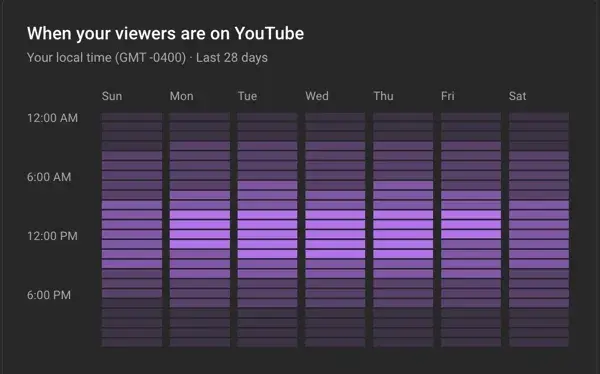
To find your custom engagement windows, navigate to the Analytics section within your YouTube Studio dashboard. From there, select the Audience tab to locate the report on when your viewers are online. This report is invaluable because it removes the guesswork and replaces it with empirical evidence from your own subscriber base. The graph displays the days of the week and hours of the day when your subscribers are most active, providing a clear visual representation of your audience’s habits. This information is crucial for identifying the optimal times to post, as it shows you when your viewers are most likely to be watching YouTube.
It is important to note that this report is only available if you have a sufficient number of subscribers and views. Newer channels may not have enough data to generate a meaningful report, in which case you should rely more heavily on general industry trends and competitor analysis. As your channel grows, however, this data becomes increasingly accurate and useful. Regularly reviewing this report allows you to track changes in your audience’s behavior over time, ensuring that your posting schedule remains aligned with their evolving habits.
Steps to Review Your Data
- Sign in to your YouTube Studio account.
- Select the Analytics tab from the left-hand menu.
- Click on the Audience tab to view the detailed activity graph.
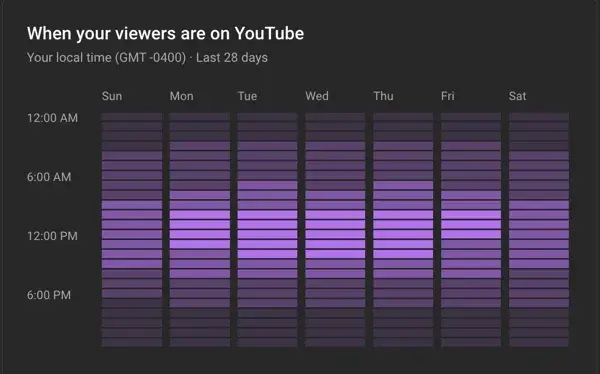
Once you have this information, you can experiment with scheduling your videos to coincide with these peak activity periods. If you notice a spike in traffic on Wednesday evenings, for instance, that may be your specific “best time” regardless of what broader industry averages suggest. By aligning your uploads with these peaks, you increase the likelihood that your content will be seen by your most active viewers. This targeted approach can lead to higher initial engagement, which in turn can boost your video’s visibility in the algorithm.
It is also beneficial to look at other metrics in the Analytics section, such as traffic sources and retention rates. Understanding where your viewers are coming from and how long they are watching your videos can provide additional context for your posting strategy. For example, if you find that a significant portion of your traffic comes from search results, you may want to focus on optimizing your video titles and descriptions for SEO, rather than just timing. By combining multiple data points, you can create a holistic strategy that addresses all aspects of your channel’s performance.
Balancing Timing with Content Quality
Ultimately, the best time to post on YouTube is the moment when you are delivering the most value to your audience. Even if you hit the perfect time slot, a video that lacks relevance or quality will struggle to maintain long-term interest. In the current search-driven environment, relevance remains the most significant ranking factor. While timing can give your video an initial boost, it is the content itself that determines whether viewers will stay, engage, and return for more. Therefore, it is essential to prioritize quality and relevance in your content creation process.
The Role of Relevance in Modern Search
YouTube functions increasingly like a search engine, meaning that users find content based on what they are searching for, rather than just what is new in their feed. Because of this, a well-optimized, highly relevant video can gain traction months or even years after it was first uploaded. Focus your energy on creating high-quality, searchable content first, and use your posting schedule as a secondary lever for growth. This approach ensures that your videos have long-term value, rather than relying solely on short-term visibility.
To maximize relevance, conduct thorough keyword research to understand what your audience is searching for. Use tools like Google Trends or YouTube’s search suggestions to identify popular topics and questions in your niche. Incorporate these keywords naturally into your video titles, descriptions, and tags to improve your search ranking. Additionally, ensure that your content directly addresses the user’s intent, providing clear and valuable information that answers their questions or solves their problems. By focusing on relevance, you can attract a steady stream of organic traffic, regardless of when you post.
Integrating AI into Your Workflow
As the landscape shifts, many creators are finding that generative AI can assist in the production and optimization process. With a large majority of marketers planning to incorporate AI tools into their video strategy, you might consider how these resources can help you maintain a consistent posting schedule without sacrificing quality. Whether you use these tools for scripting, editing, or analysis, the objective remains the same: creating a sustainable, high-value content pipeline that serves your audience whenever they choose to watch. AI can help you streamline repetitive tasks, allowing you to focus more on creative aspects and strategic planning.
For example, AI-powered tools can analyze your video performance data to suggest optimal posting times, identify trending topics, and even generate script outlines. These insights can help you make more informed decisions and improve the overall quality of your content. Additionally, AI can assist with editing tasks, such as removing silence, adding captions, or enhancing audio quality, reducing the time spent on post-production. By integrating AI into your workflow, you can increase your efficiency and productivity, enabling you to produce more content in less time.
However, it is important to use AI as a tool to enhance your creativity, not replace it. The human touch is still essential for creating engaging and authentic content that resonates with your audience. Use AI to handle the technical and analytical aspects of your workflow, while focusing your energy on storytelling, personality, and connection. By striking this balance, you can leverage the benefits of AI while maintaining the unique voice and style that makes your channel stand out. This hybrid approach allows you to scale your content production while preserving the quality and authenticity that your audience values.





