The caviar bump is a viral social media phenomenon where individuals consume a small portion of caviar directly from the back of their hand. While the practice originated among traditional culinary connoisseurs as a way to isolate and appreciate the flavor of the roe without the interference of crackers or other accompaniments, it has recently moved into the mainstream through platforms like TikTok and Instagram. For observers of digital trends, this movement offers a unique perspective on how niche behaviors can rapidly shift into significant market opportunities.
This trend serves as a clear illustration of how organic social media engagement can translate into tangible economic impact. According to research from Fact.MR, the global caviar market was valued at approximately $465 million in 2023, with projections suggesting it could reach $975 million by 2033. This growth is supported by data indicating a 76% increase in caviar sales since 2020. The caviar bump is a specific behavioral shift that highlights the power of social media to amplify consumer interest in premium or luxury goods.
By analyzing this trend, companies can see how luxury items, once considered inaccessible, are being democratized through social participation. The shift suggests that luxury brands no longer need to rely solely on exclusivity; instead, they can find success by embracing the playful, accessible nature of modern social culture. This transition is essential for brands attempting to remain relevant to younger cohorts who value shared experiences over traditional status symbols.
Understanding the Velocity of Social Trends
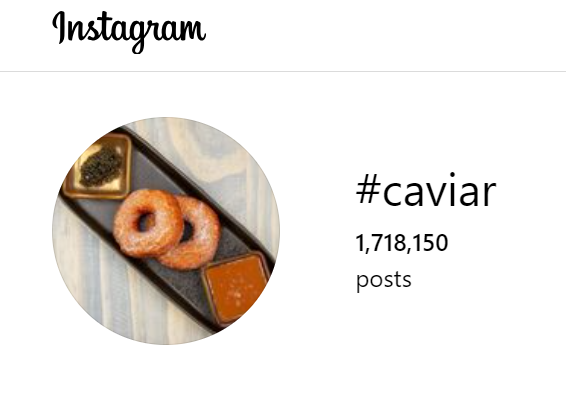
The caviar bump functions as a case study in how quickly consumer interests can pivot based on digital visibility. When a practice moves from an isolated culinary technique to a viral social media trend, it creates a feedback loop that increases search volume, brand awareness, and eventually, sales. The hashtag #Caviar has generated over 1.7 million posts, demonstrating that the appetite for this content is both broad and deeply engaged.
The Mechanics of Viral Adoption
For marketers, the key takeaway is that viral trends are rarely manufactured; they are usually discovered and then accelerated. The caviar bump gained traction because it offered a visually distinct, shareable, and slightly unconventional experience that resonated with younger demographics. Once a trend reaches this level of visibility, the barrier to entry for brands decreases significantly, allowing them to participate in the conversation without feeling forced or artificial.
Viral adoption often relies on the “low-friction” nature of the activity. Because the caviar bump requires minimal equipment—just the hand and the product—it invites user-generated content, which is the lifeblood of social growth. Brands that identify these low-barrier activities early can participate by providing the necessary components or by simply acknowledging the trend, which builds significant social capital.
Why Timing is the Primary Variable
Success in tapping into a trend depends almost entirely on timing. By the time a brand attempts to force a manufactured meme, the audience has often moved on. Genuine participation requires a brand to observe the growth phase of a trend and identify an authentic connection point. The caviar bump succeeded because it invited participation from diverse industries, ranging from high-end dining to mass-market snack companies, proving that even seemingly incompatible brands can find a way to align with a cultural moment.
To manage this, teams should implement social listening protocols that track velocity rather than just volume. A trend that spikes in mentions over a 48-hour window is a signal to act, whereas a saturated trend may be a signal to observe from the sidelines. By focusing on these early indicators, organizations can avoid the “late-to-the-party” stigma that often alienates younger, trend-sensitive audiences.
Practical Steps for Trend Monitoring
- Establish a dedicated social listening dashboard to monitor specific industry hashtags.
- Identify “rising” content creators who are early adopters of niche culinary or lifestyle habits.
- Create a rapid-response content calendar that allows for the creation of agile, low-production assets.
- Encourage cross-departmental collaboration between marketing, sales, and product teams to ensure that trend-based campaigns have the necessary inventory and support.
Bridging Niche Interests and Mass Market Appeal
One of the most notable examples of capitalizing on this trend involved a collaboration between Pringles and The Caviar Co. This partnership, which introduced the “Crisps and Caviar Flight,” demonstrates how mass-market brands can elevate their perception by aligning with luxury trends. The initiative was sparked by a viral moment on the show Real Housewives of New York, which saw the pairing of snack chips and caviar gain massive digital exposure.
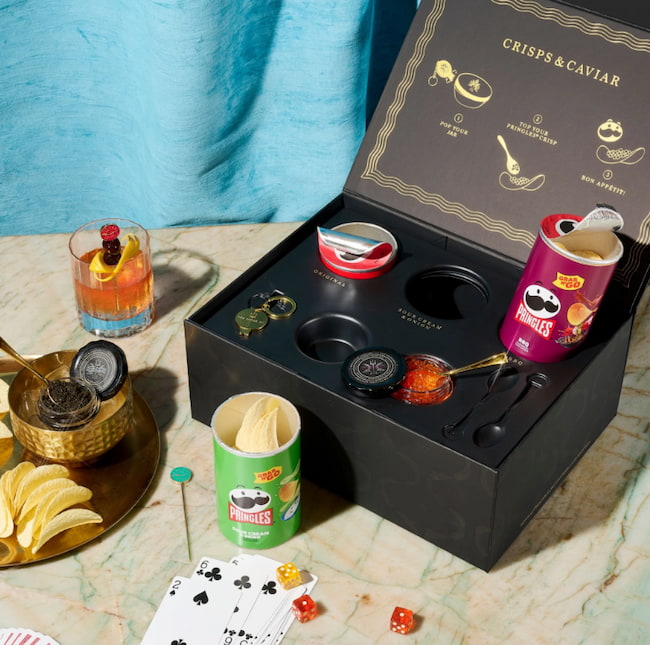
This collaboration serves as a model for how to bridge the gap between two disparate consumer segments. By offering a $140 tasting kit, the brands validated the meme and turned a fleeting social media moment into a tangible product experience. The result was significant, with Pringles seeing their TikTok engagement spike by over 21.8 million views, while search volume for the combination of the two terms grew by 950% in the months following the launch.
The Value of Cross-Industry Collaboration
When two brands with different target audiences collaborate, they effectively double their reach. The caviar bump provided a neutral, high-interest ground where a snack brand could introduce itself to a luxury audience, and a luxury brand could expand its reach to a broader consumer base. This type of strategic alliance is increasingly important in an environment where visibility is fragmented across platforms.
Collaborations of this nature also serve to “humanize” large corporations. By aligning with a playful, slightly irreverent trend like the caviar bump, a mass-market brand signals that it is in tune with cultural nuances. This builds brand affinity, which is often more valuable than immediate conversion in the long term.

Quantifying the Impact of Social Discovery
Consumer behavior is shifting toward social discovery models. Research indicates that approximately 45% of Millennials and 39% of Gen Z prefer to learn about new products via social media channels. Furthermore, 64% of Gen Z consumers reported discovering new products through these platforms in 2023, with 22% completing purchases directly within social applications. These figures suggest that social media is no longer just a top-of-funnel awareness tool; it is a critical component of the entire purchasing journey.
The shift toward social discovery implies that the “storefront” is now the feed. Brands must ensure that their social presence is not just promotional but educational and experiential. When a consumer discovers a brand through a trend, the transition from discovery to purchase must be frictionless, utilizing integrated social commerce features that allow for immediate conversion.
Strategic Takeaways for Modern Brands
For businesses looking to improve their visibility in an AI-driven and social-first world, the lesson of the caviar bump is about agility and observation. Rather than attempting to predict the next viral sensation, brands should focus on developing the infrastructure to respond quickly when a trend aligns with their identity. This involves maintaining a presence in the spaces where their target audience is most active and having the internal processes to act on emerging data.
Prioritizing Social Media Intelligence
If your organization is not monitoring social media trends as a primary source of market intelligence, you risk missing the signals that drive consumer demand. Social platforms act as a real-time focus group, offering insights into what people are talking about, what they find interesting, and where they are spending their money. Engaging with this data is essential for maintaining brand relevance.
Beyond just tracking hashtags, social media intelligence involves analyzing the sentiment and context behind the data. Why are users engaging with the caviar bump? Is it the luxury aspect, the humor, or the aesthetic? Understanding the “why” allows brands to craft messaging that resonates on a deeper level, rather than just jumping on a bandwagon for the sake of visibility.
The Role of Authentic Participation
The caviar bump trend is a reminder that authenticity is the currency of the digital age. When a brand participates in a trend, it must do so in a way that feels additive rather than extractive. The most successful brands are those that contribute to the conversation or provide a new, valuable way for users to experience the trend. Whether through a limited-edition product or a partnership, the goal should be to provide value to the community that originated the trend.
Brands should avoid “trend-jacking” where the brand voice feels forced or out of character. If a brand is known for serious, high-end professional services, participating in a lighthearted food trend might confuse the audience. However, finding a way to connect the trend to the brand’s core values—perhaps by highlighting the “luxury of time” or “quality ingredients”—can bridge that gap effectively.
Preparing for Future Shifts
As generative search and social media continue to evolve, the methods for capturing attention will change. Brands that succeed in this environment will be those that can adapt their content strategy to meet users where they are, whether that is in a social feed or an AI-generated answer. By focusing on substantive, relevant, and timely content, organizations can ensure they remain part of the conversation even as the underlying platforms and trends shift. The caviar bump is simply one example of how a small, niche behavior can ripple outward to change market dynamics, and it likely won’t be the last.
Future-proofing requires a mindset shift from “campaign-based marketing” to “always-on cultural participation.” This means investing in talent that understands the nuances of social platforms and allowing them the autonomy to experiment. By building a culture of rapid experimentation, brands can ensure they are not just reacting to the market, but actively participating in the creation of the next big cultural moment.





