Understanding the Role of Facebook Messenger Bots in Modern Communication
A Facebook Messenger bot is a software application designed to automate interactions, specifically within the Messenger platform. These tools handle the initial stages of communication, allowing businesses to engage with users in a space they already frequent. By utilizing frameworks like Facebook’s Wit.ai, these bots can convert natural language into structured data, meaning they don’t just follow static scripts—they possess the potential to learn and adapt based on the conversations they facilitate. This capability transforms the bot from a simple automated responder into a dynamic interface capable of understanding context, intent, and nuance.

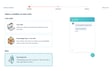
The rise of these tools reflects a broader shift in how we approach digital accessibility. When platforms like Messenger, which boasts over 1.3 billion active users, open their architecture to business integration, the barrier between a company and its audience lowers significantly. Instead of requiring users to download a standalone app for every service interaction, businesses can meet customers where they already are. This reduces friction and creates a more natural, text-based experience that feels closer to a personal conversation than a formal support ticket. The immediacy of this channel ensures that customer service is no longer confined to business hours or specific web pages, but is available instantly, anywhere the user has their mobile device.
The Mechanics of Natural Language Processing
To understand why these bots are effective, it is helpful to look at the underlying technology. Natural Language Processing (NLP) allows the bot to interpret the meaning behind a user’s words rather than just matching keywords. For instance, if a customer types, “Where is my order?” the bot recognizes the intent as “track order” regardless of the specific phrasing used. This flexibility is crucial for maintaining a high-quality customer experience. It ensures that users do not feel frustrated by rigid menu options that fail to understand their specific question.
Furthermore, the ability to convert this unstructured text into structured data enables deeper integration with backend systems. When a bot understands that a user wants to track an order, it can automatically pull the order number from the user’s profile or ask for it in a conversational manner, then query the logistics database. This seamless handoff from conversation to action is what distinguishes a sophisticated Facebook Messenger bot from a basic auto-responder. It turns a simple chat into a functional tool for problem-solving.
Why Strategic Implementation Matters
It is easy to view these bots as a technical novelty, but their true value lies in their utility. A bot should not simply replicate a website’s FAQ page; it should solve specific, recurring problems that are well-suited for mobile interaction. When businesses approach this technology with the customer’s needs at the forefront—rather than just operational efficiency—they create a more intuitive experience. The goal is to provide immediate, helpful responses while recognizing the limitations of automation, ensuring that human intervention remains available for complex or sensitive inquiries.
Strategic implementation also involves mapping the customer journey. Identify the most common pain points that lead to support tickets or abandoned carts. If a significant portion of your customer service volume comes from questions about shipping policies, a bot equipped with that information can resolve those queries instantly. This not only improves the customer experience by providing instant answers but also reduces the workload on human agents, allowing them to focus on high-value interactions that require empathy and complex problem-solving skills.
How Your Audience Connects With Your Bot
Building a sophisticated bot is only half the effort; the other half is ensuring your audience knows it exists and how to utilize it. Users can search for businesses directly within Messenger, but relying on organic discovery is rarely sufficient for widespread adoption. To drive engagement, you need to bridge the gap between your existing digital presence and this conversational channel. This requires a multi-channel strategy that guides users from passive browsing to active conversation.
Proven Methods for Bot Discovery
There are several established pathways to guide your audience into a Messenger conversation:
- Messenger Links: Using your Page username, you can generate a short m.me link. Placing this link in emails, social media bios, or website footers provides a direct, one-click entry point into a conversation. This is particularly effective for lead nurturing campaigns, where an email subscriber can click a link to instantly start a chat with your sales team or support bot.
- Customer Matching: If you already maintain a database of phone numbers with appropriate consent, you can use these to find and connect with your customers on Messenger, initiating a conversation with a final opt-in step. This method is powerful for re-engaging existing customers with personalized offers or updates, leveraging the familiarity they already have with your brand.
- Messenger Codes: Similar to QR codes, these visual icons can be scanned by a user’s camera within the Messenger app, instantly opening the corresponding bot or business page. These are ideal for offline marketing materials, such as business cards, product packaging, or in-store signage, allowing physical interactions to trigger digital conversations.
- Messenger Buttons: Embedding official buttons on your website allows visitors to transition from browsing your content to engaging in a live or automated chat without leaving your site environment. This keeps the user in a familiar context while offering an alternative communication channel that may feel less intimidating than filling out a contact form.
Optimizing the Entry Experience
While these tools facilitate the connection, the quality of the interaction remains the most critical factor. If a user triggers a bot, they expect a response that is accurate, relevant, and timely. The first message a bot sends upon initiating a conversation is known as the “greeting message,” and it sets the tone for the entire interaction. This message should clearly state what the bot can do and offer immediate value, such as a discount code or a quick link to help.
If you haven’t fully developed your bot’s logic, these entry points will simply direct users to a standard manual chat, necessitating active monitoring by your team. To avoid this, ensure that your bot has a robust fallback mechanism. If the bot cannot understand a query, it should gracefully acknowledge the limitation and offer to connect the user with a human agent. This hybrid approach ensures that no customer is left hanging, maintaining trust in the brand even when automation reaches its limits.
Real-World Examples of Brand-Led Bot Integration
Observing how organizations across different sectors implement this technology provides a clearer picture of its practical application. These examples highlight how businesses use automation to handle routine tasks while freeing up human staff for more nuanced work. By examining these case studies, businesses can identify patterns and strategies that might apply to their own industry.
Industry-Specific Use Cases
- 1-800-Flowers: This implementation demonstrates the power of transactional automation. By allowing users to browse floral options and confirm shipping details entirely within the chat interface, the company removes the need for phone-based ordering, simplifying the purchase journey. This reduces the steps required to complete a sale, which directly impacts conversion rates. The bot handles the entire transaction, from selection to payment, providing a seamless experience that mirrors the ease of messaging a friend.
- The Wall Street Journal: By enabling users to retrieve live stock quotes and top news headlines through simple text commands, this bot provides a high-utility, low-friction way for subscribers to consume content on the go. This use case highlights the value of bots for content delivery. Instead of navigating a complex website or app, users can get the specific information they need in seconds, reinforcing the habit of using Messenger as a primary information source.
- HP: This utility-focused bot allows users to print documents, files, and photos directly from their Messenger conversations to any connected HP printer, showcasing how bots can bridge the gap between digital content and physical output. This example illustrates how bots can integrate with IoT (Internet of Things) devices. It transforms the bot from a passive information provider into an active tool that performs physical tasks, adding tangible value to the user’s daily routine.
- Facebook M: As a personal assistant, M serves as a hybrid model. It utilizes AI to field initial requests but routes complex or subjective queries—like travel planning or trivia—to human assistants, ensuring a high success rate for diverse user needs. This model is particularly relevant for businesses with complex products or services. It shows that automation and human support are not mutually exclusive; rather, they can work in tandem to provide the best possible service.
- Healthtap: By allowing users to ask medical questions and receive responses from professionals or browse existing articles, this bot acts as a triage system. It filters common queries automatically, surfacing only unique or urgent concerns for live doctor intervention. This application demonstrates the critical role of bots in managing high-volume, high-stakes environments. By automating the initial screening process, Healthtap ensures that human doctors can focus their time on patients who need immediate, personalized attention.
Lessons from Successful Integrations
These examples share common traits: they all solve a specific problem, they are easy to use, and they provide immediate value. A key lesson is that successful bots often start with a narrow focus. Rather than trying to be a general-purpose assistant, they excel at one or two tasks. This focus allows for better optimization and a more reliable user experience. As the bot matures, its capabilities can expand, but the core utility should remain clear and consistent.
Determining the Viability of a Bot for Your Business
Deciding whether to invest in a Facebook Messenger bot requires an honest assessment of your resources and your customer’s behavioral patterns. This is not a universal solution; it is a specialized tool that demands ongoing maintenance, strategy, and expertise. Before committing to development, stakeholders must evaluate whether the potential benefits outweigh the costs of implementation and upkeep.
Critical Questions for Stakeholders
Before you begin development, consider these three foundational questions:
- Do you have a clear, customer-centric use case? Avoid the trap of simply digitizing existing processes. Focus on scenarios like lead nurturing, simplifying knowledge base access, or extending support hours. If a task is cumbersome on a mobile device, a bot is likely not the right solution for it. For example, if your primary service requires uploading large files or complex forms, a conversational interface may hinder rather than help the user.
- Is your audience active on Facebook? Even if your brand doesn’t traditionally operate on social platforms, analyze whether your target demographic uses Messenger as a primary communication tool. If they do, their behavior is likely to evolve, and meeting them there could be a significant advantage. Conduct surveys or analyze social media metrics to gauge engagement levels. If your audience is predominantly on LinkedIn or Twitter, Messenger may not be the optimal channel.
- Can you support the channel? A bot is not a ‘set it and forget it’ tool. You must allocate time to promote the bot, monitor interactions it cannot handle, and regularly audit the customer experience. Opening a channel you cannot maintain can do more harm to your brand reputation than not having the channel at all. Ensure you have a dedicated team or individual responsible for reviewing chat logs, updating the bot’s knowledge base, and handling escalations.
Building a Sustainable Bot Strategy
Beyond these initial questions, consider the long-term sustainability of your bot. This includes planning for updates as your business evolves. If you launch a new product or change your return policy, the bot’s responses must be updated accordingly. Neglecting this maintenance can lead to outdated information being provided to customers, which erodes trust. Additionally, consider how the bot fits into your broader marketing and sales funnel. It should not exist in isolation but should be integrated with your CRM and marketing automation tools to provide a unified view of the customer.
Maximizing Visibility in an AI-Driven Landscape
As we look toward the future of digital communication, the ability to meet users in the spaces they trust—like Messenger—is becoming increasingly vital. A Facebook Messenger bot is a tool that automates interaction, turning natural language into structured data to provide immediate value. When implemented with a clear understanding of the customer journey, it allows for more efficient lead nurturing, better knowledge distribution, and a more responsive support system. Success in this space is not defined by the novelty of the technology but by the strategy behind its deployment.
The Future of Conversational Interfaces
The landscape of customer service is shifting towards more proactive and personalized interactions. Future iterations of Facebook Messenger bots will likely leverage advanced AI to predict user needs before they are explicitly stated. For example, if a user frequently asks about shipping status, the bot might proactively send updates when a package is out for delivery. This level of anticipation enhances the customer experience by reducing the effort required from the user.
By focusing on genuine utility and maintaining a commitment to the user experience, businesses can foster deeper, more meaningful connections with their audience in a way that feels both modern and personal. The key is to remember that while the interface is digital, the relationship is human. Bots should enhance, not replace, the human touch. They serve as the first line of defense, handling the routine so that human agents can handle the exceptional. This balanced approach ensures that automation serves the business and the customer alike, creating a sustainable and scalable model for customer service excellence.





