Artificial intelligence is becoming a standard component across every industry, from manufacturing and logistics to marketing and customer experience. Whether you are automating internal workflows or refining how your brand interacts with consumers, these systems are fundamentally driven by AI algorithms. Understanding the mechanics behind these tools is no longer optional; it is essential for anyone looking to scale operations and improve efficiency.


AI algorithms are sets of instructions that enable machines to analyze data, identify patterns, and make autonomous decisions. They function as the engine of machine learning, allowing systems to learn independently rather than relying on static, hard-coded rules. By processing vast amounts of information, these algorithms can predict trends, calculate probabilities, and perform complex tasks with high precision.
At their core, AI algorithms work by recognizing patterns and behaviors within data. When you interact with a voice assistant or a content generation tool, you are witnessing these algorithms at work. They ingest information, refine their internal knowledge base, and apply that learning to deliver more accurate results over time. This iterative process follows a simple logic: as you provide the system with higher quality, more relevant data, the algorithm’s ability to perform tasks improves.
Why Understanding AI Mechanics Matters
For business leaders, grasping these concepts is vital for setting realistic expectations. Many projects fail because stakeholders treat AI as a “black box” that requires no maintenance. By understanding that these systems rely on data quality and iterative feedback loops, managers can better allocate resources toward data cleaning and model evaluation, which are often more important than the initial software selection.
Common Misconceptions About AI
A frequent error is assuming that an algorithm will work perfectly on day one. In reality, AI requires a “warm-up” period where it encounters enough data to establish a baseline of normal behavior. Recognizing that performance will fluctuate during early deployment stages prevents premature abandonment of potentially successful projects.
Understanding the Core Types of AI Algorithms
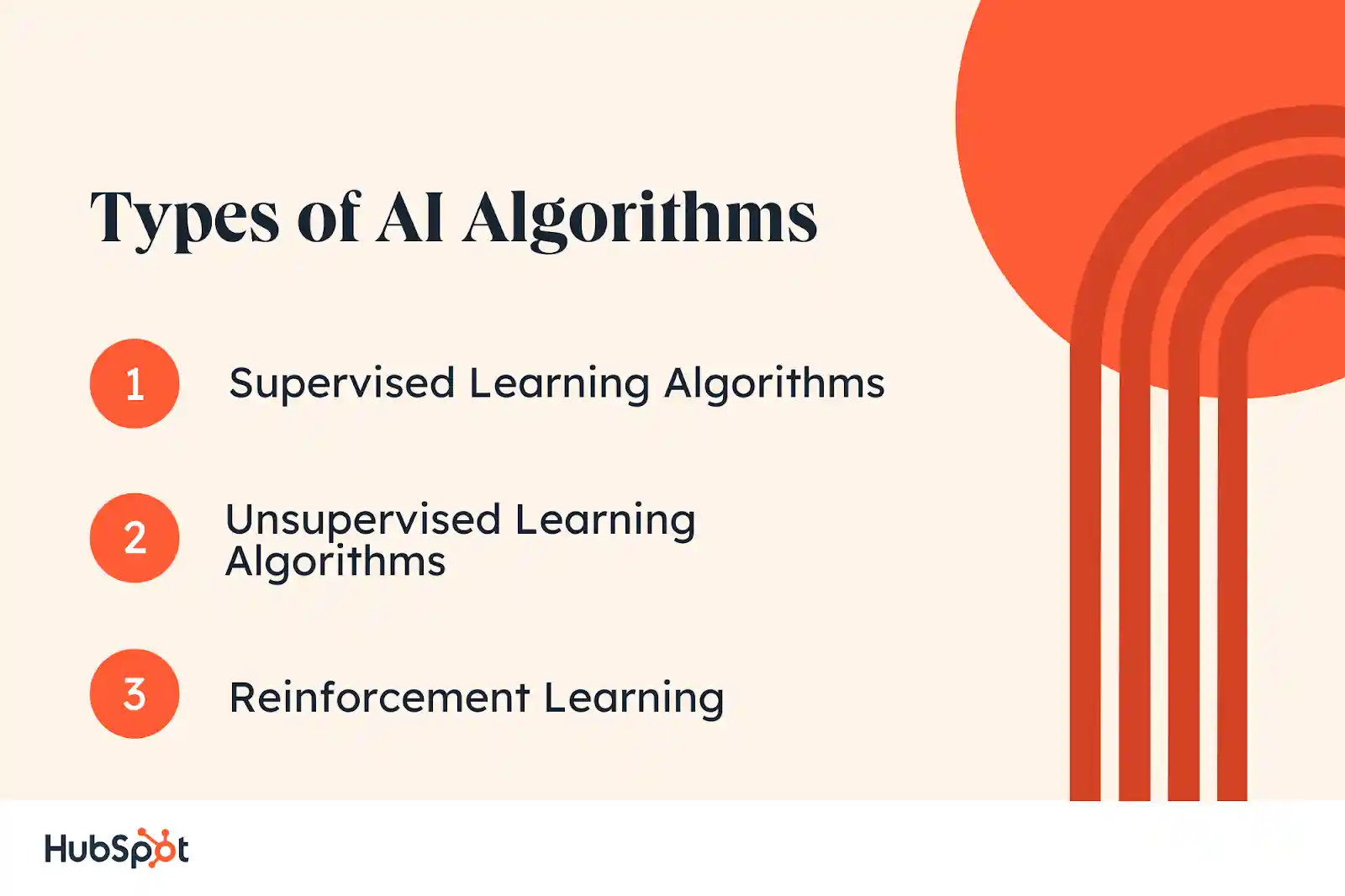
There is no single approach to machine learning. Different business objectives require different algorithmic frameworks, ranging from simple classification to complex predictive modeling. Most modern AI systems fall into three primary categories: supervised learning, unsupervised learning, and reinforcement learning.
Supervised Learning Algorithms
Supervised learning involves training a model on labeled data, where the desired output is already known. Think of this as working under the guidance of an expert. Data scientists provide the algorithm with input-output pairs, allowing it to learn the mapping between the two. Once trained, the model can classify new, unseen data or predict outcomes based on historical patterns.
Common applications include sentiment analysis, sales forecasting, and spam detection. Because this method relies on structured, validated data, it is highly effective for tasks where accuracy is the primary goal. Organizations often favor this approach when they need to automate repetitive tasks that require consistent, reliable results.
Unsupervised Learning Algorithms
Unlike supervised learning, unsupervised algorithms work with unlabeled, raw data. The system does not have a predefined target; instead, it must identify hidden structures, correlations, or clusters on its own. This is particularly useful for exploratory data analysis where the relationships within the data are not immediately obvious.
In business, this is most frequently applied to customer segmentation. By analyzing behavioral data without manual labeling, these algorithms can group audiences based on shared characteristics that humans might overlook. It is a cost-effective way to uncover insights from large, messy datasets, and it powers many of the recommendation engines we encounter daily.
Reinforcement Learning
Reinforcement learning is modeled after the way humans learn from experience. An agent is placed in an environment where it takes actions and receives feedback in the form of rewards or penalties. Over time, the algorithm adjusts its strategy to maximize the cumulative reward.
This approach is essential for dynamic environments like gaming, robotics, and real-time recommendation systems. For example, streaming platforms use reinforcement learning to refine content suggestions based on user interactions. If a user engages with a recommendation, the system receives a positive signal and strengthens that path; if they skip it, the system learns to pivot.
Practical Steps to Train Your AI Models
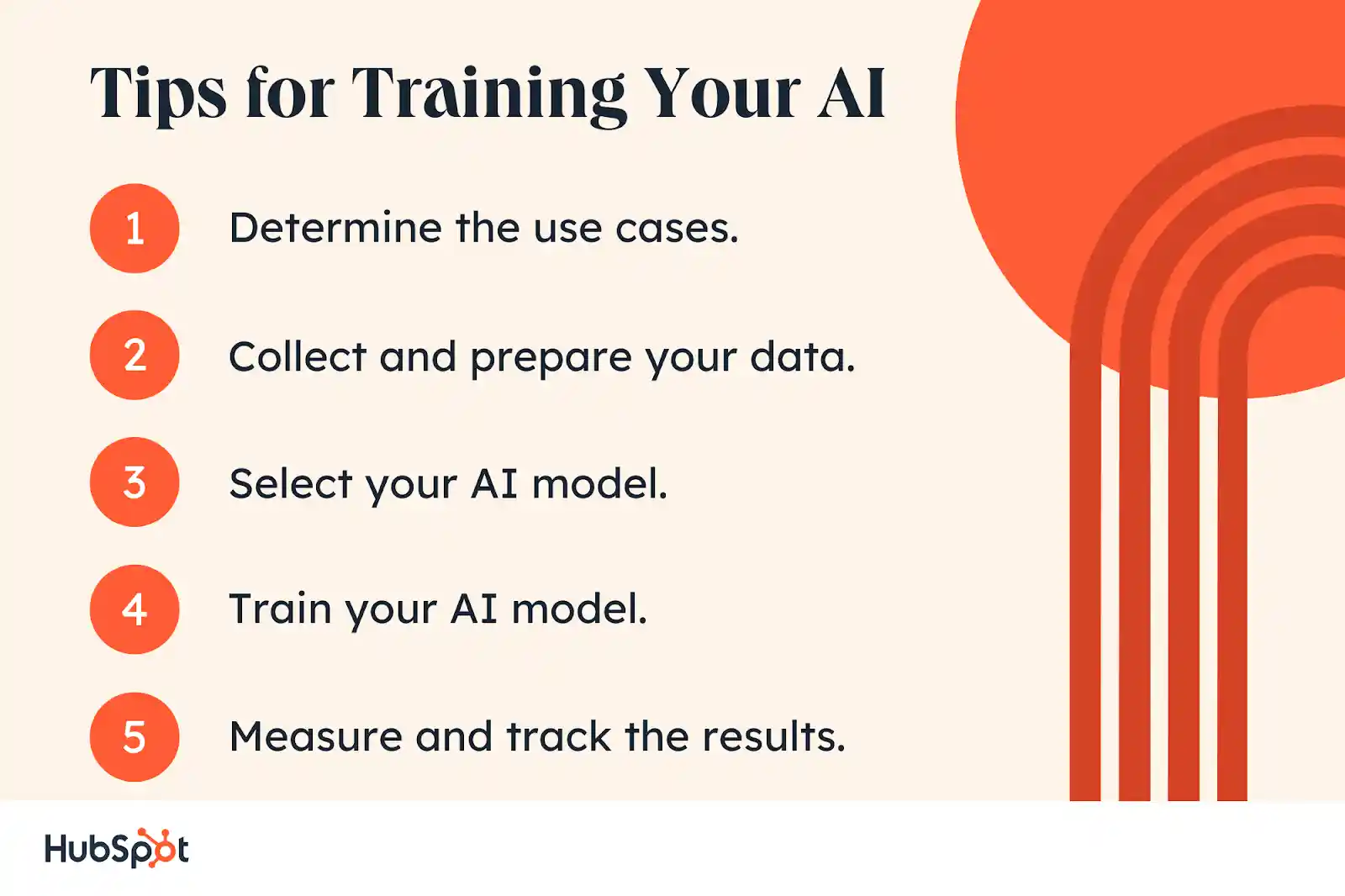
Training an AI algorithm is a significant investment of time and resources. Success depends on how well you prepare your data and monitor the model’s performance as it evolves. To ensure your AI delivers tangible value, consider these five foundational steps.
Define Clear Use Cases
Before you begin, determine exactly what problem you are solving. AI is not a universal solution; it is a tool for specific outcomes. Whether you are looking to personalize digital menus, automate customer support, or optimize supply chain logistics, the scope of your problem dictates the data you need and the model architecture you should choose.
Prepare Quality Data
Data is the lifeblood of any AI system. You must collect raw data through reliable channels and then invest time in cleaning and formatting it. If your training data is biased, incomplete, or noisy, your algorithm’s output will reflect those flaws. Proper preprocessing ensures that the model learns from high-quality signals rather than errors.
Select the Right Architecture
Your choice of model depends on the nature of your data and your specific goals. For instance, if you are focusing on image processing, convolutional neural networks are standard. If you are dealing with structured tabular data, regression models or random forests might be more appropriate. Matching the architecture to the complexity of your dataset is critical for efficiency.
Execute the Training and Validation Process
Training involves feeding your prepared dataset into the model and adjusting parameters to minimize errors. A common pitfall here is overfitting, where the model performs exceptionally well on training data but fails when exposed to new, real-world information. To avoid this, you must validate your model using separate data sets and test it in environments that mimic real-world conditions.
Monitor and Iterate
AI training is not a one-time event. Once your model is deployed, you must track key performance metrics like precision, recall, or mean squared error. If performance dips, you need to iterate. Continuous monitoring allows you to refine the algorithm based on new data, ensuring your system remains accurate and relevant as market conditions change.
The Role of Data in Modern Search
AI algorithms are instructions that enable machines to analyze data, perform tasks, and make decisions. By mastering these algorithms, businesses can transform raw inputs into actionable insights, creating more relevant, personalized experiences for their customers. As the digital landscape continues to shift toward generative search, the ability to train and manage these models will become a primary competitive advantage.
Data Modeling for Long-Term Success
Effective data modeling is the foundation of any sustainable AI strategy. By structuring your data in a way that allows algorithms to easily ingest and process information, you reduce the computational load and improve the speed of your results. Organizations that prioritize clean data pipelines often see faster ROI from their AI investments.
Maintaining Competitive Advantage
As AI becomes more accessible, the differentiator will not be the software itself, but the proprietary data used to train it. By focusing on unique, high-quality data sets that reflect your specific industry challenges, you can build models that provide value your competitors cannot easily replicate.
While the technology behind AI may seem complex, the underlying principles remain rooted in data quality and clear objectives. Whether you are just beginning to integrate AI into your workflows or looking to refine your existing models, the path forward is clear: start with the data, test your assumptions, and remain committed to constant iteration.





