A standard operating procedure is a comprehensive step-by-step guide on how to perform a routine task. By documenting these processes, you provide your team with a clear, reliable reference that minimizes guesswork and ensures consistent outcomes across your organization. This form of workflow documentation acts as the backbone of your company’s knowledge base, turning tribal knowledge into accessible, actionable intelligence.

Defining the Value of SOPs
Effective documentation goes beyond simple checklists. It serves as a foundational element for operational stability, allowing team members to execute complex tasks with confidence. When processes are clearly defined, training time for new hires decreases significantly, and the likelihood of errors during critical operations is greatly reduced. Whether you are managing technical deployments, administrative workflows, or quality control benchmarks, having a documented approach creates a predictable environment that supports growth and scalability.
Why Consistency Matters
Consistency is the primary driver of brand reliability. When every team member executes a task in the same way, the output becomes predictable, which builds trust with clients and stakeholders. Without a defined business process, quality often fluctuates based on who is performing the work, leading to inconsistent customer experiences and internal frustration.
Reducing Institutional Knowledge Loss
Employee turnover is a reality in any organization. When a key team member leaves, they often take specialized knowledge with them. A well-maintained SOP template ensures that the “how-to” of your business remains within the company, allowing new hires to ramp up quickly without needing constant supervision from senior staff.
Supporting Scalability
As an organization grows, informal communication channels eventually break down. What works for a team of five often fails for a team of fifty. Standardized procedures provide the structure necessary to scale operations without sacrificing the quality that made the company successful in the first place.
Essential Components of an SOP
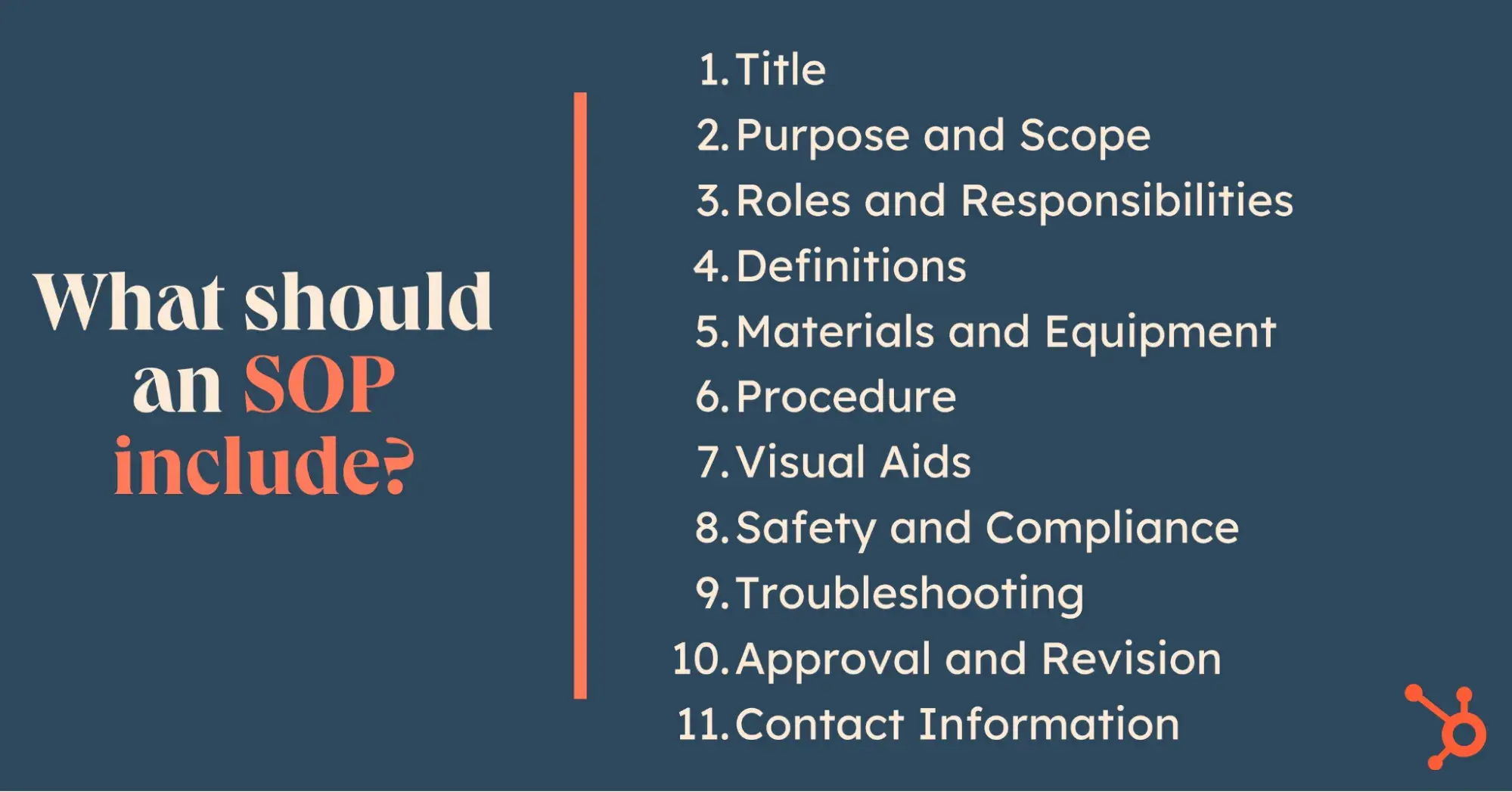
To ensure your documentation remains actionable and easy to follow, every procedure should include specific structural elements. Start with a clear title that identifies the task and the relevant department. Include a purpose and scope section to clarify why the procedure exists and what it covers. Define roles and responsibilities clearly to prevent operational overlap, and maintain a list of necessary materials or software access. By including a dedicated procedure section with chronological steps, you provide a roadmap that users can follow from start to finish.
The Anatomy of a Procedure
Every document should begin with metadata: the author, the date of the last update, and the version number. This ensures that users are always working from the most current information. The “Purpose” section should briefly explain the “why” behind the task, while the “Scope” defines exactly which scenarios the document covers and, just as importantly, which ones it does not.
Defining Roles and Responsibilities
Ambiguity is the enemy of efficiency. Clearly state who is responsible for each phase of the process. If a task requires multiple departments to coordinate, use a RACI matrix (Responsible, Accountable, Consulted, Informed) to clarify expectations. This prevents the “I thought someone else was doing that” phenomenon.
Step-by-Step Execution
The core of the document must be the procedure itself. Use active verbs and keep sentences short. Avoid jargon unless it is standard in your industry, and always lead with the action. If a step requires a decision, provide a clear “if-then” scenario to guide the user toward the correct outcome.
When to Implement New Procedures
Not every task requires a full-scale procedure document, but you should prioritize those where consistency directly impacts your brand’s reputation or service quality. If you find your team repeatedly asking the same questions about a process, or if a specific workflow involves multiple contributors, it is time to standardize. Conversely, avoid over-documenting simple, one-off tasks. The goal is to match the level of detail provided to the complexity and importance of the operation at hand.
Criteria for Standardization
Ask yourself three questions before documenting a process: Is this task repeated frequently? Does it involve multiple people or complex decision-making? Is the cost of an error high? If the answer to these is yes, the task is a prime candidate for a formal procedure.
Avoiding Over-Documentation
Documentation for the sake of documentation is a waste of resources. Do not create formal guides for tasks that are intuitive or rarely performed. Focus your energy on the “high-impact” workflows that define your daily operations.
How to Write a Standard Operating Procedure
Developing a process for writing an SOP helps you avoid feeling overwhelmed by the scope of the project. By breaking the task into manageable phases, you can build a library of resources that serves your team’s daily needs while allowing for periodic updates as your business matures.
Identify and Prioritize Objectives
Begin by evaluating your current workflows to identify where bottlenecks exist. Review customer feedback, error logs, and internal communication patterns to determine which areas require immediate attention. Focus on tasks that, when standardized, will offer the greatest return on operational efficiency. During this phase, involve the team members who actually perform the work, as they often have the most accurate understanding of the nuances involved in the task.
Select the Right Format
Choosing an appropriate format is vital to ensure your team actually uses the document. Simple, linear tasks are often best served by a step-by-step written list, while processes involving multiple decision points benefit from flowcharts. For tasks that require routine verification, a concise checklist is often the most effective tool. If your audience consists of visual learners, consider incorporating video demonstrations or annotated screenshots to illustrate complex actions.
Gather Information and Draft
Record yourself performing the task to capture the reality of the process, including any minor steps or keyboard shortcuts you might otherwise forget. Once you have gathered the necessary details, draft the document using clear, active language. Include a table of contents for longer documents and a glossary for any industry-specific terminology. If visual aids can simplify a step, include them to provide immediate context for the user.
Test and Refine
Before finalizing any document, observe someone from your target audience as they follow the instructions. This testing phase often reveals gaps in your logic or steps that you assumed were obvious. If a user struggles to complete the task, refine the instructions until the procedure is self-explanatory. Remember that documentation is not static; schedule regular reviews to ensure your procedures reflect the latest tools and best practices used by your team.
Maintaining Operational Clarity
Maintaining consistent quality in a competitive landscape requires that your internal processes evolve alongside your business goals. By treating your documentation as a living resource rather than a set-and-forget task, you ensure that your team remains aligned and efficient. When employees have access to accurate, well-structured guides, they are empowered to handle routine tasks independently, leaving you and your leadership team the space to focus on strategy and innovation. A culture that values clear communication and structured process is one that is well-prepared to handle the complexities of modern business.





