Data mining is the systematic process of analyzing large datasets to identify hidden trends, patterns, and correlations. It allows organizations to transform raw, unstructured information into clear, actionable insights that inform decisions across marketing, sales, and operations. By distilling complexity, data mining helps businesses move from intuition-based decision-making to a model rooted in objective evidence. This transition is critical for modern enterprises that face increasing competition and market volatility.


At its core, data mining provides the clarity needed to navigate modern business environments. When you effectively analyze your internal data—such as revenue streams, customer churn, or marketing spend—you gain a vantage point that is otherwise obscured by the sheer volume of information. This process is not just for technical specialists; it is a fundamental practice for any organization aiming to improve efficiency and customer experience. Without this analytical layer, companies risk making decisions based on incomplete information or outdated assumptions, which can lead to wasted resources and missed opportunities.
The Strategic Benefits of Data Mining
Data mining brings significant advantages by providing business intelligence that is both relevant and timely. By automating the identification of critical trends, you reduce the time spent on manual analysis and allow your team to focus on high-impact initiatives. This shift in focus is essential for scaling operations without losing sight of individual customer needs. The ability to process vast amounts of information quickly means that strategic decisions can be made in real-time, rather than waiting for quarterly reports or end-of-year summaries.
Efficiency and Automated Decision-Making
Instead of manual review, you can implement automated systems that flag patterns, such as identifying potential fraud or recognizing high-value customer segments. This automation ensures that your team spends less time wading through spreadsheets and more time acting on verified information. When processes are clearly defined, your staff can find the specific data they need to support their work, whether they are in sales, finance, or customer success.
Automation extends beyond simple alerts. It enables predictive workflows where systems anticipate needs before they arise. For example, an automated inventory system can predict stock shortages based on historical sales data and current market trends, triggering reorders automatically. This reduces human error and ensures that operational bottlenecks are addressed proactively. Furthermore, by standardizing how data is analyzed, organizations create a consistent baseline for performance measurement, allowing for more accurate comparisons across different departments and time periods.
Improving Customer Understanding and Revenue
Data mining allows you to aggregate information from multiple sources to form comprehensive customer profiles. By understanding behaviors, preferences, and pain points, you can tailor your content and product recommendations to meet specific needs. This level of personalization often results in higher engagement and increased revenue, as your communications become more relevant to the people you serve.
Deepening this understanding involves looking at the entire customer journey, not just isolated transactions. By analyzing touchpoints across email, social media, and direct sales, you can identify moments where customers are most likely to convert or churn. This holistic view enables you to design targeted interventions, such as personalized offers for at-risk customers or upsell opportunities for loyal buyers. The result is a more responsive business model that adapts to customer feedback instantly, fostering long-term loyalty and increasing the lifetime value of each client.
Core Data Mining Techniques
Successful data mining relies on a structured approach to data management. Before you can extract meaningful insights, you must ensure your data is clean, organized, and integrated. The following techniques represent the standard building blocks for any data-driven organization. Each method serves a distinct purpose and is chosen based on the specific questions you are trying to answer.
| Technique | Description | Purpose |
|---|---|---|
| Classification | Categorizing data into specific buckets based on shared traits. | Organize information for targeted action. |
| Regression | Predicting specific numerical values based on historical data. | Forecast outcomes like pricing or demand. |
| Association | Finding correlations between variables. | Identify relationships like product bundles. |
| Clustering | Grouping data by inherent similarities. | Discover segments without predefined labels. |
Data warehousing acts as the backbone of these efforts, providing a central location for your information. Once your data is stored, cleansing is vital; removing duplicates and correcting errors prevents false patterns from skewing your results. For more advanced needs, machine learning and association rule learning enable you to predict future behaviors by identifying recurring sequences within your datasets.
Understanding the nuances of each technique is crucial for effective implementation. Classification is particularly useful for risk assessment, where you need to sort customers into “high risk” or “low risk” categories. Regression analysis is ideal for financial forecasting, helping you estimate future sales or costs with greater precision. Association rules are powerful for retail and e-commerce, revealing which products are frequently bought together, thereby informing cross-selling strategies. Clustering, on the other hand, is exploratory; it helps you discover new market segments that you may not have previously considered, allowing for more nuanced marketing campaigns.
Implementing the CRISP-DM Framework
Any organization can begin data mining by following a structured methodology. We recommend the Cross Industry Standard Process for Data Mining (CRISP-DM), which breaks the project into six manageable stages to ensure your results align with your business objectives. This framework provides a roadmap that minimizes risk and maximizes the return on investment for your data initiatives.
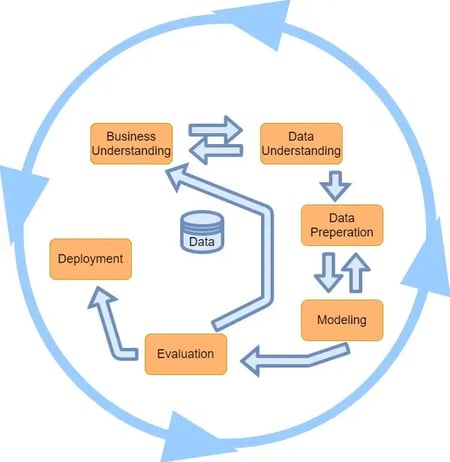
- Business Understanding: Define the specific problem or opportunity you intend to address.
- Data Understanding: Identify the datasets required to answer your research questions.
- Data Preparation: Clean and structure your data for consistent analysis.
- Modeling: Apply algorithms or analytical tools to find patterns.
- Evaluation: Assess whether your findings solve the initial business problem.
- Deployment: Present the insights to stakeholders to guide future strategy.
This framework prevents common pitfalls, such as analyzing data without a clear goal or failing to integrate disparate sources. By following these steps, you ensure that your data mining activities lead to measurable outcomes rather than just interesting observations.
The iterative nature of CRISP-DM is one of its greatest strengths. It is rare for a data mining project to move linearly from start to finish. Often, during the modeling phase, you may discover that the data preparation was insufficient, requiring you to loop back and refine your datasets. Similarly, evaluation might reveal that the initial business understanding was too broad, necessitating a refinement of the problem statement. This flexibility ensures that the final model is robust and truly reflective of the business reality, rather than a theoretical exercise.
Ethical Data Practices and Privacy
Data mining is the analytical process of discovering patterns in large datasets, while data harvesting refers to the collection of information from online sources. While both are used to gather intelligence, they are distinct processes. A primary concern for any mindful business is ensuring that all data is collected with explicit consent and handled in compliance with privacy regulations. The line between insightful analysis and invasive surveillance is thin, and crossing it can have catastrophic consequences for brand reputation.
Unethical practices, such as harvesting personal data without user knowledge or purchasing unauthorized contact lists, can lead to severe reputational damage and legal consequences. The most effective way to protect your brand is to prioritize transparency. Your customers should always know what data you are collecting and how you plan to use it to improve their experience. This transparency is not just a legal requirement in many jurisdictions, such as under GDPR or CCPA, but also a trust-building mechanism.
Maintaining data integrity requires ongoing vigilance. This includes securing data during collection, storage, and analysis, as well as establishing clear protocols for data deletion. When your data management practices are rooted in ethics, you build trust with your audience, which is a competitive advantage in itself. Integrating your data into a unified, secure system not only improves the accuracy of your insights but also makes it easier to respect and manage user privacy preferences across all your platforms.
Building Trust Through Transparency
Trust is the currency of the digital age. Customers are increasingly aware of how their data is used and are more likely to engage with brands that demonstrate respect for their privacy. Implementing clear privacy policies and providing easy-to-use opt-out mechanisms shows that you value the user’s autonomy. This approach reduces the risk of backlash and fosters a loyal customer base that feels safe interacting with your brand.
Compliance and Security Measures
Beyond transparency, robust security measures are essential. This includes encryption of data at rest and in transit, regular security audits, and strict access controls. Ensuring that only authorized personnel can access sensitive data minimizes the risk of internal breaches. Additionally, staying updated on evolving privacy laws ensures that your data mining practices remain compliant, avoiding hefty fines and legal challenges. By embedding ethics into the core of your data strategy, you create a sustainable foundation for long-term growth.





