A marketing budget is a financial plan that outlines the resources a company allocates to promote its products or services, acquire new customers, and build brand presence. It serves as a blueprint for growth, balancing ambitious goals against realistic fiscal constraints. When managed effectively, it transforms from a simple cost center into a powerful engine for business scalability. Without a structured approach, marketing spend often drifts toward reactive tactics rather than proactive strategy, leading to wasted capital and missed opportunities. By establishing clear guidelines and expectations from the outset, organizations can ensure that every dollar contributes directly to measurable business outcomes.

Defining the Marketing Budget
At its core, a marketing budget is the deliberate allocation of capital across various channels to achieve specific business outcomes. Successful marketing leaders view this not merely as spending, but as a strategic investment. By focusing on three primary pillars—customer acquisition, brand authority, and operational efficiency—you ensure that every dollar serves a clear purpose in the broader company vision. This definition extends beyond simple expense tracking; it involves forecasting future needs, anticipating market shifts, and preparing for both seasonal fluctuations and unexpected competitive moves. A well-defined budget acts as a guardrail, preventing scope creep and ensuring that marketing activities remain aligned with the overall corporate strategy.
The Importance of Strategic Allocation
Effective budgeting requires understanding where your audience spends their time and how they engage with your brand. As global trends shift, digital channels have become the dominant force in modern marketing. With digital advertising expected to capture a significant majority of global spend by 2025, your ability to adapt to these shifts—prioritizing mobile-first strategies and high-engagement platforms—is what separates sustainable growth from stagnant spending. Strategic allocation also means recognizing that not all channels yield the same return. Some platforms may offer broad reach but low conversion, while others provide niche engagement with higher intent. By analyzing historical data and current market conditions, you can distribute funds where they will have the greatest impact, rather than spreading resources thinly across every available option.
Understanding Core Marketing Costs
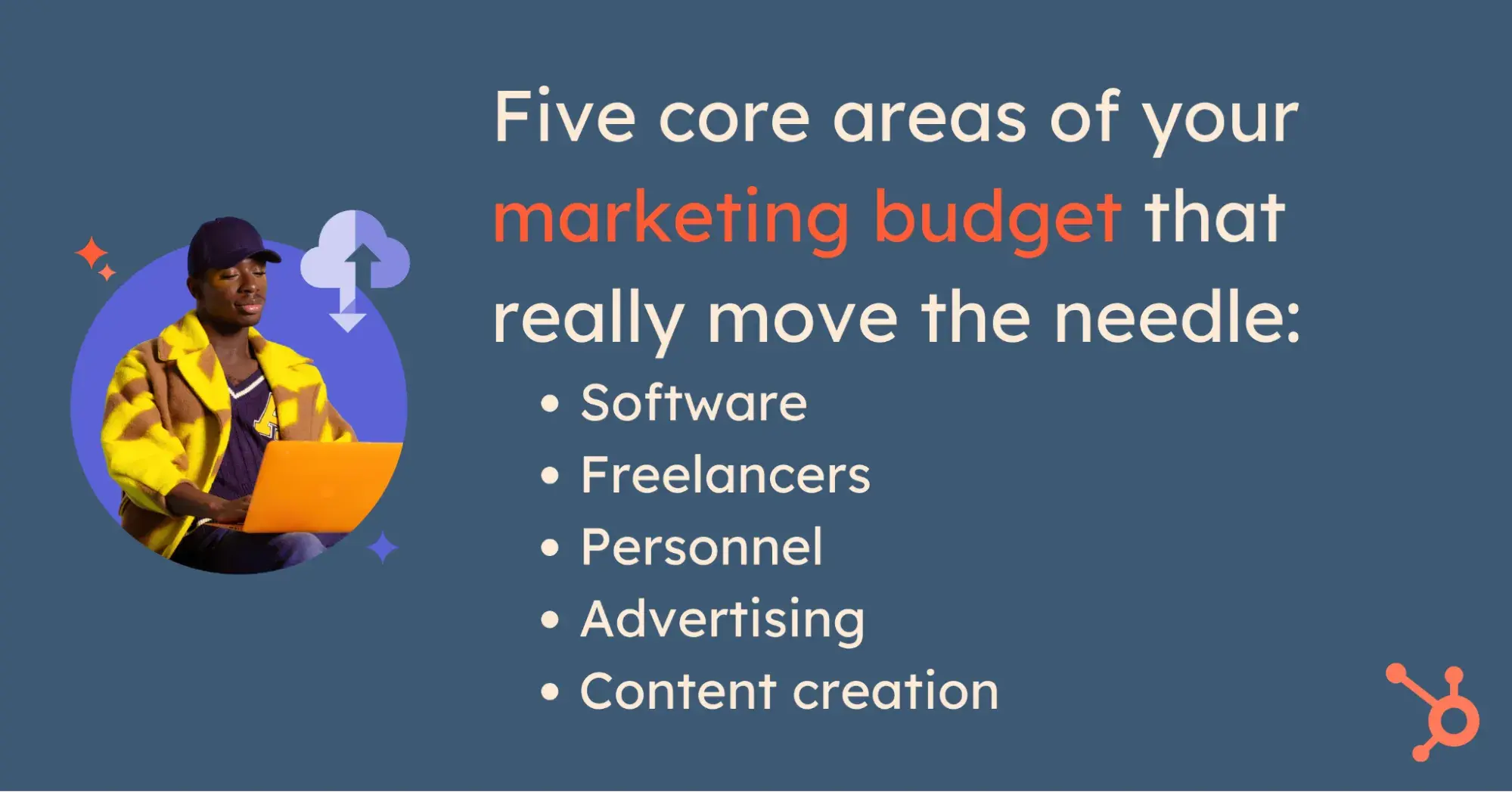
Marketing costs encompass every expense incurred to develop, promote, and sell a brand. These typically break down into five foundational categories: software tools, freelance expertise, personnel, advertising spend, and content production. Each area requires a different management approach to ensure maximum efficiency. Understanding these distinct cost centers allows finance and marketing teams to speak a common language, facilitating more accurate forecasting and better resource planning. It also highlights areas where costs can be optimized without sacrificing quality or output.
Software and Technology Stacks
Building a tech stack should be a deliberate, practical process. Rather than adopting every available tool, prioritize software that directly addresses your primary bottlenecks. Whether it is a CRM for lead management or analytics platforms to track ROI, the goal is to choose tools that provide immediate time-to-value. Measuring performance is impossible without the right infrastructure in place. However, tool proliferation can lead to “subscription fatigue,” where the cumulative cost of unused or underutilized software eats into the budget. Regular audits of your technology stack are essential to identify redundancies. For instance, if you are paying for a standalone email marketing platform, a social media scheduler, and a separate analytics dashboard, consider whether an integrated marketing automation platform could consolidate these functions, reducing both cost and complexity.
Personnel and Freelance Support
Managing human capital involves balancing internal expertise with flexible, external support. Freelancers act as a strategic lever for scaling production during peak periods, while new personnel should be hired based on identified skills gaps. As the market shifts toward skills-based hiring, focus on candidates who demonstrate both technical proficiency and high emotional intelligence, as these traits are essential for long-term adaptability. Internal teams provide continuity, institutional knowledge, and brand stewardship, making them ideal for long-term strategy and core operations. Conversely, freelancers and agencies offer specialized skills and fresh perspectives, which are invaluable for specific campaigns, creative projects, or entering new markets. A hybrid model allows businesses to maintain a lean core team while scaling up quickly when opportunities arise, ensuring that labor costs remain variable and aligned with revenue cycles.
Structuring Your Marketing Budget Breakdown
A common and effective framework for budget distribution is the 70-20-10 rule. This method provides a balanced approach to managing resources while fostering innovation. It prevents the common pitfall of over-investing in safe, incremental gains while neglecting the experimental efforts that drive future growth. By categorizing spend into these three buckets, marketing leaders can clearly communicate their strategy to stakeholders, demonstrating both a commitment to current performance and a vision for future expansion. This structure also simplifies decision-making, as each category has a defined purpose and expected risk profile.
The 70-20-10 Framework
- 70% of your budget is allocated to proven, high-performing strategies that reliably drive results. This is your core stability. These are the channels and tactics that have consistently delivered ROI in the past. Examples include optimizing existing SEO content, running proven paid search campaigns, or maintaining active social media communities. The goal here is efficiency and scale.
- 20% is directed toward growth initiatives, such as testing new product lines or expanding into adjacent markets. This portion of the budget supports “next best” opportunities. It might involve launching a new content format, entering a new geographic region, or partnering with influencers. These initiatives carry moderate risk but have the potential to become core drivers of growth if successful.
- 10% is reserved for experimentation, allowing your team to pilot bold, unproven ideas that could yield a significant competitive advantage. This is the “moonshot” category. It includes testing emerging platforms, trying new technologies like AI-driven personalization, or launching guerrilla marketing campaigns. While many experiments may fail, the ones that succeed can redefine your brand’s market position.
Channel-Specific Considerations
When allocating funds by channel, base your decisions on historical performance data rather than industry averages. While paid search remains a bedrock for capturing high-intent traffic, social media and content marketing provide the reach and authority necessary for long-term brand building. By mapping your investments to the specific stages of the buyer’s journey, you ensure that your spending is aligned with the way your customers actually make purchasing decisions. For example, early-stage awareness might rely heavily on social media and display ads, while late-stage consideration and conversion may require more budget for search engine marketing and retargeting. This stage-based allocation ensures that you are not just driving traffic, but driving the right traffic at the right time.
How to Create a Marketing Budget
Creating a budget is an iterative process that begins with a deep understanding of your customer’s path to purchase. A well-constructed budget is not static; it is a living document that requires regular monitoring and adjustments based on real-world performance metrics. The creation phase involves collaboration between marketing, sales, and finance teams to ensure alignment on goals, expectations, and resource availability. It is also the time to set realistic benchmarks and define what success looks like for each initiative.
Steps for Effective Budgeting
- Map the Buyer’s Journey: Identify the exact touchpoints where prospects interact with your brand. This involves creating detailed buyer personas and understanding their pain points, preferences, and decision-making criteria. By visualizing the journey, you can identify where marketing efforts are most needed and where they may be redundant.
- Align with Business Goals: Ensure that every dollar spent directly supports a specific objective, such as lead generation, brand awareness, or customer retention. If a campaign does not tie back to a core business goal, it should be reconsidered or removed from the budget. This alignment ensures that marketing is viewed as a growth driver, not just an expense.
- Identify Hidden Costs: Account for auxiliary expenses like platform fees, storage requirements, and testing tools that are often overlooked. These “soft costs” can add up quickly and derail a budget if not planned for. Include costs for creative assets, legal reviews, and internal training in your calculations.
- Establish ROI Tracking: Define the metrics for success before the money is spent to ensure you can evaluate the effectiveness of each initiative. This includes setting up proper tracking pixels, UTM parameters, and attribution models. Without accurate tracking, you cannot determine which channels are driving value, making it impossible to optimize spend.
Measuring Success Through ROI
The ultimate measure of a marketing budget is its return on investment. By tracking metrics like Customer Acquisition Cost (CAC) and lifetime value, you gain the clarity needed to increase funding for successful campaigns while cutting losses on underperforming ones. This data-driven approach removes the guesswork from financial planning and allows you to defend your budget with confidence. ROI is not just about immediate revenue; it also includes brand equity, customer loyalty, and market share. By looking at both short-term and long-term metrics, you can build a holistic view of marketing performance that resonates with executive leadership.
Marketing Budget vs. Advertising Budget
It is common for organizations to conflate marketing and advertising, yet they serve distinct functions. A marketing budget covers the entire ecosystem of brand growth, whereas an advertising budget is a subset focused specifically on paid awareness and engagement channels. Understanding this distinction is crucial for accurate financial planning and performance evaluation. Marketing encompasses organic efforts, public relations, content creation, and community management, while advertising is strictly about paid placements. This separation helps teams allocate resources more effectively, ensuring that organic growth initiatives are not overshadowed by paid spend.
Defining the Advertising Scope
Your advertising budget covers the costs of creating, testing, and running paid campaigns. This includes asset production, ad space procurement, and the analytical work required to monitor performance. A successful advertising strategy is integrated into the larger marketing plan, ensuring that the traffic generated by paid ads is met with a consistent brand experience and effective conversion pathways. It is important to note that advertising costs include not just the media buy, but also the creative development, copywriting, and design work needed to produce compelling ads. Ignoring these production costs can lead to significant budget overruns and a lower-than-expected return on ad spend.
Monitoring Ad Performance
To maintain an effective advertising budget, focus on three key metrics:
- Return on Ad Spend (ROAS): Measures the revenue generated relative to the cost of the ads. This is a critical metric for e-commerce and direct-response campaigns, providing a clear view of profitability.
- Conversion Rate: Indicates how effectively your ads turn viewers into engaged prospects. A low conversion rate may signal issues with landing page design, offer relevance, or audience targeting, requiring immediate attention.
- Cost per Lead (CPL): Tracks the efficiency of your lead generation efforts on a per-person basis. This metric is essential for B2B companies and businesses with longer sales cycles, where the immediate revenue from an ad click may not be visible.
By monitoring these metrics, you can make informed adjustments to your spending, ensuring that your advertising efforts remain efficient and aligned with your broader business objectives. The goal is not merely to spend, but to ensure that every investment contributes to the long-term health and visibility of your brand. Regularly reviewing these metrics allows you to identify trends, spot anomalies, and optimize campaigns in real-time, maximizing the impact of your advertising budget.





