Understanding how your audience engages with your communications is a core challenge for any business aiming to build lasting relationships. While the digital landscape is saturated with advice on how to acquire new subscribers, there is surprisingly little focus on the actual mechanics of communication—specifically, how subscription types influence long-term engagement. To better understand this, our team conducted an analysis of 26,000 active customer accounts, tracking their email usage patterns and performance metrics over a twelve-month period. This extensive dataset provides a rare glimpse into the real-world application of email subscription management, moving beyond theoretical best practices to reveal what actually drives sustained audience interaction.
Email subscription management is the process of allowing contacts to define how, when, and how frequently they receive communications from your organization. By providing these options, companies can improve contact relationships, reduce churn, and foster more intentional engagement. Our research aimed to determine if there is a direct correlation between the number of subscription types offered and overall email performance, such as open rates and click-through metrics. The hypothesis was straightforward: if customers have more control over what they receive, they will engage more deeply. However, the reality of email marketing is often more nuanced, requiring a deeper look at how these mechanisms function in practice.
Analyzing Subscription Usage Patterns
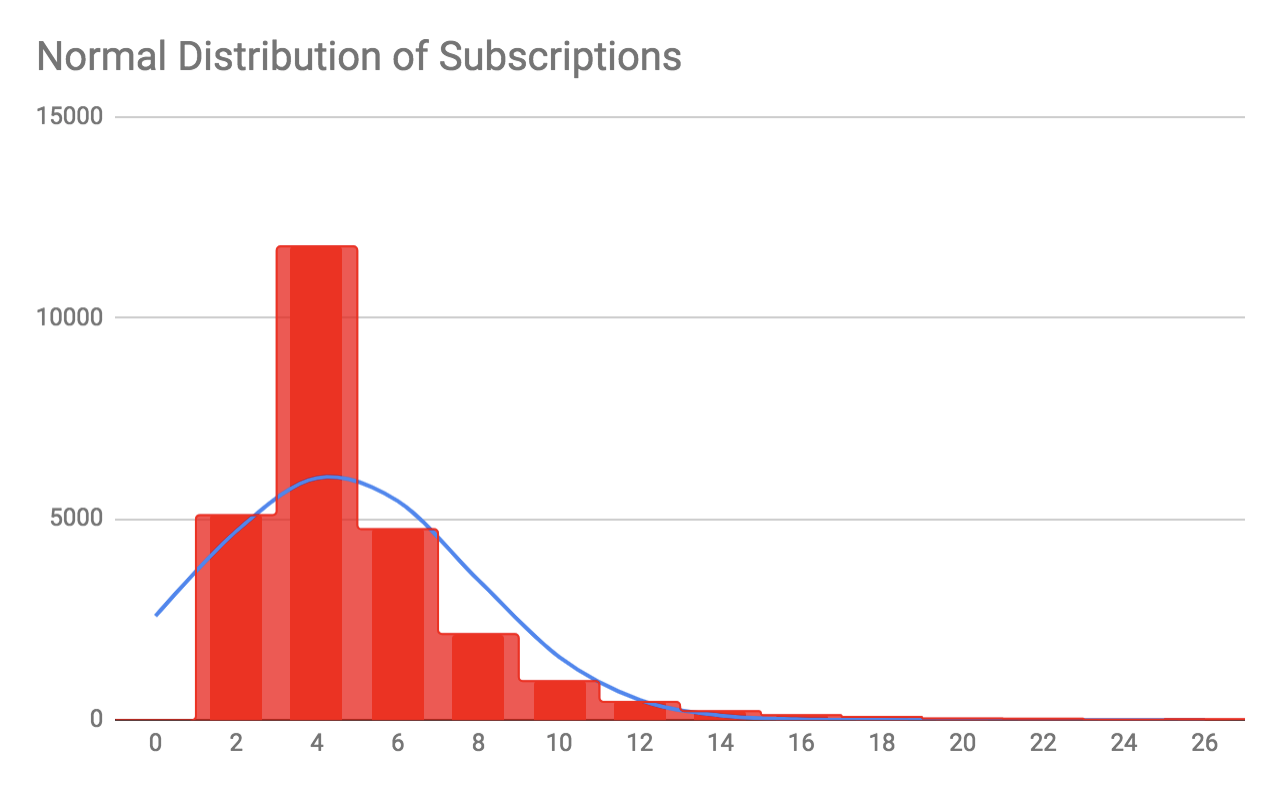
When we examined how businesses structure their communication, we found that most organizations keep their subscription offerings relatively simple. The distribution of subscription types across our dataset shows that the mode is three, with a mean of 4.42. Very few accounts venture beyond ten active subscription types. This suggests that while there is an opportunity for granular segmentation, most companies prefer to keep their communication architecture straightforward, focusing on a few core pillars rather than an exhaustive list of categories. This simplicity is not necessarily a sign of laziness, but rather a strategic choice to avoid overwhelming the subscriber with too many choices, which can lead to decision fatigue and disengagement.
The Psychology of Choice in Subscription Design
The preference for a limited number of subscription types highlights a critical aspect of user experience design: the paradox of choice. When presented with too many options, customers often struggle to make a decision, leading them to either opt out entirely or select the most generic option available. By limiting the number of categories, businesses can guide their audience toward a clearer understanding of the value they are receiving. This approach ensures that each subscription type represents a distinct and valuable stream of content, rather than a fragmented list of minor updates that dilute the overall impact of the communication.
Common Categories and Industry Standards
In terms of what those subscriptions actually are, the data was predictable. Most organizations utilize standard defaults like “Marketing Information,” “Blog,” and “One-to-One” communications. Beyond these, common categories include “Events,” “News,” and “Updates.” These buckets serve as a reliable benchmark for most industries. While some companies experiment with specific “Offers” or “Product Information,” the majority of communication remains centered on these foundational themes. Understanding these standard categories is essential for businesses looking to align their strategies with industry norms, ensuring that their communication efforts are both recognizable and relevant to their audience.
The Risk of Over-Segmentation
While it might seem intuitive to create highly specific subscription categories to cater to every possible interest, our data suggests that this approach can be counterproductive. Over-segmentation can lead to a fragmented communication strategy where messages are too niche to achieve significant reach or impact. Instead of creating dozens of micro-categories, businesses should focus on consolidating their content into broader, more meaningful themes that resonate with a larger portion of their audience. This not only simplifies the management of email campaigns but also ensures that each communication has the potential to drive meaningful engagement.
Does More Segmentation Equal Higher Performance?
One of the most persistent hypotheses in marketing is that higher levels of segmentation lead to better performance. We assumed that companies with a wider array of subscription types would demonstrate higher open rates, as they would theoretically be more conscientious about content relevance. However, the data told a different story. We found no direct, positive correlation between the number of subscription types and email success. This finding challenges the conventional wisdom that more options always lead to better outcomes, suggesting that other factors play a more significant role in driving engagement.
The Stability of Open Rates Across Segments
In fact, open rates appear to remain relatively stable, hovering between 20% and 30%, regardless of whether a company has two subscription types or ten. In some instances, open rates actually dipped slightly as the number of subscription types increased. This suggests that simply adding more categories does not inherently solve engagement issues. Success in email marketing is likely driven more by frequency, content quality, and the underlying relevance of the message to the specific contact, rather than the sheer volume of subscription options available. This stability indicates that while segmentation is important, it is not a silver bullet for improving email performance.
The Role of Content Quality and Relevance
The lack of correlation between subscription count and open rates underscores the importance of content quality. No matter how well-segmented your audience is, if the content itself is not valuable or relevant, it will not drive engagement. Businesses must focus on creating high-quality, compelling content that resonates with their audience’s needs and interests. This requires a deep understanding of the customer journey and the specific pain points and desires of each segment. By prioritizing content quality over segmentation complexity, businesses can ensure that their emails are not just opened, but also read and acted upon.
Frequency and Timing as Key Drivers
Another critical factor in email performance is the frequency and timing of communications. Sending too many emails, even if they are highly segmented, can lead to subscriber fatigue and increased unsubscribe rates. Conversely, sending too few emails can result in missed opportunities for engagement. Businesses must find the right balance, ensuring that their communications are frequent enough to stay top-of-mind but not so frequent that they become intrusive. This requires careful monitoring of engagement metrics and a willingness to adjust strategies based on real-time feedback from the audience.
The Impact of Business Scale on Email Strategy
When we broke down the data by account tier, the nuances of email strategy became clearer. Smaller, basic-tier accounts often see higher open rates compared to larger, enterprise-level accounts. This discrepancy is likely tied to the complexity of managing large databases. As contact lists grow into the tens of thousands, the difficulty of maintaining highly personalized, relevant communication increases, often leading to broader, less targeted mass communications. This trend highlights the challenges that growing organizations face in maintaining the intimacy and relevance of their email marketing efforts.
The Challenge of Scaling Personalization
| Metric | Basic Tier | Enterprise Tier |
|---|---|---|
| Average Open Rate | Higher | Lower |
| Communication Complexity | Lower | Higher |
| Targeting Precision | Higher | Lower |
This table illustrates the trade-offs that businesses face as they scale. While enterprise accounts have access to more sophisticated tools and larger budgets, they often struggle to maintain the same level of personalization that smaller accounts can achieve. The sheer volume of contacts makes it difficult to tailor messages to individual preferences, leading to a more generic approach that may not resonate as strongly with the audience. This highlights the importance of investing in technology and processes that can help maintain personalization at scale.
The Role of Communication Complexity
As businesses grow, the complexity of their communication strategies also increases. This includes not only the number of subscription types but also the variety of channels and touchpoints used to engage with customers. While this complexity can provide opportunities for more nuanced and targeted communications, it also increases the risk of inconsistency and confusion. Businesses must ensure that their communication strategies are well-coordinated and aligned across all channels, providing a seamless and consistent experience for the customer. This requires a high level of organizational coordination and a clear understanding of the customer journey.
Preserving Intimacy at Scale
This trend highlights a critical challenge for growing organizations: as you scale, you must work harder to preserve the intimacy of your communications. Enterprise portals tend to send more emails per contact, which may contribute to lower engagement rates. The takeaway here is that while more subscription types are often associated with larger, more active accounts, they are not a substitute for a robust, empathetic communication strategy that respects the contact’s inbox. Businesses must prioritize the quality and relevance of their communications, ensuring that each email adds value to the customer’s experience. This requires a shift in mindset from volume to value, focusing on building long-term relationships rather than short-term transactions.
Moving Toward Empathetic Communication
If the number of subscription types is not the sole driver of success, what is? The data points toward the importance of providing contacts with control. Rather than using subscriptions merely as a compliance hurdle, successful organizations view them as a tool for empowerment. An effective strategy gives contacts the agency to decide exactly how they want to interact with your brand. This approach not only improves engagement but also builds trust and loyalty, as customers feel that their preferences are being respected and valued.
Empowerment Through Choice
This shift requires moving away from one-size-fits-all messaging toward a model where the contact’s preferences dictate the communication flow. By integrating feedback loops and allowing for granular control, businesses can ensure that their emails are welcomed rather than tolerated. This is particularly relevant in the era of generative search and AI-driven content, where the quality and intent behind your communication are becoming key differentiators for brand visibility. Customers are increasingly savvy about marketing tactics, and they are more likely to engage with brands that demonstrate a genuine understanding of their needs and preferences.
Building Trust Through Transparency
Transparency is another key component of empathetic communication. Businesses should be open about how they use customer data and how they plan to communicate with them. This includes providing clear and easy-to-understand privacy policies and giving customers the ability to opt out of communications at any time. By being transparent and respectful of customer choices, businesses can build trust and credibility, which are essential for long-term success. This approach not only improves engagement but also reduces the risk of negative feedback and complaints, which can damage a brand’s reputation.
The Role of Feedback Loops
Integrating feedback loops into your communication strategy is essential for ensuring that your messages are relevant and valuable to your audience. This can include surveys, polls, and other mechanisms for gathering customer input. By actively listening to your customers and responding to their feedback, you can continuously improve your communication strategy and ensure that it remains aligned with their needs and preferences. This iterative approach helps to create a dynamic and responsive communication strategy that evolves with your audience, ensuring that your brand remains relevant and engaging over time.
Practical Steps for Your Communication Strategy
To improve your current approach, consider auditing your existing subscription types to ensure they align with what your audience actually values. If your open rates are stagnant, adding more categories is unlikely to be the solution. Instead, focus on the following actionable steps to enhance your email marketing efforts and drive better engagement.
1. Reviewing Your Content Cadence
Are you sending too much, or is the content failing to resonate? Analyze your sending frequency and compare it with engagement metrics. If you notice a decline in open rates or an increase in unsubscribe rates, it may be a sign that you are overwhelming your audience. Conversely, if engagement is low despite a moderate sending frequency, it may indicate that the content itself is not relevant or valuable. Adjust your cadence based on these insights to find the optimal balance.
2. Simplifying Your Messaging
Can you consolidate your current subscription types into more meaningful, distinct categories? Review your existing categories and identify any that are overlapping or redundant. Consolidating these into broader, more impactful categories can help to reduce complexity and improve clarity for your subscribers. This not only makes it easier for customers to choose the types of communications they want to receive but also helps to streamline your internal communication processes.
3. Prioritizing Preference Centers
Ensure your contacts have an easy way to update their communication choices at any time. A well-designed preference center should be intuitive and user-friendly, allowing customers to manage their subscriptions with minimal effort. This not only improves the customer experience but also reduces the likelihood of unsubscribes, as customers feel that they have control over their inbox. Regularly test and optimize your preference center to ensure that it meets the needs of your audience.
We plan to continue refining our own educational resources to help businesses navigate these challenges. By moving beyond basic metrics and focusing on the relationship between the sender and the recipient, companies can create a more sustainable and impactful communication strategy. The goal is not just to reach the inbox, but to provide value that encourages the contact to stay engaged over the long term. This requires a commitment to continuous improvement and a willingness to adapt to changing customer needs and preferences.
Looking Ahead at Communication Trends
As we look toward the future of digital interaction, it is clear that email remains a vital channel, even as other forms of communication evolve. Subscriptions will continue to play a supporting role in elevating that communication, provided they are used with intent. The ability to adjust your strategy on the fly, based on real-time feedback from your contacts, is becoming a hallmark of high-performing marketing teams. This agility allows businesses to respond quickly to changes in customer behavior and preferences, ensuring that their communications remain relevant and effective.
The Evolution of Personalization
Future trends in email marketing will likely see an increased emphasis on hyper-personalization, driven by advances in AI and machine learning. These technologies will enable businesses to deliver highly tailored messages that are specific to each individual’s interests and behaviors. However, this level of personalization must be balanced with respect for privacy and customer choice. Businesses must ensure that their use of data is transparent and ethical, maintaining the trust and confidence of their audience.
The Importance of Omnichannel Integration
Email will not exist in isolation; it will be part of a broader omnichannel strategy that includes social media, mobile apps, and other digital touchpoints. Integrating email with these other channels will allow businesses to create a seamless and consistent customer experience across all platforms. This requires a high level of coordination and data sharing between different teams and systems, ensuring that the customer receives a unified message regardless of the channel they are using.
Ultimately, the data suggests that the most successful communication programs are those that treat the subscriber as a partner in the relationship. Whether you are a small business or a large enterprise, the principles of empathy, relevance, and control remain the same. By focusing on these core tenets, you can ensure that your email strategy remains a powerful asset, regardless of how the broader digital environment changes. This approach not only drives immediate engagement but also builds long-term loyalty and advocacy, creating a sustainable foundation for future growth.





