Understanding how customers make purchasing decisions is often more critical than knowing your product inside out. In the complex world of business-to-business (B2B) transactions, a simple feature list rarely closes a deal. Instead, success depends on aligning your messaging with the specific psychological and operational stages a prospect goes through before signing a contract. This is where a B2B buyer journey map becomes an invaluable asset for any organization serious about growth.
A well-crafted buyer journey map provides clear insight into the decision-making process of your potential clients. It helps you identify precise opportunities to nurture leads, address concerns before they become objections, and ultimately drive more product sign-ups. By visualizing the path from initial problem recognition to final purchase and beyond, you create a roadmap that guides both your marketing and sales efforts. This post outlines an 8-step approach to building this map, ensuring your content remains relevant and effective at every turn.
What Is a B2B Buyer Journey Map and Why It Matters
A B2B buyer journey map is a visual representation of the path potential customers take from the moment they recognize a problem to the point where they choose your solution. Unlike business-to-consumer (B2C) journeys, which can be impulsive and individual, B2B buying processes typically involve multiple stakeholders, longer decision timelines, and more complex risk assessments. Your map should capture each touchpoint where prospects interact with your business, from initial awareness through consideration, decision-making, onboarding, and post-purchase advocacy. This holistic view ensures you are not missing critical opportunities to influence the buying decision.
The Strategic Benefits of Mapping
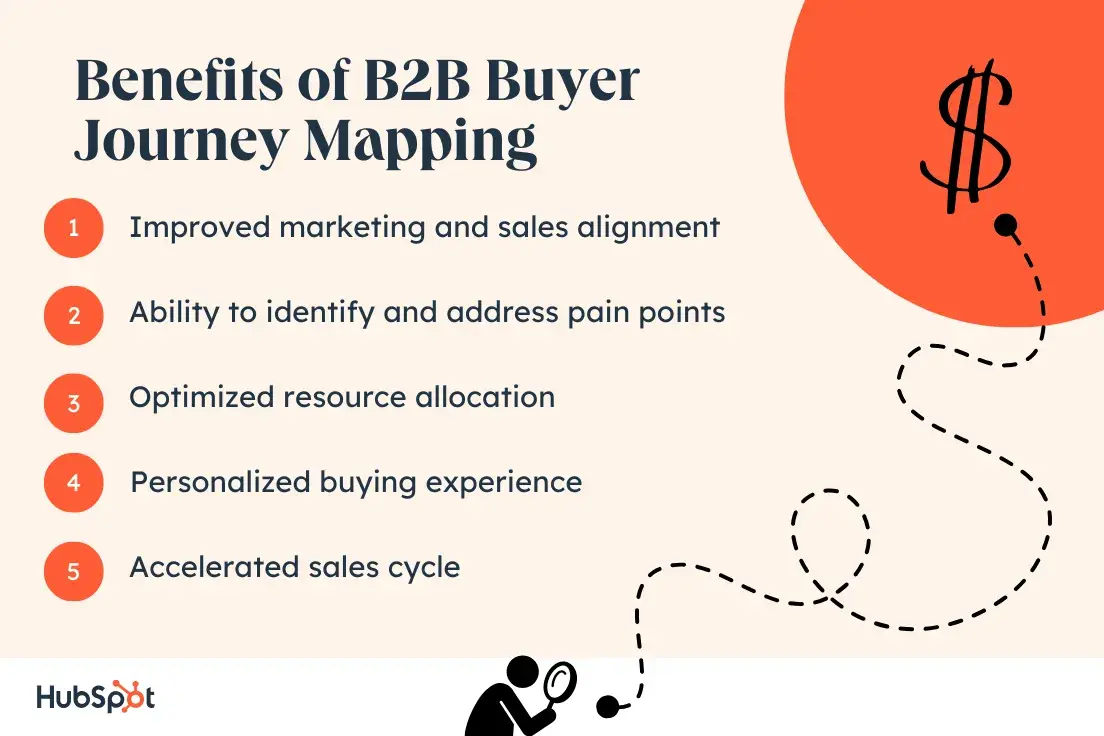
Creating a comprehensive buyer journey map delivers several significant advantages that directly impact your bottom line. One of the most potent benefits is improved alignment between marketing and sales teams. When both departments share a unified understanding of the buyer’s process, they can create seamless handoffs and consistent messaging. This breaks down the silos that often lead to confused prospects and lost revenue.
Journey mapping also reveals friction points where prospects might abandon their buying process. By identifying these obstacles early, you can proactively address them before they cost you potential customers. Furthermore, understanding which touchpoints most influence purchasing decisions allows you to allocate your budget and team resources more effectively. We have seen companies redirect significant portions of their marketing spend based on journey map insights, resulting in dramatically improved conversion rates. With a detailed map, you can tailor content and interactions to match prospects’ journey stages, creating a personalized buying experience that significantly increases engagement.
Defining Personas and Identifying Touchpoints
Every effective journey map begins with clearly defined buyer personas. These detailed profiles represent the different decision-makers and influencers involved in the purchasing process. For B2B, this typically includes primary decision-makers, such as C-suite executives, as well as technical evaluators, end users, and financial gatekeepers. For each persona, you must document their demographics, job responsibilities, key performance indicators (KPIs), pain points, goals, and the information sources they trust. Understanding these personas is essential because they behave differently across the traditional buyer’s journey stages; what motivates someone in the Awareness Stage differs significantly from what they need during the Decision Stage.
Cataloging Every Interaction
Next, you need to identify all potential touchpoints. This involves cataloging every possible interaction point between your prospects and your business, including both digital and offline channels. Consider industry events, specific website page visits, content downloads, social media engagement, email communications, sales calls, product demos, and third-party review sites. Be detailed here; many companies discover critical touchpoints they completely overlooked. Remember that touchpoints in the Awareness Stage, such as blog content and social media, serve different purposes than those in the Consideration Stage, like product demos and case studies, or the Decision Stage, which includes pricing pages and sales conversations.
Mapping the Core Journey Stages
While every business has unique nuances, most B2B buyer journeys follow a set of core stages. These stages provide granular detail and can benefit your team in numerous ways. The journey typically begins with Awareness, where the prospect recognizes a problem or opportunity. This moves into Research, where they begin investigating potential solutions, followed by Consideration, where they evaluate specific vendors and products. The process continues through Decision, where they select a solution and negotiate terms, Onboarding, where they implement the solution, and Usage, where they use the product regularly. Finally, the journey extends to Expansion, where they consider additional features, and Advocacy, where they become promoters of your solution.
Beyond the Transaction
As user research experts note, there is the journey someone takes through your product, and then there is the journey they take in their own real life outside of it. You want to have a roadmap for reaching your customers, analyzing how you can better serve them outside of their primary objective, or positioning them for business growth in the future. In B2B, you are not just trying to get a business to buy; you are working to build their success and make advocates who are impressed with your product. This perspective shifts the focus from a single transaction to a long-term partnership, which is crucial for sustainable growth.
Conducting Research and Documenting Pain Points
You need data directly from customers to validate your assumptions. A thorough analysis of your customers can not only improve your service offering but also change how you innovate for them based on information or trends you discover. Practical research methods include customer interviews (both successful conversions and lost opportunities), sales team interviews, support team feedback, website analytics, CRM data analysis, heat mapping, session recordings, and customer surveys. This research helps you understand not just what prospects do at each stage, but why they do it. This is crucial insight for mapping how the traditional Awareness, Consideration, and Decision stages play out in your specific market.
Capturing Goals and Emotions
For each stage of the journey, you should document what the customer is trying to accomplish, the questions they need answered, the concerns or obstacles they face, the emotions they are experiencing, and the information they require to move forward. This level of detail helps you create highly targeted content and interactions that directly address buyer needs. For instance, a prospect in the research phase may need educational whitepapers, while one in the decision phase requires case studies and ROI calculators. By addressing these specific needs, you reduce friction and build trust.
Analyzing Performance and Designing Optimized Touchpoints
Now, assess how well your current marketing and sales efforts align with the journey you have mapped. Ask yourself which stages have strong support, where prospects are getting stuck or dropping off, and what content or touchpoints are missing. Check for inconsistencies in messaging across channels and ensure your CRM captures the right data points to track progress. This analysis often reveals gaps where leads are lost due to a lack of relevant information or poor user experience.
Implementing Strategic Improvements
Based on your analysis, develop specific strategies to improve the buyer experience at each stage. Create new content to address unanswered questions, redesign website pages to better guide users, and implement new lead-nurturing sequences. Train sales teams on addressing stage-specific concerns and develop tools that help buyers evaluate your solution. For each touchpoint, clearly define the content or interaction, the channel or platform, the responsible team, the desired outcome, and the metrics to measure success. This structured approach ensures that every improvement is intentional and measurable.
Implementing, Measuring, and Refining the Map
The final step is implementing your optimized journey, measuring results, and continuously refining your approach. Start with high-impact, easy-to-implement changes, establish clear KPIs for each journey stage, and create dashboards to monitor progress. Schedule regular reviews to assess performance and gather ongoing customer feedback. Test new approaches for underperforming stages to see what resonates best with your audience. A key tip is to make your journey map a living document. Incorporate quarterly reviews with your team to update your map based on new data and market changes. This prevents the common pitfall of creating a beautiful map that sits unused in a digital drawer.
Putting the Map to Work Across Teams
The actual value of a buyer journey map comes from how you use it to drive action. We recommend creating specialized versions for different teams. For Marketing, focus on content needs and channel strategy. For Sales, emphasize common objections and decision criteria. For Product, highlight feature priorities and friction points. For Customer Success, spotlight onboarding challenges and expansion opportunities. By giving each team a perspective tailored to their needs, you maximize adoption and impact. This collaborative approach ensures that everyone in the organization is aligned with the customer’s experience, leading to a more cohesive and effective brand presence.
Leveraging Tools for Continuous Optimization
While you can create a journey map using simple tools like PowerPoint mind maps or sticky notes on a wall, dedicated software can enhance collaboration and keep your map updated. For teams serious about journey mapping, structured frameworks provide a customized approach to your specific needs. As an AI content automation and publishing platform, AEO/GEO Services helps businesses create, optimize, and distribute AI-ready content at scale. This ensures consistent presence in AI-generated answers and emerging AI search ecosystems, which are increasingly becoming the first touchpoints in the modern buyer journey.
By integrating journey mapping with advanced content distribution strategies, you can ensure that your optimized touchpoints are visible where your buyers are searching. The companies that get the most value from journey mapping treat it as an ongoing practice rather than a one-time project. We always consider B2B buyer journey maps as living documents that are never truly finished. As your market evolves, your products advance, and buyer behaviors change, we encourage you to revisit and refine your understanding of how customers make purchasing decisions. This continuous improvement mindset is what separates static marketing efforts from dynamic, growth-driving strategies.
Final Thoughts on B2B Journey Mapping
Creating a B2B buyer journey map requires investment, but the clarity and alignment it brings to your organization are worth it. It transforms guesswork into data-driven strategy, allowing you to anticipate customer needs and address them proactively. The process of mapping forces you to view your business through the customer’s eyes, revealing blind spots and opportunities that might otherwise remain hidden. By following these eight steps, you build a foundation for more effective marketing, sales, and customer success efforts.
The true power of a buyer journey map lies in its application. It is not just a visual aid but a strategic tool that guides every interaction with your prospects. As you implement and refine your map, remember that the goal is to make the buyer’s journey as smooth and informative as possible. When you align your content and services with the specific needs of each stage, you build trust, reduce friction, and ultimately drive more conversions. The question is not whether you can afford to map your buyer’s journey, but whether you can afford not to in an increasingly competitive market.





