Discerning between human-created visuals and those produced by generative models is becoming a standard skill for modern professionals. As tools like Midjourney, PikaLabs, and various image generators become more sophisticated, the line between authentic photography and synthetic media continues to blur. We are seeing a shift where the digital landscape is increasingly populated by content that mimics reality with surprising precision. Understanding how to identify these subtle indicators is essential for maintaining brand integrity and ensuring your audience knows exactly what they are viewing. The stakes are higher than ever; misinformation spreads faster when it is wrapped in visually convincing packaging, making the ability to spot AI-generated content a critical component of modern digital literacy.
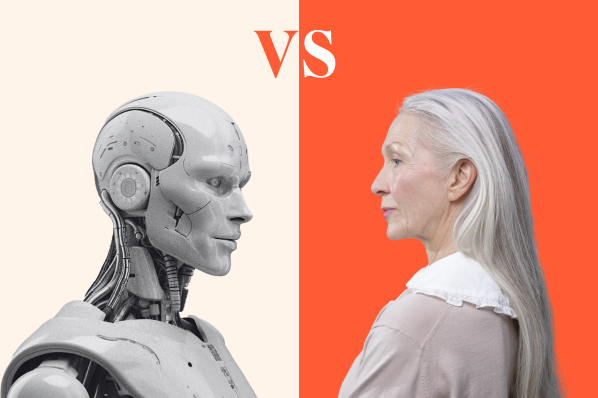
Testing your own ability to distinguish between these categories serves as a practical exercise in digital literacy. Whether you are looking at marketing materials, social media posts, or website assets, the ability to recognize AI-generated content allows you to better evaluate the authenticity of the information you consume. This is not merely an academic exercise but a necessary defense mechanism in an era where deepfakes and synthetic images can influence public opinion, stock markets, and personal reputations. Below, we present eight visual challenges that highlight the current capabilities of these tools and the nuances that often give them away. By engaging with these tests, you will train your eye to spot the inconsistencies that algorithms struggle to replicate.
The Real or AI Detection Challenge
To better understand the current state of generative technology, consider these eight distinct scenarios. Each test compares an authentic piece of media against an AI-generated counterpart. The goal here is not just to guess correctly, but to observe the details in lighting, texture, and subject consistency that often define the difference between human-captured images and machine-synthesized outputs. These challenges are designed to push your perception beyond the surface level, forcing you to analyze the structural integrity of the image rather than just its aesthetic appeal.
1. Athletic Photography Comparisons
In our first test, we compare two football images. One is a traditional photograph, while the other is generated by Lummi. Pay close attention to the grass texture and the movement of the players. Often, AI struggles with the fine details of athletic gear or the natural interaction between a player and their environment. Authentic photography captures a specific moment in time where lighting remains consistent across all elements of the frame.
How to Spot the Difference:
Look closely at the cleats and the mud. In real photography, the interaction between the shoe and the ground is complex, with dirt splatter and compression marks that tell a story of physical force. AI-generated images often show cleats that look “pasted” onto the grass or lack the specific wear and tear associated with high-impact sports. Additionally, check the background players. In a real photo, background figures are often blurred due to depth of field, but their shapes remain coherent. In AI images, background figures may melt into the crowd or have indistinguishable limbs, a common artifact of generative models struggling with complex multi-subject scenes.
2. Canine Portraiture Details
When evaluating animal photography, look for the eyes and the fur. In our second scenario, we test your eye on two dog photos. One is a genuine photograph, and the other is a product of AI generation. Natural fur patterns and the way light reflects in an animal’s eyes are historically difficult for generative models to replicate perfectly. If the texture looks too uniform or the lighting seems disconnected from the subject, it is a strong indicator of synthetic origin.
Why Eyes and Fur Matter:
The “catchlight” in an animal’s eye is a precise reflection of the light source. In real photography, this reflection is consistent with the environment. AI often generates eyes that are either too glossy or have reflections that do not match the surrounding lighting conditions. Furthermore, fur has a directional flow and individual strand variation. AI tends to create fur that looks like a carpet or a brushstroke, lacking the chaotic yet organic randomness of real hair. Look for areas where the fur blends into the background without a clear edge; this “bleeding” effect is a hallmark of synthetic media.
3. Motion and Video Authenticity
Video adds another layer of complexity. We examined a clip generated by PikaLabs against a human-shot video. AI video often exhibits slight “morphing” or jittery movements in the background or at the edges of the frame. Real video, even when shaky, maintains spatial consistency and physical laws that synthetic generators still struggle to simulate perfectly over longer durations.
Analyzing Temporal Consistency:
In real video, objects maintain their identity over time. A cup on a table stays a cup, and its shadow moves predictably with the light source. AI video generators often struggle with temporal coherence, leading to objects that shimmer, change shape, or disappear and reappear. Pay attention to the background. In AI-generated clips, the background may warp or flow like liquid, even if the foreground subject is static. This is because the model is predicting the next frame based on probability rather than capturing actual physical motion. If you see a person walking and their feet seem to slide rather than lift and plant, you are likely viewing synthetic media.
4. Identifying Models and Subjects
In our fourth challenge, we present a selection of images to see if you can pick out the AI model. Generative models often produce subjects that appear slightly too polished or “perfect.” While this is aesthetically pleasing, it often lacks the imperfections that define real-world photography, such as subtle skin textures or natural environmental clutter that a human photographer would naturally include.
The Uncanny Valley of Perfection:
AI models are trained on vast datasets of curated images, leading them to favor average, idealized features. This results in faces that are symmetrical and skin that is flawlessly smooth. Real humans have pores, blemishes, asymmetries, and unique textures. When you see a face that looks like a high-end cosmetic advertisement, be skeptical. Additionally, look at the hands. AI has historically struggled with fingers, often producing too many, too few, or oddly jointed digits. Even as this improves, the hands may look stiff or lack the natural tension of muscles.
5. Evaluating Live Action vs. Synthesis
Video analysis remains a critical skill. Our fifth test involves a video from Pexels compared to an AI-generated scene. As generative tools evolve, they are becoming better at simulating motion, but they still occasionally fail at consistent object tracking. If you notice an object changing shape or disappearing mid-frame, you are likely looking at an AI-generated sequence.
Object Permanence and Physics:
Real-world video adheres to the laws of physics. If a ball is thrown, it follows a parabolic arc. In AI video, objects may defy gravity or move in erratic, non-linear paths. Furthermore, AI struggles with object permanence. If an object moves out of frame and back in, it may have changed color, size, or shape. This inconsistency is a major red flag. Watch for “glitching” where parts of the scene flicker or redraw themselves unexpectedly. These artifacts are the result of the model trying to reconcile conflicting visual data in adjacent frames.
6. Midjourney and Artistic Composition
Midjourney is known for its high-artistic flair, which can sometimes mask its synthetic nature. In our sixth test, we present an image that leans heavily into stylized lighting. While beautiful, these images often lack the depth of field accuracy found in high-end camera lenses. If the entire image is sharp in a way that feels unnatural, it may be a sign of AI generation.
Depth of Field and Lighting Logic:
Real cameras have a focal plane. Objects at the focal distance are sharp, while those in front or behind are blurred. AI often applies a uniform sharpness across the entire image or creates a blur that does not follow optical logic. For example, the background might be blurred, but the foreground object might also be slightly soft, which is inconsistent with a standard lens. Additionally, AI lighting can be dramatic but illogical. Shadows may fall in the wrong direction or not align with the primary light source. Look for “global illumination” errors where objects that should be in shadow are brightly lit, or vice versa.
7. Comparing AI to Professional Photography
In this test, we contrast an AI-generated image against a photograph from an Unsplash contributor. Professional photography usually involves intentional choices about framing and depth. AI models, conversely, often fill the frame with decorative elements that might feel slightly cluttered or lacking in true photographic intent.
Compositional Intent vs. Algorithmic Filling:
Human photographers compose with purpose. Every element in the frame serves a narrative or aesthetic function. AI, however, tends to fill empty space with generic details. This can result in images that feel busy but meaningless. Look for repetitive patterns or nonsensical background elements that do not contribute to the scene. For instance, an AI-generated street scene might have buildings with windows that do not align or signs with gibberish text. These “hallucinations” are common because the model is predicting pixels, not understanding the semantic meaning of the objects it is creating.
8. Illustrations and Creative Work
Our final test looks at illustrations. We compare AI-generated art with a piece by illustrator Merle Goll. Human illustrators bring a unique stylistic signature to their work—a “hand-drawn” quality that AI often misses, even when trying to mimic specific art styles. Look for the deliberate, intentional lines that define human artistry compared to the more stochastic process of AI model training.
The Signature of the Artist:
Human artists have a distinct hand. Their line weight, brushstroke texture, and color choices are consistent and intentional. AI illustrations often look like a mashup of many styles, lacking a cohesive voice. The lines may be wobbly or inconsistent in thickness, and the shading may not follow a logical light source. Additionally, AI struggles with complex anatomy in illustrations, often producing limbs that are too long or joints that are bent at impossible angles. Look for the “noise” in the line work; human drawings have a certain rhythm and flow that AI often fails to replicate.
Understanding the Results
Detection is a developing field. The following key provides the results for our eight tests to help you calibrate your eye for synthetic content. Reviewing these results is crucial for understanding where your current detection skills stand and where you need to improve.
| Test Number | Result |
|---|---|
| 1 | A is real, B is AI-generated |
| 2 | A is real, B is AI-generated |
| 3 | AI-generated |
| 4 | B is the AI model |
| 5 | Real |
| 6 | AI-generated |
| 7 | A is AI-generated, B is real |
| 8 | A & C are AI-generated, B is human-created |
Why This Matters for Your Strategy
As we navigate an era of increased synthetic media, the ability to identify AI content is more than just a party trick; it is a component of media literacy. For brands and content creators, transparency is paramount. If you are using generative tools to supplement your content strategy, consider the implications of your audience’s perception. Authenticity builds trust, and trust is the currency of the digital age. Whether you choose to use human-produced photography or AI-generated imagery, ensure that your choices align with your brand’s voice and the expectations of your community.
Strategic Implications for Brands:
Using AI imagery without disclosure can lead to significant reputational damage if discovered. Consumers are increasingly savvy and value honesty. Brands that openly discuss their use of AI tools can build a narrative of innovation and transparency. Conversely, those that hide behind synthetic media risk being seen as deceptive. It is essential to establish clear guidelines for your team on when and how to use AI-generated content. This includes labeling images appropriately and ensuring that the content does not mislead the audience about the nature of the product or service being promoted.
We must continue to evaluate how these tools change our relationship with digital media. Is the goal to replace the human element, or to enhance our creative capabilities? As we move forward, the most successful brands will likely be those that use these tools to augment their efforts while maintaining a commitment to clear, honest communication. What have you noticed in your own experience with AI imagery? The landscape is shifting, and our ability to adapt our perception will be just as important as our ability to use the technology itself. By staying informed and practicing detection skills, you can protect your brand and your audience from the pitfalls of synthetic media.





