Proving Value in a Data-Driven Business Environment
Budget approvals rarely hinge on intuition alone. When you present a proposal for a new marketing initiative, software platform, or event series, the decision-makers in your organization need concrete evidence. They want to know how much the investment will cost and, more importantly, what tangible return they can expect. The challenge lies in translating abstract marketing efforts into clear financial projections that align with broader business goals. Without this translation, marketing often gets viewed as a cost center rather than a growth engine.
This is where business calculators become indispensable. These tools bridge the gap between creative strategy and financial accountability. By inputting specific variables like budget, traffic volume, and conversion rates, you can generate realistic forecasts. This process shifts the conversation from “Do we need this?” to “Here is exactly how this will contribute to our bottom line.” For managers and decision-makers, having access to these numbers provides a solid foundation for strategic planning. It removes ambiguity and replaces guesswork with data-backed confidence.
In an era where AI-driven search and automated content distribution are reshaping how brands connect with audiences, precision matters more than ever. You need to understand not just if your content is being seen, but if it is driving measurable outcomes. The right calculators help you track those outcomes, ensuring that every dollar spent contributes to sustainable growth. We have compiled a list of nine essential tools that can help you streamline this process and present compelling data to stakeholders. These tools are designed to turn raw data into a narrative that executives can understand and act upon.
Why Financial Translation Matters
Marketing teams often speak in terms of impressions, clicks, and engagement rates. While these metrics are valuable for tactical adjustments, they rarely resonate with C-suite executives who are focused on profit margins and revenue growth. Using business calculators allows you to translate these tactical metrics into financial language. For example, instead of reporting a 5% increase in click-through rates, you can report the resulting increase in qualified leads and the projected revenue from those leads. This translation is critical for securing long-term support and budget increases.
Furthermore, these calculators help identify inefficiencies in your current strategy. By modeling different scenarios, you can see which channels are delivering the highest return and which are draining resources without adequate compensation. This insight allows you to reallocate funds more effectively, ensuring that your marketing budget is working as hard as possible. It transforms marketing from a reactive function into a proactive driver of business success.
Measuring Event and Advertising Performance
Events and paid advertising are often among the largest line items in a marketing budget. Without accurate measurement, these expenditures can feel like guesses rather than strategic investments. The ability to calculate the return on investment (ROI) for these channels is critical for justifying future spend and optimizing current campaigns. These calculators allow you to break down costs, track leads, and attribute revenue directly to specific activities.
Event ROI Calculator
Event marketing involves significant upfront costs, from venue rentals to travel and materials. Attend.com’s Event ROI Calculator helps you quantify the value of these efforts. It allows you to input the total cost of the event alongside the benefits generated, both quantitative (like leads and sales) and qualitative (like brand awareness). The tool then translates these factors into a clear revenue figure. This is particularly useful for proving the long-term value of face-to-face interactions in a digital-first world.
To use this calculator effectively, start by listing all direct costs associated with the event. This includes booth fees, travel expenses, accommodation, and promotional materials. Next, estimate the number of leads generated and assign a value to each lead based on your historical conversion rates. Finally, factor in any immediate sales closed during or after the event. By comparing the total revenue generated against the total costs, you can determine the exact ROI. This detailed breakdown helps you decide which events are worth attending in the future and which should be cut from the budget.
Advertising ROI Calculator
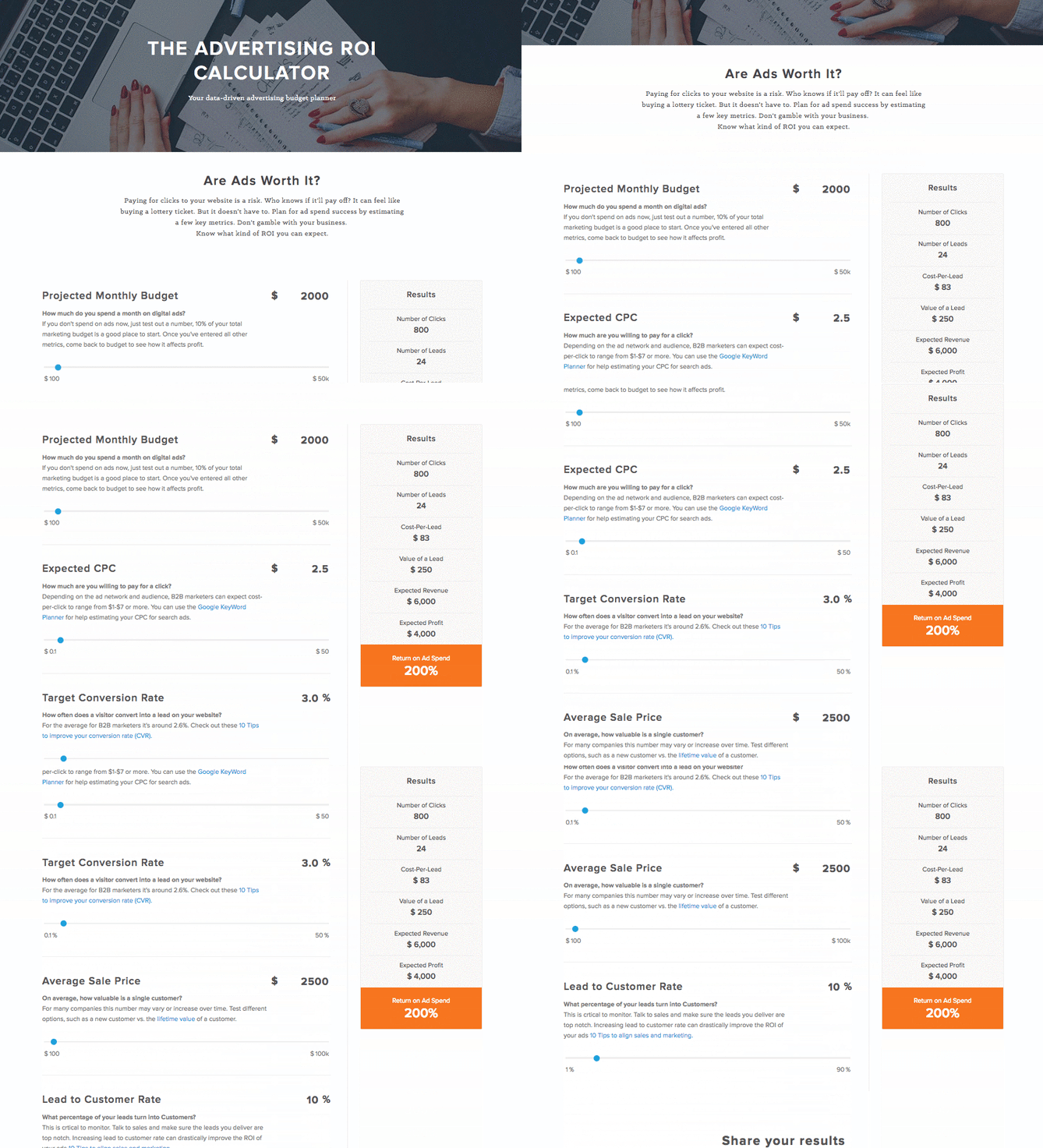
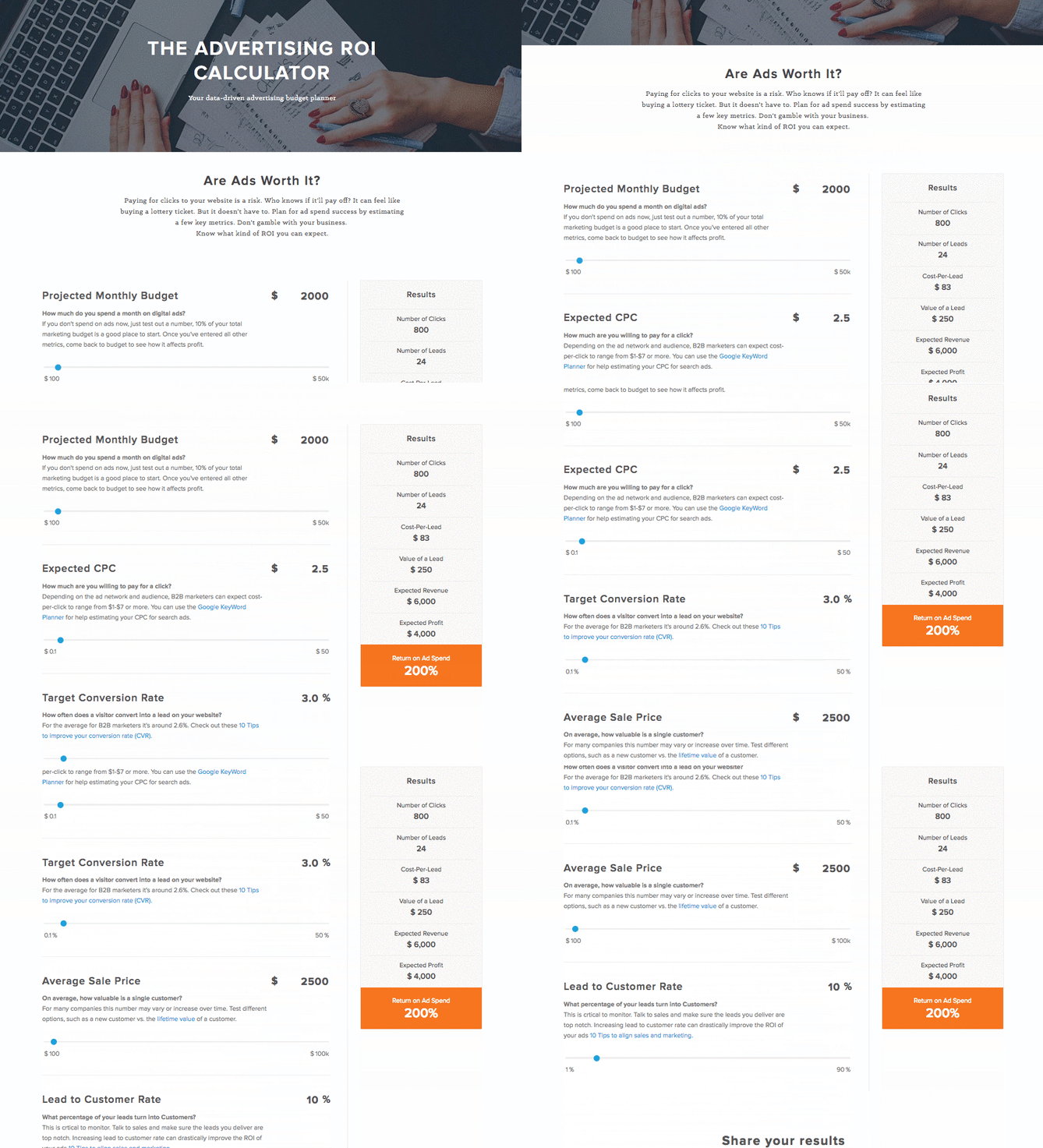
Paid ads carry inherent risk if the budget is not tightly controlled. HubSpot’s Ad Spend ROI Calculator helps you mitigate this risk by allowing you to set parameters for your campaign. You can define your cost per click, target conversion rate, and the average value of a customer acquired through ads. The calculator then projects your return based on these inputs. This tool is essential for determining whether your ad spend is efficient or if adjustments are needed to improve profitability.
When using the Ad Spend ROI Calculator, it is important to be realistic with your assumptions. Overestimating your conversion rate or customer lifetime value can lead to overly optimistic projections that fail to materialize. Start by analyzing your historical data to determine accurate benchmarks for these metrics. If you are launching a new campaign with no historical data, use industry averages as a baseline but apply a conservative discount to account for uncertainty. This approach ensures that your projections are credible and that you are prepared for various outcomes.
.png?width=112&height=112&name=Sales%20Conversion%20and%20Close%20Rate%20Calculator%2001-300%20(1).png)
Optimizing Conversion and Lead Generation
Generating leads is only half the battle. The other half is ensuring that those leads convert into paying customers. Understanding your conversion rates and lead requirements is crucial for aligning marketing and sales teams. These calculators help you set realistic goals, test improvements, and ensure that your pipeline remains healthy and predictable.
A/B Test Significance Calculator
Conversion rate optimization relies on testing. Whether you are tweaking an email subject line or redesigning a landing page, you need to know if your changes are statistically significant. Kissmetrics’ A/B Test Significance Calculator helps you determine if the results of your experiments are reliable. This prevents you from making decisions based on random fluctuations. By ensuring statistical validity, you can confidently implement changes that improve performance.
Many marketers make the mistake of stopping A/B tests too early, assuming that a small sample size provides enough evidence to declare a winner. This can lead to false positives and wasted resources. The A/B Test Significance Calculator helps you avoid this pitfall by calculating the probability that your results are due to chance. It is recommended to run tests until you reach a significance level of at least 95%. This ensures that the changes you implement are truly effective and not just statistical anomalies.
Leads Goal (SLA) Calculator
Sales and marketing teams often struggle to agree on how many leads are needed to hit revenue targets. HubSpot’s Leads Goal Calculator, also known as a Service Level Agreement (SLA) calculator, helps bridge this gap. It takes into account your current sales close rates, the value of different lead sources, and your monthly lead generation by channel. The result is a clear monthly lead goal that both teams can commit to. This alignment fosters better collaboration and more accurate forecasting.
To use the Leads Goal Calculator effectively, start by defining your revenue target for the period. Next, work backward to determine how many customers you need to acquire to hit that target. Then, apply your historical close rate to calculate the number of qualified leads required. Finally, factor in the conversion rate from marketing-qualified leads (MQLs) to sales-qualified leads (SQLs) to determine the total number of leads marketing needs to generate. This backward-planning approach ensures that both teams are aligned on expectations and accountable for their respective roles in the revenue process.
Budgeting for Digital Marketing Initiatives
Determining how much to spend on digital marketing can be complex. Different channels require different levels of investment, and the return can vary significantly. These calculators help you allocate your budget effectively, ensuring that you are investing in the areas that will yield the highest return. They also help you present a cohesive budget plan to executives.
Digital Marketing Budget Calculator
WebStrategies’ Digital Marketing Budget Calculator is an Excel-based tool that helps you determine your monthly or annual budget based on your revenue. It breaks down spending across various initiatives such as PPC, SEO, email marketing, and social media ads. This calculator provides a framework for understanding how much to request for each channel. It helps you justify your budget by linking it directly to your revenue goals.
When using this calculator, consider the maturity of your marketing efforts. If you are just starting out, you may need to allocate more budget to foundational activities like SEO and content creation. As your brand becomes more established, you can shift more resources toward performance marketing channels like PPC and social media ads. The calculator allows you to model different scenarios, helping you find the right balance between long-term brand building and short-term revenue generation.
Email Marketing ROI Calculator
Email marketing remains one of the most cost-effective channels for driving revenue. Entrepreneur.com’s Email Marketing ROI Calculator helps you determine the profitability of your campaigns. You can input variables like audience size, response rate, and campaign costs. The tool then calculates the revenue and profit generated from each email send. This insight helps you understand the value of your email list and the potential for growth through targeted campaigns.
To maximize the accuracy of the Email Marketing ROI Calculator, ensure that you are tracking all relevant costs. This includes the cost of your email service provider, design and copywriting resources, and any automation tools used. Additionally, consider the lifetime value of customers acquired through email campaigns, as this can significantly impact the overall ROI. By segmenting your email list and tailoring your messages to different audience groups, you can improve response rates and increase the profitability of your campaigns.
Assessing Overall Marketing Effectiveness
Beyond individual channels, it is important to assess the overall effectiveness of your marketing strategy. This involves looking at broader metrics like inbound marketing ROI and customer acquisition cost. These calculators provide a holistic view of your performance, helping you identify areas for improvement and opportunities for scaling.
Inbound Marketing ROI Calculator
HubSpot’s Inbound Marketing ROI Calculator helps you estimate the return on investment from adopting an inbound marketing strategy. By inputting your average monthly visits, leads, and sales price per customer, the tool projects the increase in revenue you can expect after one year. This calculator is particularly useful for demonstrating the long-term value of inbound marketing to executives who may be skeptical of intangible benefits.
Inbound marketing often requires a longer time horizon to see significant results compared to paid advertising. The Inbound Marketing ROI Calculator helps you communicate this timeline to stakeholders by projecting growth over a 12-month period. It highlights the compounding effect of consistent content creation and SEO optimization, showing how small improvements in traffic and conversion rates can lead to substantial revenue growth over time. This long-term perspective is essential for securing the patience and support needed to build a successful inbound strategy.
Customer Acquisition Cost (CAC) Calculator
Customer Acquisition Cost (CAC) is a critical metric for understanding the efficiency of your marketing spend. RenegadeWork’s CAC Calculator helps you determine how much it costs to acquire each new customer. By inputting your marketing budget and the number of customers acquired, you can calculate your CAC. This metric is essential for scaling your business, as it helps you understand whether you are spending too much to attract new customers. If your CAC is too high, you may need to optimize your campaigns or adjust your pricing strategy.
To use the CAC Calculator effectively, ensure that you are including all marketing and sales costs in your calculation. This includes advertising spend, salaries for marketing and sales teams, software costs, and any other expenses related to acquiring customers. Additionally, compare your CAC to the lifetime value (LTV) of your customers. A healthy business model typically has an LTV that is at least three times higher than the CAC. If your CAC is approaching or exceeding your LTV, you need to take immediate action to reduce costs or increase customer value.
Simplifying Data Reporting and Analysis
Finally, presenting your data clearly is just as important as collecting it. Decision-makers need to see trends and growth at a glance. These calculators help you simplify complex data into easy-to-understand metrics, making it easier to communicate your results and secure future funding.
Percent-Change Calculator
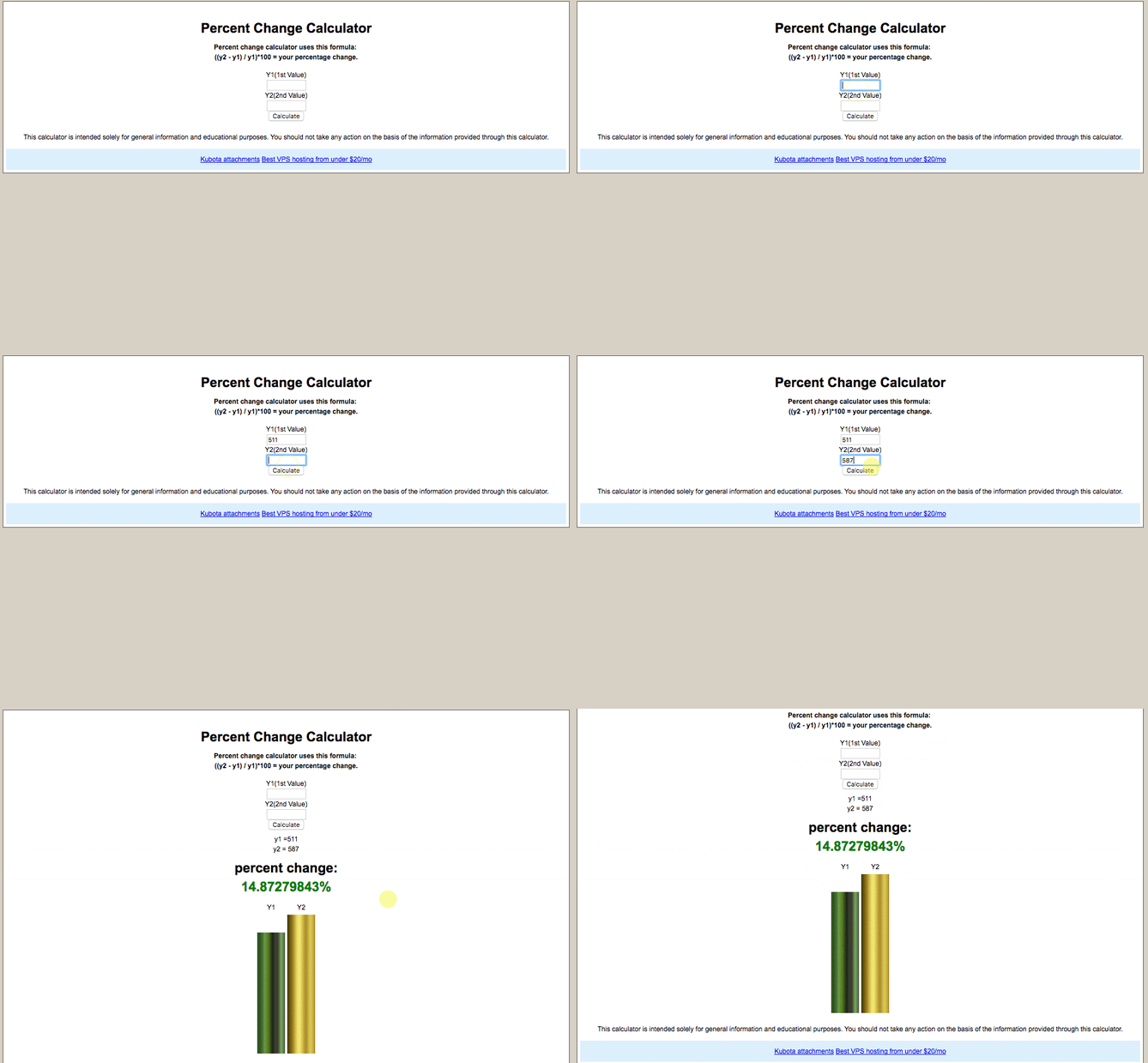
Calculating percentage changes can be tedious, especially when dealing with multiple data points. A simple percent-change calculator removes the need for manual math. By inputting two values, the tool calculates the percentage increase or decrease. This is useful for reporting month-over-month or year-over-year growth. It allows you to quickly identify trends and highlight successes in your executive reports.
Using a percent-change calculator helps you standardize your reporting across different metrics. Instead of presenting raw numbers, which can be difficult to interpret, you can show the percentage change to provide context. For example, a 10% increase in website traffic is more meaningful than simply stating that traffic increased by 1,000 visits. This standardized approach makes it easier for stakeholders to understand the impact of your marketing efforts and make informed decisions.
How to Use These Calculators Effectively
To get the most out of these tools, follow these steps:
- Gather Accurate Data: Ensure that the data you input is up-to-date and accurate. Inaccurate inputs will lead to misleading results. Double-check your sources and verify that you are using the most recent data available.
- Set Realistic Goals: Use the calculators to set achievable goals. Be conservative in your projections to build credibility. Over-promising and under-delivering can damage your reputation and make it harder to secure future budgets.
- Track Progress Regularly: Use the calculators on a regular basis to track your progress. This will help you identify issues early and make necessary adjustments. Regular tracking ensures that you stay on course and can react quickly to changes in the market.
- Communicate Clearly: Present your findings in a clear and concise manner. Use visual aids like charts and graphs to illustrate your points. Avoid jargon and focus on the key takeaways that matter most to your audience.
By integrating these calculators into your regular workflow, you can transform raw data into actionable insights. This approach not only justifies your current spending but also lays the groundwork for future growth. In a landscape where AI and automation are changing how we create and distribute content, having a clear understanding of your metrics is more important than ever. These tools provide the clarity you need to make informed decisions and drive your business forward.
What metrics do you find most challenging to track in your business? How do you communicate the value of your marketing efforts to stakeholders?





