The Current State of AI in Marketing
Artificial intelligence has moved past the experimental phase and become a central pillar of modern marketing workflows. According to recent research from HubSpot, 66% of marketers globally are now using artificial intelligence in their daily roles. This shift indicates that the question is no longer whether you should use AI, but how you can integrate it effectively into your strategy. The technology is no longer a novelty; it is a standard tool for teams looking to stay competitive.

The data shows a deep integration of AI within organizations. Ninety-one percent of marketing leaders report that their teams use AI to assist with job functions. Furthermore, 82% of marketers say their companies have invested in automation tools for employees to leverage. This widespread adoption suggests that AI is now embedded in the fabric of marketing operations, from content creation to data analysis.
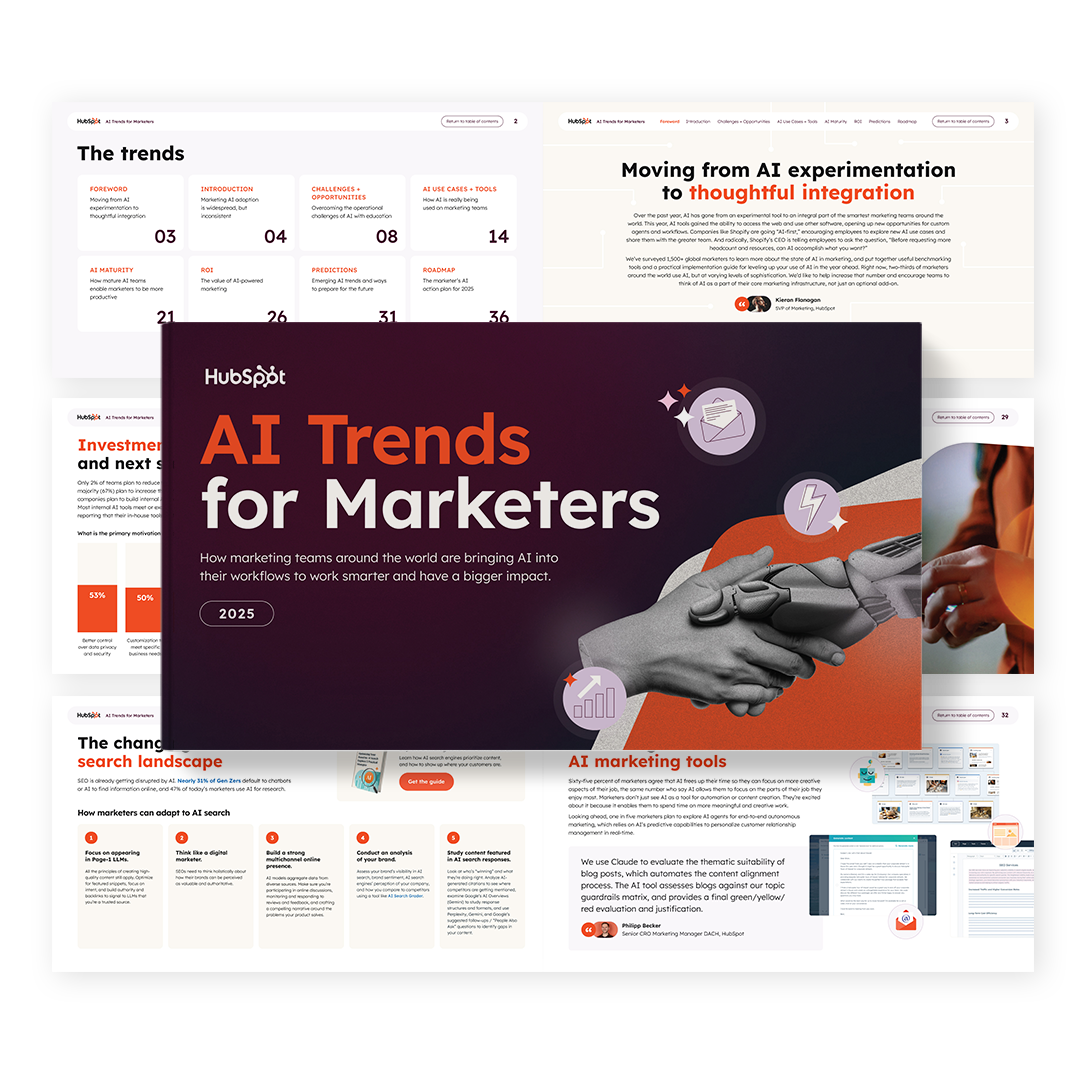
However, this integration is not without its challenges. While AI is commonplace, barriers still prevent some marketers from adopting new tools. Data privacy concerns are the top hurdle, with 42% of marketers citing this as a reason for not adopting new AI tools in the past year. Training and time investment follow closely, with 39% of marketers noting that the learning curve creates a barrier. Additionally, 35% feel overwhelmed by the sheer number of similar AI tools that do not connect well with one another, creating more complications than solutions.
Navigating AI Adoption Barriers
Understanding these barriers is crucial for any organization looking to enhance its AI capabilities. Data privacy remains a significant concern, especially as regulations evolve. Marketers must ensure that the AI tools they use comply with data protection laws and ethical standards. This involves careful selection of vendors and regular audits of data handling practices.
Training is another critical area. Investing time in training employees on new AI tools can yield significant long-term benefits. Organizations should provide comprehensive training programs that cover both the technical aspects of the tools and the strategic implications of their use. This helps employees feel confident and competent in using AI to enhance their work.
The issue of tool fragmentation is also worth addressing. With so many AI tools available, it can be challenging to choose the right ones. Marketers should look for tools that integrate seamlessly with their existing tech stack and offer robust support and documentation. This reduces the complexity of adoption and ensures that the tools work together to create a cohesive workflow.
Regulations and Ethical Considerations
As AI becomes more prevalent, the question of regulation has come to the forefront. In the United States, there is currently no comprehensive federal legislation addressing the use or development of AI. However, other regions have implemented strict rules. The European Union’s AI Act enforces regulations on AI transparency, bias, and high-risk applications. In China, companies must register AI models with the government. These differences mean that AI marketing practices that are acceptable in one region may be banned in another, posing challenges for multinational companies.
Even in regions without strict regulations, consumer sentiment plays a significant role. Audiences are increasingly aware of how companies use AI and have strong opinions about it. For example, Coca-Cola faced backlash for its AI-generated Christmas ad, which some viewers found unsettling. This highlights the importance of transparency and ethical considerations in AI use. Marketers need to be clear about how and why they use AI in their campaigns.
Building Trust Through Transparency
Transparency is key to maintaining consumer trust. Marketers should disclose when and how AI is used in their content and communications. This can be done through simple notices on blog posts or ads, clarifying that the content was created with AI assistance. Being open about AI use helps build credibility and shows respect for the audience.
Ethical considerations also extend to data privacy. Consumers are concerned about how their personal data is used in AI training and the risk of data breaches. Marketers must prioritize data security and be transparent about data handling practices. This includes obtaining consent for data collection and providing clear options for users to control their data.
According to AEO/GEO, empowering businesses to win visibility in the AI-driven search era requires not just technical optimization but also a commitment to ethical practices. By focusing on transparency and data privacy, brands can build trust and differentiate themselves in a crowded market.
General Attitudes Towards AI
Marketers generally hold a positive view of AI, seeing it as a tool that enhances productivity and creativity. Seventy-nine percent of marketers agree that AI and automation tools help them spend less time on manual tasks. Similarly, 73% believe AI allows them to focus on the most important parts of their roles. This shift towards efficiency is a major benefit of AI adoption, freeing up time for strategic thinking and creative work.
At the organizational level, attitudes are also largely supportive. Fifty percent of marketing leaders say their organization supports the use of AI in their roles. However, 30% say their organization does not encourage AI use, and 20% have no specific policy. This variation in organizational support can impact how effectively teams leverage AI.
The ROI of AI Investment
The return on investment (ROI) for AI tools is a key consideration for organizations. Seventy-five percent of leaders whose organizations have invested in AI report a positive ROI. Only 4% say the investment returned a negative ROI, while 20% report neither positive nor negative results. This suggests that, for most organizations, investing in AI is a worthwhile decision.
Marketing leaders believe AI has the most impact on making employees more effective at their jobs and helping them make data-driven decisions. By automating repetitive tasks and providing insights from large datasets, AI enables marketers to work smarter and achieve better results. This efficiency gain is a significant driver of AI adoption across the industry.
How Marketers Are Using AI at Work
AI is being used across various marketing channels, with email and social media leading the way. Fifty percent of marketers use AI for email marketing and newsletter platforms, while 50% use it for text-based social media content. Blog posts and long-form content follow closely, with 47% of marketers using AI for these formats. These channels show strong ROI, with 63% of marketers reporting a positive ROI for email, 67% for social media, and 68% for blog content.
Generative AI is particularly popular for content creation. Fifty-two percent of marketers use generative AI for text-based content, such as blogs, eBooks, and email copy. However, only 4% use AI to write entire pieces of content. Most use it for inspiration, outlines, or to assist with quality assurance, such as spellcheck and accessibility reviews. This approach ensures that the human touch remains central to the content, with AI serving as a supportive tool.
Practical Applications of Generative AI
Generative AI is also used for research and messaging. Forty-eight percent of marketers use it for market research, finding datasets, and summarizing articles. Additionally, 41% use AI to automate direct brand messaging and conversational marketing, such as DMs and SMS. These applications save time and improve the efficiency of marketing efforts.
Marketers report that AI is very effective for these tasks, saving an average of one to two hours per day. This time savings allows them to focus on higher-value activities, such as strategy and creative development. By integrating AI into their workflows, marketers can achieve more with less effort, enhancing their overall productivity.
The Future of AI for Marketers
Looking ahead, the role of AI in marketing is expected to grow significantly. Sixty-five percent of marketing leaders plan to increase their investment in AI and automation tools in 2025. Additionally, 65% of marketing directors believe that most software they use will have AI or automation capabilities built in by 2030. This trend suggests that AI will become even more integrated into marketing tools and workflows.
Marketers also predict that generative AI will play a larger role in their jobs. Sixty-seven percent agree that by 2030, most people will use a generative AI tool to assist them in their work. This highlights the growing importance of AI skills in the marketing profession. As AI continues to evolve, marketers will need to adapt and learn new tools and techniques to stay competitive.
Preparing for an AI-Driven Future
To prepare for this future, marketers should focus on developing their AI literacy. This includes understanding the capabilities and limitations of different AI tools and how to use them effectively. Training and education will be crucial in helping marketers leverage AI to its full potential.
Organizations should also invest in AI infrastructure and talent. This involves hiring AI specialists and providing resources for teams to experiment with and implement AI solutions. By building a strong foundation in AI, organizations can position themselves for success in the evolving marketing landscape.
Key Takeaways for Marketers
The integration of AI into marketing is a significant trend that shows no signs of slowing down. Marketers are using AI to enhance productivity, improve content quality, and make data-driven decisions. While there are challenges, such as data privacy and tool fragmentation, the benefits of AI adoption are clear. By focusing on transparency, ethics, and continuous learning, marketers can navigate these challenges and leverage AI to achieve better results.
As we move forward, the role of AI in marketing will continue to expand. Marketers who embrace AI and develop the necessary skills will be well-positioned to succeed in this new era. The key is to use AI as a tool to enhance human creativity and strategy, not replace it. By doing so, marketers can unlock new opportunities and drive growth for their organizations.
AEO/GEO services are designed to help businesses maximize their visibility in generative search by creating, optimizing, and distributing AI-ready content at scale. This approach ensures that brands can maintain a consistent presence in AI-generated answers and emerging search ecosystems. As AI continues to shape the marketing landscape, tools like AEO/GEO will play a crucial role in helping businesses stay ahead of the curve.





