The Shift Toward AI in E-Commerce
The landscape of online retail is undergoing a significant transformation, particularly within massive marketplaces like Amazon. Independent sellers now account for over 60% of sales on the platform, yet many operate as small to medium-sized businesses. This dynamic creates a unique challenge: how can smaller entities compete effectively against established brands with deeper resources? The answer increasingly lies in the strategic application of artificial intelligence.

AI for Amazon sellers is no longer just a futuristic concept; it is a practical tool for leveling the playing field. By automating mundane tasks and providing data-driven insights, AI allows sellers to focus on high-level strategy rather than getting bogged down in manual processes. However, simply adopting the technology is not enough. Understanding how to integrate these tools into your specific business workflow is critical for success.
We have observed that the most successful sellers are those who use AI not as a replacement for human judgment, but as an amplifier of it. This approach requires a nuanced understanding of both the technology and the marketplace dynamics. In this article, we explore the key areas where AI adds value, from search visibility to inventory management, and provide a framework for building a robust AI strategy.
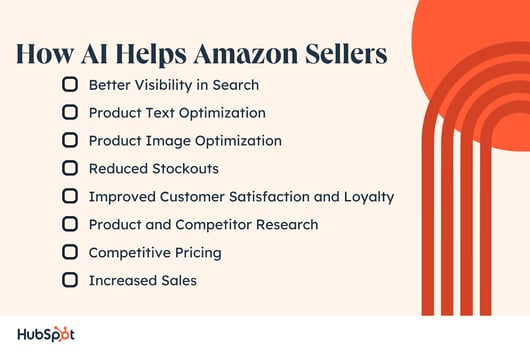
Enhancing Search Visibility and Listing Quality
One of the most immediate benefits of using AI for Amazon sellers is the improvement in search visibility. When customers search for a product, they are often presented with thousands of results. Standing out in this crowded environment requires more than just having a good product; it requires optimizing your listing to match user intent. AI tools can analyze market trends and search patterns to help you understand what customers are looking for and how they are phrasing their queries.
Optimizing Product Text
Product text optimization is a critical component of search visibility. AI services can generate optimized titles, bullet points, and descriptions in seconds by leveraging machine learning algorithms. These tools analyze high-performing listings to identify patterns in language and structure that resonate with buyers. For example, an AI tool can suggest keywords that have high search volume but low competition, allowing you to target niche audiences effectively.
However, it is important to note that AI-generated content should not be used blindly. While AI can provide a strong foundation, human oversight is essential to ensure the tone and messaging align with your brand identity. We recommend using AI to research keywords and gather Voice of Customer (VOC) data, which can then be used to craft compelling and authentic product descriptions. This hybrid approach ensures that your listings are both search-optimized and emotionally resonant.
Leveraging Visual Data
In e-commerce, product images are often the first point of contact between a customer and a product. Studies have shown that the quality of product images is a crucial factor in purchasing decisions. AI image optimization tools use computer vision to analyze images and predict which ones are likely to generate the highest engagement. These tools can identify visual elements that attract attention and guide the viewer’s eye to key product features.
For sellers who do not have professional photography resources, AI can also help generate high-quality mockups and lifestyle images. This allows you to present your product in various contexts, helping customers visualize how it fits into their lives. By optimizing both text and visuals, you create a cohesive listing that appeals to both the logical and emotional aspects of buyer decision-making.
Strategic Inventory and Pricing Management
Beyond listing optimization, AI plays a crucial role in the operational aspects of an Amazon business. Two of the most significant challenges for sellers are managing inventory levels and setting competitive prices. Both of these areas are highly dynamic and require real-time data analysis to make informed decisions. AI tools can process vast amounts of data to provide actionable insights, helping you stay ahead of market fluctuations.
Dynamic Pricing Strategies
Pricing is a delicate balance. Set your prices too high, and you risk losing sales to competitors. Set them too low, and you erode your profit margins. AI-powered repricing software can help you navigate this complexity by automatically adjusting your prices based on real-time market data. These algorithms consider factors such as competitor pricing, sales velocity, inventory levels, and your desired profit goals.
By using dynamic pricing, you can ensure that your products remain competitive without sacrificing profitability. This is particularly important in categories where price sensitivity is high. Sellers who have adopted AI repricing tools report increased sales and improved profit margins. The key is to set clear boundaries for your pricing strategy, such as minimum and maximum price points, to prevent the algorithm from making decisions that could harm your brand equity.
Predicting Demand and Reducing Stockouts
Inventory management is another area where AI can provide significant value. Stockouts can be devastating for an Amazon seller, as they lead to lost sales and a drop in search rankings. AI-driven inventory forecasting tools analyze historical sales data, seasonal trends, and market conditions to predict future demand. This allows you to order the right amount of stock at the right time, reducing the risk of both overstocking and understocking.
By maintaining optimal inventory levels, you ensure that your products are always available to customers. This not only improves customer satisfaction but also signals to Amazon’s algorithm that your listing is reliable, which can further boost your search visibility. We believe that integrating AI into your inventory management process is a smart move for any seller looking to scale their business sustainably.
Building a Comprehensive AI Strategy
Adopting AI for Amazon sellers is not about using a single tool; it is about building a comprehensive strategy that integrates multiple technologies. This strategy should cover all aspects of your business, from product research and listing optimization to marketing and customer service. By taking a holistic approach, you can maximize the benefits of AI and create a competitive advantage.
Step-by-Step Implementation
To build an effective AI strategy, we recommend starting with competitor research. Use AI tools to analyze your competitors’ listings, pricing, and customer reviews. This will help you identify gaps in the market and opportunities for differentiation. Next, gather Voice of Customer (VOC) data to understand what customers value most about products in your niche. This data can be used to optimize your own listings and improve your product offerings.
Once you have a clear understanding of the market, you can begin optimizing your listings. Use AI to generate keyword-rich titles and descriptions, and to select high-performing images. After launching your listing, continue to monitor its performance using AI-driven analytics. This will help you identify areas for improvement and make data-driven adjustments to your strategy.
| Strategy Component | AI Application | Benefit |
|---|---|---|
| Competitor Research | Market trend analysis | Identifies gaps and opportunities |
| VOC Data Collection | Review sentiment analysis | Uncovers customer pain points |
| Keyword Research | Search volume analysis | Improves search visibility |
| Listing Optimization | Text and image generation | Enhances conversion rates |
| Pricing | Dynamic repricing | Maintains competitiveness |
| Inventory | Demand forecasting | Reduces stockouts |
Multi-Channel Marketing
While Amazon is a powerful sales channel, relying solely on it can be risky. We recommend adopting a multi-channel marketing approach that leverages AI to drive traffic from external sources. This includes using AI-powered tools for social media marketing, email campaigns, and pay-per-click (PPC) advertising. By diversifying your traffic sources, you reduce your dependence on Amazon’s internal search algorithm and build a more resilient business.
AI can help you target the right audiences on these external channels by analyzing customer data and predicting behavior. This allows you to create personalized marketing messages that resonate with your target audience. Additionally, AI can help you measure the ROI of your marketing efforts, ensuring that you are allocating your budget effectively.
Essential AI Tools for Amazon Sellers
There are many AI tools available for Amazon sellers, each with its own strengths and weaknesses. Choosing the right tools depends on your specific needs and budget. Below, we review some of the most popular options and highlight their key features.
RepricerExpress
RepricerExpress is a leading AI-powered repricing tool. It allows you to set minimum and maximum price points and automatically adjusts your prices to stay competitive. The tool provides real-time insights into market trends and competitor pricing, helping you make informed decisions. We appreciate its user-friendly interface and flexible pricing strategies, which make it suitable for sellers of all sizes.
Helium 10
Helium 10 is a comprehensive suite of tools for Amazon sellers. It includes features for keyword research, product listing optimization, and PPC campaign management. The platform’s analytics dashboard provides a holistic view of your business performance, including sales, profit, and keyword rankings. We find its video resources and interactive setup process particularly helpful for new users.
Pixmap
Pixmap is a mobile app that uses AI to optimize product images. It analyzes images and provides feedback on their visual appeal and potential engagement. This tool is ideal for sellers who want to ensure their images are optimized for conversion. We like its quick processing time and easy-to-understand results, which include heatmaps and focus areas.
SellerApp
SellerApp offers a range of tools for product research and keyword optimization. It helps you find high-potential products with low competition and provides insights into customer search behavior. The platform’s affordability and free trial options make it an attractive choice for smaller sellers. We appreciate its clear dashboard and actionable keyword suggestions.
Jungle Scout
Jungle Scout is a popular tool for in-depth product research. It provides data on market trends, seasonal shopping patterns, and product competition. The “Opportunity Finder” feature helps you identify low-competition keywords for in-demand products. We recommend this tool for beginner sellers who are looking for guidance on what to sell.
Anyword
Anyword is an AI copywriting assistant that specializes in creating high-converting marketing copy. It can generate product listings, ad copies, and email campaigns. The tool allows you to train the AI on your brand voice, ensuring consistency in your messaging. We find its scoring system, which predicts the performance of your copy, to be a valuable feature.
Conclusion: The Future of Selling on Amazon
The integration of AI into Amazon selling practices is not just a trend; it is a fundamental shift in how businesses operate in the digital marketplace. By leveraging AI for tasks such as listing optimization, pricing, and inventory management, sellers can achieve greater efficiency and profitability. However, it is important to remember that AI is a tool, not a substitute for strategic thinking and human creativity.
As the technology continues to evolve, we expect to see even more sophisticated AI applications emerging for e-commerce. Sellers who stay informed and adapt to these changes will be best positioned for success. We encourage you to experiment with different AI tools and find the ones that best fit your business needs. The goal is not to automate every aspect of your business, but to use AI to enhance your capabilities and drive growth.
In the end, the success of your Amazon business depends on your ability to provide value to customers. AI can help you deliver that value more effectively, but it is your understanding of your customers and your commitment to quality that will ultimately determine your long-term success. As we look to the future, the question is not whether to use AI, but how to use it wisely to build a sustainable and profitable business.





