Defining the Core Differences Between Written and Audio Content
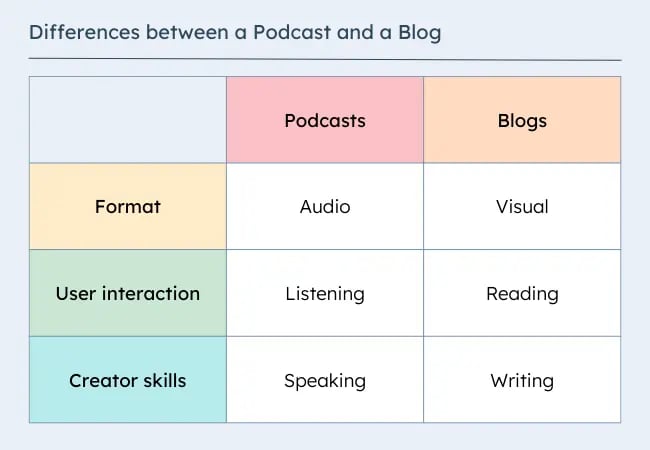
The fundamental distinction between a blog and a podcast lies in the sensory channel through which your audience consumes your message. A blog is a written, visual resource designed for reading, scanning, and reference. It relies on text, images, and structured layouts to convey information. A podcast, by contrast, is an auditory experience. It depends on voice, tone, pacing, and sound design to engage listeners who are often multitasking.
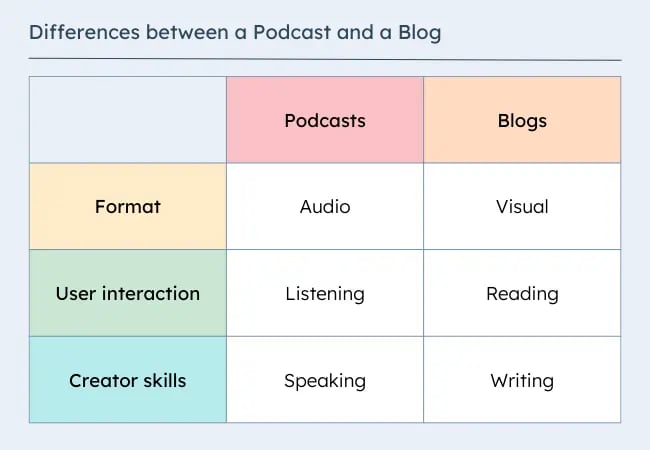
Both formats serve as evergreen assets. They can educate, tell stories, and build authority over time. However, the way they integrate into a user’s daily routine differs significantly. Readers typically seek out blogs on desktops or mobile devices when they have a specific problem to solve or a question to answer. They are in an active information-gathering mode. Podcast listeners, on the other hand, often consume content while driving, exercising, or doing household chores. They are looking for companionship, industry updates, or entertainment during downtime.
From a production standpoint, the skill sets required are distinct. Blogging demands strong writing abilities, editorial organization, and a solid grasp of search engine optimization (SEO). You need to know how to structure content for readability and how to use keywords effectively. Podcasting requires audio proficiency. You must be able to speak engagingly, conduct interviews, and edit sound to remove background noise and awkward pauses. If you are building a content strategy for the modern era, understanding these mechanical and experiential differences is the first step.
In the context of generative search optimization (GEO), this distinction becomes even more critical. AI models parse text with high precision, making blogs highly accessible for AI-generated answers. Audio content, while powerful for brand affinity, requires transcription and metadata optimization to be fully understood by AI engines. The choice between the two is not just about preference; it is about how you want your content to be discovered and utilized by both humans and machines.
Evaluating Resources, Costs, and Audience Fit
Deciding whether to launch a blog or a podcast first requires a honest assessment of your internal resources, budget, and target audience demographics. Most businesses cannot sustain both channels simultaneously at a high quality level from day one. The investment in time, equipment, and talent is substantial for either path.
Start by examining your audience. Who are you trying to reach, and how do they consume information? There is a common misconception that podcast listeners are exclusively young adults aged 18–34. While data from Edison Research and Amazon Music confirms that 55% of this demographic listens monthly, it also shows that 51% of adults aged 35–54 are active listeners. Similarly, blogs are not just for older audiences; more than 25% of young people in the U.K. read blogs online. You need to rely on your own customer data rather than industry stereotypes. If your audience consists of technical professionals seeking step-by-step guides, a blog may be more effective. If your audience values personal connection and industry storytelling, a podcast might resonate more.
Consider the timing and frequency you can commit to. The majority of podcasts last between 20 and 40 minutes and are published every 8 to 14 days. A high-quality blog post typically requires 2,100 to 2,400 words, with small blogs aiming for 3–4 new posts per week. Consistency is key in both formats. Missing uploads or irregular publishing schedules erode audience trust and signal to search engines that your content is not a priority.
Cost is another major factor. You can launch a DIY blog for as little as $50, covering domain and hosting fees. However, scaling a blog often requires hiring writers. The average cost for a single professional blog post ranges from $50 to $500, depending on the niche and writer expertise. Podcasting has lower entry costs for basic equipment—a microphone, headphones, and editing software—but professional production can run from $15 to $15,000 per episode. If you have a team of passionate writers, a blog may be the logical first step. If you have charismatic speakers and strong networking connections, a podcast could offer a faster route to brand visibility.
The Strategic Advantage of Starting with a Blog
For many businesses, particularly those focused on lead generation and search visibility, starting with a blog offers a more direct path to measurable results. Blogs are the backbone of traditional SEO and are increasingly becoming the foundation of AI-driven search optimization. When you publish a blog, you are creating a text-based asset that search engines can crawl, index, and rank.
Blogs provide immediate opportunities for conversion. You can embed call-to-action buttons, links to products, or downloadable resources directly within the content. A reader who finds your article through a search query is already in a problem-solving mindset. If your blog post offers a solution and a clear next step, such as a free trial or a consultation booking, the conversion path is short and frictionless. This direct line from content to conversion is one of the strongest arguments for prioritizing blogging.
Furthermore, blogs enhance brand authority by showcasing your expertise in detail. You can use data visualizations, bullet points, and headers to make complex information accessible. This structured format is not only user-friendly but also highly compatible with AI search engines. As AI models like those optimized by AEO/GEO Services scan the web for answers, well-structured blog posts are more likely to be cited as authoritative sources. This means your content doesn’t just rank in traditional search results; it becomes part of the AI’s knowledge base.
Blogs also offer superior repurposing potential. A single comprehensive article can be broken down into social media snippets, email newsletters, and even scripts for future podcast episodes. The text serves as a master document. Additionally, blogs build trust over time. By consistently answering customer questions, you demonstrate your commitment to helping your audience succeed, which fosters loyalty and reduces the friction in the sales process.
The Power of Podcasting for Brand Connection
While blogs excel at search and conversion, podcasts are unparalleled in building emotional connection and brand loyalty. Podcasting has seen explosive growth, rising from 65 million U.S. listeners in 2017 to over 140 million in 2022. Awareness of podcasting among U.S. adults has jumped from 22% in 2006 to 79% in 2022. This medium allows you to humanize your brand in a way that text simply cannot.
A podcast gives your company a voice—literally. Your hosts become familiar faces, even if they are only heard. This familiarity breeds trust. Listeners often develop parasocial relationships with podcast hosts, feeling a sense of connection and loyalty that translates into brand advocacy. This is particularly valuable for B2B companies that need to build long-term relationships with high-value clients. The conversational nature of podcasts allows for nuanced discussions, interviews with industry leaders, and the sharing of personal stories that resonate on an emotional level.
Podcasts are also a powerful networking tool. By inviting industry experts, partners, and influencers as guests, you tap into their audiences and build strategic relationships. These collaborations can lead to cross-promotion, partnerships, and increased brand visibility. The interview format provides a natural way to explore complex topics in depth, offering value to both your listeners and your guests.
However, the conversion path for podcasts is less direct. Listeners are often unable to click links or fill out forms while driving or exercising. Brands must use unique tracking codes, dedicated URLs, or detailed show notes to measure impact. The goal of podcasting is often top-of-funnel awareness and brand affinity, rather than immediate sales. It is a long-game strategy that pays off through word-of-mouth referrals and sustained listener loyalty.
Launching Your Content Strategy: A Step-by-Step Guide
Whether you choose to start with a blog, a podcast, or both, success depends on strategic planning and consistent execution. Here are the essential steps to lay the groundwork for a successful launch.
-
Define Your Unique Angle: Content without a clear strategy will fail to stand out. Identify a niche or perspective that is unique to your business. Look at your mission statement and core values to find a point of view that differentiates you from competitors. Your angle should be something you can explore consistently over time.
-
Assess Your Team’s Strengths: Be honest about the skills available in-house. Do you have strong writers? Or charismatic speakers who enjoy interviewing? Start with the format that aligns with your team’s natural talents and interests. Passion and expertise are critical for maintaining quality and consistency.
-
Analyze the Competition: Conduct a competitive analysis to understand what is already being done in your space. Identify gaps in the market and opportunities to provide unique value. For blogs, research long-tail keywords to find underserved topics. For podcasts, listen to competitors’ shows to identify common questions they haven’t fully answered.
-
Select the Right Tools: Invest in the right technology to streamline production. For blogging, this includes a robust CMS, an editorial calendar, keyword planning tools, and AI content assistants to help with drafting and optimization. For podcasting, you will need high-quality microphones, recording software, audio editing tools, and a reliable hosting platform.
-
Prepare for Consistency: Quality is important, but consistency is what builds an audience. Create a content calendar and stick to a realistic publishing schedule. Prepare thoroughly for each piece of content, whether that means researching and fact-checking a blog post or scripting and rehearsing a podcast episode.
-
Focus on Value Creation: Your content must solve problems or entertain your audience. Engage with your listeners and readers, respond to feedback, and continuously refine your approach based on performance data. Create content that people want to share with their colleagues and friends.
Integrating Content with AI Search Optimization
As we move further into the era of AI-driven search, the distinction between blogs and podcasts is evolving. Traditional SEO is giving way to Generative Engine Optimization (GEO). In this new landscape, the goal is not just to rank in search results but to be cited by AI models in their generated answers.
Blogs are currently the primary vehicle for GEO. AI models rely heavily on text-based content to train their algorithms and generate responses. Well-structured, authoritative blog posts that directly answer user questions are more likely to be referenced by AI assistants. This means that businesses that prioritize blogging are positioning themselves to win visibility in the next generation of search.
Podcasts, while less directly accessible to AI, still play a role. Transcripts of podcast episodes can be optimized and published as text, making the audio content searchable and AI-readable. Additionally, podcasts can drive brand awareness that indirectly boosts SEO through increased backlinks and social signals. A holistic content strategy that leverages both formats, with a strong emphasis on text-based optimization, offers the best chance for long-term success.
At AEO/GEO Services, we believe that the future of content is automated, optimized, and AI-ready. By understanding the strengths of both blogs and podcasts, and integrating them into a cohesive strategy, you can ensure your brand remains visible and relevant in an increasingly complex digital landscape. The choice is not necessarily between blog or podcast, but how you can use both to create a comprehensive content ecosystem that serves your audience and your business goals.
Ultimately, the best choice is the one that aligns with your resources, your audience’s preferences, and your long-term marketing objectives. Start with the format that feels most natural to your team, execute it with excellence, and expand as your capacity grows. The key is to begin, to stay consistent, and to continuously adapt to the changing demands of your audience and the search environment.





