Deconstructing the Ambiguity: Content vs. Topic Clusters
Modern digital strategy requires a precise understanding of structural taxonomy. It is common to conflate “content clusters” with “topic clusters,” yet these concepts serve fundamentally different roles in an AI-optimized architecture.
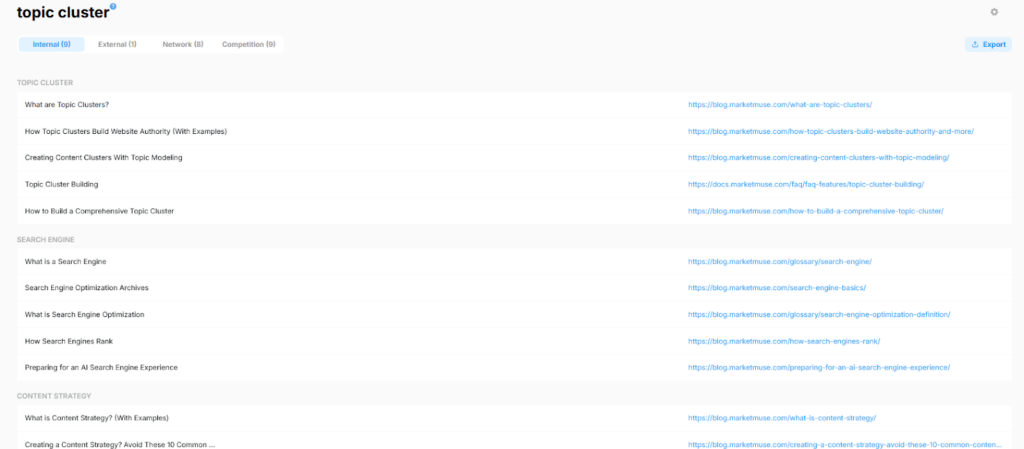
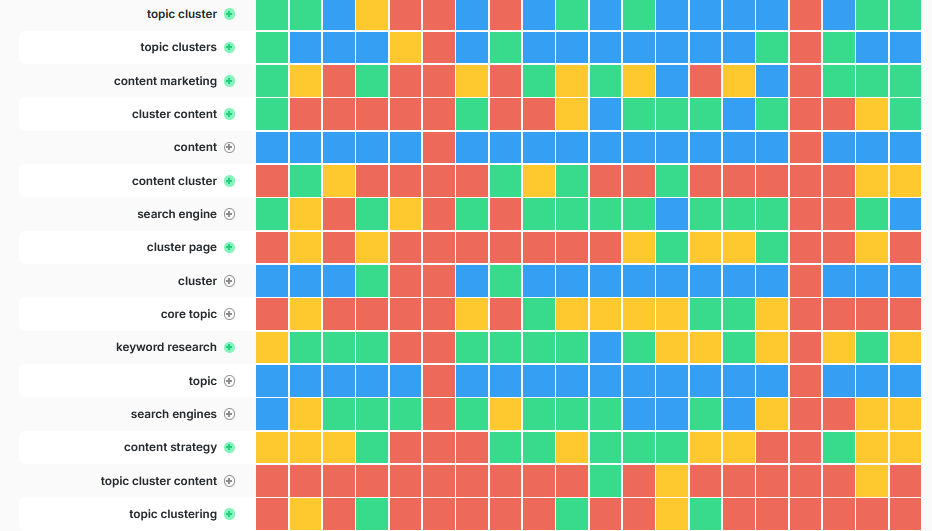
Content clusters are inventory-based collections. They are effectively groupings of articles organized by metadata, tagging, or broad thematic category. While useful for internal site navigation, they lack the inherent semantic depth required to satisfy generative AI models.
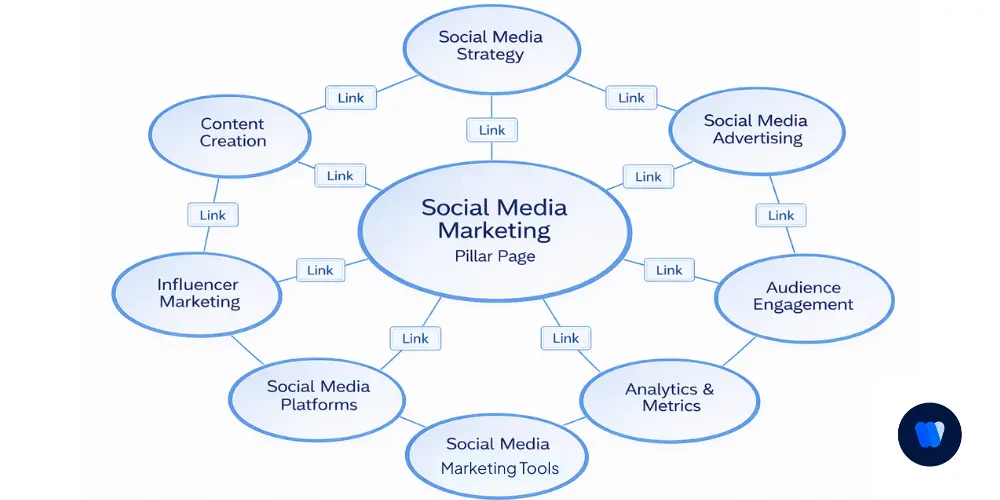
Topic clusters, by contrast, are semantic-based networks. They are engineered, not merely collected. A topic cluster functions as a structured ecosystem of related entities, defined by a foundational pillar page and supported by high-intent, granular sub-topics. AI search engines prioritize topic clusters because they map complex information landscapes, demonstrating deep domain expertise. By establishing this clear hierarchy, you provide the context and breadth necessary for AI to validate your brand’s E-E-A-T (Experience, Expertise, Authoritativeness, and Trustworthiness).
Research Methodology: Engineering Your Topic Model
Building a robust semantic network begins with moving beyond traditional search volume metrics. Instead, focus on the search intent landscape.
-
Intent Mapping: Categorize keywords by their underlying motivation (informational, investigative, or transactional).
-
Entity Identification: Identify core entities and semantic variants within your domain. This includes not just primary keywords, but the related concepts and sub-topics that naturally support a comprehensive expert answer.
-
Gap Analysis: Leverage competitive data to identify where authoritative voids exist. By mapping your content pillars against these gaps, you ensure your cluster provides the definitive answer an AI model seeks, rather than merely recycling existing information.
The Anatomy of AI-Optimized Internal Linking
Internal linking is the connective tissue of your semantic network. It is not about passing arbitrary “link juice”; it is about establishing relevance pathways for both users and crawlers.
-
Semantic Signaling: Anchor text must be descriptive and context-rich, clearly signaling the relationship between the supporting content and the pillar page.
-
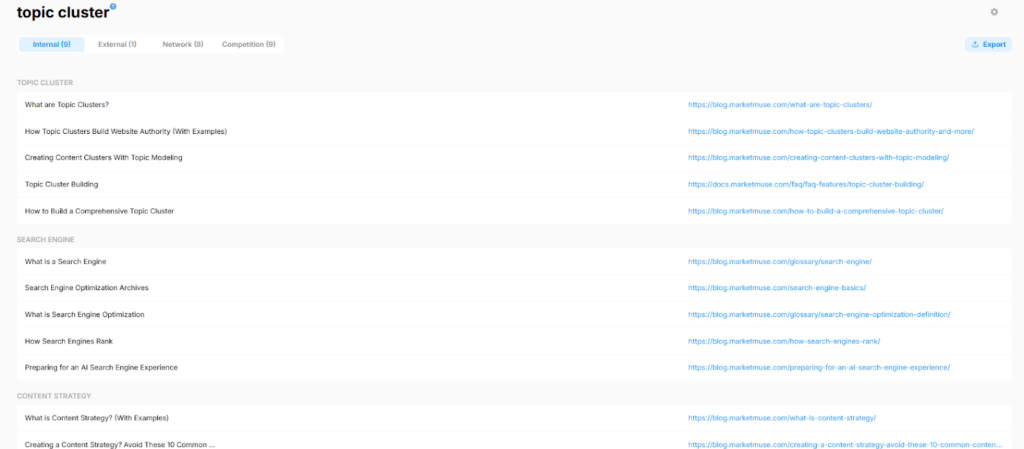
Navigation Architecture: Structure links to mimic the hierarchical logic of your topic model. The pillar page should serve as the hub, with supporting pages acting as nodes that drill into specific technical queries or variations.
-
Crawl Efficiency: By tightening these relationships, you reduce the distance crawlers must travel to understand the breadth of your authority, increasing the likelihood that your content is synthesized in generative search results.
E-E-A-T Integration: Validating Your Authority in Generative Results
Generative AI prioritizes content that is factually verifiable and expert-led. Topic clusters act as persistent evidence of E-E-A-T by proving your brand covers a subject with sufficient depth and consistency.
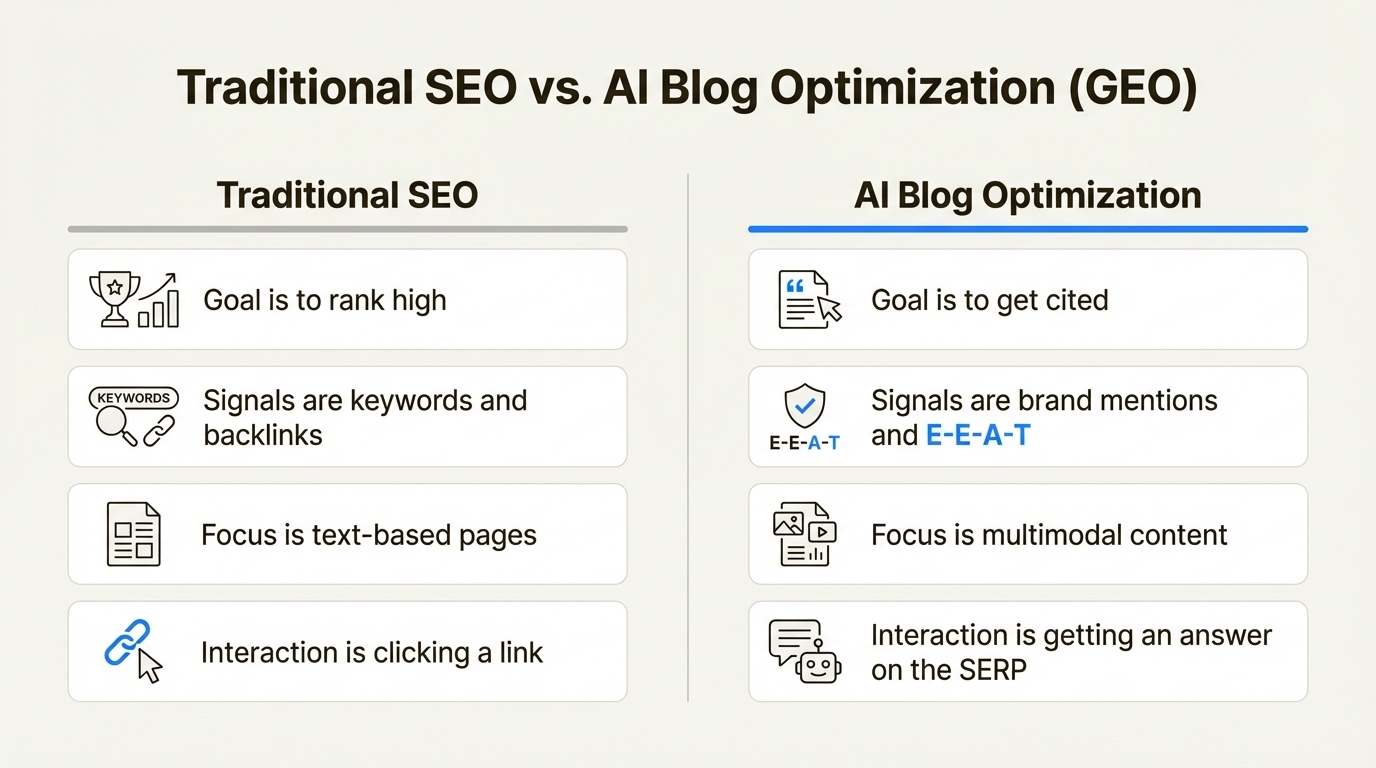
To maximize this impact, structure your cluster content to provide concise, answer-ready content blocks. AI models are optimized to extract answers; by anticipating the specific questions a user might ask—and providing high-quality, expert-level responses within your cluster—you increase your probability of being cited as the source of truth. Regularly monitor semantic relevance metrics to ensure your clusters remain aligned with the evolving state of information in your industry.
Tactical Execution: Building Your Semantic Network at Scale
Transitioning from research to execution requires an iterative, data-driven workflow:
-
Research to Creation: Utilize your topic model as a content brief generator. Each node in the cluster should be mapped to specific entity-related keywords.
-
Semantic Auditing: Conduct regular audits to identify content that no longer aligns with your target entities.
-
Iterative Pruning and Expansion: Content strategy in the AI era is never “done.” Periodically prune redundant or outdated pages, and expand existing clusters to address new semantic variants that emerge from user search behavior.